About Samuel Parnell, MD

Assistant Professor of Emergency Medicine
Assistant Program Director for the Emergency Medicine Residency Program
University of Texas Southwestern

SAEM Clinical Images Series: Snake it Off
snake

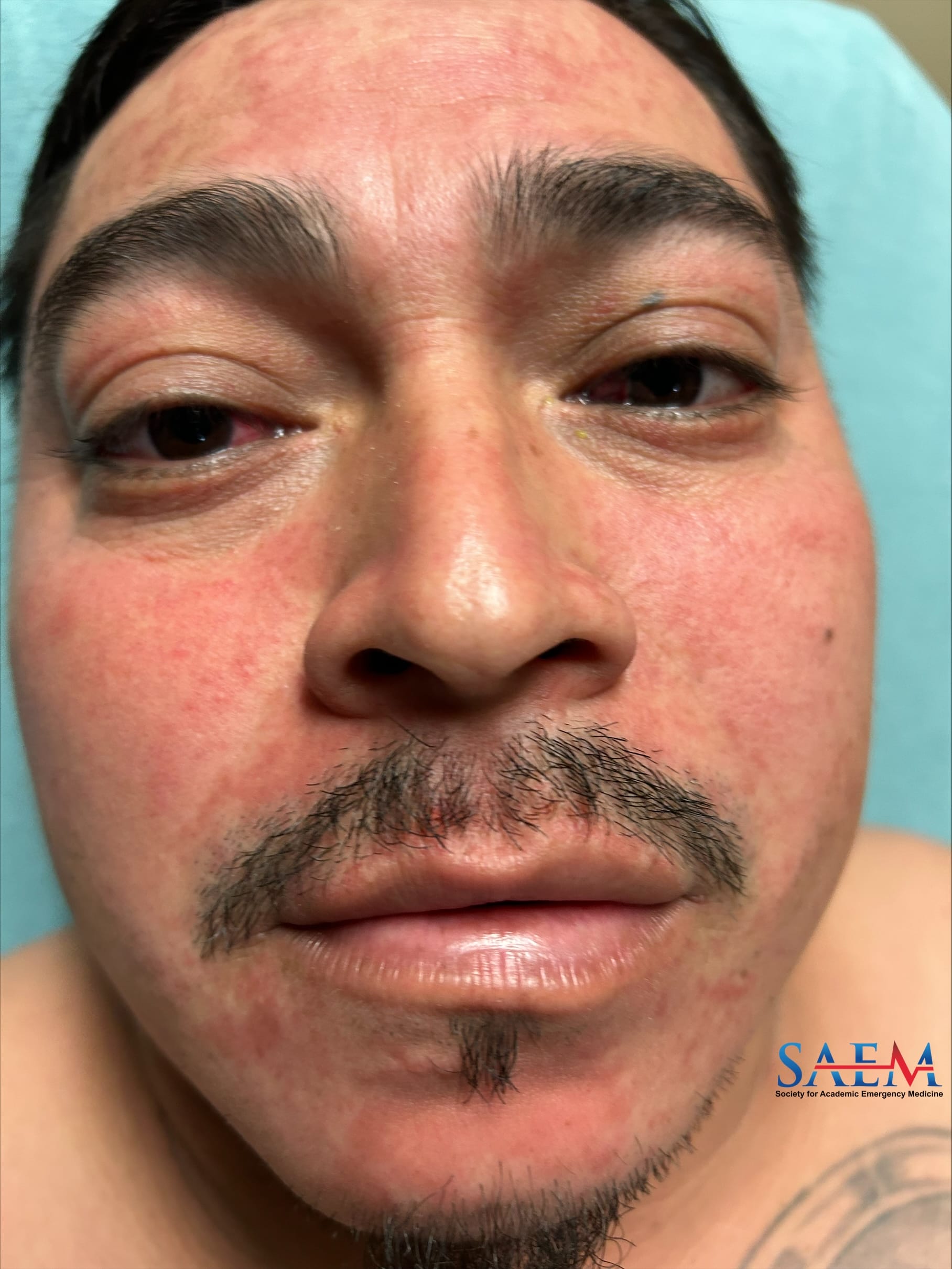
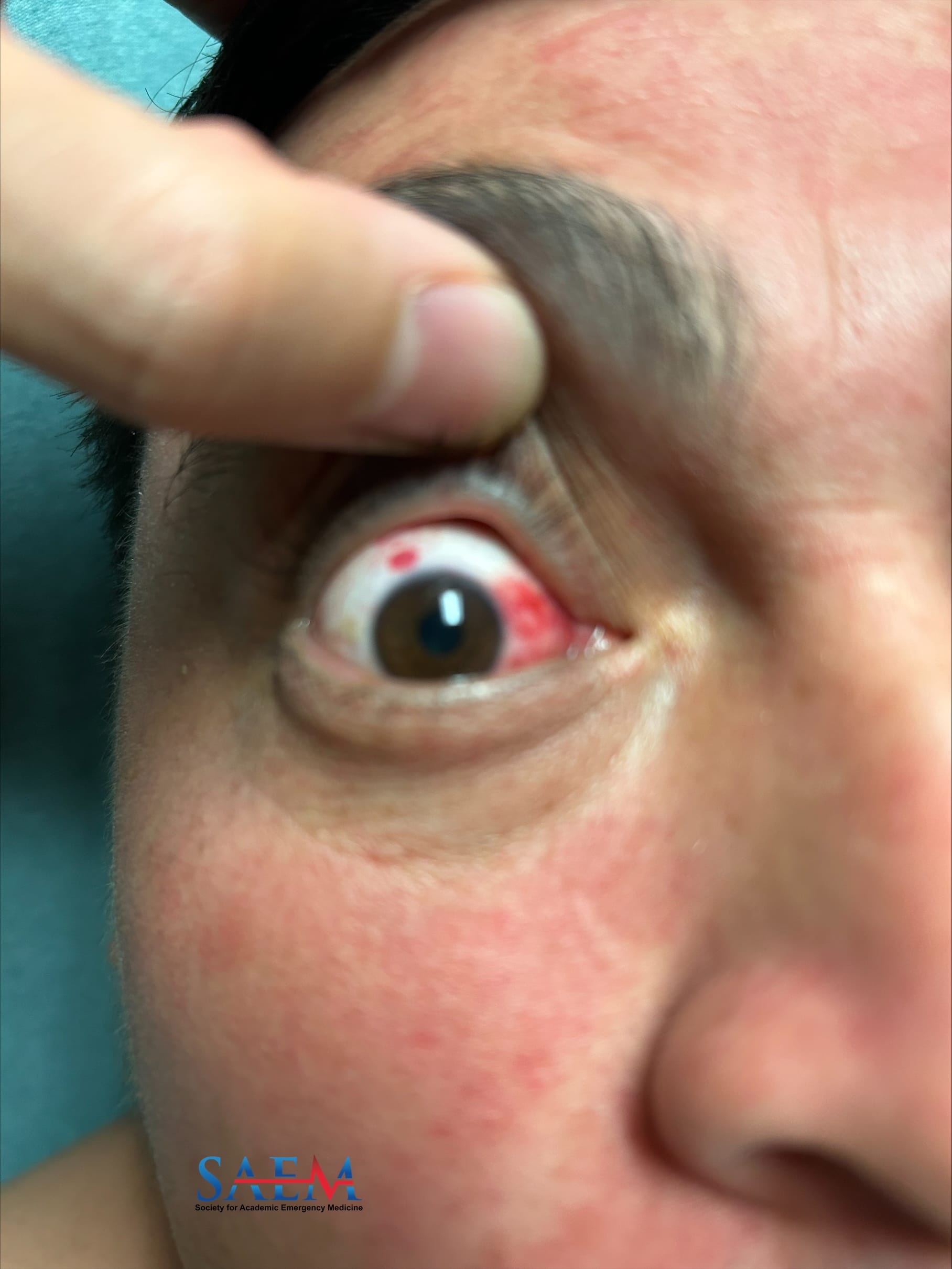
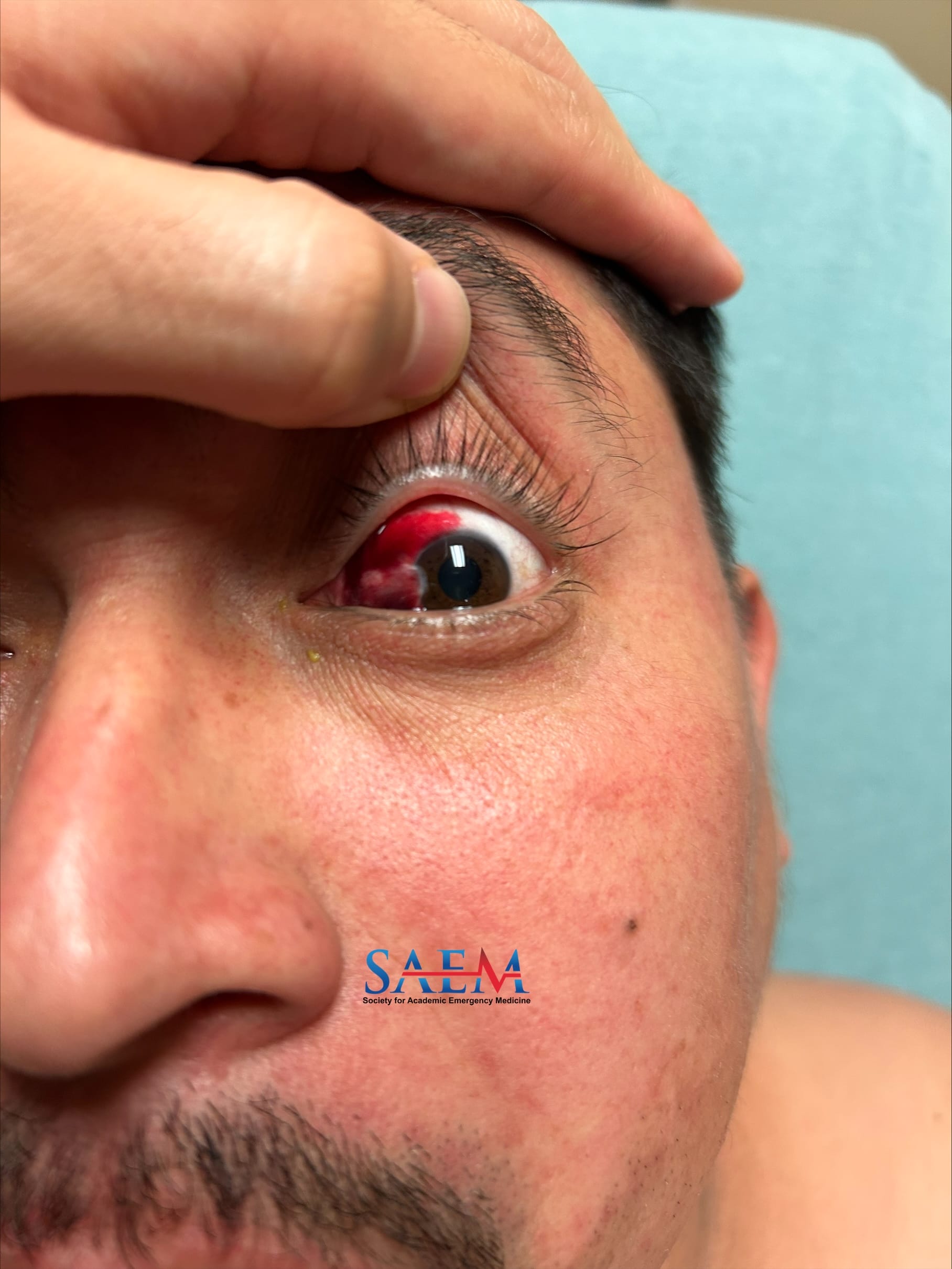
A 35-year-old male with no past medical history presented to the Emergency Department with eye redness. Two days prior, the patient reported he was cutting brush with a chainsaw when he felt something “spray” into his face. After inspecting the area, the patient found the remnants of a dead rattlesnake that unfortunately got in the way of his chainsaw. He subsequently developed bilateral eye redness without pain or vision changes, as well as a painless, pruritic facial rash. The patient denied any additional trauma, injury, snake bite, headache, fever, chills, cough, congestion, or other symptoms.

Vitals: T 36.8°F; BP 147/90 mmHg; HR 81; pulse ox 99% on room air; RR 20

Ophthalmic: OD (right eye) – Visual acuity: 20/20. Tonometry: 18 mmHg. Pupil equal and reactive to light. Conjunctiva: Nasal subconjunctival hemorrhage with small area of fluorescein uptake on the nasal conjunctiva. OS (left eye) – Visual acuity: 20/20. Tonometry: 20 mmHg. Pupil equal and reactive to light. Conjunctiva: Nasal subconjunctival hemorrhage with small area of fluorescein uptake on the nasal conjunctiva. Pterygium on the nasal side.

HENT: Maculopapular, erythematous, blanching rash across the forehead and bilateral cheeks. The remainder of the body is spared.

No other abnormal findings on physical examination.

WBC: 8.97 x 10^9/L

Platelets: 280 x 10^9/L

Hemoglobin: 15.4 g/dL

Fibrinogen: 203 mg/dL

Diagnosis: Ophthalmic Envenomation.

This is a case of ophthalmic envenomation causing subconjunctival hemorrhage. The patient also exhibits irritant contact dermatitis of the face related to topical cutaneous venom exposure. Ophthalmic envenomation is extremely rare in North America but occurs more commonly in areas of the world where “spitting” cobras are native species. Snake venom consists of a complex mixture of cytotoxins, including metalloproteinases and hyaluronidases. Topical ocular venom exposure can cause pain, photophobia, conjunctivitis, subconjunctival hemorrhage, keratitis, uveitis, corneal ulceration, angle-closure glaucoma, retinal hemorrhage, and rarely, blindness. The classic patient is a snake handler who lacks proper eye protection when encountering “spitting” cobras. However, inadvertent ocular exposure, such as accidental venom aerosolization after cutting through a rattlesnake’s head and venom glands with a chainsaw, can also cause ophthalmic envenomation.

The treatment for suspected ophthalmic envenomation is copious ocular irrigation with neutral fluids to clear venom and reduce subsequent damage. Topical antibiotics and supportive care measures can then be applied to prevent infection and minimize irritation. Unlike venomous snake bites, there is usually no indication for antivenom unless the patient develops systemic symptoms.

Take-Home Points

  • Ocular envenomation from aerosolized snake venom can cause pain, photophobia, conjunctivitis, subconjunctival hemorrhage, keratitis, uveitis, corneal ulceration, angle-closure glaucoma, retinal hemorrhage, and rarely, blindness.

  • Dilution is the solution! Early ocular irrigation can decrease the morbidity of ophthalmic envenomation. There is no utility for antivenom for simple ocular envenomation. Save the CroFab for those with severe, systemic signs of envenomation.

  • Eye protection is strongly recommended for those working with power tools, as well as snake handlers (especially when working with spitters!).

  • Hoffman, R. S., Howland, M. A., Lewin, N. A., Nelson, L., Goldfrank, L. R., & Smith, S. W. (Eds.). (2019). Goldfrank’s toxicologic emergencies (Eleventh edition.). McGraw-Hill.

  • Chu ER, Weinstein SA, White J, Warrell DA. Venom ophthalmia caused by venoms of spitting elapid and other snakes: Report of ten cases with review of epidemiology, clinical features, pathophysiology and management. Toxicon. 2010 Sep 1;56(3):259-72. doi: 10.1016/j.toxicon.2010.02.023. Epub 2010 Mar 21. PMID: 20331993.

  • Chang KC, Huang YK, Chen YW, Chen MH, Tu AT, Chen YC. Venom Ophthalmia and Ocular Complications Caused by Snake Venom. Toxins (Basel). 2020 Sep 8;12(9):576. doi: 10.3390/toxins12090576. PMID: 32911777; PMCID: PMC7551025.

SAEM Clinical Images Series: Red Rash on My Legs

milaria

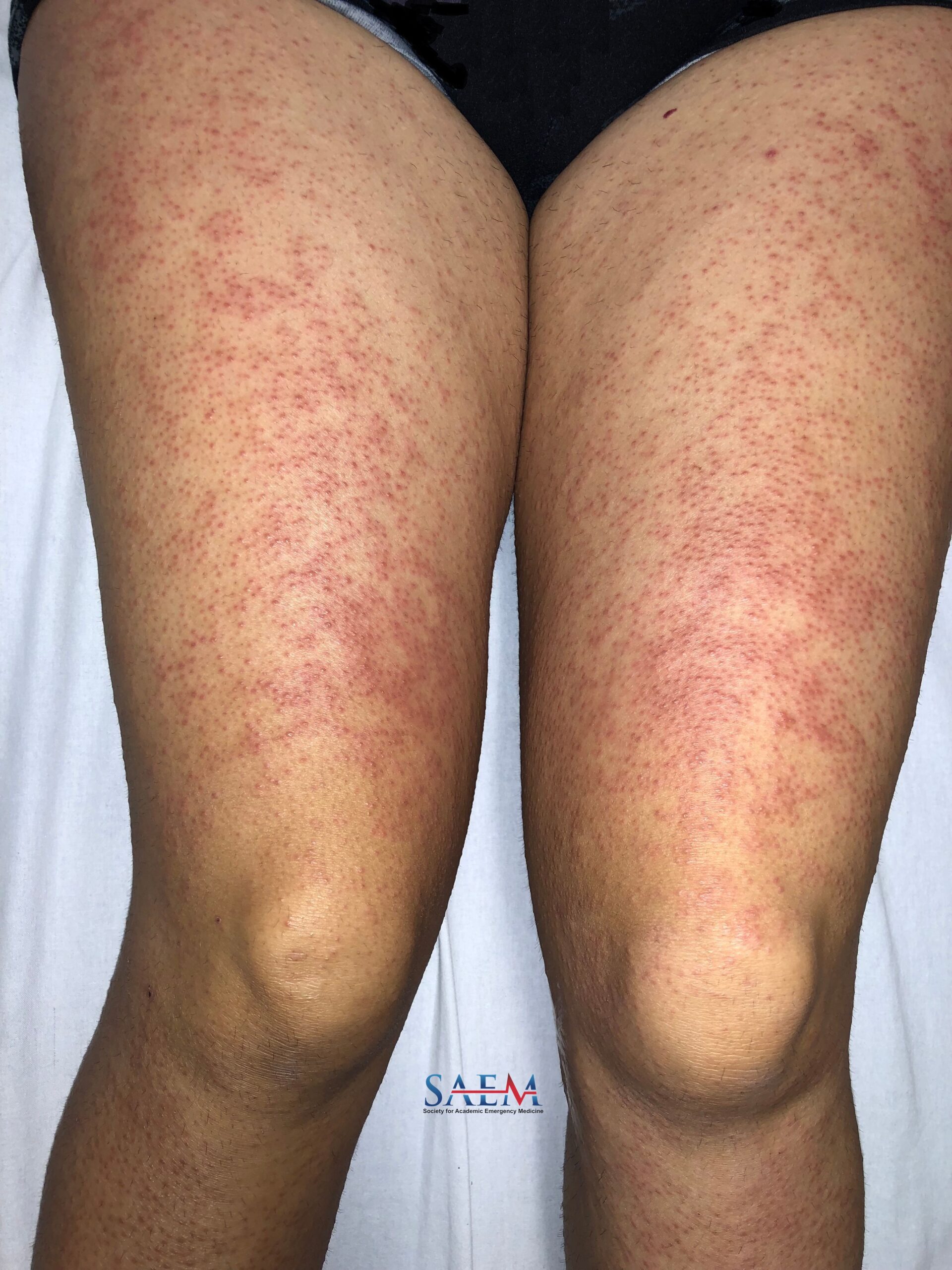
A 23-year-old female with no known past medical history presented with a rash concentrated on her legs, with a few areas on her arms and chest. The rash began the day before presentation when she became overheated while wearing sweatpants in 104°F weather. The rash was mildly pruritic but not painful. She denied any prior reaction to her sweatpants that she has had for several months. She denied any new soap or cosmetic use, prior rash, allergy, or medication use. Her review of systems and past medical history were negative.

Vitals: Normal

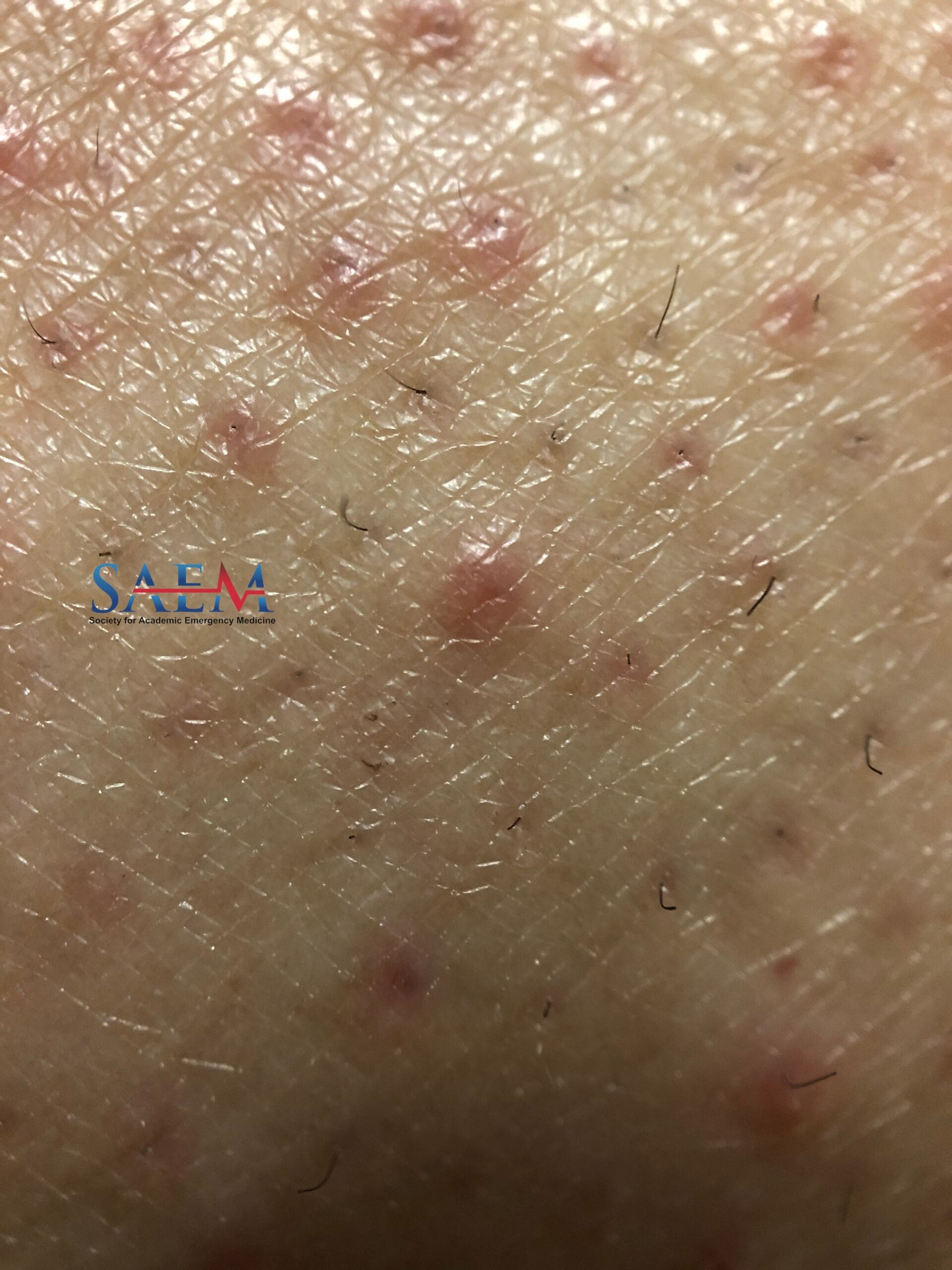
Skin: An erythematous papular rash is concentrated and symmetric on her lower extremities. There are a few sparse lesions on her arms, thorax, and abdomen with sparing of the palms, soles, and face. No pustules or vesicles are noted. There is no scale or crust. No other skin lesions are present. The rest of the examination is normal.

Non-contributory

Miliaria, or prickly heat (heat rash).

Miliaria, also known as prickly heat or heat rash, is caused by blocked eccrine sweat glands and ducts. Exposure to heat with sweating causes eccrine sweat to pass into the dermis or epidermis causing a rash. It is common in warm and humid climates during the summer months. It can affect up to 30% of adults living in hot and humid conditions. It may present as vesicles, papules, or pustules depending on the depth of the eccrine gland obstruction. In adults the rash is most likely seen where clothes rub on the skin. Infants and children typically have lesions on the upper trunk, neck, and head. Miliaria is a clinical diagnosis. Treatment involves measures to reduce sweating and exposure to hot and humid conditions. Air conditioning and the reduced humidity of indoor environments are helpful. If significant inflammation is present with pruritis, some improvement can be seen with 0.1% triamcinolone topically, though ointment should be avoided and only cream or lotion applied.

Take-Home Points

  • Miliaria, or prickly heat, is caused by sweating and blocked eccrine sweat glands.
  • Treatment involves retreating to cool, indoor environments.
  • Triamcinolone 0.1% cream or lotion may reduce pruritis.
  • Guerra KC, Toncar A, Krishnamurthy K. Miliaria. 2023 Aug 8. In: StatPearls [Internet]. Treasure Island (FL): StatPearls Publishing; 2024 Jan–. PMID: 30725861.

By |2024-03-26T10:26:51-07:00Apr 1, 2024|Dermatology, SAEM Clinical Images|

SAEM Clinical Images Series: Back Lesion

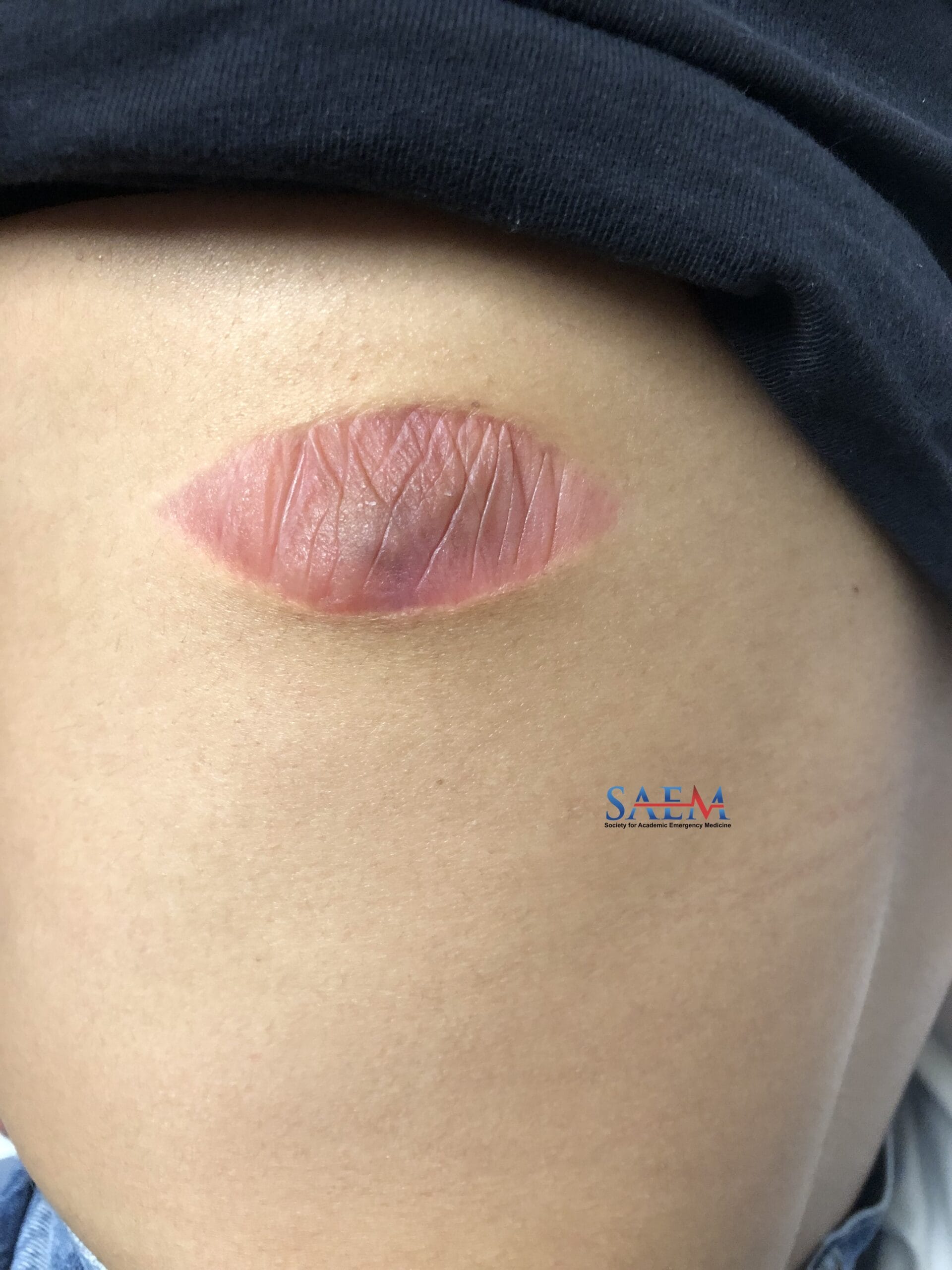
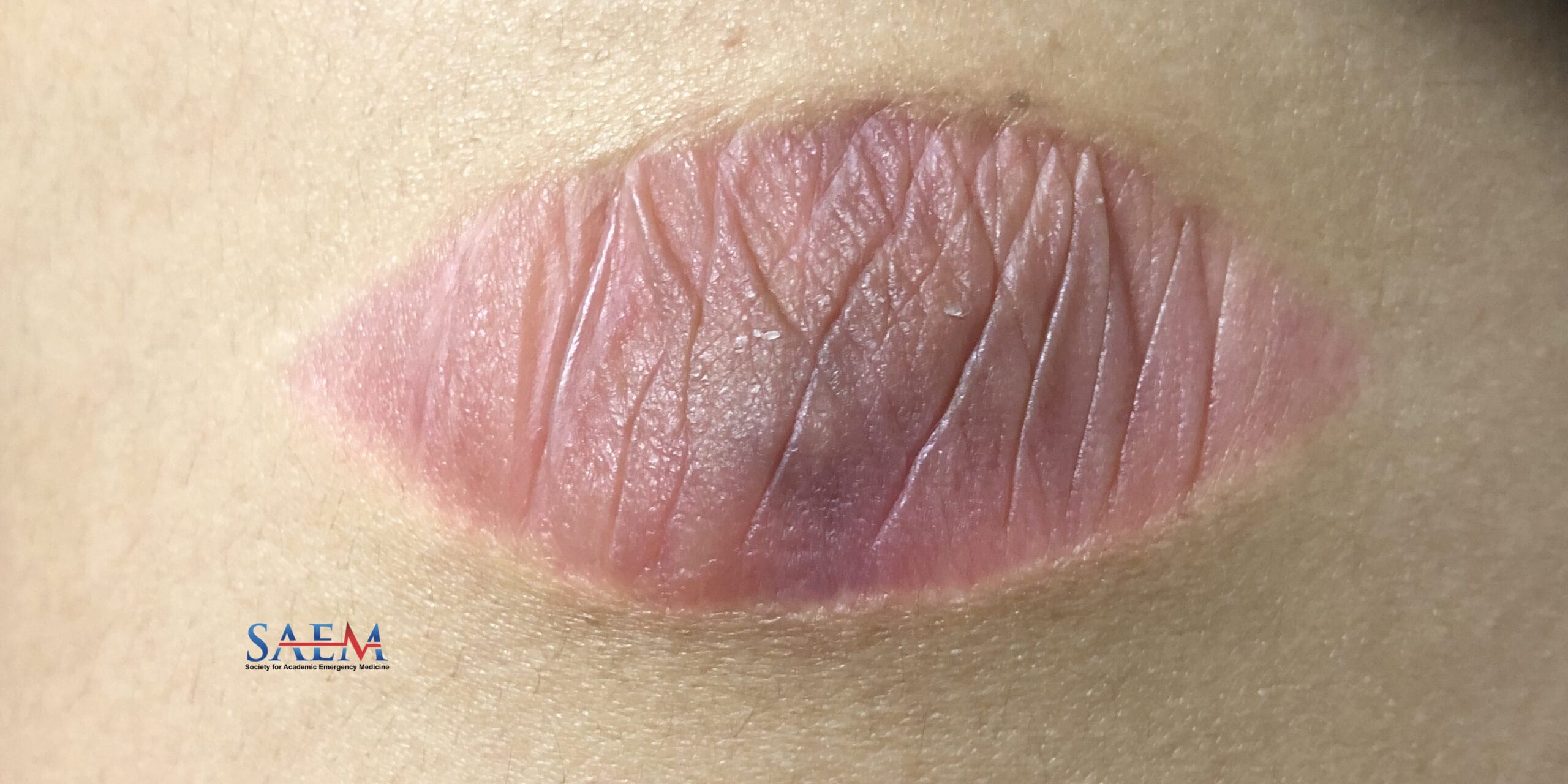
skin lesion

An 18-year-old-female with no known past medical history presented with a lesion on her back that had been present and enlarging for five months. It was not painful unless she touched it, and then only mildly tender. She denied any known cause, wound, prior rash, or other lesions. Her review of systems and past medical history were negative.

Vitals: Normal

Skin: An erythematous lenticular, or biconvex, lesion with distinct borders is noted at the left posterior thorax below the scapula. It is soft with some slight nodularity on palpation, and only mild tenderness noted. There is no fluctuance. No other skin lesions are present. The rest of the examination is normal.

Ultrasound reveals a 1.7 x 0.8 x 1.1 cm superficial soft tissue mass inferior to the scapula on the left thorax.

CT scan of the chest confirms no intrathoracic extension or other lesions.

Biopsy is the next appropriate step. The lesion does not appear to be infectious, either viral, bacterial, or fungal. Furthermore, it has no appearance of an inflammatory reaction that would benefit from topical steroids. The differential includes a cystic structure, neurofibroma, or malignancy. Because of the concern for malignancy, a biopsy was performed in the emergency department after the ultrasound and CT scan confirmed there was no extension into the thorax. The biopsy revealed a pilomatrixoma, or pilomatricoma. Pilomatrixoma is a superficial benign skin tumor that arises from hair follicle matrix cells. They commonly occur in the first two decades of life with a mean age of 17 years. The most common presentation is an asymptomatic, firm, slowly growing mobile nodule. However, only 16% are accurately diagnosed on clinical examination. This case reveals the wide variation in visual presentation and confirms the inability to diagnose the lesion at the bedside. Complete surgical excision is curative.

Take-Home Points

  • Unknown skin lesions, with concern for malignancy, should be diagnosed by biopsy.
  • Pilomatrixoma is rarely diagnosed at the bedside.
  • Jones CD, Ho W, Robertson BF, Gunn E, Morley S. Pilomatrixoma: A Comprehensive Review of the Literature. Am J Dermatopathol. 2018 Sep;40(9):631-641. doi: 10.1097/DAD.0000000000001118. PMID: 30119102.

By |2024-01-28T21:32:23-08:00Feb 2, 2024|Dermatology, SAEM Clinical Images|
Go to Top