Paucis Verbis card: Septic Arthritis

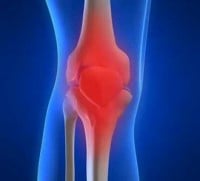
Knee PainIn the workup of monoarticular arthritis, the question that emergency physicians constantly struggle over is whether the patient has a nongonococcal septic arthritis. This joint infection alarmingly damages and erodes cartilage within only a few days.

This installment of the Paucis Verbis (In a Few Words) e-card series reviews the JAMA Rational Clinical Examination article which asks “Does this patient have septic arthritis?” Pooled sensitivities and likelihood ratios were calculated. These statistics are always helpful when trying to figure out the patients probability of having a septic joint.

I was surprised to learn that only about 50% of patients with septic joints have a fever. Note that a hip or knee prosthesis PLUS an overlying skin infection pretty much equals a septic joint (LR = 15.0).

Risk factors are listed in the table with the corresponding sensitivities, specificities, and likelihood ratios.

PV Card: Septic Arthritis


Go to ALiEM (PV) Cards for more resources.
By |2021-10-19T19:42:49-07:00Jun 11, 2010|ALiEM Cards, Infectious Disease, Orthopedic|

PV Card: Dermatomal and Myotomal Maps

There are some things in life which I just can’t memorize and dermatomal/myotomal maps are one of them. Weird cases of peripheral neurologic symptoms have presented to the ED in the setting of trauma and no trauma. So purely for selfish reasons, I’m making my own map to have on file.

This installment of the Paucis Verbis (In a Few Words) e-card series reviews Sensory and Motor Function Testing by Levels.

PV Card: Dermatomal and Myotomal Maps

Go to ALiEM (PV) Cards for more resources.
By |2021-10-08T09:42:25-07:00May 28, 2010|ALiEM Cards, Neurology, Orthopedic|

Paucis Verbis card: Ottawa knee, ankle, and foot rules

Often times, I get called to triage to help decide whether a patient should be sent to Radiology for an initial x-ray after injuring their knee, ankle, and/or foot. After teaching one of the nurses about the Ottawa rules, she taped a list of these rules on the triage wall.

This installment of the Paucis Verbis (In a Few Words) e-card series reviews Ottawa Knee, Ankle, and Foot Rules.

(more…)

By |2021-10-19T19:39:35-07:00May 7, 2010|ALiEM Cards, Orthopedic, Radiology|

Paucis Verbis card: Knee exam

Knee examHow accurate is the clinical knee exam?

JAMA published a meta-analysis trying to answer this question. Although they include patients with acute and chronic knee pain, it’s a good general review of the knee anatomy, historical clues, and exam elements.

In the ED, the knee exam is challenging because we see very acute injuries where knee pain and swelling often preclude an accurate exam. For patients with an equivocal exam, be sure to refer for orthopedic follow-up. A repeat exam should be performed once the pain and swelling subside.

This installment of the Paucis Verbis (In a Few Words) e-card series reviews the Knee Exam.

I used to be all confused and had a hard time memorizing all the different maneuvers (especially for the meniscus). It is much easier to remember after doing these knee exams routinely. Particularly, the lateral pivot test and McMurray test can be done with several rounds of simultaneous knee flexion-extension, internal-external rotation, and valgus stressing. Looking at diagrams almost makes things more confusing.

PV Card: Knee Exam


Go to ALiEM (PV) Cards for more resources.

By |2021-10-19T18:57:31-07:00Mar 19, 2010|ALiEM Cards, Orthopedic|

Paucis Verbis card: Ankle fractures

Lauge-Hansen Classification of Ankle fracturesAnkle fractures are a common injury diagnosed in the Emergency Department. Being able to speak Ortho-ese (i.e. the language of orthopedists) is invaluable in consulting the orthopedist over the phone. One ankle fracture classification system that our orthopedists like to use is the Lauge-Hansen system.
PV Card: Lauge-Hansen Classification of Ankle Fractures


Go to ALiEM (PV) Cards for more resources.

By |2021-10-19T19:08:02-07:00Feb 19, 2010|ALiEM Cards, Orthopedic, Radiology|

Beware the hidden tibia plateau fracture

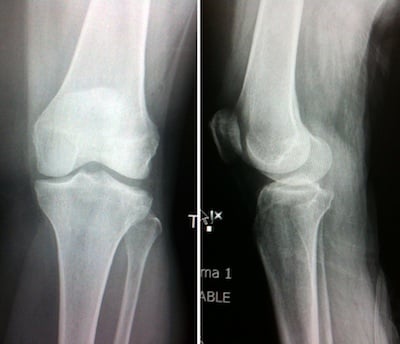
TibialPlateau2vsmFind the fracture in this patient with blunt knee trauma.

As a general rule, plain films are insensitive in ruling out orthopedic injuries. One particularly tricky area is the knee. This 2-view knee series above is normal.

Did you know that the sensitivity of picking up knee fractures is as low as 79% with a 2-view series and 85% with a 4-view series? With the advent of CT imaging, more and more subtle fractures are being found.

By |2016-11-11T19:01:36-08:00Feb 11, 2010|Orthopedic, Radiology|
Go to Top