



MIA 2012: Backes D, et al. Time-dependent test characteristics of head computed tomography in patients suspected of nontraumatic subarachnoid hemorrhage. Stroke. 2012 Aug;43(8):2115-9
Bottom Line 1 100% sensitive and specific if < 6 hours from headache onset 90% sensitive if after 6 hours A noncontrast head CT can effectively rule out atraumatic subarachnoid hemorrhage (aSAH) in patients who present with acute headache within six hours after ictus. Those who present outside this time window or present atypically for SAH (ie neck pain) require further workup, including a lumbar puncture. [+]

MIA 2012: Pearce MS et al. Radiation exposure from CT scans in childhood and subsequent risk of leukaemia and brain tumours: a retrospective cohort study. Lancet. 2012 Aug 4;380(9840):499-505.
Bottom Line 1 Interpret this data how you will: Exposure to 2-3 CT scans of the head will triple the risk of brain tumors; 5-10 head CT scans will triple the risk of leukemia. In absolute terms, this translates into approximately 1 excess case of leukemia and 1 excess brain tumor per 10,000 patients. [+]
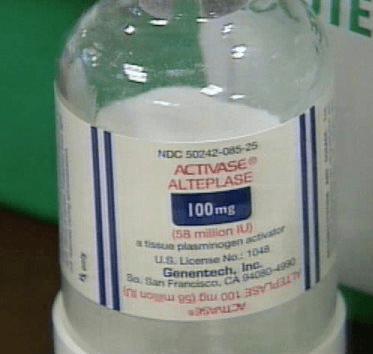
MIA 2012: IST-3 collaborative group et al. The benefits and harms of intravenous thrombolysis with recombinant tissue plasminogen activator within 6 h of acute ischaemic stroke (the third international stroke trial [IST-3]): a randomised controlled trial. Lancet. 2012 Jun 23;379(9834):2352-63.
Bottom Line 1 Giving tPA to stroke patients within 6 hrs of symptom onset does not improve mortality or independence at 6 months. However, patients might be a little “less disabled” while they are alive. Maybe. [+]

Director of [+]
MIA 2012: Weingart SD, Levitan RM. Preoxygenation and prevention of desaturation during emergency airway management. Ann Emerg Med. 2012 Mar;59(3):165-75.e1.
Bottom Line 1 [+]
Director of Growth, Strategic Alliance Initiative, Center for Innovation and Digital Health
Massachusetts General Hospital;
Chief Scientific Officer, Conductscience.com

MIA 2012: Than M et al. 2-Hour accelerated diagnostic protocol to assess patients with chest pain symptoms using contemporary troponins as the only biomarker: the ADAPT trial. J Am Coll Cardiol. 2012 Jun 5;59(23):2091-8.
Bottom Line 1 For ED patients presenting with undifferentiated chest pain, a TIMI score of 0, together with a non-ischemic EKG, and a negative cTnI at 0 hours and 2 hours, can identify patients at very low-risk for having a major adverse cardiac event (MACE) in 30 days. [+]
Trick of the Trade: Ossification centers of the elbow
Fracture or a normal ossification center? This is a common question heard when viewing an xray of a pediatric elbow. How do you remember the timing of normal ossification centers? FYI, the xray images above are normal and have no fractures. [+]
Patwari Academy videos: ACLS and post-resuscitation care
This is the last installment of Dr. Rahul Patwari’s digital whiteboard video talks on ACLS, specifically focusing on post-resuscitation care and therapeutic hypothermia. Parts 1-3 (ACLS and airway) Parts 4-6 (ACLS: cardiac arrest) Parts 7-10 (ACLS: bradycardias and tachycardias) [+]
PV card: Metacarpal fractures
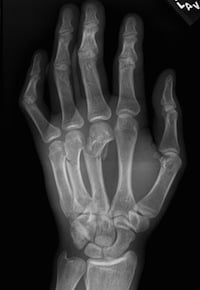
Patients with rotation deformities of the fingers from a metacarpal fracture should be reduced. All fingers should normally point towards the patient's scaphoid bone. Metacarpal (MC) fractures are common injuries, which often spark discussions about whether they should be reduced in the ED urgently. What are the criteria for acceptable degrees of angulation? Are these criteria different for the MC neck versus shaft? Which fractures tend to be unstable and thus require eventual operative repair? How should I splint the injury? Here's a quick-reference card to help guide your management decisions. These recommendations may vary slightly based on what references [+]
Trick of the Trade: Speed up ECG paper rate to differentiate tachycardias
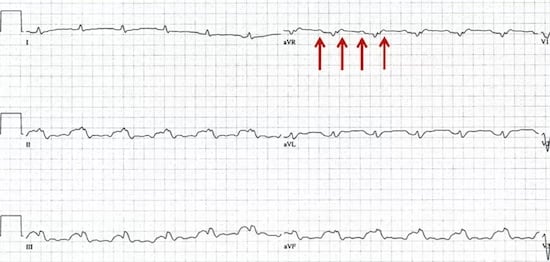
Undifferentiated tachycardias, especially when the rate is extremely fast, make it difficult to see anything other than the QRS complexes! Is there a P or flutter wave? [+]
Director of Growth, Strategic Alliance Initiative, Center for Innovation [+]
Patwari Academy videos: ACLS (parts 7-10)
What is the definition of bradycardia and tachycardia in the 2010 ACLS guidelines, for the purposes of resuscitation algorithms? Bradycardia: heart rate < 50 bpm Tachycardia: heart rate > 150 bpm [+]
Director of Growth, Strategic Alliance [+]
Director of Growth, Strategic Alliance Initiative, Center for Innovation and Digital Health
Massachusetts General Hospital;
Chief Scientific Officer, Conductscience.com
Latest posts by Shuhan He, MD (see all)
- The Discharge Severity Index: Early Research on ED Readmission Risk Assessment - August 14, 2025
- Suboxone and the Emergency Physician: Get Waivered Training - August 12, 2022
- A Tale of Two Epidemics: COVID-19 and the Opioid Crisis - April 23, 2020