


Wellness and Resiliency during Residency: EM is a career with unresolved stories
“We do make a difference, but not just in the setting of resuscitating critically ill or injured people, but in putting people on the pathway to health. We often get cheated out of the ending of the movie. We don’t see the romantic side of what we’ve helped facilitate. We certainly don’t get credit for it.” – Dr. Richard Cantor
 There are lots of reasons why Emergency Medicine (EM) has one of the highest burnout rates compared to other medical specialties.1,2 We have long and erratic hours, difficult patients, and an increasing number of bureaucratic tasks such as clicking boxes in an electronic medical records system or ensuring high patient-satisfaction survey responses.2 These stresses are not unique to EM, but our high-volume and high-acuity patient loads do amplify those stresses compared to other fields.
 When I got back home from taking [my board exams], having all these [negative] feelings swirling through my head, I remember driving up and seeing my wife and baby sitting on the porch and suddenly being like, “Isn’t this what life is all about? Is it really about studying for an exam? Is it really about pushing yourself to get triple-boarded or do this or that within medicine? I mean, isn’t THIS what it’s about? Having a wife and a child, a family to call your own, aren’t these the things that are most important that we should value?” After that point, after seeing them on the porch and over the next couple weeks, things really started to change for me.
 It seems that the 2017 year is quickly shaping up to be one of grassroots action both politically and now in emergency medicine (EM). On May 15, 2017, we are launching a joint initiative FOR residents BY residents with
  The second annual Emergency Wellness Week is coming to a close. This week we
  “One of the residents that I was working with was yelled at once by somebody else because he had cried while giving a family bad news. I think everyone knows when you’re giving them bad news; it’s not like a big secret. You maintaining a great deal of composure doesn’t change that fact. I think that we’re allowed to be human. If we force ourselves not to be human or have any degree of human emotion, that’s obviously not putting us on the path to wellness and certainly if we force other people not to be human that’s not putting either them or us on the path to wellness.”
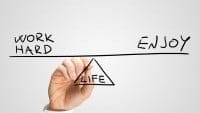 “The hardest thing for me was trying to find time to do things aside from being a resident. When you’re working six 12 hours shifts in a week, there’s only so much time left in the day to do anything else. Especially in the winter, you wake up, you get to work before the sun comes up, you work a 12 hour shift, you leave, and the sun’s gone. By the time you get home, you have enough time to wash the grime off, shovel a sandwich in your mouth, and pass out. And there was nothing else except for that.”