About Brigid Garrity, DO, MPH

Resident Physician
Boston Medical Center

SAEM Clinical Images Series: Weird Flex
tenosynovitis

A 29-year-old female with a history of depression, anxiety, and tobacco use disorder presented with worsening right index finger pain, swelling, and redness for the previous three days. Additionally, she reported that she was unable to further flex or extend her finger. She denied fevers, chills, rashes, or recent illness. There was no history of trauma, aquatic or other environmental exposures, insect bites, or intravenous drug use. She did note that she uses a copper brillo pad to clean her dishes at home which often causes small abrasions to her fingers.
Vitals: BP 160/112; PR 73; Temp 36.4°C; RR 18; SpO2 100% on RA

General: Well-appearing, no acute distress.

Cardiovascular: Right index finger capillary refill <2 sec.

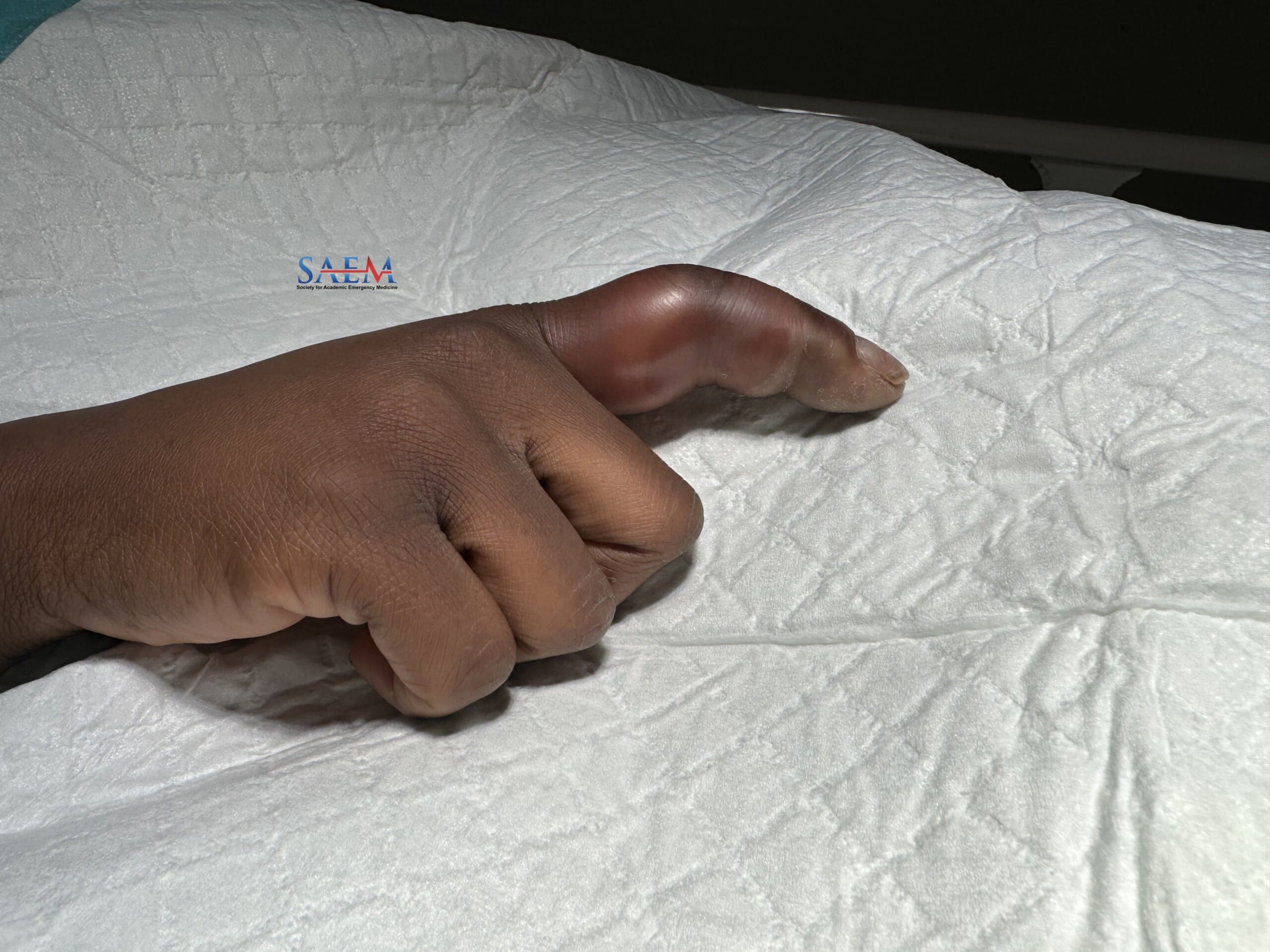
Skin: Right index finger uniformly edematous and erythematous with tenderness to palpation along the tendon sheath; small healed abrasions over distal palmar aspect of the digit; no focal area of fluctuance.

MSK: right index finger held in flexion, pain with passive extension.

WBC: 8.6

ESR: 129

CRP: 105.5

This patient has flexor tenosynovitis, an infection of the synovial sheath surrounding the flexor tendon of the hand. The condition is usually caused by local inoculation from penetrating trauma although can also result from hematogenous spread. Flexor tenosynovitis is considered a surgical emergency, as delayed intervention can lead to significant morbidity including tendon rupture, deep space infection, abscess development, soft tissue necrosis, amputation, and/or chronically compromised hand function. Diagnosis is usually clinical, based on history and physical exam findings; however, laboratory evaluation may reveal leukocytosis and/or elevated inflammatory markers. If there is a history of penetrating trauma, x-rays of the affected digit are recommended to rule out retained foreign body. Management in the ED includes prompt surgical consultation and broad-spectrum antibiotics against common cutaneous pathogens. Antibiotic coverage should be broadened in patients with a history of marine exposure or Pseudomonal risk factors including immunocompromised status.

Flexor tenosynovitis presents with four classic exam findings called “Kanavel Signs.” Kanavel Signs include (1) flexion of the involved digit, (2) tenderness to palpation over the tendon sheath, (3) pain with passive extension, and (4) uniform swelling of the finger. The presence of all four Signs has a sensitivity for flexor tenosynovitis as high as 97.1%, although early in the course of infection, pain with passive extension may be the only finding.

Take-Home Points

  • Flexor tenosynovitis is an infection of the flexor tendon sheath of the hand and a history of trauma or penetrating injury to the area should raise suspicion.

  • Flexor tenosynovitis is a “can’t miss” clinical diagnosis in the ED as there is a risk of significant complications with delayed antibiotics and surgical intervention.

  • Infection can reliably be identified by the presence of the four Kanavel Signs on physical exam.

  • Chan E, Robertson BF, Johnson SM. Kanavel signs of flexor sheath infection: a cautionary tale. Br J Gen Pract. 2019 Jun;69(683):315-316. doi: 10.3399/bjgp19X704081. PMID: 31147342; PMCID: PMC6532803.

  • Chapman T, Ilyas AM. Pyogenic Flexor Tenosynovitis: Evaluation and Treatment Strategies. J Hand Microsurg. 2019 Dec;11(3):121-126. doi: 10.1055/s-0039-1700370. Epub 2019 Nov 2. PMID: 31814662; PMCID: PMC6894957.

  • Hermena S, Tiwari V. Pyogenic Flexor Tenosynovitis. In: StatPearls. StatPearls Publishing; 2022.

  • Kennedy CD, Huang JI, Hanel DP. In Brief: Kanavel’s Signs and Pyogenic Flexor Tenosynovitis. Clin Orthop Relat Res. 2016 Jan;474(1):280-4. doi: 10.1007/s11999-015-4367-x. Epub 2015 May 29. PMID: 26022113; PMCID: PMC4686527.

By |2025-03-30T20:30:57-07:00Apr 7, 2025|Orthopedic, SAEM Clinical Images|

SAEM Clinical Images Series: An Unusual Arm Conundrum

shoulder

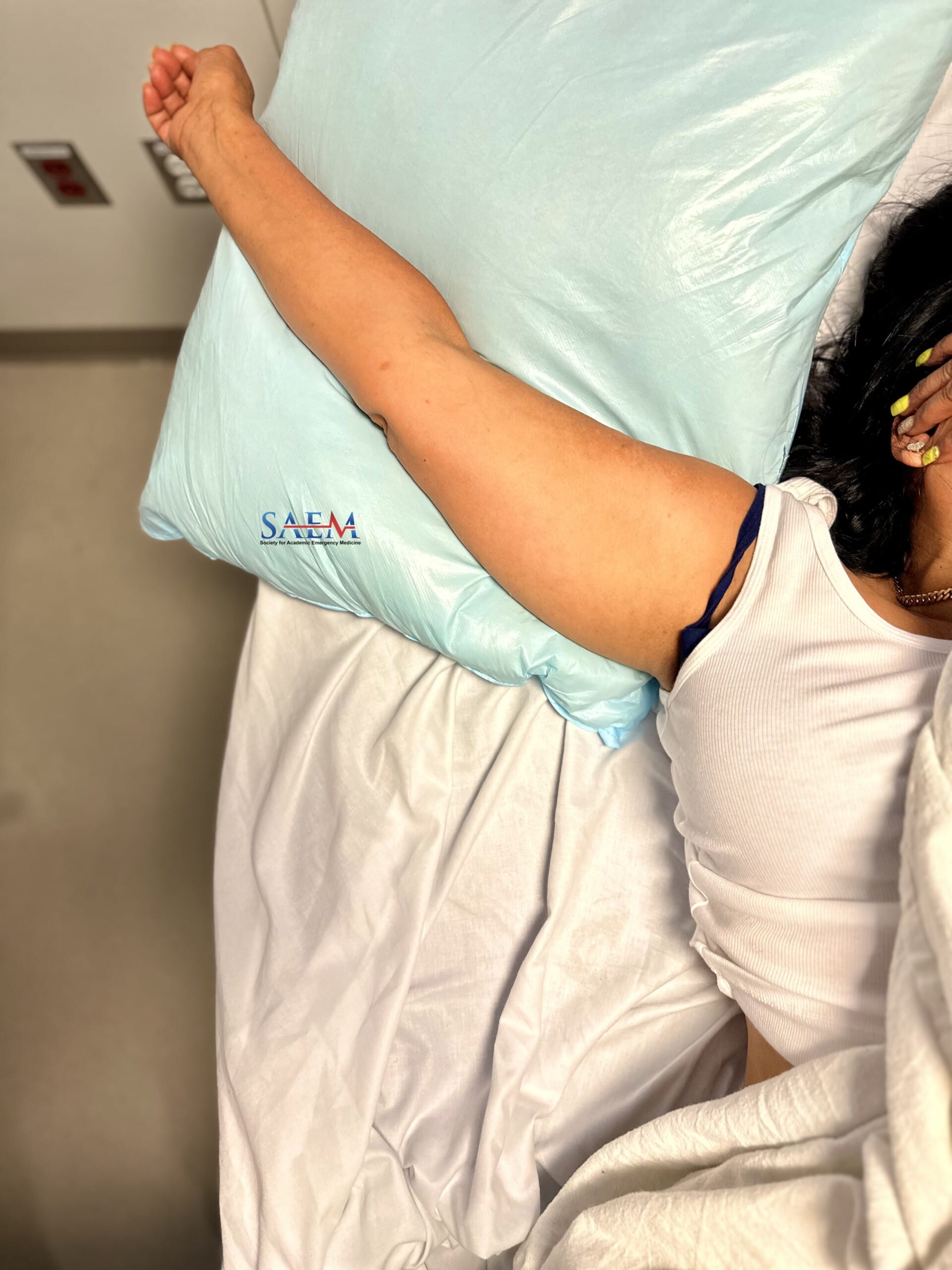
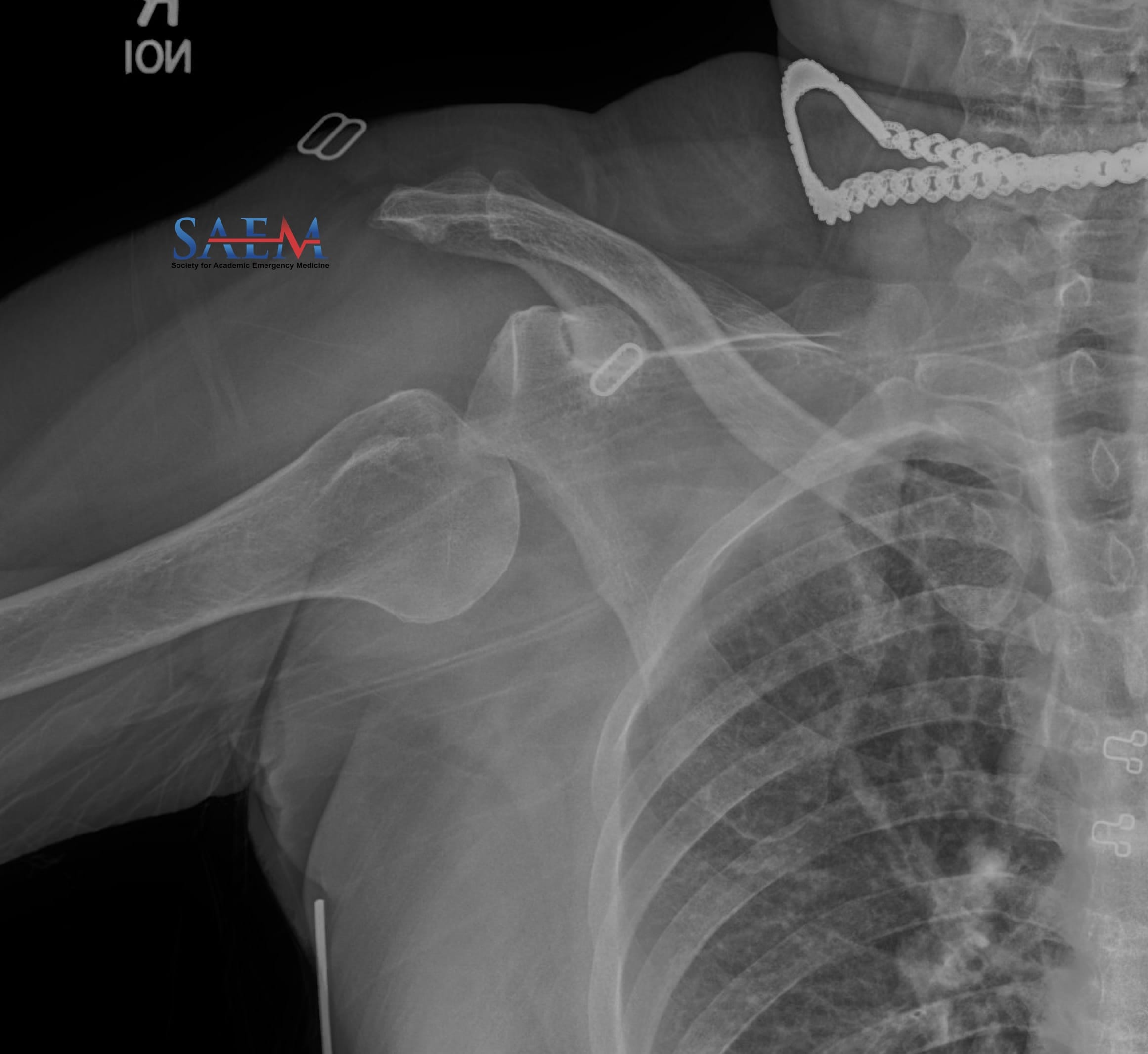
A 58-year-old female with a past medical history significant for osteoporosis presented with right shoulder pain after a witnessed mechanical fall down two stairs. She sustained no headstrike or loss of consciousness. She endorses severe right shoulder pain without numbness/tingling over any part of her arm. Since the fall, she has been unable to move her arm, which remains abducted overhead.

General: Right arm fixed, abducted position and elevated over her head.

Vascular: 2-second capillary refill in all nail beds, strong palpable radial pulse.

Neuro: Sensation intact to light touch on medial and lateral aspects of all distal digits, and throughout entire axillary, radial, ulnar and median nerve distribution.

Motor: Flexor digitorum superficialis (FDS) and flexor digitorum profundus (FDP) intact in digits 2 through 5. Extensor digitorum communis (EDC) and extensor indicis proprius (EIP) intact. Normal finger abduction and adduction. Normal thumb opposition. Normal OK sign. Wrist flexors and extensors intact.

Luxatio erecta (inferior shoulder dislocation) is a rare type of shoulder dislocation. The majority of shoulder dislocations are anterior (over 95%), with a smaller number being posterior (2-4%). Inferior dislocations are the least common injury pattern (0.5%), but prompt identification and treatment are crucial due to the high risk of neurovascular damage.  Radiographs will typically demonstrate the humeral head lying inferior to the glenoid fossa, with the humeral shaft parallel to the spine of the scapula. Classically, the entire arm is held in abduction.

Inferior shoulder dislocation most commonly occurs either due to hyperabduction of the shoulder (such as when grasping at a tree branch above while falling) or through an axial load from above on a hyperabducted arm (as seen in falls or motor vehicle accidents). Patients presenting with inferior shoulder dislocation are at substantial risk for neurovascular compromise, particularly of the axillary nerve, leading to impaired upper extremity movement and sensation. Due to the substantial injury mechanism, patients with inferior shoulder dislocations are also at increased risk for rotator cuff pathology. Treatment of inferior shoulder dislocation is immediate closed reduction to reduce the risk of neurovascular complications. Once reduced, the arm should be placed in an immobilizer to prevent recurrent dislocation.

Take-Home Points

  • Patients with inferior shoulder dislocations often present holding their arm above their head. Often, patients cannot adduct their arm.

  • Axillary nerve injuries occur in about 60% of inferior dislocations. Compared to other dislocations, inferior dislocations have the highest incidence of axillary nerve injuries.

  • Patients with inferior dislocations often present with neurovascular compromise of the affected arm, so be sure to do a thorough exam after reduction.

  • Grate I Jr. Luxatio erecta: a rarely seen, but often missed shoulder dislocation. Am J Emerg Med. 2000 May;18(3):317-21. doi: 10.1016/s0735-6757(00)90127-x. PMID: 10830689.

  • Nambiar M, Owen D, Moore P, Carr A, Thomas M. Traumatic inferior shoulder dislocation: a review of management and outcome. Eur J Trauma Emerg Surg. 2018 Feb;44(1):45-51. doi: 10.1007/s00068-017-0854-y. Epub 2017 Oct 3. Erratum in: Eur J Trauma Emerg Surg. 2018 Feb;44(1):53. doi: 10.1007/s00068-017-0878-3. PMID: 28975397.

By |2025-03-09T21:48:15-07:00Mar 10, 2025|Orthopedic, SAEM Clinical Images|

SAEM Clinical Images Series: Doubly Double Vision

palsy

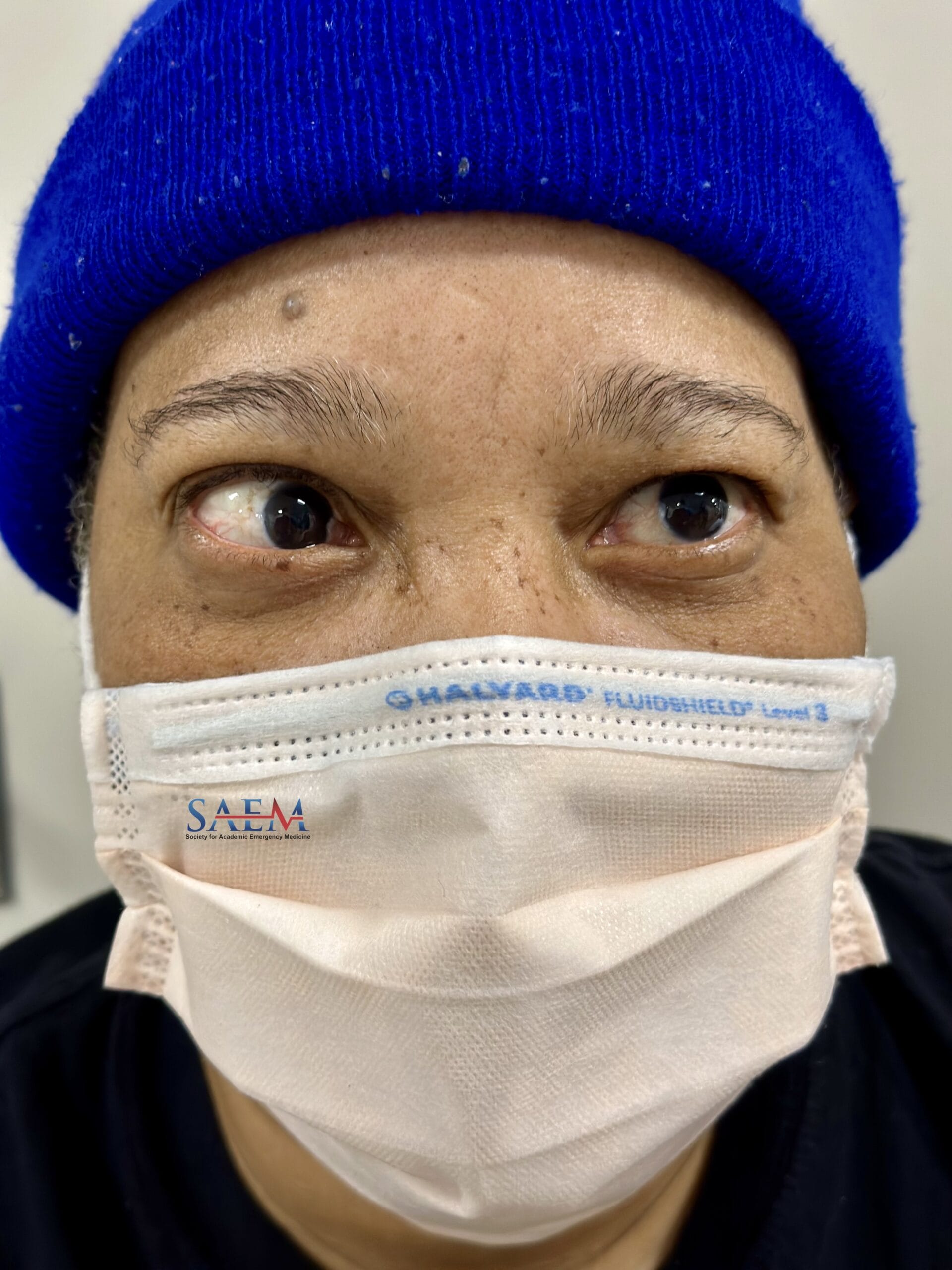
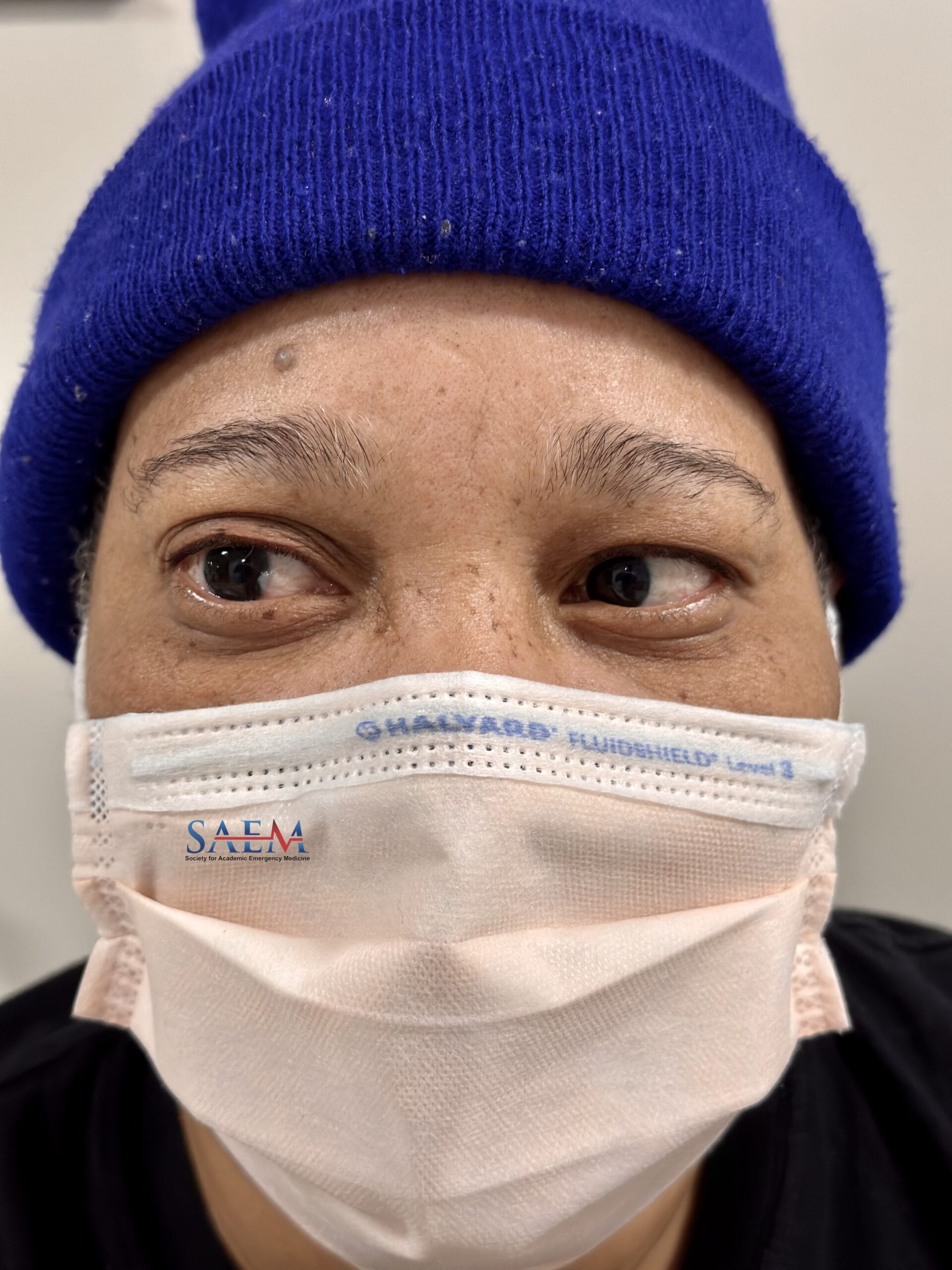
A 52-year-old female with a past medical history of hypertension and prediabetes presented to the emergency department with double vision that started one day prior to arrival. She stated that her double vision improved when she closed one eye. She denied trauma, headache, neck pain, dizziness, dysphagia, numbness, tingling, weakness, or gait instability.

Vitals: BP 181/119; HR 76; RR 18; T 98.4°F; O2 saturation 96% on room air

General: No acute distress, well-appearing

Neurologic: AOx3; Following commands. Speech without dysarthria. PERRLA. EOM: incomplete abduction of the L and R eye. No facial asymmetry. Tongue protrudes midline. No pronator drift. 5/5 strength in all extremities. Sensation is intact throughout. Finger to nose is normal. Gait is narrow and steady.

Cranial nerve 6 (CN VI), also known as the abducens nerve, is responsible for ipsilateral eye movement. CN VI palsy presents clinically with the inability to abduct the eye resulting in horizontal diplopia. Patients often present complaining of double vision that is worse with lateral gaze. Other symptoms on presentation may include headache, nausea, vomiting, hearing loss, and recent viral symptoms. CN VI is typically diagnosed clinically by an inability to abduct the eye. It is the most common oculomotor palsy in adults and can be caused by damage anywhere along the course of the abducens nerve. Etiologies in adults include ischemia, trauma, neoplasm, demyelinating lesions, increased intracranial pressure, and infection. Risk factors include microvascular disease such as hypertension and inflammatory conditions. Bilateral CN VI nerve palsy without associated intracranial abnormalities is rare. Importantly, abducens nerve palsy is the second most common oculomotor palsy in children and a frequent presenting sign of an intracranial tumor. Children with CN VI palsy should be evaluated for ataxia and other gait disturbances which may indicate a brainstem glioma.

Depending on the presenting symptoms and medical history, the workup should include an MRI/MRA brain to evaluate for microvascular ischemia and cerebrovascular accident. Treatment of CN VI palsy should be targeted at the underlying cause. In cases of CN VI palsy due to microvascular ischemia, symptoms often self-resolve. In children, treatment includes alternating patching of the eyes, but this has not been shown to be effective in adults.

Take-Home Points

  • CN VI palsy is the most common oculomotor palsy in adults and presents with an inability to abduct the eye.
  • Treatment of CN VI palsy should target the underlying pathology which may include infection, trauma, neoplasm, or increased intracranial pressure.
  • CN VI palsy in children may indicate an intracranial tumor and workup should include a full neurologic examination and intracranial imaging when appropriate.
  • Graham C, Gurnani B, Mohseni M. Abducens Nerve Palsy. 2023 Aug 24. In: StatPearls [Internet]. Treasure Island (FL): StatPearls Publishing; 2024 Jan–. PMID: 29489275.

    Merino P, Gómez de Liaño P, Villalobo JM, Franco G, Gómez de Liaño R. Etiology and treatment of pediatric sixth nerve palsy. J AAPOS. 2010 Dec;14(6):502-5. doi: 10.1016/j.jaapos.2010.09.009. PMID: 21168073.

By |2024-09-28T21:34:14-07:00Oct 7, 2024|Neurology, SAEM Clinical Images|
Go to Top