About Bryan D. Hayes, PharmD, DABAT, FAACT, FASHP

Leadership Team, ALiEM
Creator and Lead Editor, Capsules and EM Pharm Pearls Series
Attending Pharmacist, EM and Toxicology, MGH
Associate Professor of EM, Division of Medical Toxicology, Harvard Medical School

Social Media in the EM Curriculum: Annals of EM Resident Perspective article

Hand holding a Social Media 3d SphereThis month marks our second ALiEM-Annals Resident’s Perspective discussion. Similar to the ALiEM-Annals Global EM Journal Club series and the first Resident’s Perspective piece on Multiple Mini Interviews, we will be discussing the most recent Annals of Emergency Medicine Resident’s Perspective piece on the Integration of Social Media in Emergency Medicine Residency Curriculum. We hope you will participate in an online discussion based on the paper summary and questions below from now through August 1, 2014. Respond by commenting below or tweeting using the hashtag #ALiEMRP.

(more…)

Most Followed #FOAMed Twitter Users

Twitter-HashtagsAs the Free Open Access Meducation (FOAM; #FOAMed) movement has continued to flourish over the past few years, Twitter has become a vital method for disseminating/discussing educational and clinical content. We thought it would be interesting to see who is being ‘followed’ on Twitter in the FOAM world. Certainly, the metric of Twitter followers does not necessarily correlate with quality. And, it misses newcomers to the FOAM scene and those with a more focused area of expertise/interest. We are more interested in understanding the landscape such as who is involved, geographic locations, areas of expertise, and association with blogs/podcasts.

(more…)

PV Card: Pediatric Ingestion Dose Thresholds for ED Referral

Clinical Toxicology has published guidelines for out-of-hospital management of 16 distinct overdoses and their dose thresholds, above which, pediatric patients should be referred to the Emergency Department for evaluation. Clinical Toxicology is the official journal of the American Academy of Clinical Toxicology (AACT, @AACTinfo), the American Association of Poison Control Centers (AAPCC, @AAPCC), and the European Association of Poisons Centres and Clinical Toxicologists (EAPCCT). There are two caveats to be aware of regarding these guidelines.
  1. They were developed between 2005 and 2007. New medications have been approved since that time and there may be more recent data available.
  2. As with any poisoning, dose is only one factor when determining disposition. Consideration should also be given to intent, underlying medical conditions, co-ingestion of other medications, presence of symptoms, and drug formulation.

This PV Card summarizes the pediatric ingestion dose thresholds for referral to an ED.

PV Card: Pediatric Dose Thresholds


Adapted from [1–16]
Go to ALiEM (PV) Cards for more resources.

Thanks to Zlatan Coralic, PharmD (@ZEDPharm) for his excellently detailed expert peer review and suggestions for revisions for this important card.

References

  1. Wax P, Erdman A, Chyka P, et al. beta-blocker ingestion: an evidence-based consensus guideline for out-of-hospital management. Clin Toxicol (Phila). 2005;43(3):131-146. [PubMed]
  2. Caravati E, Erdman A, Christianson G, et al. Ethylene glycol exposure: an evidence-based consensus guideline for out-of-hospital management. Clin Toxicol (Phila). 2005;43(5):327-345. [PubMed]
  3. Manoguerra A, Erdman A, Booze L, et al. Iron ingestion: an evidence-based consensus guideline for out-of-hospital management. Clin Toxicol (Phila). 2005;43(6):553-570. [PubMed]
  4. Olson K, Erdman A, Woolf A, et al. Calcium channel blocker ingestion: an evidence-based consensus guideline for out-of-hospital management. Clin Toxicol (Phila). 2005;43(7):797-822. [PubMed]
  5. Dart R, Erdman A, Olson K, et al. Acetaminophen poisoning: an evidence-based consensus guideline for out-of-hospital management. Clin Toxicol (Phila). 2006;44(1):1-18. [PubMed]
  6. Scharman E, Erdman A, Wax P, et al. Diphenhydramine and dimenhydrinate poisoning: an evidence-based consensus guideline for out-of-hospital management. Clin Toxicol (Phila). 2006;44(3):205-223. [PubMed]
  7. Manoguerra A, Erdman A, Wax P, et al. Camphor Poisoning: an evidence-based practice guideline for out-of-hospital management. Clin Toxicol (Phila). 2006;44(4):357-370. [PubMed]
  8. Caravati E, Erdman A, Scharman E, et al. Long-acting anticoagulant rodenticide poisoning: an evidence-based consensus guideline for out-of-hospital management. Clin Toxicol (Phila). 2007;45(1):1-22. [PubMed]
  9. Chyka P, Erdman A, Christianson G, et al. Salicylate poisoning: an evidence-based consensus guideline for out-of-hospital management. Clin Toxicol (Phila). 2007;45(2):95-131. [PubMed]
  10. Woolf A, Erdman A, Nelson L, et al. Tricyclic antidepressant poisoning: an evidence-based consensus guideline for out-of-hospital management. Clin Toxicol (Phila). 2007;45(3):203-233. [PubMed]
  11. Nelson L, Erdman A, Booze L, et al. Selective serotonin reuptake inhibitor poisoning: An evidence-based consensus guideline for out-of-hospital management. Clin Toxicol (Phila). 2007;45(4):315-332. [PubMed]
  12. Chyka P, Erdman A, Manoguerra A, et al. Dextromethorphan poisoning: an evidence-based consensus guideline for out-of-hospital management. Clin Toxicol (Phila). 2007;45(6):662-677. [PubMed]
  13. Scharman E, Erdman A, Cobaugh D, et al. Methylphenidate poisoning: an evidence-based consensus guideline for out-of-hospital management. Clin Toxicol (Phila). 2007;45(7):737-752. [PubMed]
  14. Cobaugh D, Erdman A, Booze L, et al. Atypical antipsychotic medication poisoning: an evidence-based consensus guideline for out-of-hospital management. Clin Toxicol (Phila). 2007;45(8):918-942. [PubMed]
  15. Caravati E, Erdman A, Christianson G, et al. Elemental mercury exposure: an evidence-based consensus guideline for out-of-hospital management. Clin Toxicol (Phila). 2008;46(1):1-21. [PubMed]
  16. Manoguerra A, Erdman A, Woolf A, et al. Valproic acid poisoning: an evidence-based consensus guideline for out-of-hospital management. Clin Toxicol (Phila). 2008;46(7):661-676. [PubMed]

tPA Administration: Don’t Forget the Leftover Volume in the Pump Tubing

LeftoversWhether alteplase (tPA) is given for ischemic stroke, pulmonary embolism, or STEMI, there is an important practical issue to be aware of during administration. Dr. Charles Bruen (@resusreview) published a great step-by-step pictorial tPA Mixing Tutorial. Once the tPA is mixed, it will invariably be infused via a smart pump through its corresponding tubing. At my institution we use Alaris® CareFusion smart pumps, through the principle applies irrespective of which brand pump is used.

(more…)

Atrial Fibrillation Rate Control in the ED: Calcium Channel Blockers or Beta Blockers?

Screen Shot 2014-05-27 at 2.26.48 AMRate control with IV medications is recommended for atrial fibrillation in the acute setting in patients without preexcitation. This was a Class 1 recommendation (Level of Evidence B) per the 2014 AHA/ACC/HRS Guideline for the Management of Patients With Atrial Fibrillation [1]. What does the evidence say? Are calcium channel blockers or beta blockers better?

(more…)

Piperacillin/Tazobactam and Risk of Acute Kidney Injury with Vancomycin

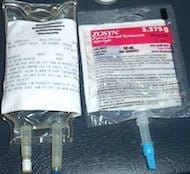
Vanco zosynThere are a few reasons why piperacillin/tazobactam (Zosyn) is not usually my first choice for a broad-spectrum gram-negative agent in the ED. First, at my institution, the Pseudomonas aeruginosa susceptibilities to pip-tazo are lower than that for cefepime. Second, pip-tazo does not have great CNS penetration, especially compared to ceftriaxone, cefepime, or even meropenem. Third, do we really need the anaerobic coverage that pip-tazo provides for every sick patient? Pip-tazo is great for empiric treatment of intra-abdominal and severe diabetic foot infections, but may not be needed for a hospital-acquired pneumonia. Fourth, with its frequent dosing (every 6 hours), too often the second dose is missed if the patient is still boarding in the ED.
(more…)

Understanding Phenytoin Equivalents

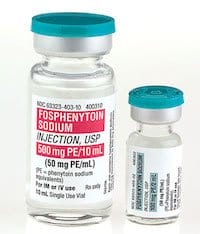
fosphenytoin image 1 (1)Sometimes, in an effort to make things simpler, we actually make them more confusing. Such is the case with phenytoin equivalents. 

Fosphenytoin is a water-soluble prodrug of phenytoin. After IV administration, much of the fosphenytoin is metabolized to phenytoin within 15 minutes. Advantages over phenytoin include the option for IM administration and less cardiotoxicity allowing for faster infusion rates. Even the potential for hyperphosphatemia from the release of phosphate is generally inconsequential. 

(more…)

Go to Top