


SAEM Clinical Images Series: Short of Breath and Short on Time
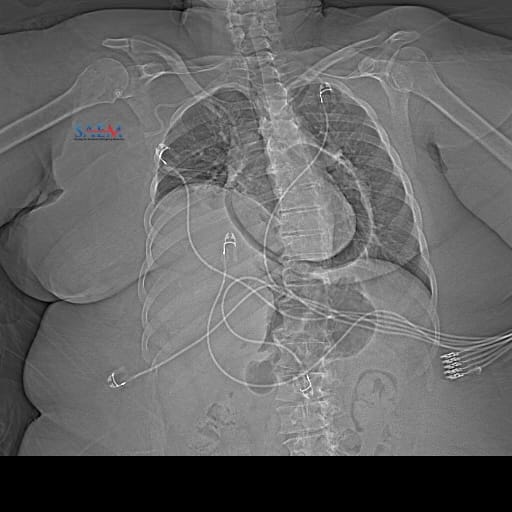
A 62-year-old female presented with shortness of breath that started two days ago which she described as mild to moderate, worse with activity. She denied chest pain, abdominal pain, fever, diaphoresis, syncope, cough, wheezing, sputum production, or emesis. Past medical history was significant for rectal adenocarcinoma metastatic to liver. She was status post radioembolization of liver metastasis from the left lobe and her last chemotherapy was approximately one month prior to presentation.
Vitals: T 36.5°C; BP 87/57; HR 91-115; RR 12; O2 sat 94% on 2L NC
General: Ill-appearing.
Cardiovascular: Normal rate and regular rhythm, diminished heart sounds.
Chest: Pulmonary effort normal, normal breath sounds.
Gastrointestinal: Abdomen flat, soft, nontender.
MSK: Cyanotic toes bilaterally with decreased capillary refill.
Neurologic: Diffuse motor weakness, no focal deficit present.
CBC: WBC 18.0, Hgb 9.6, Plt 348
PT: 19.4
INR: 1.6
BMP: Na 126, K 4.4, Cl 100, CO2 13 (20-29), Anion Gap 13, Glucose 107, BUN 54 (7-25), Cr 1.96, Ca 7.7
BNP: 410 (0-100)
Lactic acid: Initial 2.5, repeat 4.0 (0.5-2.0)
EKG: Normal sinus rhythm, normal rate, low voltage QRS.
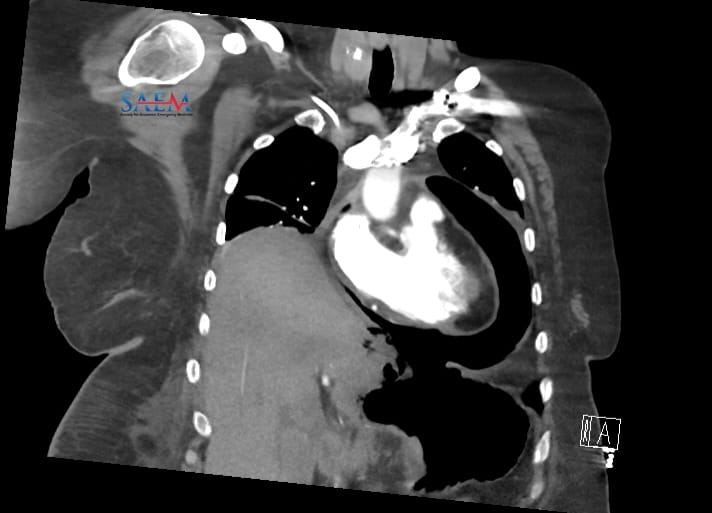
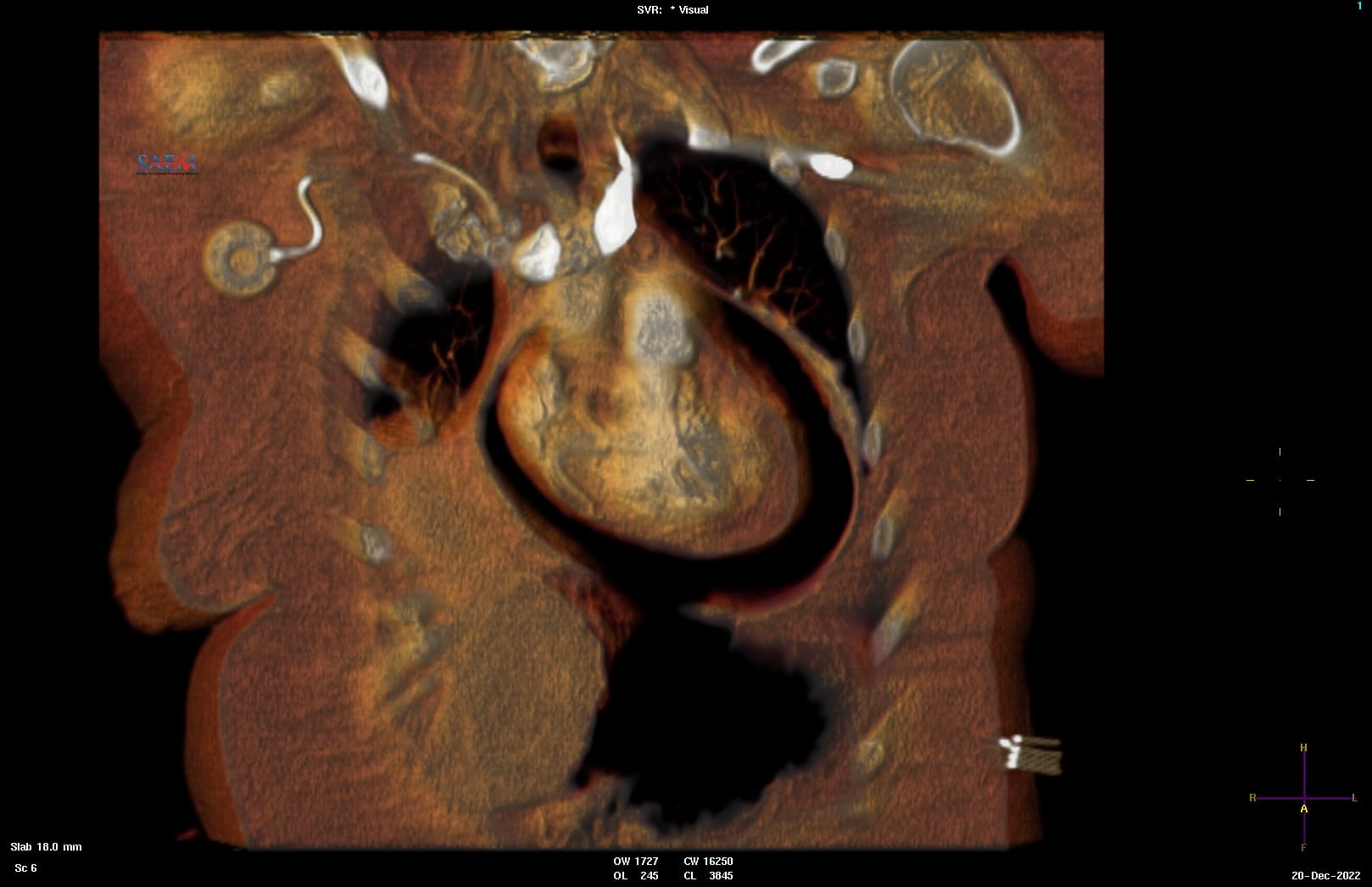
Pneumopericardium, the presence of air within the pericardial sac, is discovered on imaging. The accumulation of air can result in compression of the heart and interfere with normal functioning. Pneumopericardium on imaging can appear as a characteristic radiolucency around the heart on chest X-ray and CT scan, or as direct visualization of air within the pericardial sac on ECHO. Causes include trauma introducing air into the pericardial sac, infection with gas-producing organisms, procedural complications, barotrauma, or spontaneous occurrence.
Gastropericardial fistula is a rare, life-threatening condition whereby an abnormal communication is created between the stomach and pericardial sac, with less than 100 cases reported in modern literature. This condition usually occurs in the setting of prior gastroesophageal surgery, ulcer perforation, or as in this case, malignant perforation due to breakdown of malignant implants between the liver and the gastric wall adherent to the diaphragm and pericardium. This can lead to frank pneumopericardium and tension physiology, ultimately resulting in death if not promptly diagnosed and treated with urgent pericardial drain placement to ameliorate tension physiology. Definitive therapy is surgical repair.
Take-Home Points
-
Gastropericardial fistula is a rare cause of pneumopericardium, usually in the setting of patients with prior gastroesophageal surgery, gastric ulceration, or malignancy of the stomach.
-
Diagnosis is usually made with a combination of imaging modalities including esophagram/upper GI, CT with water soluble oral contrast, and echocardiogram.
-
Prompt diagnosis and treatment are necessary to prevent the onset of tension physiology.
-
Azzu V. (2016). Gastropericardial fistula: getting to the heart of the matter. BMC gastroenterology, 16(1), 96. https://doi.org/10.1186/s12876-016-0510-8
-
Rathur, A., Al-Mohamad, H., Steinhoff, J., & Walsh, R. (2021). Chest Pain from Pneumopericardium withGastropericardial Fistula. Case reports in cardiology, 2021, 5143608. https://doi.org/10.1155/2021/5143608