


SAEM Clinical Images Series: Case of Painless Vision Changes
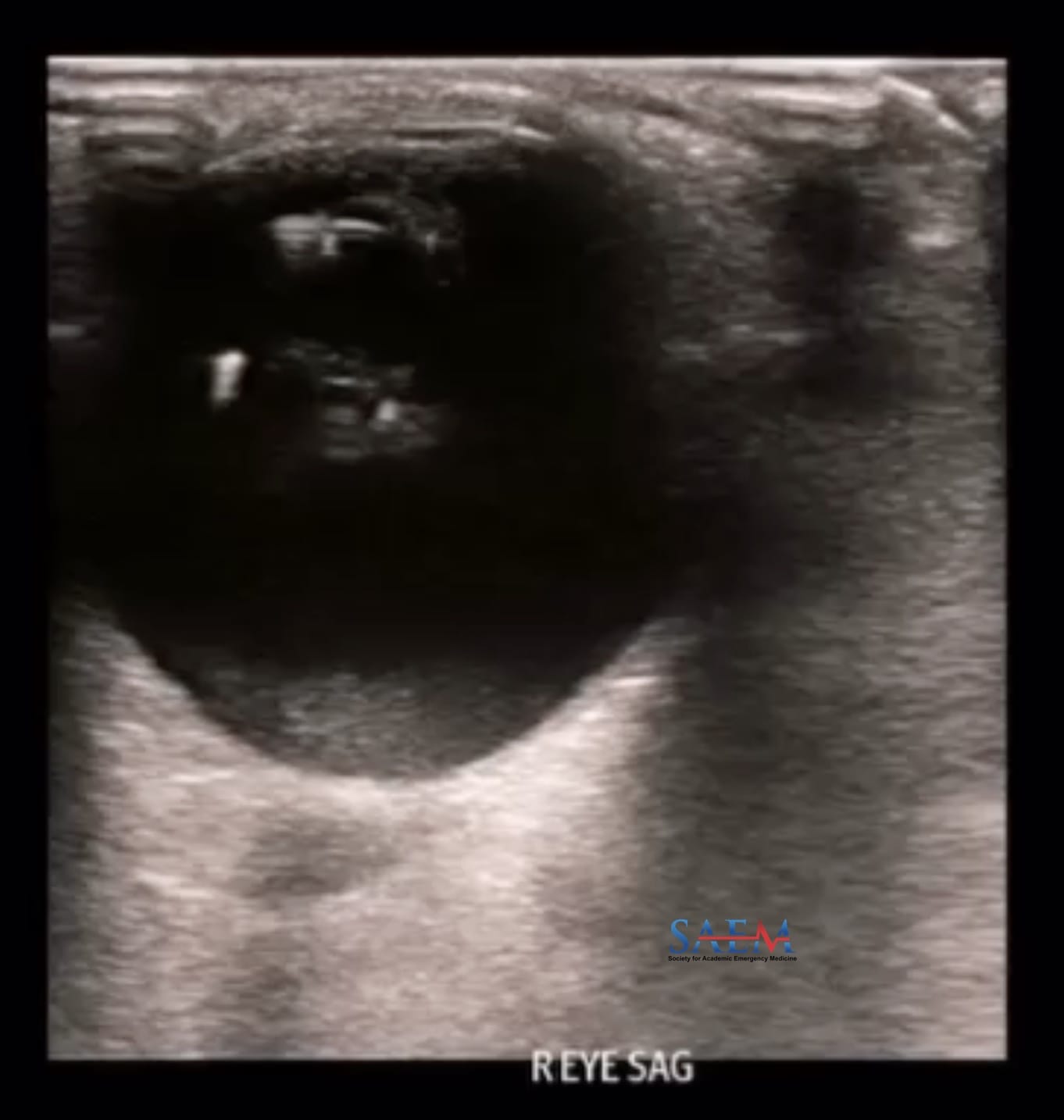
A 62-year-old female presented to the emergency room with a chief complaint of atraumatic painless blurry vision. She reported a medical history of bilateral lens replacements in 1999 and a prior history of bilateral retinal detachments and expressed concern that she may have detached her retina again. The patient first noted floaters starting 3 days ago, that progressed yesterday to sudden onset blurry vision of her right eye. She denied any sensation of “a curtain falling. The patient clarified that this presentation is different in nature to her prior bilateral retinal detachments.
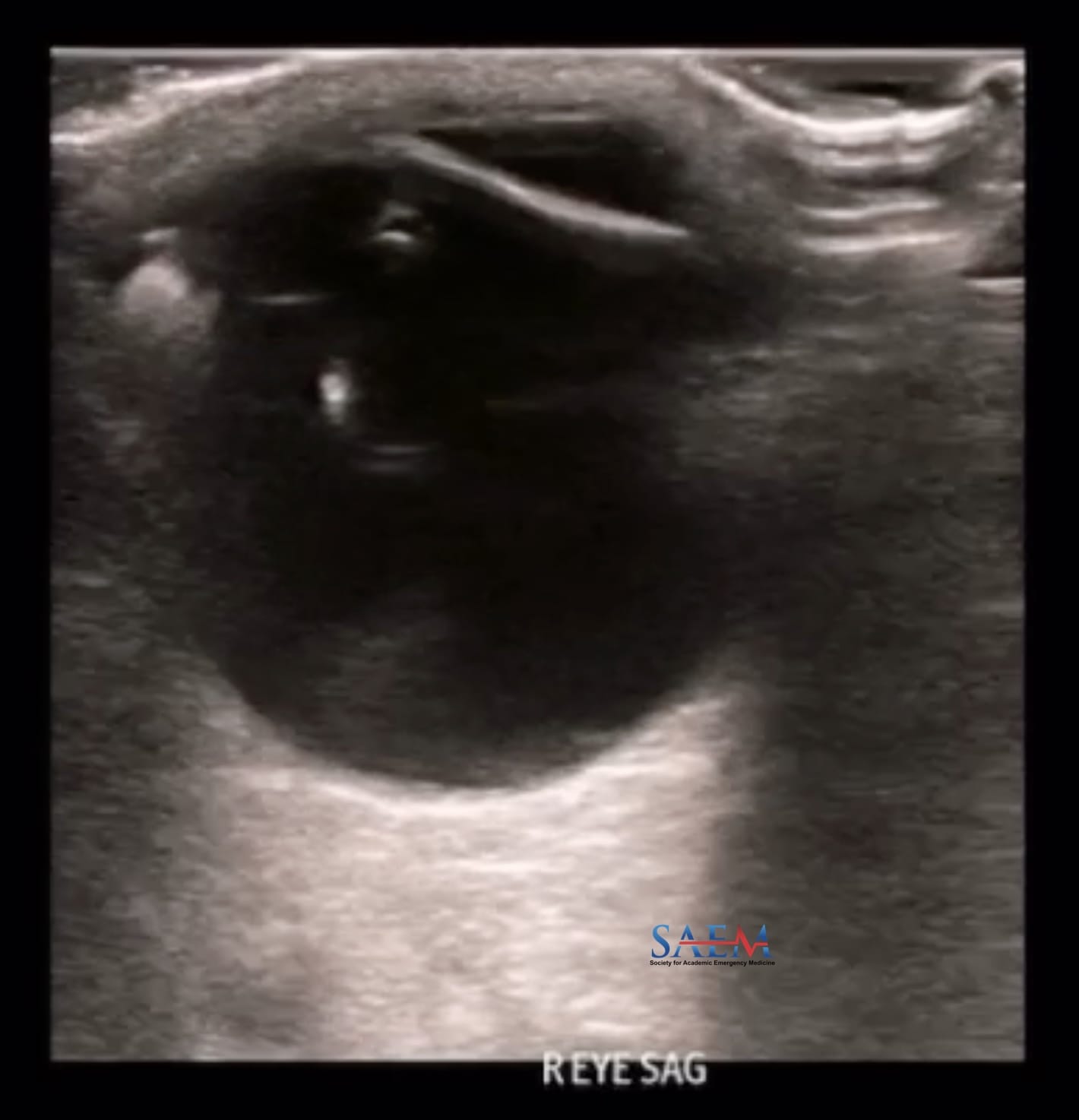
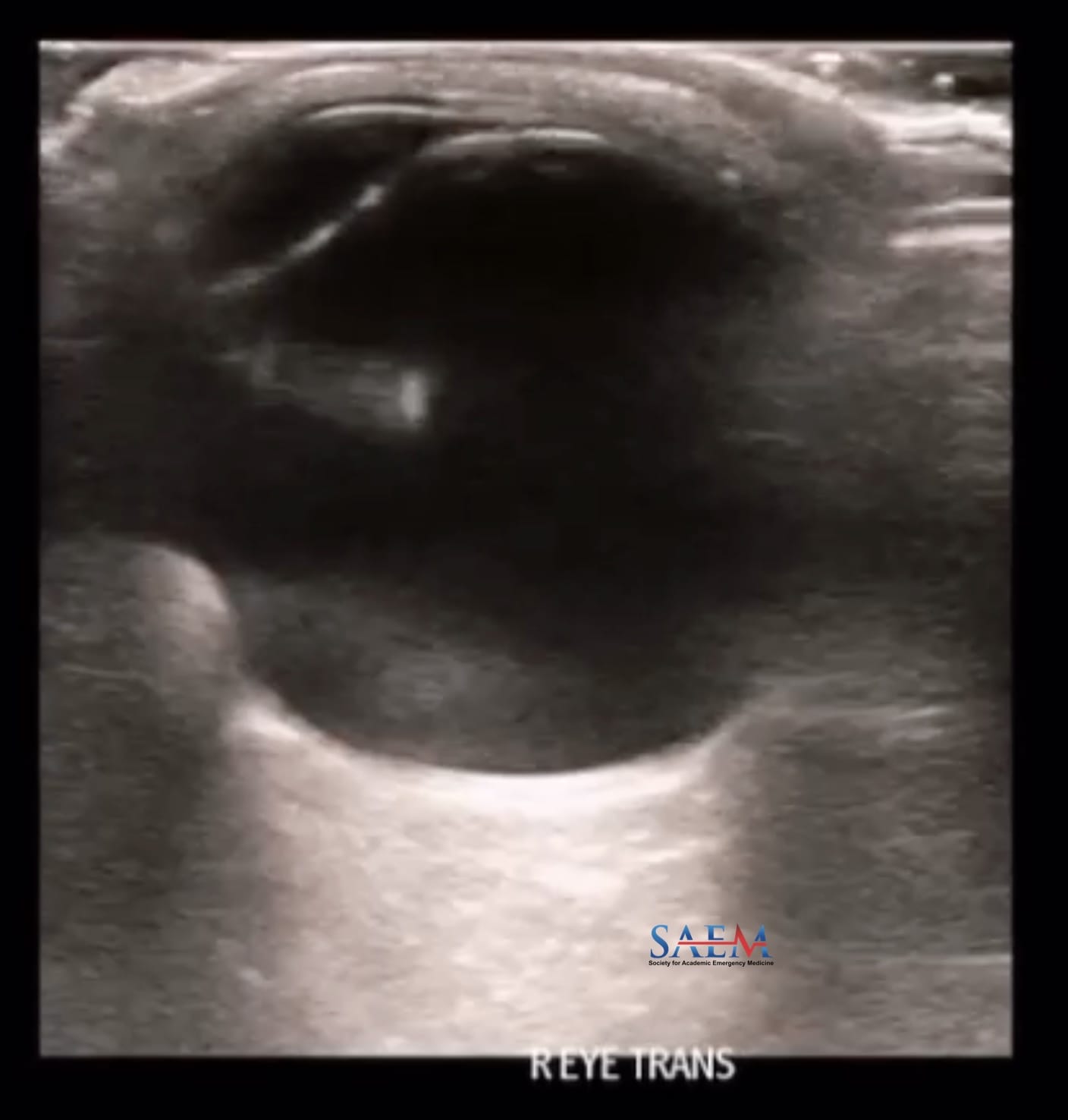
Vitals: BP 115/70; Pulse 98; Temp 98.7°F, Resp 22, SpO2 100%
Constitutional: Patient is well-appearing, alert, oriented x 3 in no acute distress.
HEENT:
Visual acuities: Left eye: 20/ 30 ; Right eye: 20/ 200 . Bilateral: 20/25.
Lids & Lashes: Normal, no erythema or swelling.
Pupils: Equal and reactive to light and accommodation, 3 mm bilaterally reactive.
EOM’s: Intact. Nonpainful. Horizontal beating nystagmus noted of the right eye.
Conjunctivae: No injection noted Cornea: No corneal abrasion visualized.
Anterior chamber: Fluttering of iris during EOM right eye IOP in right eye 18 mmHg; left eye 20 mmHg
Cardiovascular: Normal rate, regular rhythm and normal heart sounds.
Neurological: She is alert. She exhibits normal muscle tone. NIH 0.
None
Image 2 is a great image demonstrating the anterior chamber, iris and ciliary body, posterior chamber, and the lens floating.
This case highlights the importance of recognizing iridodonesis as a clinical sign for possible lens subluxation and partial dislocation. Iridodonesis is a clinical sign commonly seen in lens partial dislocation/subluxation. It can indicate weakness or laxity in the zonular fibers that support the lens within the eye. This is particularly relevant in cases of trauma, advanced age, or surgical complications. This case emphasizes the importance in performing a thorough history and physical exam. In particular, the history of cataract surgery in the right eye raises suspicion for zonular weakness as a potential cause of iridodonesis. Lastly, point-of-care ocular ultrasound is an essential diagnostic modality in the emergency department for ophthalmologic presentations.
Image 1 demonstrates subluxation of the right lens. Image 3 is a freeze frame of the iridodonesis movement.
Take-Home Points
-
In patients who have undergone cataract surgery, the presence of lens subluxation and iridodonesis likely suggest compromised zonular integrity.
-
Iridodonesis is commonly associated with pseudoexfoliation syndrome, a condition characterized by the accumulation of abnormal extracellular material in various ocular tissues.
-
Oustoglou, Eirini, et al. “Prime Pubmed: Reoperations after Cataract Surgery: Is the Incidence Predictable through a Risk Factor Stratification System?” PRIME PubMed | Reoperations After Cataract Surgery: Is the Incidence Predictable Through a Risk Factor Stratification System?, 3 Nov. 2020, www.unboundmedicine.com/medline/citation/33133858/ Reoperations_After_Cataract_Surgery:_Is_the_Incidence_Predictable_Through_a_Risk_Factor_Stratification_System. Pieklarz B;Grochowski ET;Saeed E;Sidorczuk P;Mariak Z;Dmuchowska DA; “IRIDOSCHISIS-A Systematic Review.” Journal of Clinical Medicine, U.S. National Library of Medicine, pubmed.ncbi.nlm.nih.gov/33081187/. Accessed 9 Jan. 2024.
-
RH;, Marques DM;Marques FF;Osher. “Subtle Signs of Zonular Damage.” Journal of Cataract and Refractive Surgery, U.S. National Library of Medicine, pubmed.ncbi.nlm.nih.gov/15177607/. Accessed 9 Jan. 2024.