About Kelly Mayo, MD

Attending Physician
Boston Medical Center

SAEM Clinical Images Series: A Grain of Sand… or Something More Sinister?
hsv

A 54-year-old male with a history of Type 2 Diabetes Mellitus presented with one day of atraumatic left eye pain. He reports pain with blinking and a sandy foreign body sensation. Patient denies new discharge from the eye, though endorses increased tearing. He reports no recent trauma to the face or chemical exposures. He has had no recent rashes or sick contacts and no associated infectious symptoms. Patient does not wear contact lenses.

Vitals: BP 159/98, HR 73, Temp 98.2°F (36.8°C), RR 16, SpO2 97%

HEENT: PERRL. EOMI. Left conjunctiva injected. Right conjunctiva normal. No discharge. No rashes or lesions. Ocular exam following fluorescein administration shown in image.

Glucose: 90 mg/dL

Administration of fluorescein reveals punctate or diffuse branching ulceration (herpetic dendrites) on the cornea, as shown in this case.

This patient has herpes simplex virus (HSV) keratitis. Primary ocular HSV infection is usually caused by direct contact with contaminated secretions or lesions and most frequently presents as epithelial disease. Epithelial keratitis can manifest clinically as unilateral eye pain, redness, tearing, and foreign body sensation. Once affected, patients are at risk for chronic reactivation, which may be triggered by fever, trauma, menstruation, stress, or trigeminal nerve manipulation. Importantly, infectious and immunocompromised conditions predispose to reactivation. Therefore, it is essential to screen for underlying stressors such as hyperglycemia and HIV. Administration of fluorescein reveals punctate or diffuse branching ulceration (herpetic dendrites) on the cornea, as shown in this case.

The diagnosis of HSV is often made clinically, though laboratory testing of conjunctival scrapings, cytology specimens, and vesicular skin lesions may be conducted. If readily available, ophthalmology should be consulted to determine the depth of corneal involvement and associated sequelae of HSV. First line treatment for HSV keratitis includes oral antiviral treatment with acyclovir, valacyclovir, or famciclovir for 10-14 days and/or topical antiviral medications including topical ganciclovir 0.15% or trifluridine 1%. Long- term prophylaxis with oral antivirals is often considered, notably for patients at high risk of recurrence. Without adequate treatment, HSV keratitis can lead to severe vision impairment and is the leading cause of corneal blindness worldwide. All patients need urgent/emergent ophthalmology follow-up within 24 hours.

Take-Home Points

  • Primary ocular HSV-1 keratitis is a leading preventable cause of blindness and classically presents with unilateral eye pain, foreign body sensation, and corneal herpetic dendrites on fluorescein exam.
  • Avoid using topical steroids as monotherapy because they can suppress the patient’s immune response, allowing the herpes virus to replicate more readily, which may cause severe corneal damage, inflammation, and tissue necrosis within the stroma of the cornea. Adjuvant steroids with antiviral therapy have shown to be effective.
  • It is essential to screen for infections and underlying conditions such as HIV as immunocompromised individuals are predisposed to HSV reactivation.

  • Labib BA, Chigbu DI. Clinical Management of Herpes Simplex Virus Keratitis. Diagnostics (Basel). 2022 Sep 29;12(10):2368. doi: 10.3390/diagnostics12102368. PMID: 36292060; PMCID: PMC9600940.
  • Arshad S, Petsoglou C, Lee T, Al-Tamimi A, Carnt NA. 20 years since the Herpetic Eye Disease Study: Lessons, developments and applications to clinical practice. Clin Exp Optom. 2021;104(3):396-405.
  • Sugar, A. 2024, Apr 10. Herpes simplex keratitis. UpToDate. Retrieved January 2, 2024, from https://www.uptodate.com/contents/herpes-simplex-keratitis?search=hsv%20keratitis&source=search_result&selectedTitle=1%7E150&usage_type=default&display_rank=1#H3848962064

By |2026-02-19T12:56:37-08:00Feb 27, 2026|Uncategorized|

SAEM Clinical Images Series: Tangled in the Toilet

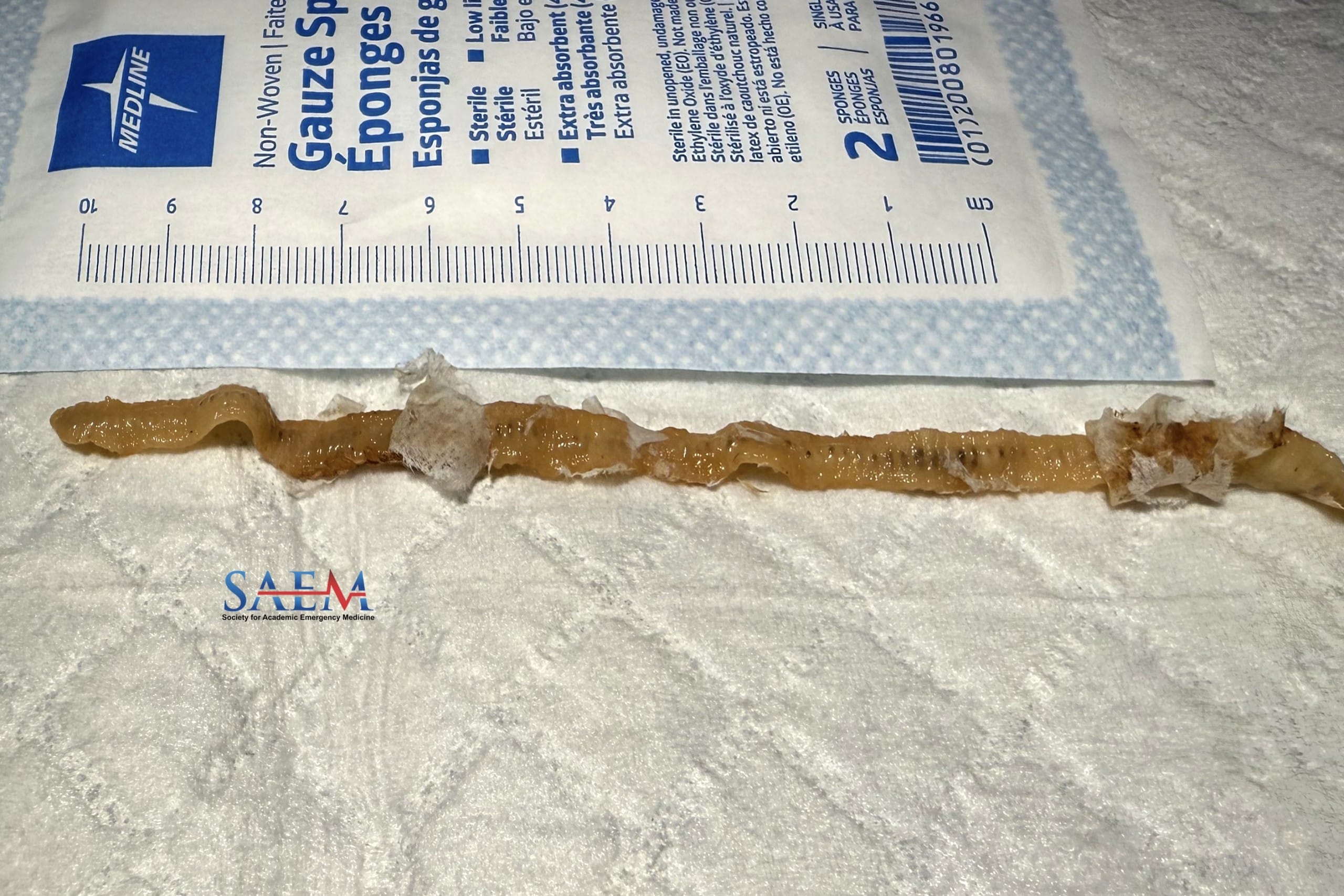
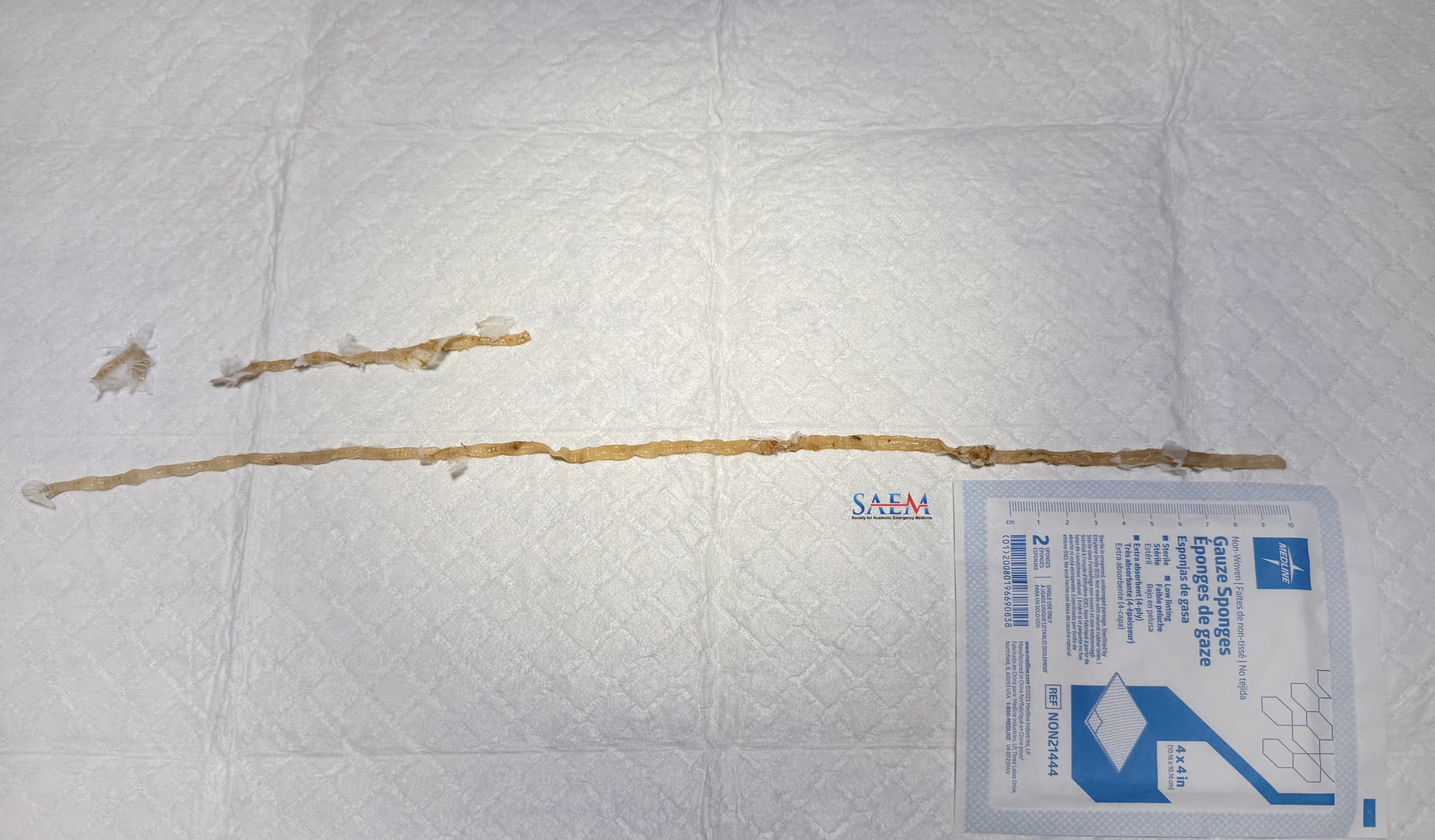
An otherwise healthy 46-year-old male presented to the Emergency Department with 18 months of diarrhea and intermittent abdominal cramping that has acutely worsened in the past week. On the morning of presentation, he noticed a worm-like object in his stool, which he brought to the ED (See images), prompting his visit. Throughout these 18 months, he experienced 4-10 loose bowel movements per day. He tried dietary modifications, including the removal of dairy, gluten, and soy, all without relief. The patient frequently travels for work, mainly to the US, Europe, and intermittently to Asia. His diet includes all forms of meat, fish, and shellfish. He denied fevers, chills, headaches, chest pain, shortness of breath, unexpected weight loss or gain, nausea, vomiting, or changes in his urinary habits. His stool has been non- greasy and has not contained any blood or mucous.

Vitals: BP 136/85; HR 70; R 18; T 98.2°F; O2 sat; 97% room air.

General: Well appearing, no acute distress.

Abdomen: There is mild tenderness to palpation in bilateral lower quadrants. Bowel sounds present in all quadrants. No rebound tenderness or guarding. No organomegaly.

Lymph: No lymphadenopathy present.

Skin: No rashes.

WBC: 5.4

Hgb: 14.4

Dibothriocephalus (Diphyllobothrium) latus: a tapeworm.

This patient is infected with Dibothriocephalus (Diphyllobothrium) latus, a tapeworm distinctive for its proglottids with central hyperpigmented reproductive organs, as shown in the images. Patients rarely visualize the tapeworm in their stool, so diagnosis is usually made with a stool ova and parasite study. Diphyllobothrium latus infection is commonly caused by eating raw, undercooked, or lightly pickled seafood contaminated with tapeworm eggs. Tapeworm eggs are also occasionally used as weight loss supplements. The market for these supplements is not regulated; thus, the eggs may be from other parasites, leading to more severe manifestations of infection in different body areas, such as the brain, lungs, or muscles. Diphyllobothrium latus infection can cause pernicious anemia, as 80% of Vitamin B12 intake may be absorbed by the worm. Treatment for Diphyllobothrium latus is a single dose of praziquantel. Due to fecal-oral transmission, patients who engage in high risk transmission-prone behaviors should consider having their partners tested and treated as well.

Take-Home Points

  • Diphyllobothrium latus infection may cause Vitamin B12 deficiency and resultant anemia as the worm may absorb up to 80% of B12 intake.

  •  A single dose of praziquantel is generally sufficient to eradicate tapeworm infection.

  • Schantz, P. M. (1996). Tapeworms (cestodiasis). Gastroenterology Clinics of North America., 25(3), 637–653. https://doi.org/10.1016/s0889-8553(05)70267-3
  • Craig P, Ito A. Intestinal cestodes. Curr Opin Infect Dis. 2007 Oct;20(5):524-32. doi: 10.1097/QCO.0b013e3282ef579e. PMID: 17762788
  • Scholz T, Garcia HH, Kuchta R, Wicht B. Update on the human broad tapeworm (genus Diphyllobothrium), including clinical relevance. Clin Microbiol Rev. 2009; 22:146–160

By |2025-10-26T13:38:34-07:00Oct 31, 2025|Infectious Disease, SAEM Clinical Images|

SAEM Clinical Images Series: Insidiously Contracted Hand

contracture

A 64-year-old Caucasian male with a history of alcohol use disorder and tobacco use disorder presents with painless bilateral hand contractures that have been worsening for the past several months. He denies any recent trauma, fever, chills, or decreased sensation. The patient works as a construction worker.

Vitals: BP 143/83 ; HR 94; RR 18; T 98.6°F; O2 saturation 98% on room air

Musculoskeletal: He has bilateral palmar contractures proximal to the fourth digits. No tenderness to palpation along digits. Passive extension of the digits is limited bilaterally but does not elicit pain. When asked to place his palm flat on the table, there is notable contracture of the bilateral fourth metacarpophalangeal (MCP) joint (a positive Hueston’s tabletop test). No erythema or cellulitic changes are appreciated.

Non-contributory

Dupuytren’s Contracture is a clinical diagnosis that most commonly presents as painless loss of extension of the fourth and fifth phalanx. Collagen deposition and subsequent fibrosis within the palmar fascia cause nodule formation along the flexor tendons near the distal palmar crease. Clinically this appears as puckering, tethering, and/or dimpling of the skin of the palm (as shown in the photograph). Accompanying joint rigidity and loss of full extension of the digit typically can take years to fully develop. Pain or inflammatory findings are not commonly seen unless there is an underlying tenosynovitis. Without signs of infection, outpatient management with Hand Surgery is the appropriate initial management.

Risk factors for the development of Dupuytren’s contracture include northern European descent, age greater than 50 years, and diabetes. The condition has been associated with tobacco use disorder, alcohol use disorder, jobs that require repetitive handling tasks or vibration, and localized fibrotic pathologies including Peyronie’s disease.

Take-Home Points

  • Dupuytren’s contracture presents as a painless palmar contraction (typically proximal to the 4th or 5th digit) that impedes finger extension.
  • A progressive condition, Dupuytren’s is best managed through Hand Surgery referral provided there is no evidence of superinfection.
  • Repetitive motion occupations, tobacco use, alcohol use, and diabetes are key risk factors.

  • Shih B, Bayat A. Scientific understanding and clinical management of Dupuytren disease. Nat Rev Rheumatol 2010; 6:715.   Trojian TH, Chu SM. Dupuytren’s disease: diagnosis and treatment. Am Fam Physician 2007; 76:86.

By |2023-09-14T12:40:35-07:00Sep 15, 2023|Orthopedic, SAEM Clinical Images|
Go to Top