


SAEM Clinical Images Series: Painful Weeping Scalp
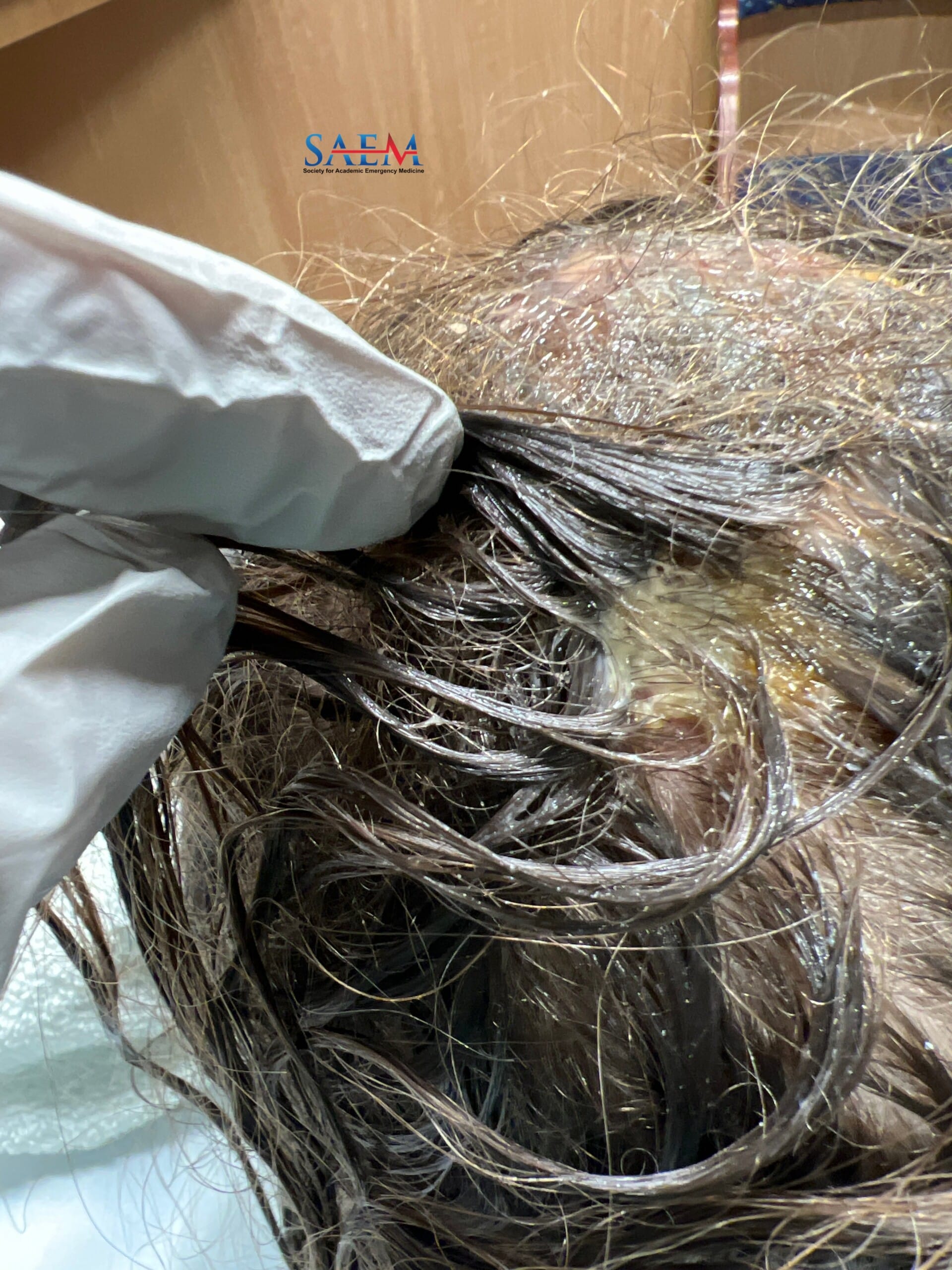
An otherwise healthy 11-year-old female presented to the Emergency Department (ED) with one week of scalp pain and discharge. Her symptoms began as a dry and itchy rash in the scalp area that was unresponsive to triamcinolone 0.1% ointment. She was initially seen in clinic and was diagnosed with an abscess of the scalp and treated with Trimethoprim/ Sulfamethoxazole (TMP-SMX) for seven days. Two days before her presentation to ED, the rash started to increase in size and pain, and her mother noticed a purulent oozing coming from her scalp. The patient denied any trauma to her head or scalp. There is no history of rashes or other skin infections on her scalp. Review of systems is negative for any systemic symptoms including fever, chills, nausea, vomiting or diarrhea.
Vitals: BP 105/68; HR 113; T 99.7°F; RR 16, O2 sat 98%, RA
General: Patient has an irritable mood and scratches her head.
Head: Normocephalic, matted hair with dried yellow drainage at crown of scalp visible, no occipital lymphadenopathy.
Skin: Inspection reveals an erythematous, crusted, scaly, boggy plaque at the vertex of the patient’s scalp with significant yellow serosanguinous drainage and tenderness to palpation (Figure 1).
Eyes: Conjunctivae clear, EOM intact, PERRL, fundi normal.
Ears: External ears and canals normal, TM’s normal landmarks bilaterally.
Nose: Nares normal, mucosa normal, no drainage.
Mouth/Throat: Moist mucosa without lesions.
Neck: Supple, no cervical lymphadenopathy.
Bacterial aerobic swab with sensitivities
Fungal smear and sensitivities
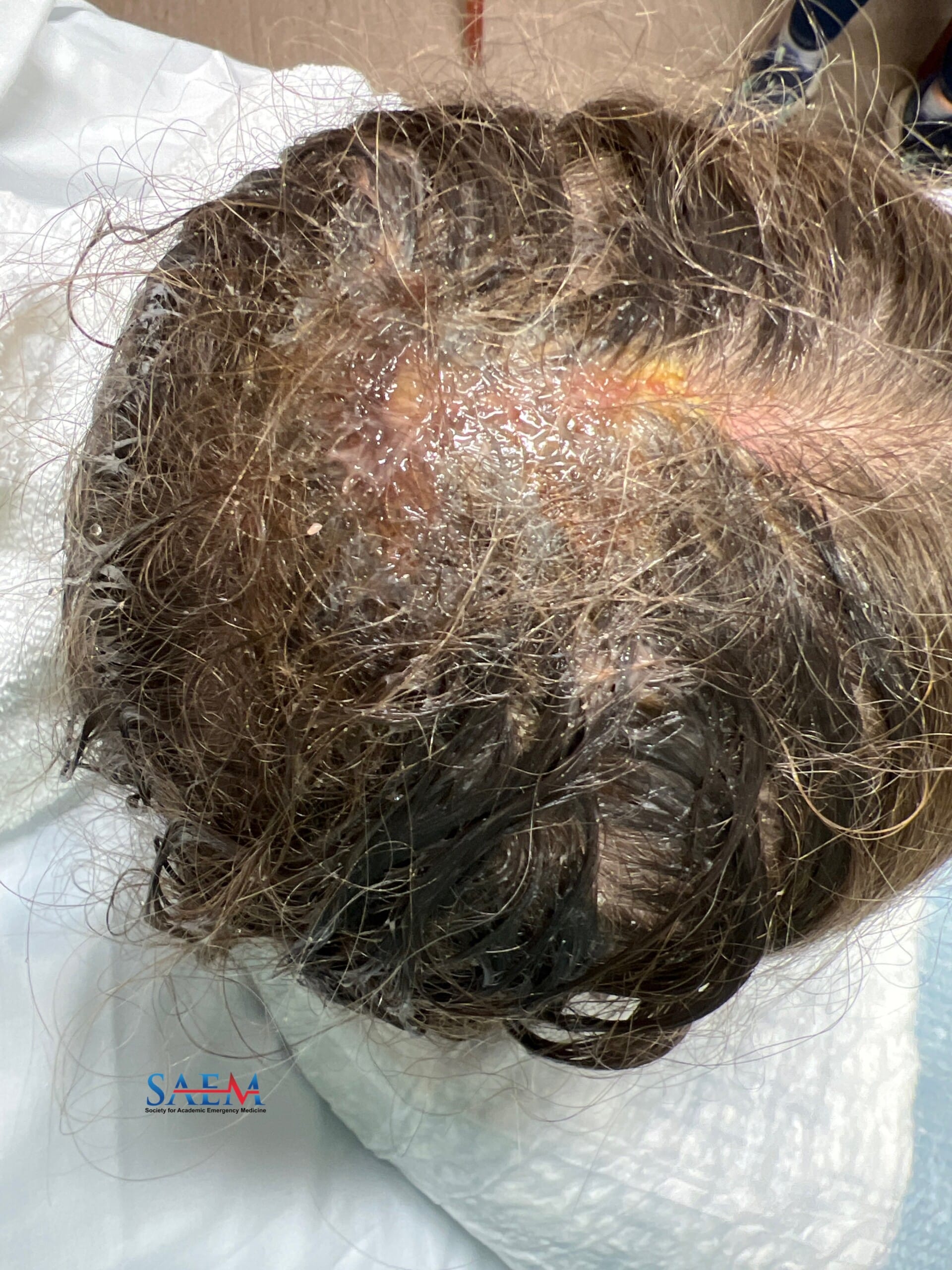
Kerion is an inflammatory type of tinea capitis characterized by swelling and alopecia of the scalp, which could be mistaken as bacterial infection. It is caused by dermatophyte fungi found on animals and in the soil such as Trichophyton spp. and Microsporum spp. It occurs almost exclusively in children and is more common in patients of African descent and males. Secondary bacterial infection needs to be suspected if there is associated fever, pain, or occipital lymphadenopathy. If left untreated, scarring, and permanent alopecia can develop. Location and the presence of other signs of a fungal infection, such as scaling can distinguish it from cellulitis [1]. The diIerential diagnosis includes bacterial abscess, psoriasis, seborrheic dermatitis, contact dermatitis, pseudolymphoma and dissecting cellulitis of the scalp. The patient’s clinical image demonstrates a boggy, suppurative plaque consistent with kerion (Figure 2).
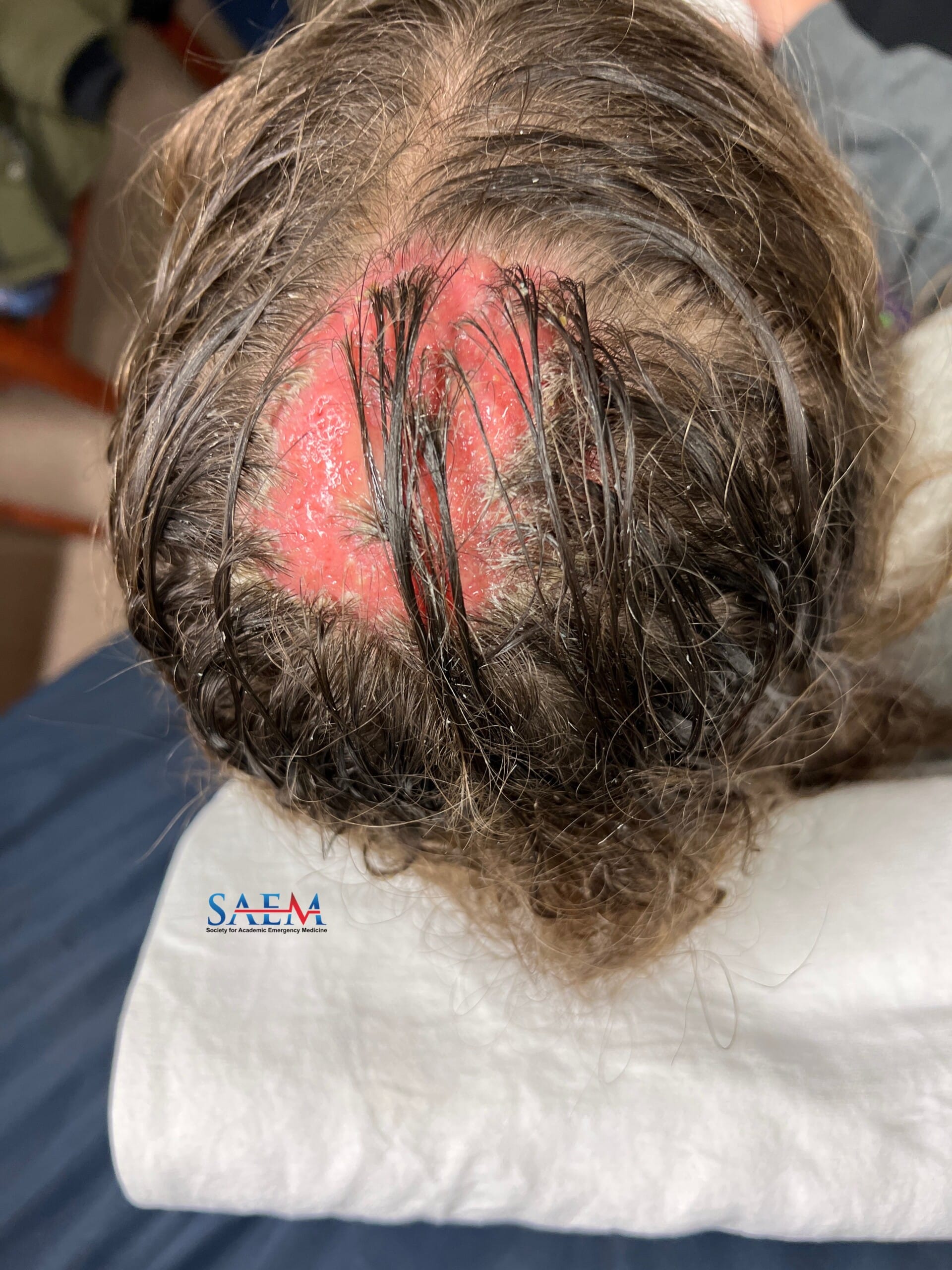
Initial management in the ER should focus on adequate pain control, debridement and obtaining bacterial and fungal cultures. Our patient was given ibuprofen and oxycodone for pain control and the area was cleansed and gently debrided. After irrigation and removal of matted hair, there was an erythematous boggy plaque with scaling and associated overlying hair loss (Figure 3). Fungal culture of hairs or biopsy will provide speciation but will take several weeks. In the ED setting, potassium hydroxide (KOH) preparation of infected plucked hairs or skin scrapings under the microscope can provide early diagnosis. When the diagnosis is uncertain, early antibiotics are prudent to prevent exacerbation and systemic spread. Treatment of suspected kerion should also include oral antifungal medication [2]. Our patient was transitioned from TMP-SMX to cefadroxil for better streptococcus coverage. Pediatric dermatology recommended dilute acetic acid soaks, oral terbinafine and ketoconazole shampoo for 12 weeks, and a one-week course of prednisone. Bacterial culture returned positive for three colonies of Streptococcus dysgalactiae, Acinetobacter parvus, and Staphylococcus epidermidis. Fungal cultures grew a filamentous fungus – Trichophyton verrucosum.
Take-Home Points
-
Superimposed bacterial infection should be suspected if a scalp lesion is painful and there is discharge.
-
Treatment should consist of both, an antifungal, and antibiotics.
-
Pain control and gentle debridement constitute the initial management of a suppurative scalp lesion.
-
Bacterial and fungal cultures should be obtained in the ER to optimize the management in outpatient setting.
-
John AM, Schwartz RA, Janniger CK. The kerion: an angry tinea capitis. Int J Dermatol. 2018 Jan;57(1):3-9. doi: 10.1111/ijd.13423. Epub 2016 Oct 1. PMID: 27696388.
-
Leung AKC, Hon KL, Leong KF, Barankin B, Lam JM. Tinea Capitis: An Updated Review. Recent Pat Inflamm Allergy Drug Discov. 2020;14(1):58-68. doi: 10.2174/1872213X14666200106145624. PMID: 31906842.