


EKG Subtlety: Tall T-Wave in Lead V1

EKGs are a simple, cheap modality that can give an emergency physician quite a bit of information. Sometimes, in a busy ER, this information can be very subtle and almost overlooked without a second thought. A perfect example of this is a New Tall T-wave in lead V1 (NTTV1). This finding can be a normal variant, but can also be a precursor to badness.
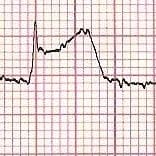 It is well known that primary percutaneous coronary intervention (PPCI) is the gold standard in STEMI treatment and that decreased door-to-balloon time has better patient outcomes. Guidelines recommend that the interval between arrival at the hospital and intracoronary balloon inflation (door-to-balloon time) should be 90 minutes or less.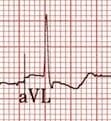

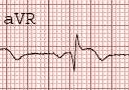
 Wellen’s Syndrome was first described in 1982 in which 75% of patients with t wave inversions in V2-V4 went on to have an acute myocardial infarction (MI). This was again repeated in 1989, and showed that all patients with this morphology had >50% LAD stenosis. The incidence in the United States is about 10-15%.