


ED Charting and Coding: Critical Care Time
 After a STEMI activation from the field on Monday morning, the cardiac catheterization team scoops the patient away shortly after the paramedics arrive in the Emergency Department (ED). “Well that was a smooth and seamless resuscitation. The patient was barely in the ED for more than 15 minutes,” you think to yourself. You diligently complete your critical care documentation, noting 20 minutes of critical care time, before seeing your next patient. A few weeks later the chart is bounced back and noted as an erroneous documentation of critical care time. The coding department notifies you that the case will be billed as a Level 3 visit (E/M code #99283). Why is that the case?

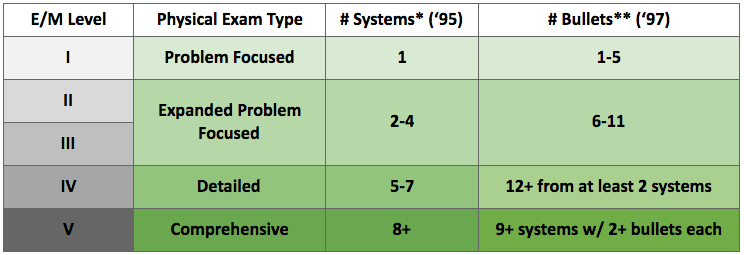

 What makes a good chart? How do you write a good chart quickly? How about a good, efficient, billable chart? On average, residents and practicing physicians report they did not receive adequate training in charting and coding [1–3] and resident charts are more often down-coded due to documentation failures than those of attendings and PAs [4]. Thankfully, resident education in charting has improved over the past 15 years [5], and a little learning goes a long way to improve confidence [6] and competence [7].