


EM ReSCu Peds 15: Status Epilepticus
Brief Narrative Description of Case
This case involves a 3-year-old female with no significant past medical history, was full term at birth, and who has received all immunizations presents to the Emergency Department after having a witnessed seizure at home. She presents with altered mental status and is actively seizing. The patient is given escalating doses of benzodiazepines resulting in airway compromise requiring intubation. There is clinical concern for status epilepticus, and the team will discuss this with the patient’s family and the Neurology consultants. Multiple rounds of benzodiazepines and antiepileptic drugs (AEDs) are required to stop seizure. Or alternatively hypoglycemia and EtOH intoxication will be noted and corrected resulting in seizure cessation.

Primary Learning Objectives
At the end of this simulation, participants should be able to:
- Describe signs/symptoms of status epilepticus (comprehension)
- Demonstrate early evaluation of a critically ill patient (application)
- Construct a differential diagnosis for status epilepticus in a pediatric patient (synthesis)
- Formulate a diagnostic plan for a critically ill child with seizure (application)
- Construct and implement initial medical management of status epilepticus in a child (application)
- Differentiate benzodiazepines including routes of administration (analysis)
- Identify airway compromise in setting of multiple doses of benzodiazepines (knowledge)
- Demonstrate airway management of a sick child with airway compromise secondary to altered mental status using appropriate adjuncts, BMV, and/or endotracheal intubation (application)
- Demonstrate focused history taking from a caregiver (application)
- Explain diagnosis and management to caregivers (synthesis)
- Demonstrate teamwork and closed loop communication (application)
Critical Actions
- Perform primary and secondary surveys
- Place patient on monitor, establish access
- Assess airway, place patient on side, suction, and position airway consider adjuncts
- Send initial laboratory tests (fingerstick glucose, CBC, CMP, Mg, Phos, tox screen, anticonvulsant levels if indicated) and perhaps add CBG or VBG
- Obtain a brief history and physical exam (include concern for trauma, ingestion, prior seizure history)
- Identify airway compromise and perform RSI
- Consult Neurology
- Discuss patient status with the family
- Determine disposition for the patient
Case Creators
Author
- Lauren W. Conlon, MD, FACEP
Editors
- Ilana Bank, MDCM, FRCPC, FAAP
- Rebekah Burns, MD
- Amanda Young, MD
- Kellie Kitamura, MD
- Justin Koch, DO, FACEP
Updated August 25, 2020
Setup
Chief complaint: Seizure
Patient age: 3 years old
Weight: 15 kg
Recommended Supplies
- Manikin: Toddler sized
- Moulage: None
- Manikin set up: IV with drain bag, massage pad to simulation seizure activity, if needed
- Equipment: Intubation supplies, IV supplies, IO, bag valve mask
- Medications:
- Benzodiazepines (depending on local practices): Diazepam, midazolam (buccal, IM, or intranasal), lorazepam
- Antiepileptic drugs (depending on local practices): Levetiracetam, phenytoin, fosphenytoin, valproic acid, phenobarbital
Supporting Files
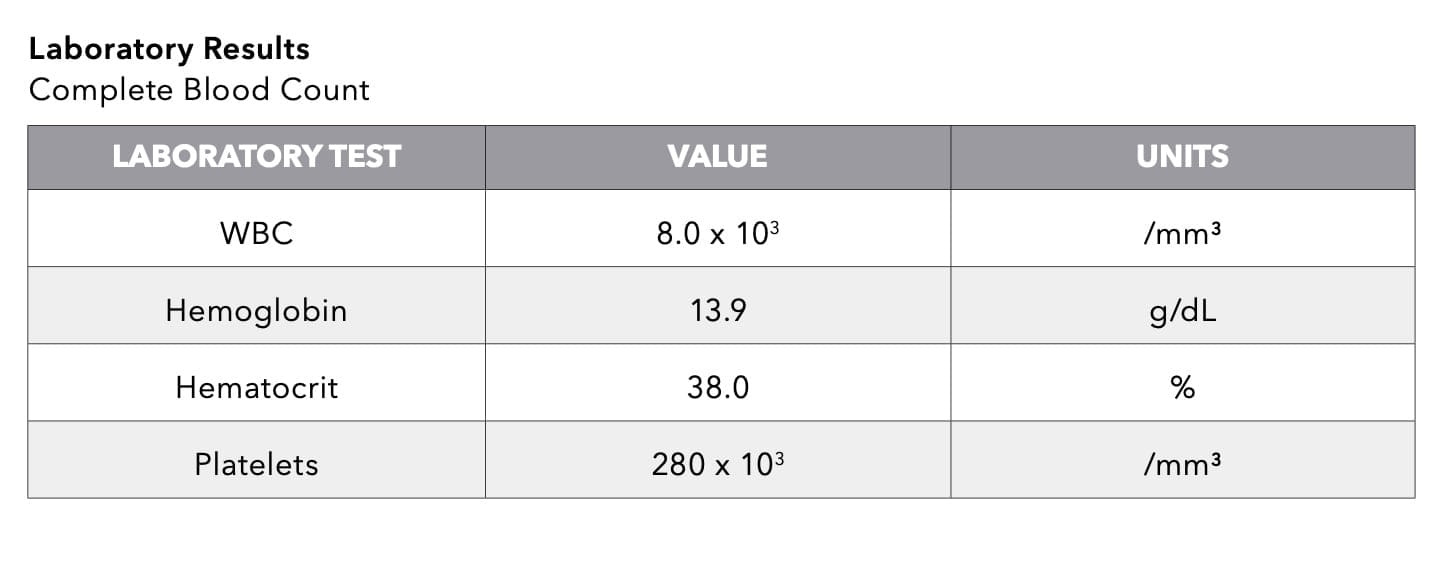
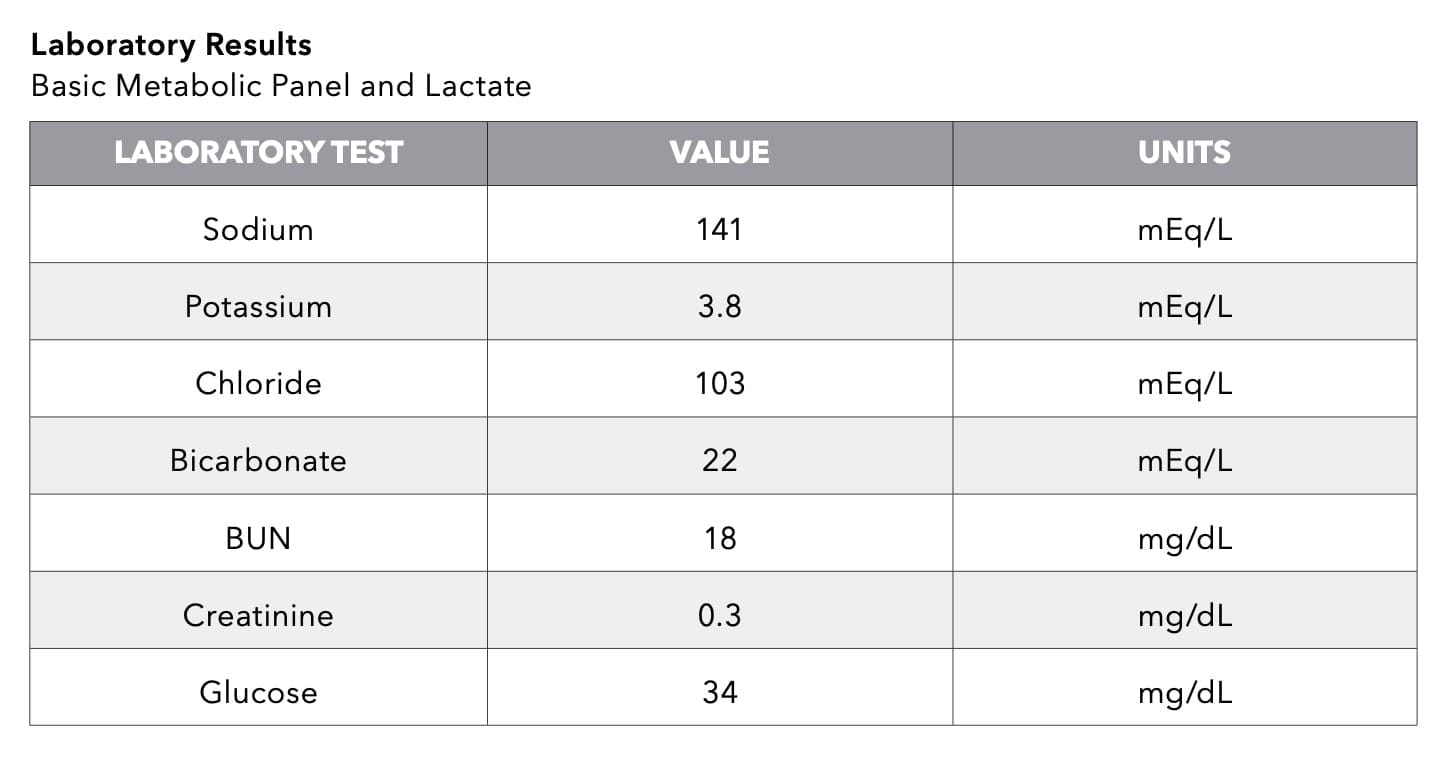
- Laboratory results (Complete metabolic panel, CBC, Mg, Phos, tox screen, fingerstick glucose, EtOH level)
- Chest x-ray
- CT head
Participants/Roles
- Team leader
- Airway manager
- Survey physician
- Nurse(s) for medication preparation and administration
- Team member physician
- Team member proceduralist
- Standardized patient (actor or faculty) to play patient’s parent
If there are not enough learners to perform the above roles, faculty members or other embedded participants can play a nurse, respiratory therapist, or tech.
* Team roles may need to be adjusted in order to suit local practices and norms
Prerequisite Knowledge
- Faculty
- PALS protocols
- General knowledge of emergency medicine
- Simulation implementation and debriefing experience
- Emergency medicine residents
- Any stage of training (preferably PGY-2 or higher)
- Completed PALS certification
Case Alternatives
- If greater than 2 rounds of benzodiazepines are given or an incorrect elevated dose of benzodiazepine given, the patient may become apneic.
- If there is a failure to recognize and manage respiratory distress or arrest, the patient could have PEA arrest requiring 2 rounds of CPR and epinephrine before ROSC.
- Learners may be told that IV access is not established during placement attempts in the first 5 minutes necessitating alternative routes for benzodiazepines (buccal, intranasal, rectal).
- For advanced learners, the patient may have refractory status requiring second and third line anti-epileptic drugs administered before cessation of seizure.
- A family member can be difficult or intoxicated requiring additional allocation of resources to family or more high-level communication skills by participants.
- A consulting service may not be available to discuss next steps due to availability or setting of scenario.
Virtual Resus Room
This simulation case can be run virtually using Google Slides and Zoom from the Virtual Resus Room (Peds Status Epilepticus) page.
Milestones
PC1. Emergency Stabilization
PC2. Performance of Focused History & Physical Exam
PC4. Differential Diagnoses and Management
PC5. Pharmacotherapy
PC7. Disposition
PC10. Airway Management
ICS1. Patient Centered Communication
ICS2. Team Management
Resources
- Friedman JN. Emergency management of the pediatric patient with generalized convulsive status epilepticus. February 28, 2018. Canadian Pediatric Society.
- Adams JG. 2013. Emergency Medicine: Clinical Essentials. 2nd edition. Elsevier Saunders Philadelphia. Section Ix: Chapter 99.
- Seattle Children’s seizure clinical standard work pathway [PDF], 2019.
| ITEM | FINDING |
|---|---|
| Overall Appearance | 3-year-old female unresponsive, some secretions from mouth. Shallow respirations, pink color to skin, actively seizing. |
| HPI | Volunteered information (by EMS): We have a 3-year- old female with a witnessed seizure at home. The estimated start of seizure was 11 minutes ago. No medications were given, since we are a basic unit. The family is on the way. The patient has no past medical history, other than 1 episode of an afebrile seizure in the past. She is not on any medications. She has received all immunizations and had an uncomplicated birth delivery. The patient is shaking in all extremities symmetrically.
The parent arrives 2 minutes after the EMS leave. If learners ask for specifics: No fever. The patient was acting normally earlier in the day. The parents had family from out of town visiting. No trauma. The child was noticed to be first drowsy and clumsy, and subsequently was shaking and drooling. The shaking started 10 minutes ago. The EMS providers were unable to place IV, and no medications given prior to ED arrival. Additional Information should be provided only if learners specifically ask about alcohol or risk of ingestion. A family member from out of town was drinking an alcoholic drink in a water bottle that was left on the counter that the child drank inadvertently. |
| Past Medical/Surgical History | Afebrile seizure in past |
| Medications | None |
| Allergies | No known drug allergies |
| Family History | Grandmother with alcohol use disorder |
| Social History | Lives at home, only child, mother stays at home with child. No daycare. Currently was having a family party. |
Initial Assessment and Stabilization
Start through third dose of benzodiazepine OR administration of additional AED after benzodiazepine
Critical Actions
- Assign team roles
- Obtain history from parent (include concern for trauma, ingestion, prior seizure history)
- Perform primary assessment of airway, breathing, circulation and disability
- Place patient on side and suction
- Position airway and consider adjuncts
- Place patient on continuous cardiac monitor
- Establish access
- Brief history and physical exam
- Send initial laboratory tests (fingerstick glucose, CBC, CMP, Mg, Phos, tox screen)
- Administer glucose for hypoglycemia
- Administer 2 rounds of benzodiazepines for seizure
Physical Exam
| ITEM | FINDING |
|---|---|
| Vital Signs | T: 98.1oF, HR: 115, BP: 92/64, RR: 24, SpO2: 94% |
| General | Unresponsive to verbal stimuli, actively seizing |
| HEENT | Normocephalic, atraumatic. Secretions at airway, gag reflex intact with use of suction, pupils round and reactive bilaterally |
| Neck | Normal |
| Lungs | Shallow breaths, no wheeze, no rales |
| Cardiovascular | Regular rate and rhythm, no murmurs, pulses palpable, capillary refill normal |
| Abdomen | Soft |
| Neurological | Unresponsive to verbal stimuli, incomprehensible sounds |
| Skin | Pink, no bruising, no rashes |
Instructor Notes: Changes and Case Branch Points
| INTERVENTION / TIME POINT | CHANGE IN CASE | ADDITIONAL INFORMATION |
|---|---|---|
| Patient turned on side and suction/airway maneuvers performed | Pulse ox improves to 96% | Patient bites down on suction catheter. |
| IV attempted but not successful until second attempt | Patient condition does not change | If still no IV access in 5 minutes, team should provide intranasal, oral, or rectal benzodiazepine. |
| Participants request a fingerstick blood glucose. | Glucose level is 25 mg/dL. Seizing stops if dextrose given. | Glucose level will normalize if patient is given IV dextrose bolus. 50-100 rule for glucose:
|
| Participant asks for repeat glucose after administration of dextrose | Glucose level is 95 mg/dL. No active seizure. | |
| At 5 minutes into case or when IV is placed | Active seizure activity resumes. If new glucose check is done, glucose is now 92 mg/dL. | |
| Second dose of benzodiazepine is administered | Seizure continues | |
| Third dose of benzodiazepine or another AED is administered | SpO2 decreases to 82%, and the patient becomes apneic. The seizure continues. | Proceed to Stage 2. |
| Participants request a head CT | Participants are told that the scanner will be available in 15 minutes or that the patient is too unstable for transport. | |
| Labs such as VBG, CMP, CBC, tox screen ordered | VBG/Point of care labs are available:
|
Participants told they have been sent to the lab and will result in 20 minutes if asked. |
| Bedside FAST ultrasound performed | Participants are told it is normal |
Airway Compromise
After 5 minutes in case OR 2nd dose of benzodiazepine + AED (or 3rd dose of benzodiazepine) through intubation
Critical Actions
- Selection of RSI medications
- Bag mask ventilation
- Rapid sequence intubation
Physical Exam
| ITEM | FINDING |
|---|---|
| Vital Signs | T: 98.1oF, HR: 120, BP: 84/64, RR: 8, SpO2: 82% |
| Exam Changes | Perioral cyanosis; apneic; pupils equal, round, and normal to large in size |
Instructor Notes: Changes and Case Branch Points
| INTERVENTION / TIME POINT | CHANGE IN CASE | ADDITIONAL INFORMATION |
|---|---|---|
| 1 minute into stage or after third dose of benzodiazepine with no active bagging | SpO2 decreases to 75%, and the patient becomes apneic. | Activate cyanosis on manikin |
| Administer levetiracetam or phenytoin as first-line AED | No change. HR increases to 115. | EEG tech or results indicate persistent seizure (if available) or leader/team member should mention that a seizure can still be ongoing and will need ICU transfer and neurology ASAP |
| RSI performed | SpO2 increases to 98%. Proceed to Stage 3. | Cyanosis resolves |
| Intubation attempted without paralysis | The patient gags and vomits. SpO2 decreases further to 60%. | If the patient subsequently is intubated, the SpO2 will not rise beyond 92% despite ETT placement. Respiratory will note increased secretions through the ETT. |
| Neurology Consult arrives or is available by phone or telehealth video after intubation. | Patient’s HR 115 | If learners require support with AED selection, a facilitator may act as the neurology consult to assist with medication selection. |
Refractory Seizure
After intubation through administration of second AED
Critical Actions
- Identify appropriate antiepileptic medications and indications for second-line medications
- Discuss patient status with the family
- Consult neurology
Physical Exam
| ITEM | FINDING |
|---|---|
| Vital Signs | T: 98.1oF, HR: 99, BP: 88/64, RR: 20, SpO2: 100% |
| Exam Changes |
|
Instructor Notes: Changes and Case Branch Points
| INTERVENTION / TIME POINT | CHANGE IN CASE | ADDITIONAL INFORMATION |
|---|---|---|
| Participants request head CT | No change | Nurse states, “I don’t think the patient is stable enough for transport.” |
| Administer a second AED (phenytoin, valproate, levetiracetam) | Seizure cessation. Proceed to Stage 4. | |
| Recheck glucose | Glucose 98 mg/dL | EEG indicates seizure activity has stopped. |
| Family member arrives with new information and admits that the patient may have mistakenly drank vodka from a water bottle. | No change | Prompt team to order additional toxicology lab work if not already ordered. |
| Reassess 5 minutes after medication given and administer additional AED | Seizure cessation |
Case Conclusion
After administration of 2 AEDs through discussion with family
Critical Actions
- Determine disposition of patient
- Discuss patient status with the family
Physical Exam
| ITEM | FINDING |
|---|---|
| Vital Signs | T: 98.1oF, HR: 99, BP: 88/64, RR: 20 SpO2: 100% |
| Exam Changes | The patient is intubated and breathing at the bagged rate; pupils round and reactive, but now pinpoint due to intubation medications. |
Instructor Notes: Changes and Case Branch Points
| INTERVENTION / TIME POINT | CHANGE IN CASE | ADDITIONAL INFORMATION |
|---|---|---|
| Participants request head CT | No change | Images provided |
Describe the signs/symptoms of status epilepticus (comprehension)
- Status epilepticus in pediatric patients can present in a variety of ways, such as myoclonic, tonic, tonic-clonic, absence, and complex partial.
- Generalized tonic-clonic seizures are the most common form of status epilepticus.
- The minimum time criterion used to be 30 minutes but is now 5 minutes. This can include continued seizure activity or recurrent seizures without return to baseline.
Demonstrate early evaluation of a child in status epilepticus (application)
- Learners should identify that the child is in status epilepticus, defined as >5 minutes of active seizure. A usual assumption is that when a child arrives seizing from home, they have been seizing for over 5 minutes.
- Approach a seizing child in a standardized fashion. Airway, breathing, and circulation should be assessed immediately followed by disability (neurological assessment and dextrose level).
- The initial medical management of status epilepticus in a child should always include ABCD then should be systematic. If the glucose level is low, it should be remedied. Otherwise the step-wise approach should be benzodiazepine, benzodiazepine, levatiracetam OR phenytoin OR phenobarbital bolus (based on age of patient), and then other agents can also be used but not without further consultation with a pediatric neurologist (e.g., can include propofol infusion, midazolam infusion…)
- It is important to note that medical teams must be ready for airway management in a seizing child especially after administration of multiple doses of benzodiazepines.
Construct a differential diagnosis for status epilepticus in a pediatric patient and formulate a diagnostic plan for a critically ill child with a seizure (synthesis)
- The differential should include new onset epilepsy, atypical febrile seizure, intracranial mass, intracranial bleed, intoxication, and infection (meningitis, encephalitis).
- Lab testing includes glucose, basic metabolic panel, complete blood count, calcium, magnesium, and antiepileptic medication levels (if applicable).
- Neuroimaging, lumbar puncture, additional lab work (inborn errors of metabolism screening, liver function tests, coagulation studies, toxicology screen), and continuous EEG monitoring should be considered especially if seizures lasting beyond 15 minutes.
- EEG should also be considered as patients often can have subclinical seizures following status epilepticus or if the patient is paralyzed/sedated for intubation.
Construct and implement initial medical management of status epilepticus in a child (application)
- Escalating doses of benzodiazepines early is critical in managing status epilepticus
- Delay in administering benzodiazepines may result in prolonged and self-sustaining seizures that become pharmaco-resistant
- Benzodiazepines: First-line medication
- Lorazepam: 0.1 mg/kg IV, can repeat at 5 minutes (max dose 4 mg)
- Diazepam: 0.15 mg/kg IV
- Rectal administration:
- Age 2-5 years: 0.5 mg/kg
- Age 6-11 years: 0.3 mg/kg
- Age >11 years: 0.2 mg/kg
- Rectal administration:
- Midazolam
- Intramuscular : 0.05-0.1 mg/kg (max 10 mg)
- Intranasal: 0.2-0.4 mg/kg
- Buccal: 0.5 mg/kg
- Phenytoin/Fosphenytoin: Stabilizes sodium channels to limit repetitive firing
- Phenytoin 20 mg/kg IV followed by additional 5 mg/kg if needed
- Fosphenytoin dosed in phenytoin equivalents and can be given IM if necessary
- Phenobarbital: Long acting barbiturate
- 20 mg/kg IV followed by additional 5 mg/kg if needed
- Valproic acid: Broad spectrum anticonvulsant 20-40 mg/kg IV
- Levetiracetam: Broad spectrum anticonvulsant 20-60 mg/kg IV
- Topiramate: Broad spectrum anticonvulsant 5-10 mg/kg IV
- Refractory status epilepticus: Consider ketamine and propofol as additional medications
Differentiate benzodiazepines including routes of administration (analysis)
IV administration of benzodiazepines is ideal. However, if no access is available, consider alternative routes early to avoid delay in medication administration. Consider diazepam or midazolam.
Identify airway compromise in setting of multiple doses of benzodiazepines (knowledge)
Hypoxia is a common etiology for pediatric cardiac arrest. Hypoxia can be a late sign of impending decompensation.
Demonstrate airway management of a sick child with airway compromise secondary to altered mental status using appropriate adjuncts, BMV, and/or endotracheal intubation (application)
- RSI medications
- Consider lidocaine 1 mg/kg IV (max dose 100 mg) as a premedication to decrease ICP in actively seizing patient or fentanyl
- Induction: Benzodiazepine preferable in status epilepticus
- Paralytic: Rocuronium 1 mg/kg IV
- Airway pearls for pediatric patients
- Know your equipment
- In general, pediatric patients have a larger head and tongue and have a more anterior airway. Consider placing a roll under shoulders
- Cuffed vs uncuffed ET tube: Above age 1 year, a cuffed tube is acceptable.
- Age/4 + 4 = tube size for uncuffed tube
- Age/4 + 3.5 = tube size for cuffed tube
Demonstrate focused history taking from a caregiver (application)
- Components of history taking: Past medical history, surgical history, family history, medications, allergies, social history, vaccination history
- Specifically for patients presenting with a seizure, recent illnesses, fever, and prior seizure history are all very important questions.
Explain diagnosis and management to caregivers (synthesis)

Use the teach-back approach
Demonstrate teamwork and closed loop communication (application)
Teams may use different frameworks to improve team dynamics and communication. Below are a few definitions that may be helpful to discuss, adapted from the AHRQ TeamSTEPPS Pocket Guide.
- Brief: Short session prior to start of encounter to share the plan, discuss team formation, assign roles and responsibilities, establish expectations and climate, anticipate outcomes and likely contingencies
- Huddle: Ad hoc team discussion to re-establish Situation Awareness; designed to reinforce plans already in place and assess the need to adjust the plan
- Callout: A strategy used to communicate critical information during an emergent event. Helps the team prepare for vital next steps in patient care. (Example: Leader- “Airway status?”; Surveying provider- “Airway clear”; Leader- “Breath sounds?”; Surveying provider- “Breath sounds decreased on right”)
- Check-back: A closed-loop communication strategy that requires a verification of information ensuring that information conveyed by the sender is understood by the receiver as intended. The sender initiates the message; the receiver accepts it and restates the message. In return, the sender verifies that the re-statement of the original message is correct or amends if not. (Example: Leader- “Give diphenhydramine 25 mg IV push”; Med Prep- “Diphenhydramine 25 mg IV push”; Leader- “That’s correct”)
- SBAR: A framework for team members to structure information when communicating to one another.
- S = Situation (What is going on with the patient?)
- B = Background (What is the clinical background or context?)
- A = Assessment (What do I think the problem is?)
- R = Recommendation (What would I do to correct it?)
- Situation monitoring: The process of continually scanning and assessing a situation to gain and maintain an understanding of what is going on around you.
- Situation awareness: The state of “knowing what’s going on around you.”
- Shared mental model: Result of each team member maintaining situation awareness and ensures that all team members are “on the same page.” An organizing knowledge structure of relevant facts and relationships about a task or situation that are commonly held by team members.
- STEP: A tool for monitoring situations during complex situations. A systematic method to review Status of patient, Team members’ performance and status, Environment, and Progress towards goal.
- Cross-monitoring: A harm error reduction strategy that involves 1. Monitoring actions of other team members 2. Providing a safety net within the team. 3. Ensuring that mistakes or oversights are caught quickly and easily. 4. “Watching each other’s back.”
- CUS: Signal phrases that denote “I am Concerned,” “I am Uncomfortable,” and “This is a Safety Issue.” When spoken, all team members should understand clearly not only the issue but also the magnitude of the issue.



Chest X-ray
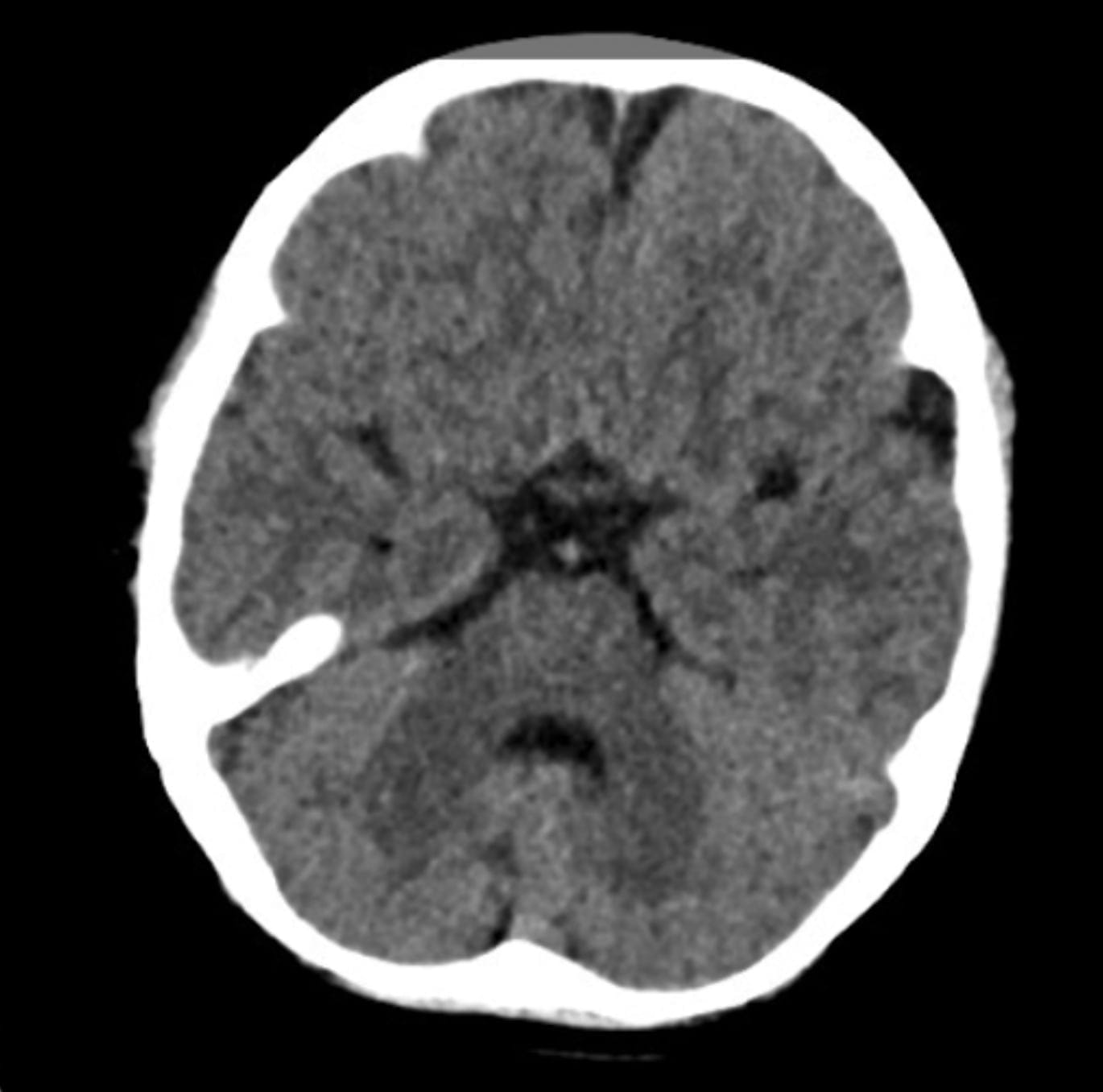
Head CT 1

Head CT 2

Head CT 3
Download Case 15 supporting files
Notes:
- Chest X-ray Interpretation: The post-intubation CxR. Image from Dr. Rebekah Burns.
- Head CT Interpretation: Normal. Images from Dr. Rebekah Burns.
For the embedded participant playing the patient’s parent
Case Background Information
Your daughter was recently diagnosed with a first episode afebrile seizure. The neurologist had said that they will wait for a second seizure before starting on medications. Today she was well with no viral symptoms, no fever, and slept well last night. You noted drowsiness midday, which is not her typical. You have guests over all day today for a family reunion and everything seemed ok. She was running around with a non-labelled water bottle which you assumed was water, but it actually was vodka. She started seizing at home and you were told to keep her in a safe place where she could not hurt herself and roll her to her side which you did. She was seizing with all 4 limbs exhibiting stiff, jerking movement. Her eyes rolled back and there were some secretions in the mouth. You did not notice her bite her tongue, nor any fecal or urinary incontinence. The seizure lasted longer than 5 minutes, so you called 911 and an ambulance brought her to the hospital (arrival to your home until the hospital was 6 minutes). So seizure has been ongoing for 11 minutes.
Who are the Learners?
Emergency medicine residents (various stages of training at first, second, third, and possibly fourth years)
First year residents can gather a history and perform physical examinations on patients. However, their medical knowledge and familiarity with pediatric medical treatments and procedures likely is limited. These skills become more refined and developed with each year of training. For the purposes of this simulation, assume learners are in their first or second year of residency training.
Standardized Patient Information
See Case Background Information.
Patient Information
(Please remember not to offer any of this information, but when asked please respond while remaining in character.)
- CHIEF COMPLAINT (your response to open-ended questions such as “what’s going on?” or “what can we do for you? Or “what happened?”): “She was fine and then she lost consciousness and started to seize!”
- AGE: 3 years old
- ADDITIONAL HISTORY: Previously well child. Had her first episode of a seizure about a month ago with no fever.
- PAST MEDICAL HISTORY: Asthma, obstructive sleep apnea, seasonal allergies
- SOCIAL HISTORY: Lives at home with mother, father, and older brother. Has family visiting for a few days and everyone was enjoying their time. Grandmother has a drinking problem which is well known and so you keep almost no alcohol at home because you want to make sure she is safe around your children. However, she sometimes will do anything to get her drink.
- FAMILY HISTORY: No family history of epilepsy
- PAST SURGICAL HISTORY: None
- MEDICATIONS: None
- ALLERGIES: No known drug allergies
- IMMUNIZATIONS: Up-to-date
- FEEDINGS: Regular diet, no restrictions
- BIRTH HISTORY: Full term girl born by spontaneous vaginal delivery. Normal pregnancy without complications. Unremarkable newborn course.
Potential Dialogue
IMPORTANT: Do not offer unsolicited information. Please allow the learners to ask questions. Do not offer information unless they ask you.
Things you could say without being asked:
- “Oh my gosh, is she going to be ok, I can’t believe this is happening. What’s wrong with her? Is she going to be ok?”
- “She seemed fine. She hasn’t been sick at all, no fevers, or anything.”
- “Why isn’t she stopping to seize?”
- “She slept well last night but seemed drowsy this afternoon, more than usual.”
Participants will have to calm the SP parent while also designating a team member to answer additional questions.
Things you might say triggered by events in the scenario:
| EVENT | YOUR POTENTIAL RESPONSE |
|---|---|
| When participants inquire more about the drowsiness | “I don’t know. She just seemed less coordinated. You know, we do have family in from out of town and I saw her drinking out of my mom’s water bottle. I assumed it was water but do you think it could be something else? She has a drinking problem, oh my gosh, I can’t believe this is happening.”
“I don’t have any medications at home, we are all fine- there is no way she could have taken something… oh wait- my mom!” “My mom has a drinking problem… my daughter was drinking from her water bottle… could she have had alcohol in there! Oh my!!!” |
The learners enter the room to find a 3-year-old patient being transferred to a stretcher by EMS actively seizing. The seizure activity involves all 4 extremities and movements appear symmetric. The team immediately places the patient on bedside monitors and recognizes that the patient is actively seizing, concerning for status epilepticus. Supplemental oxygen is provided as well as proper positioning and suction of the airway. Fingerstick glucose and IV access is obtained. The patient is noted to be hypoglycemic and given an IV dextrose bolus, resulting in seizure cessation. After completing a physical examination and obtaining an appropriate history including a prior history of an afebrile seizure as well as possible alcohol ingestion.
The provider notes that the patient is seizing again, but a rechecked glucose is normal. The initial dose of IV benzodiazepine is given without cessation of the seizure, requiring the team to give a second dose of benzodiazepine. The team recognizes a lower SpO2 with subsequent benzodiazepine doses and prepares to perform RSI on the patient. After successful intubation, the team consults with Neurology specialists to initiate EEG monitoring (if available) given that the patient is paralyzed and to discuss sequential AED medications. Further history is obtained and there is a concern for alcohol intoxication, resulting in a hypoglycemic-induced seizure. The patient is started on a dextrose infusion and admitted to PICU for further monitoring and care.
Anticipated Management Mistakes
- Lack of complete history and exam: In an acute presentation of a seizure, the history can be overlooked resulting in missing the potential for alcohol intoxication as a cause. Similarly, the examination is also extremely important to rule out traumatic etiology. Embedded participants and prompting can be used to avoid this error. If asked, there are no signs of external trauma, no bruising, no hematoma, normal TMs, and no battle sign.
- Failure to recognize the need for airway management: Some learners may not immediately recognize that the patient requires airway management, leading to a delay in diagnosis and potential apneic arrest. Facilitators can discuss the fact that many patients will become apneic with benzodiazepines. Although some can be bagged throughout, if it is prolonged, a risk of aspiration, or intractable seizures, the patient will need intubation.
- Lack of seizure treatment if no IV access: Learners may not be aware of alternate ways to provide benzodiazepine medications to patients who are actively seizing.
Feedback
Please complete our brief survey describing your experience.
Learner (scan or click on QR code)

Facilitator (click or scan QR code)


Professor and Digital Innovation Lab Director
Department of Emergency Medicine
University of California, San Francisco
@M_Lin
Latest posts by Michelle Lin, MD (see all)
- Pediatric Pneumonia Without Routine Chest X-Rays: How Much Weight Should We Give the Lung Exam? - September 25, 2026
- Sickle Cell Acute Pain Episodes: Lessons Learned from the Prematurely Halted PECARN STArT Trial - August 24, 2026
- What We Still Do Not Know About Pediatric Mental Health Emergencies: PECARN Research Agenda - July 13, 2026