The patient is a 22-year-old G0P0 female who presents to the Emergency Department with two days of left lower quadrant abdominal pain. The patient rates her pain as 10/10 in intensity, sharp in character, and states the pain radiates to her lower back. She notes similar intermittent pain over the past few months, but the pain became persistent over the past two days and has worsened. She also reports decreased appetite with nausea and vomiting. Her pain is exacerbated by movement. She began her menstrual period three days before presentation and denies being sexually active. She was previously prescribed oral contraception for treatment of menorrhagia, but discontinued it five months ago. She denies any fever, chills, chest pain, shortness of breath, urinary frequency, dysuria, vaginal discharge, bleeding, or vaginal pain.
Vitals: BP 132/84; HR 89; R 17; T 98.6°F; O2 sat 100% on room air
General: Appears uncomfortable due to pain.
Cardiovascular: Normal rate, regular rhythm.
Abdominal: Soft, non-distended, LLQ tenderness to palpation without rebound or guarding, bowel sounds present.
Genitourinary: No active bleeding or discharge, no signs of infection. No masses palpated.
WBC: 4.8
Hgb: 13.2
BMP: Normal
LFT’s: Normal
Urinalysis: Normal
Urine pregnancy test: Negative
This patient has a mature cystic teratoma (Dermoid Cyst).
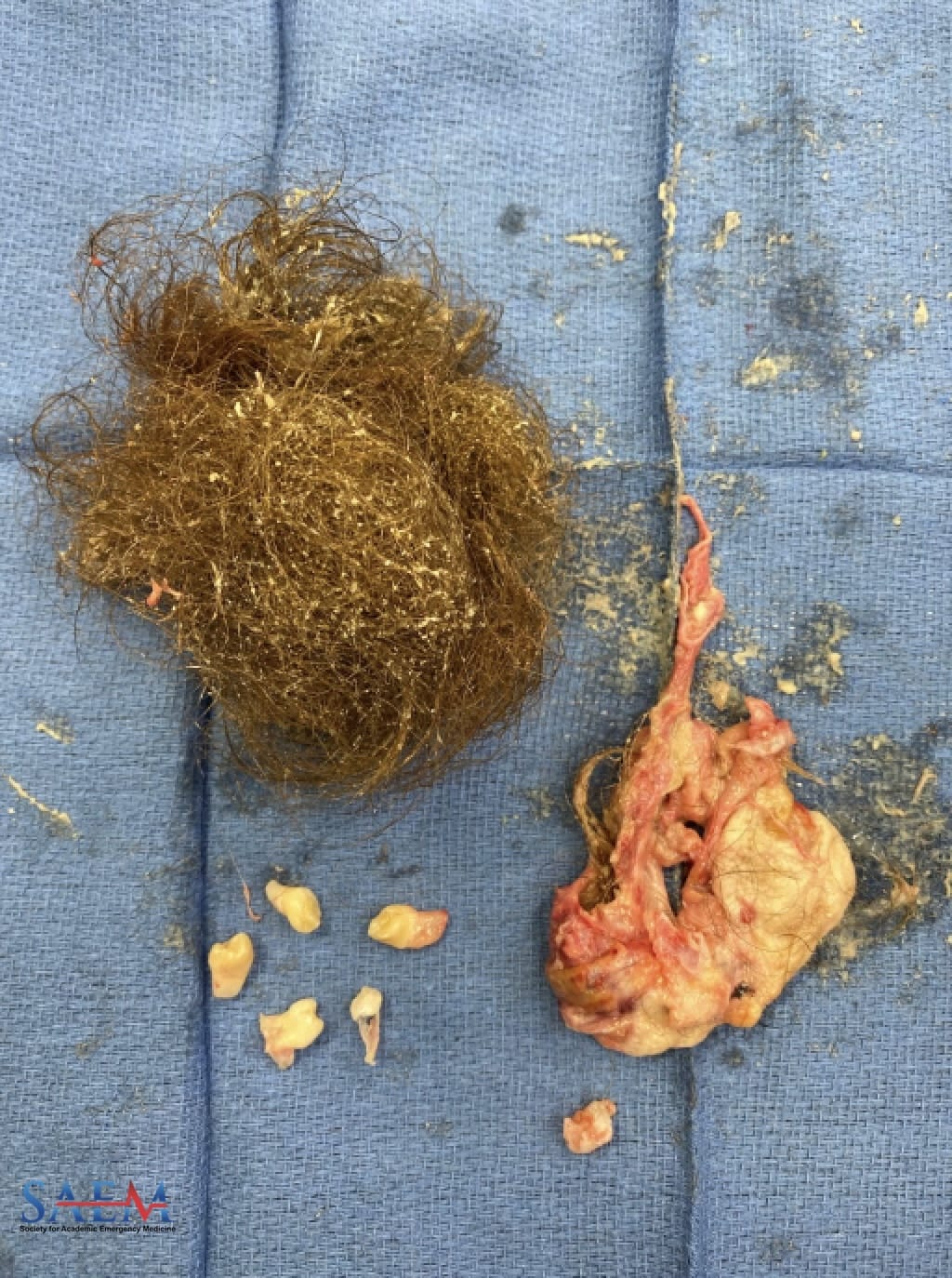
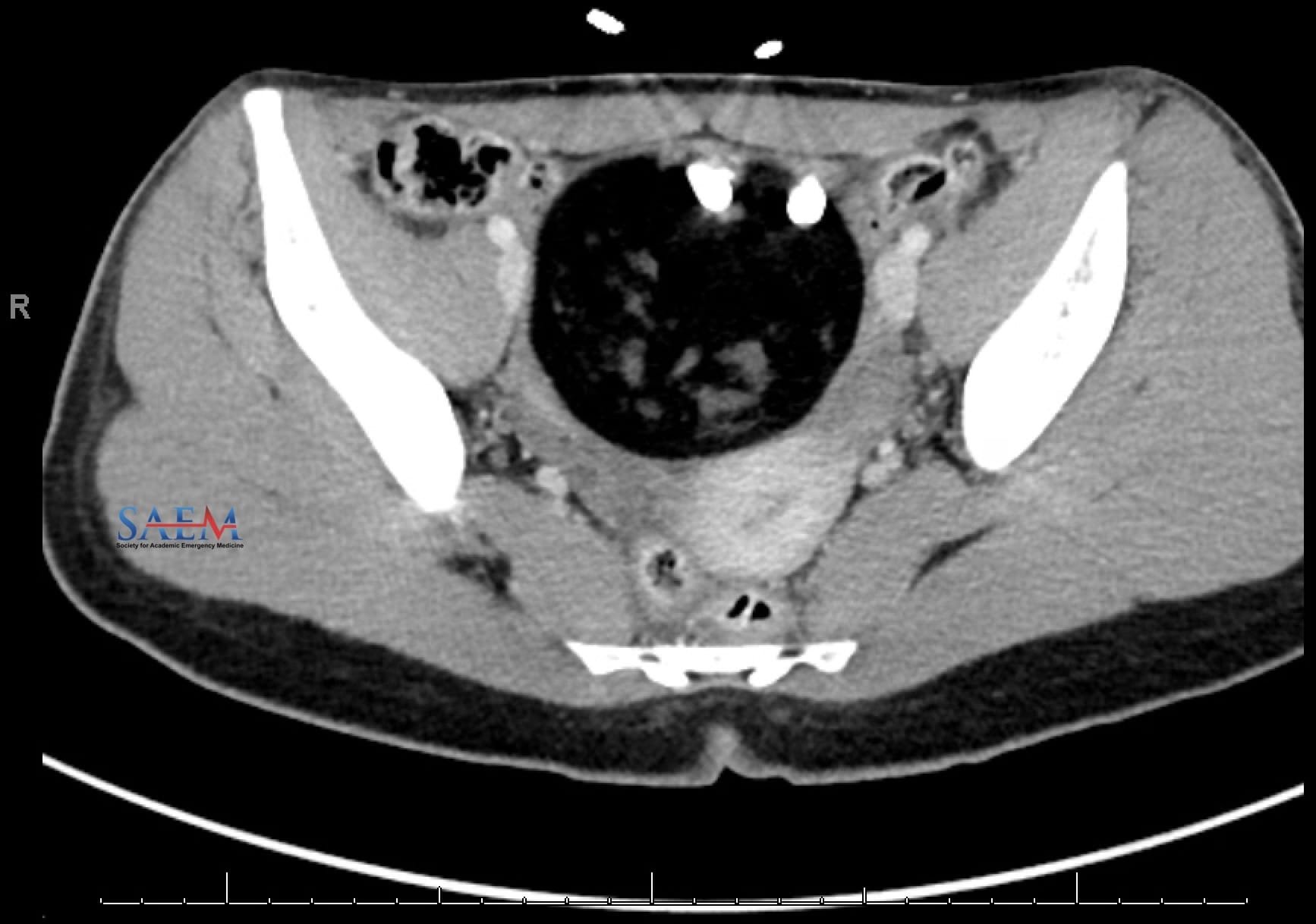
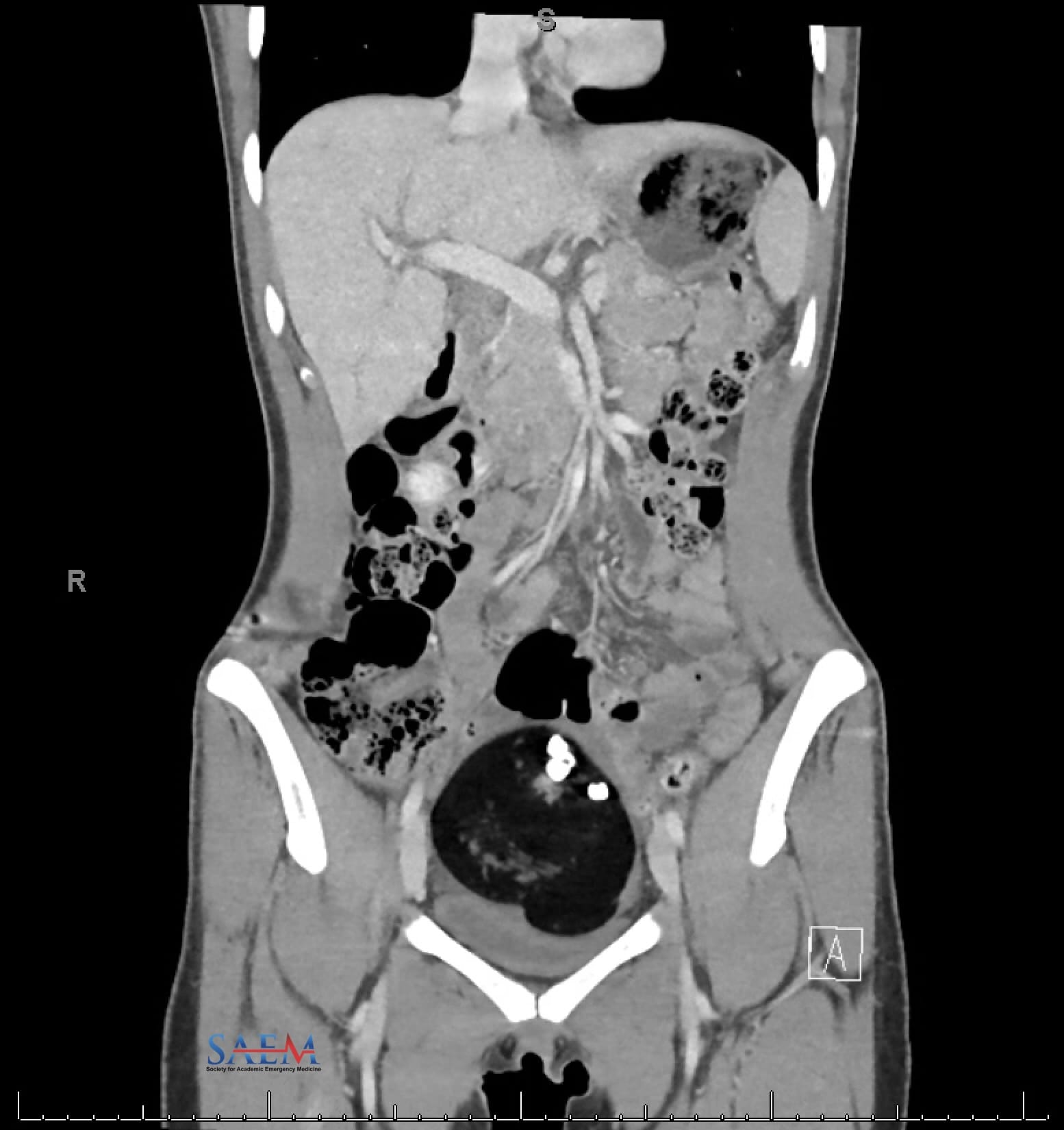
Mature cystic teratomas (MCTs), also known as dermoid cysts, are benign ovarian germ cell tumors. While MCTs can occur in women of any age, they are found primarily in patients of reproductive age, with a median age of mid-30s. Patients may present asymptomatically, or with symptoms including nausea/vomiting, abdominal pain, and vaginal bleeding. Pelvic ultrasound or abdominal CT are first-line imaging studies, as well as laboratory testing to include ruling out pregnancy. In this patient with a negative UA and urine pregnancy test, abdominal CT was obtained and showed a large pelvic mass containing bony structures. Intraoperatively, the patient was found to have a large left ovarian dermoid cyst with evidence of torsion. The cyst contained multiple teeth and brown hair, and the diagnosis was confirmed with surgical pathology. Ovarian torsion is a serious complication of MCT and occurs in 3% to 21% of cases. If concomitant ovarian torsion is suspected, emergent gynecologic consultation is warranted.
Take-Home Points
-
Dermoid cysts are benign ovarian germ cell tumors that may grow large, cause significant pain, and often contain teeth and hair.
-
Ovarian torsion is an emergent potential complication of dermoid cysts and may require emergent consultation and surgical intervention.
- Cong L, Wang S, Yeung SY, et al. Mature Cystic Teratoma: An Integrated Review. Int J Mol Sci. 2023;24(7):6141. doi: 10.3390/ijms24076141. PMID: 37047114.
- Ahmed A, Lotfollahzadeh S. Cystic Teratoma. 2023. In: StatPearls [Internet]. Treasure Island (FL): StatPearls Publishing; 2024. PMID: 33231995.

Akshilkumar Patel, MD
Tower Health Reading Hospital
Latest posts by Akshilkumar Patel, MD (see all)
- SAEM Clinical Images Series: A Curious Case of Abdominal Pain - February 2, 2026

Shaila Quazi, D.O., FACEP
Department of Emergency Medicine
Drexel University College of Medicine
Tower Health Reading Hospital
Latest posts by Shaila Quazi, D.O., FACEP (see all)
- SAEM Clinical Images Series: A Curious Case of Abdominal Pain - February 2, 2026