
A 20-year-old previously healthy student-athlete female presented with a 2-week history of bilateral periorbital swelling unresponsive to steroids and anti-histamines prescribed by her PCP. The edema had been worsening, and there was a new development of throat tightening and discomfort. She denied rash, allergies, fever, URI symptoms, urinary symptoms, or new medications.
General: No acute distress.
HEENT: Significant bilateral periorbital edema with an otherwise normal eye exam. 2+ bilateral tonsillar swelling and erythema, no exudates. No uvula swelling or deviation. No oral mucosal lesions.
Neck: Anterior and posterior cervical lymphadenopathy.
Respiratory: No stridor.
Skin: No rash.
Abdomen: No hepato/splenomegaly. Otherwise, exam WNL.
CBC: WBC 14 with 18% Neut, 63% Lymphs, 9% Reactive lymphs
BMP: Wnl
ALT: 194
AST: 121
UA: Wnl, no protein, no blood
Urine pregnancy: Negative
Strep: Negative
Flu/Covid: Negative
*Monospot and EBV titers returned next day positive
This case presentation is an impressive example of bilateral periorbital edema as a very early sign of mononucleosis, appearing two weeks before the classic triad of fever, tonsillitis, and cervical lymphadenopathy. Peri-orbital edema has been reported in the literature to be present in 10-30% of mononucleosis cases and when present, it is often the earliest sign/symptom. Common symptoms of mononucleosis are fever, tonsillitis, lymphadenopathy, and fatigue. Less common symptoms include periorbital edema, splenic pain/rupture, rash, and neurologic syndromes.
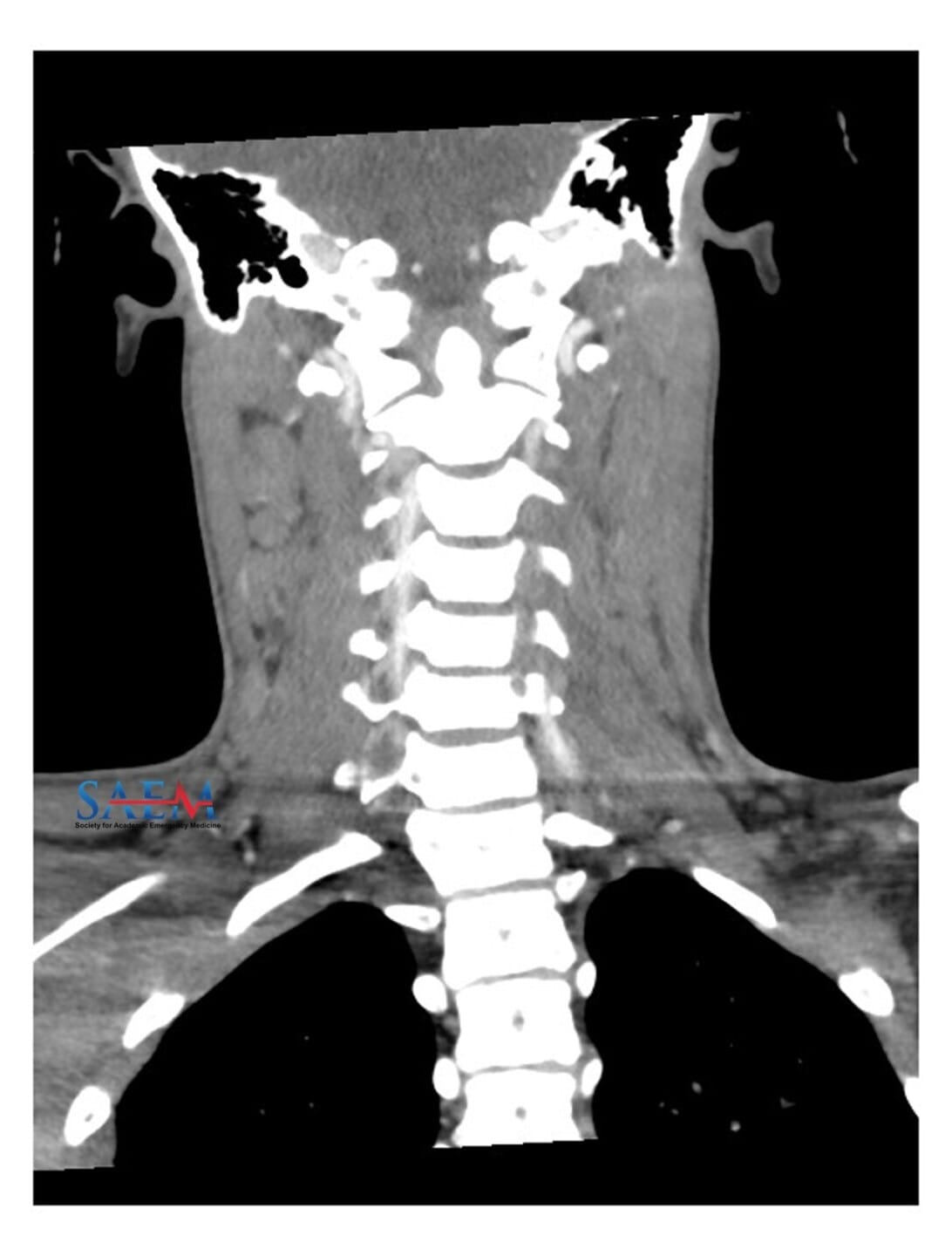
CT image shows bulky posterior cervical lymphadenopathy. Lab studies show hematologic abnormalities, including reactive lymphocytes and mild LFT elevation, suggestive of mononucleosis. Heterophile monospot and EBV titers often are not available as STAT labs and return after the ED evaluation.
Take-Home Points
-
Bilateral peri-orbital edema can be an early sign of mononucleosis.
-
Reactive lymphocytes and mild LFT elevations can be suggestive of mononucleosis.
-
HOAGLAND RJ. Infectious mononucleosis. Am J Med. 1952 Aug;13(2):158-71. doi: 10.1016/0002-9343(52)90154-x. PMID: 12976417.
-
Luzuriaga K, Sullivan JL. Infectious mononucleosis. N Engl J Med. 2010 May 27;362(21):1993-2000. doi: 10.1056/NEJMcp1001116. Erratum in: N Engl J Med. 2010 Oct 7;363(15):1486. PMID: 20505178.
-
Aronson A and Auwaeter P. Infectious mononucleosis In: Post TW, ed. UpToDate. UpToDate; 2021.

Nara Shin, MD
Princeton University
Latest posts by Nara Shin, MD (see all)
- SAEM Clinical Images Series: Bilateral Periorbital Edema - January 27, 2025