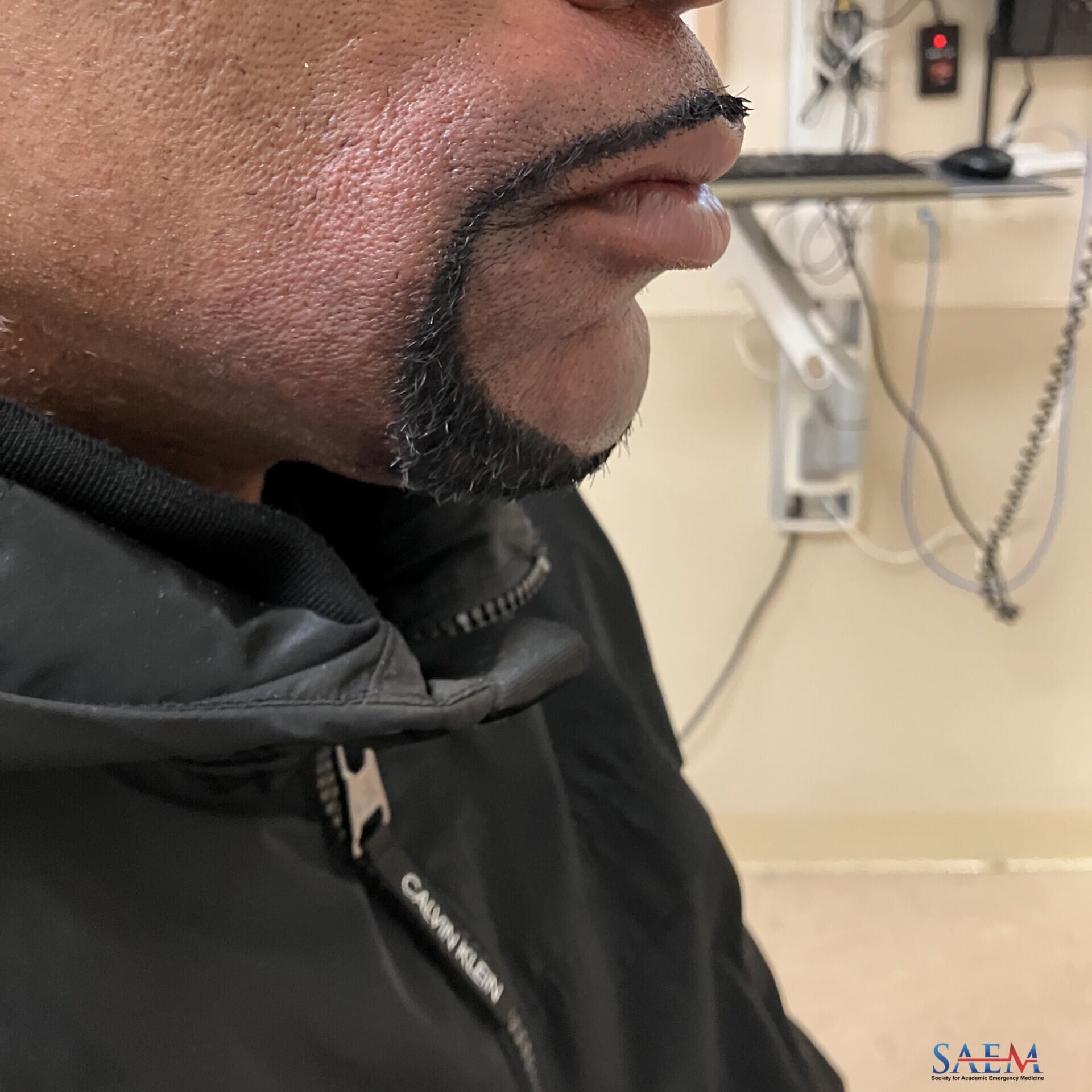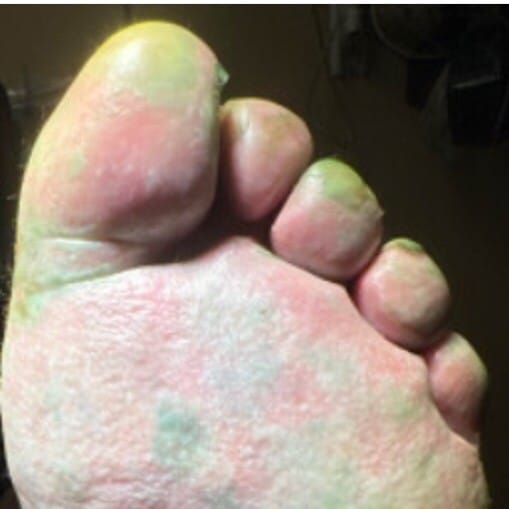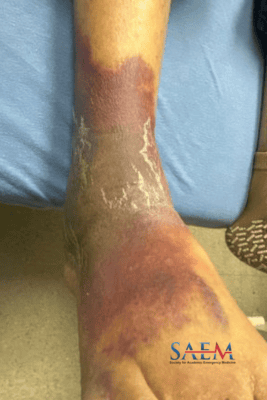
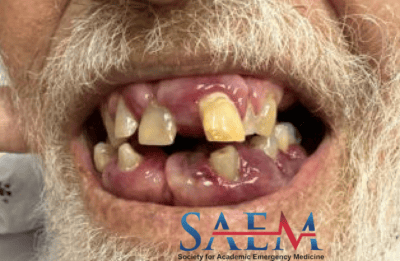
The patient is a 72-year-old male with multiple medical problems who presents to the Emergency Department complaining of dyspnea on exertion. The patient also complains of bruising that has developed on his right leg. He states that he previously had a similar episode for which she was admitted to the hospital and had warfarin discontinued due to thrombocytopenia. He also reports that he has been unable to eat or drink much lately due to gum swelling and tenderness, and states that when he begins chewing he feels as though his teeth are going to fall out. When asked about his usual diet, the patient states that he primarily eats raisin bran crunch and grits and that he does not really eat fruits or vegetables. He denies any chest pain, abdominal pain, nausea, vomiting, diarrhea, bloody stools, or any other complaints.
Vitals: All vital signs are normal.
General: Pleasantly interactive in no acute distress.
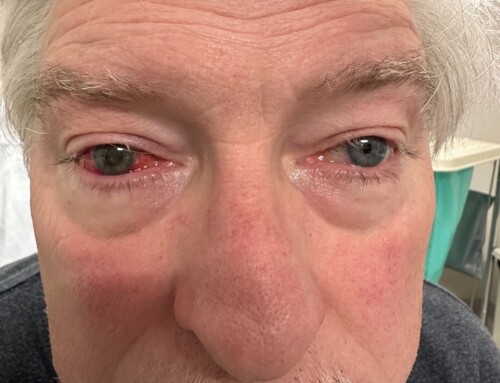
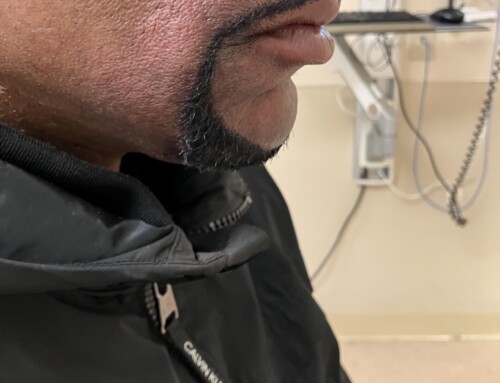
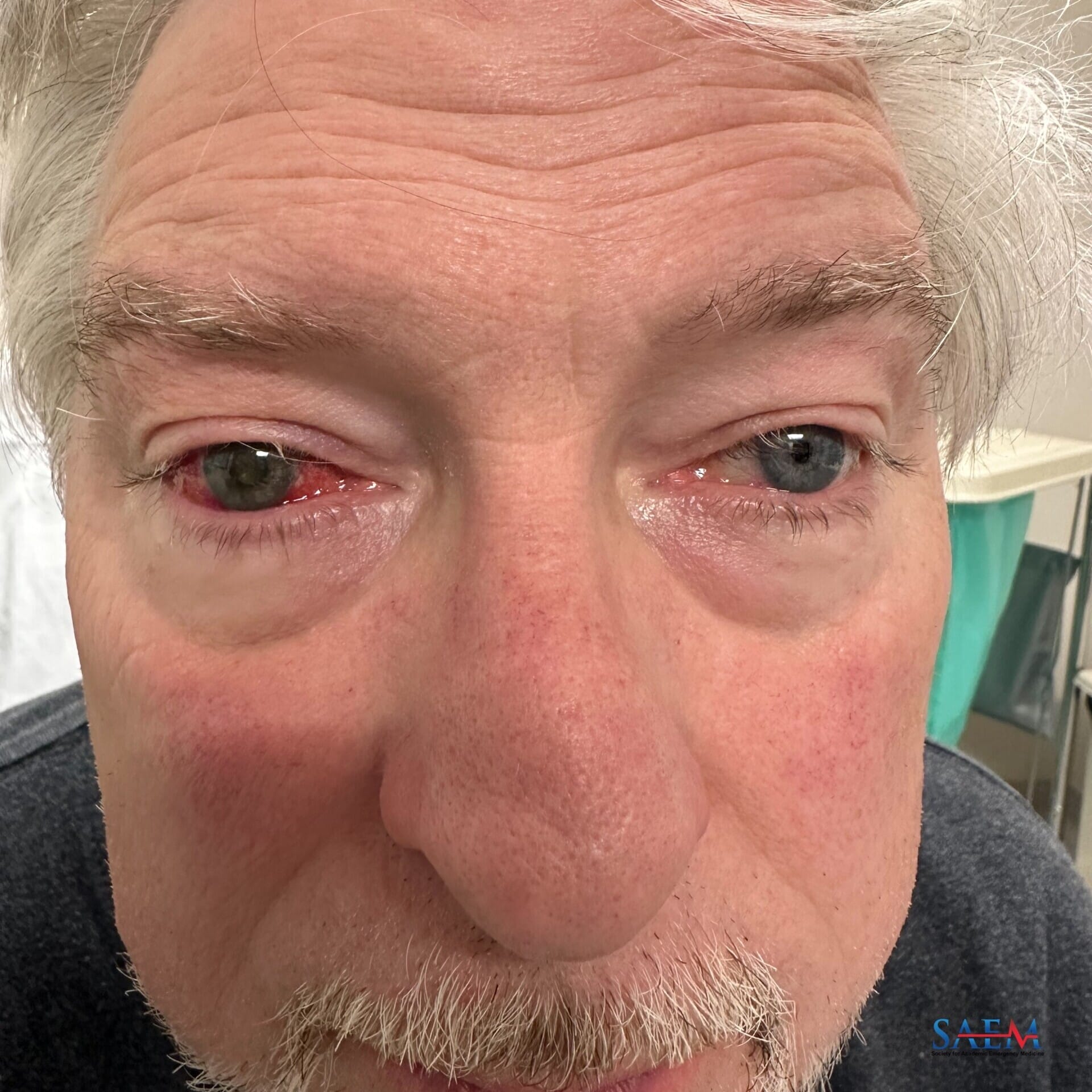
HEENT: Key findings are shown in the image provided.
Respiratory: Clear to auscultation, no increased work of breathing.
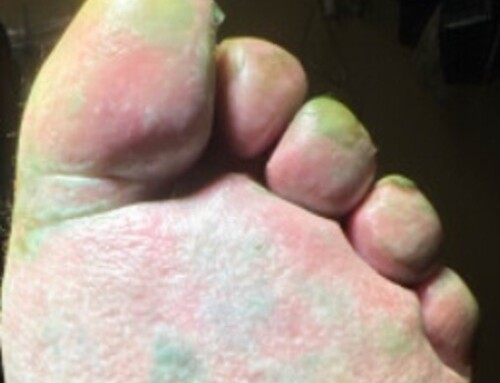
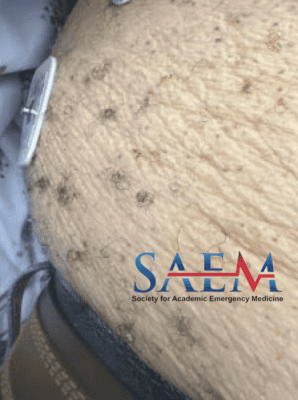
Extremities/Skin: Diffuse ecchymosis and petechiae are present. Bruising to the right foot and ankle as shown. Bilateral legs with significant petechiae diffusely. Hair as shown.
CBC: WBC 10.4 Hgb 7.8 Plt 98,000
RBC Morphology abnormal- Moderate Anisocytosis, Slight Poikilocytes
Moderate Polychromasia, Slight Elliptocytes, Slight Hyopchromia
CMP: Albumin 2.5, Total Protein 5.4
This patient has scurvy.
Vitamin C deficiency
Scurvy results in multiple symptoms including gingivitis with bleeding, periodontal disease, loss of dentition, mucocutaneous petechiae, ecchymosis, hyperkeratosis, and corkscrew hairs. Scurvy is due to Vitamin C deficiency and resultant impaired collagen biosynthesis. Petechiae, ecchymosis, follicular hyperkeratosis, perifollicular hemorrhages, corkscrew hairs, gingival bleeding, arthralgias, skin discoloration, impaired wound healing, koilonychias, and splinter hemorrhages may all be seen in patients with scurvy. These findings are primarily derived from inability to synthesize collagen due to lack of ascorbic acid, which is used as an electron donor to catalyze proline and lysine into hydroxyproline and hydroxylysine. Ascorbic acid also prevents epigenetic DNA hypermethylation, which is essential in the synthesis of certain collagen types.
Take-Home Points
- A thorough dietary history can help identify patients at risk for vitamin deficiencies and other diagnoses caused by malnutrition.
- Scurvy is caused by Vitamin C deficiency and results in impaired collagen synthesis, leading to multiple potential abnormal physical exam findings such as gingivitis with bleeding, severe periodontal disease, loss of dentition, mucocutaneous petechiae, ecchymosis, hyperkeratosis, and corkscrew hairs.
- Gandhi M, Elfeky O, Ertugrul H, Chela HK, Daglilar E. Scurvy: Rediscovering a Forgotten Disease. Diseases. 2023 May 26;11(2):78. doi: 10.3390/diseases11020078. PMID: 37366866; PMCID: PMC10296835.
- Léger D. Scurvy: reemergence of nutritional deficiencies. Can Fam Physician. 2008 Oct;54(10):1403-6. PMID: 18854467; PMCID: PMC2567249.
Mitchell Guedry, MD
Emergency Medicine
LSUHSC Baton Rouge
Latest posts by Mitchell Guedry, MD (see all)
- SAEM Clinical Images Series: Connect the Dots - March 9, 2026
- SAEM Clinical Images Series: Modern Pirate - February 23, 2026
Brian Allen, MD
Emergency Medicine
LSUHSC Baton Rouge
Latest posts by Brian Allen, MD (see all)
- SAEM Clinical Images Series: Modern Pirate - February 23, 2026

Tommie Espy, MD
Emergency Medicine
LSUHSC Baton Rouge
Latest posts by Tommie Espy, MD (see all)
- SAEM Clinical Images Series: Connect the Dots - March 9, 2026
- SAEM Clinical Images Series: Modern Pirate - February 23, 2026