

Trick of the Trade: Less traumatic nasopharyngoscopy
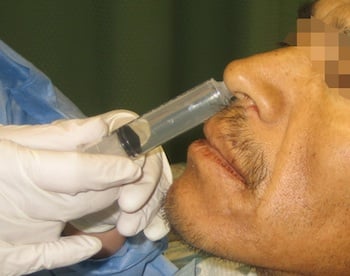

ViscousLidoNosesm
A fiberoptic nasopharyngoscope is a handy tool to check patients for suspected foreign bodies (e.g. fishbone stuck in throat) or laryngeal edema. Depending on the diameter of your fiberoptic cable, it may be fairly uncomfortable for the patient despite generous viscous lidocaine instillation through the nares and nebulized lidocaine. Alternatively or additionally, you can make your own lidocaine-oxymetazoline nasal atomizer which works well.  

What if the patient is STILL not tolerating the procedure well? 
(more…)

By |2016-11-11T19:02:31-08:00Jul 16, 2013|ENT, Tricks of the Trade|

Trick of the Trade: Got a shoulder dislocation? Park it

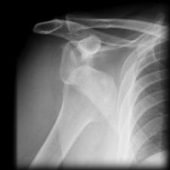
ShoulderDLxray

Myriad techniques exist to reduce shoulder dislocations, which includes scapular rotation, Hennepin, Snowbird, Cunningham, and Legg maneuvers. They are nicely reviewed at ShoulderDoc.co.uk. You can also supplement any technique with ultrasound-guided intraarticular lidocaine for improved pain control.

Recently, Dr. Jay Park (Beth Israel Medical Center in New York) contacted me about his novel approach to shoulder reduction which anatomically makes sense. If his animation video doesn’t convince you, check out the video of an actual reduction.

(more…)

By |2019-01-28T21:59:02-08:00Jun 25, 2013|Orthopedic, Tricks of the Trade|

Trick of the Trade: Making the NG and NP procedures less painful

When doing nasogastric (NG) tubes and fiberoptic nasopharyngoscopy (NP) procedures, there many approaches in how patients can be locally anesthetized. Getting things pushed up your nose is so profoundly irritating that most patients only give you 1 or 2 changes to get it right.

One option is to use nebulized lidocaine, although it takes a while to prepare and anecdotally tends to numb mainly the hypopharynx, placing the patient at risk for aspiration later on. Another option is to use viscous lidocaine to coat the NG or NP tubing, but this is fairly messy and only mildly helpful. Commercial intranasal atomizers, which disperse lidocaine over the nasal mucosal surfaces well, are generally effective, but may not be available in some emergency departments.

By |2019-02-22T13:34:02-08:00Apr 23, 2013|Tricks of the Trade|

Trick of the Trade: External jugular tourniquet

Paitents can be a challenge when trying to obtain peripheral IV access. The vein may be collapsed from dehydration or scarred because of IV drug use or repeated cannulation. Before thinking about an ultrasound-guided deep vein IV or a central line, take a look at the external jugular (EJ) vein.

There are, however, a few problems that exist when trying to cannulate this site:
  • There is no tourniquet for the neck.
  • To distend the vein, you often need to put the patient in Trendelenburg, which may be uncomfortable or intolerable for some
By |2016-11-11T11:17:20-08:00Mar 5, 2013|Tricks of the Trade|

Trick of Trade: Umbilical foreign body removal

Emergency physicians are constantly challenged with fishing foreign bodies out of various orifices such as ears, as shown here in an earlier Trick of the Trade using a tissue adhesive.

What do you do when an overweight person presents with the cotton portion of a Q-tip lodged in his umbilicus? Skin retractors and direct probing were unsuccessful in removing the cotton.

(more…)

By |2016-11-11T18:40:59-08:00Feb 19, 2013|Tricks of the Trade|
Go to Top