About Alejandro Avina-Cadena, MD, MPH

Resident Physician
Boston Medical Center

SAEM Clinical Images Series: An Unusual Arm Conundrum

shoulder

A 58-year-old female with a past medical history significant for osteoporosis presented with right shoulder pain after a witnessed mechanical fall down two stairs. She sustained no headstrike or loss of consciousness. She endorses severe right shoulder pain without numbness/tingling over any part of her arm. Since the fall, she has been unable to move her arm, which remains abducted overhead.
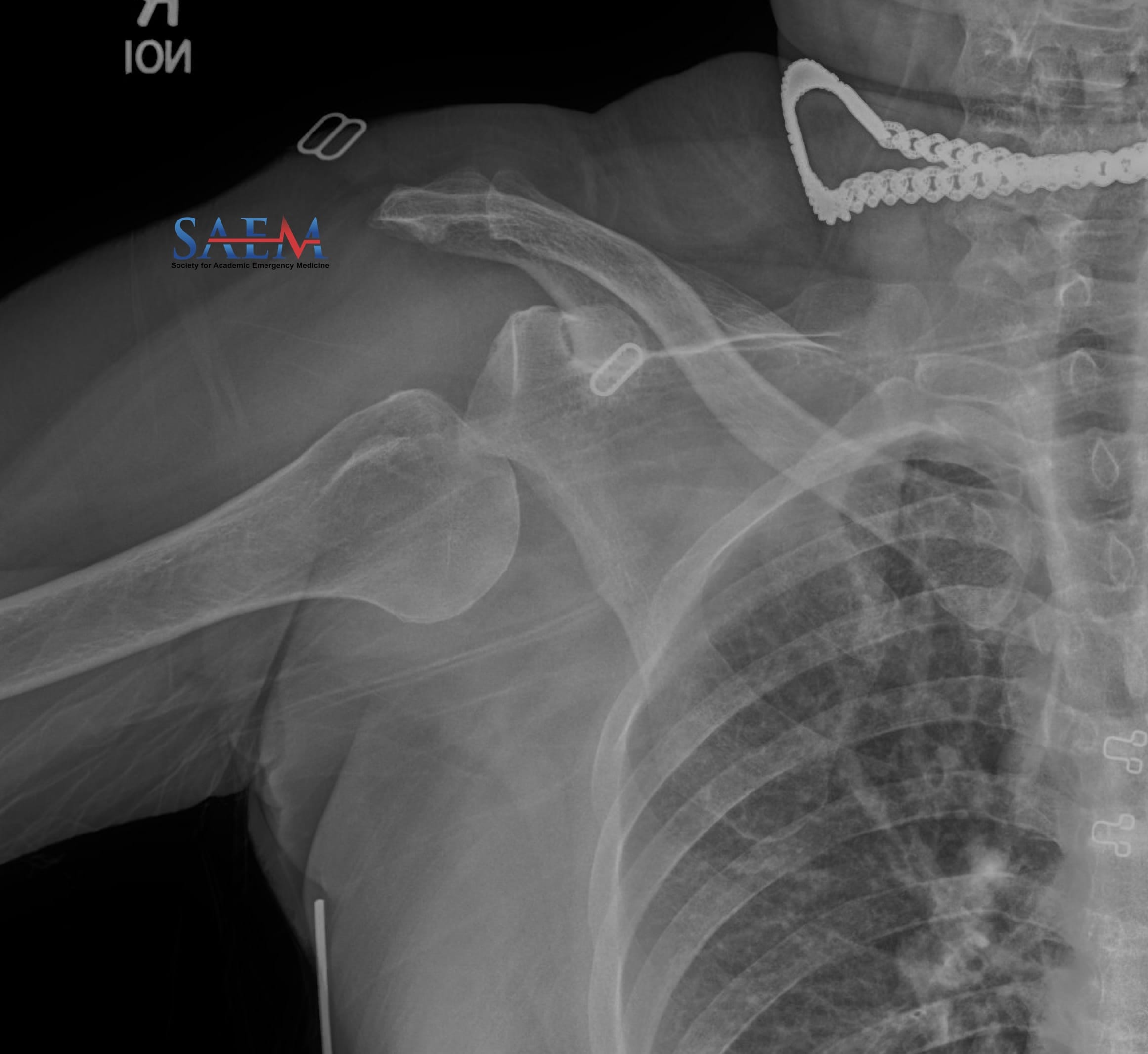
General: Right arm fixed, abducted position and elevated over her head.

Vascular: 2-second capillary refill in all nail beds, strong palpable radial pulse.

Neuro: Sensation intact to light touch on medial and lateral aspects of all distal digits, and throughout entire axillary, radial, ulnar and median nerve distribution.

Motor: Flexor digitorum superficialis (FDS) and flexor digitorum profundus (FDP) intact in digits 2 through 5. Extensor digitorum communis (EDC) and extensor indicis proprius (EIP) intact. Normal finger abduction and adduction. Normal thumb opposition. Normal OK sign. Wrist flexors and extensors intact.

Luxatio erecta (inferior shoulder dislocation) is a rare type of shoulder dislocation. The majority of shoulder dislocations are anterior (over 95%), with a smaller number being posterior (2-4%). Inferior dislocations are the least common injury pattern (0.5%), but prompt identification and treatment are crucial due to the high risk of neurovascular damage.  Radiographs will typically demonstrate the humeral head lying inferior to the glenoid fossa, with the humeral shaft parallel to the spine of the scapula. Classically, the entire arm is held in abduction.

Inferior shoulder dislocation most commonly occurs either due to hyperabduction of the shoulder (such as when grasping at a tree branch above while falling) or through an axial load from above on a hyperabducted arm (as seen in falls or motor vehicle accidents). Patients presenting with inferior shoulder dislocation are at substantial risk for neurovascular compromise, particularly of the axillary nerve, leading to impaired upper extremity movement and sensation. Due to the substantial injury mechanism, patients with inferior shoulder dislocations are also at increased risk for rotator cuff pathology. Treatment of inferior shoulder dislocation is immediate closed reduction to reduce the risk of neurovascular complications. Once reduced, the arm should be placed in an immobilizer to prevent recurrent dislocation.

Take-Home Points

  • Patients with inferior shoulder dislocations often present holding their arm above their head. Often, patients cannot adduct their arm.

  • Axillary nerve injuries occur in about 60% of inferior dislocations. Compared to other dislocations, inferior dislocations have the highest incidence of axillary nerve injuries.

  • Patients with inferior dislocations often present with neurovascular compromise of the affected arm, so be sure to do a thorough exam after reduction.

  • Grate I Jr. Luxatio erecta: a rarely seen, but often missed shoulder dislocation. Am J Emerg Med. 2000 May;18(3):317-21. doi: 10.1016/s0735-6757(00)90127-x. PMID: 10830689.

  • Nambiar M, Owen D, Moore P, Carr A, Thomas M. Traumatic inferior shoulder dislocation: a review of management and outcome. Eur J Trauma Emerg Surg. 2018 Feb;44(1):45-51. doi: 10.1007/s00068-017-0854-y. Epub 2017 Oct 3. Erratum in: Eur J Trauma Emerg Surg. 2018 Feb;44(1):53. doi: 10.1007/s00068-017-0878-3. PMID: 28975397.
SAEM Clinical Images Series: Didn’t See That Coming

hyphema

A 23-year-old healthy male presented to the emergency department with left eye pain, soreness, and blurry vision after being hit in the left eye with a Nerf gun bullet two days prior. He had no prior ophthalmologic history and does not wear corrective lenses.

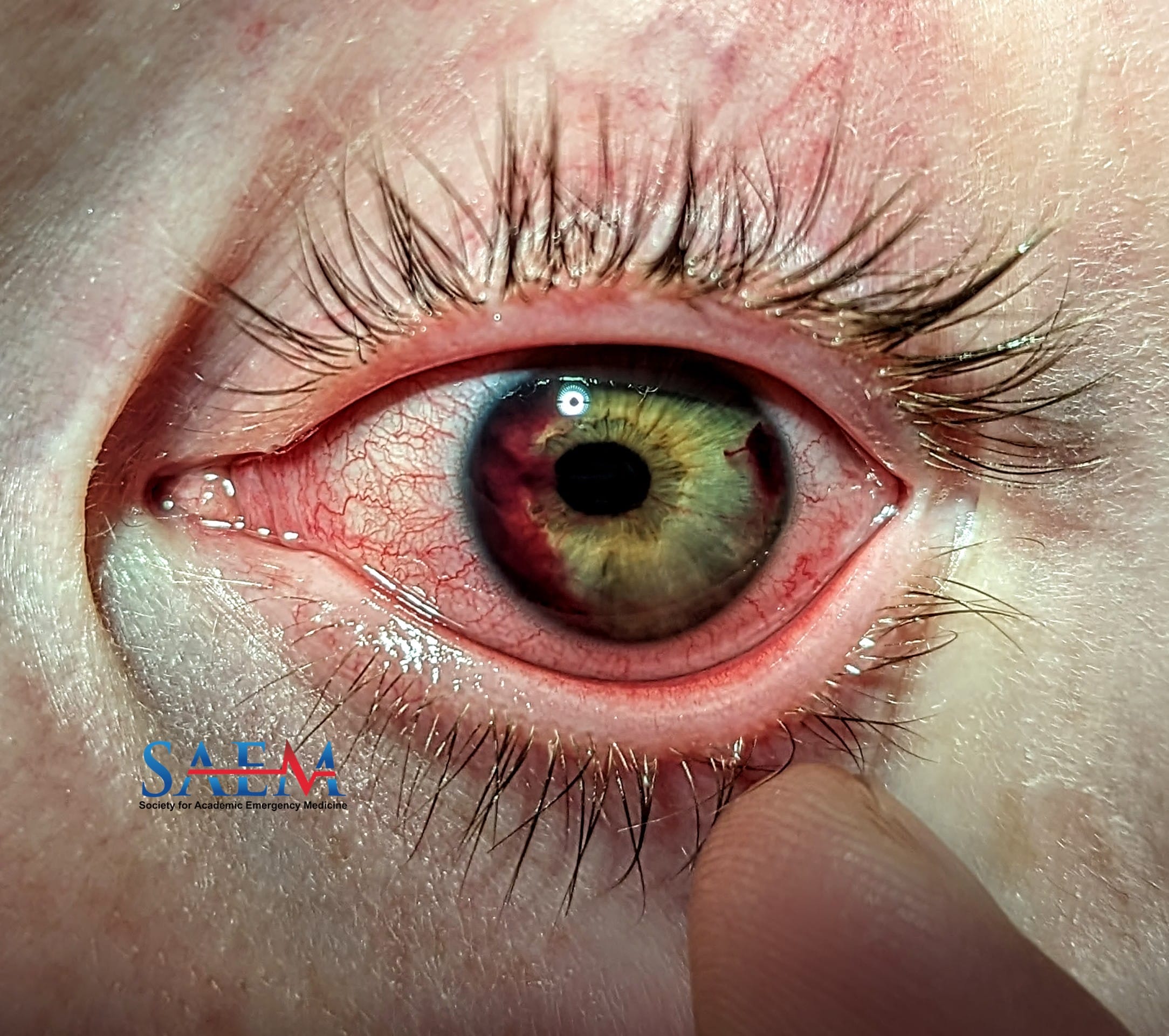
Left eye: Visual acuity 20/30. Intraocular Pressure 17. Pupil 3mm, irregular, minimally reactive. Slit lamp exam revealing 3+ RBCs, vertical layering of blood along the nasal aspect.

Vertical hyphema

Blunt trauma induces shearing forces upon the vasculature of the ciliary body and iris, resulting in the accumulation of red blood cells (RBCs) in the anterior chamber. This space normally contains only clear, aqueous humor. RBCs slowly settle to the bottom of the anterior chamber in a gravity-dependent manner. Classically this develops in a horizontal pattern, but patients who subsequently sleep on their side may experience vertical hyphema formation. Although trauma is the most common etiology, hyphema can occur due to any hematologic abnormality. It is a frequent complication of sickle cell disease. As in all cases of ocular trauma, globe rupture must be immediately ruled out before proceeding with a comprehensive ophthalmologic examination.

The patient had a Grade I hyphema.

Grade 0: No visible layering, but red blood cells within the anterior chamber (microhyphema)

Grade I: Layered blood occupying less than one-third of the anterior chamber

Grade II: Blood filling one-third to one-half of the anterior chamber

Grade III: Layered blood filling one-half to less than total of the anterior chamber

Grade IV: Total filling of the anterior chamber with blood (also known as 8-ball hyphema)

Take-Home Points

  • A hyphema is a collection of blood in the anterior chamber of the eye.
  • Before measuring intraocular pressure, remember to inspect the anterior ocular anatomy with consideration for globe rupture. If this is not excluded, avoid tonometry as it can cause extrusion of aqueous humor and further damage to the globe.
  • Blunt trauma is the most common cause of hyphema. However, non-traumatic hyphema should prompt investigation for hematologic disorders such as Sickle cell disease.

  • Brandt MT, Haug RH. Traumatic hyphema: a comprehensive review. J Oral Maxillofac Surg. 2001 Dec;59(12):1462-70. doi: 10.1053/joms.2001.28284. PMID: 11732035.
  • Gragg J, Blair K, Baker MB. Hyphema. 2022 Dec 26. In: StatPearls [Internet]. Treasure Island (FL): StatPearls Publishing; 2024 Jan–. PMID: 29939579.

SAEM Clinical Images Series: Below the Chin, Badness Lies Within

neck swelling

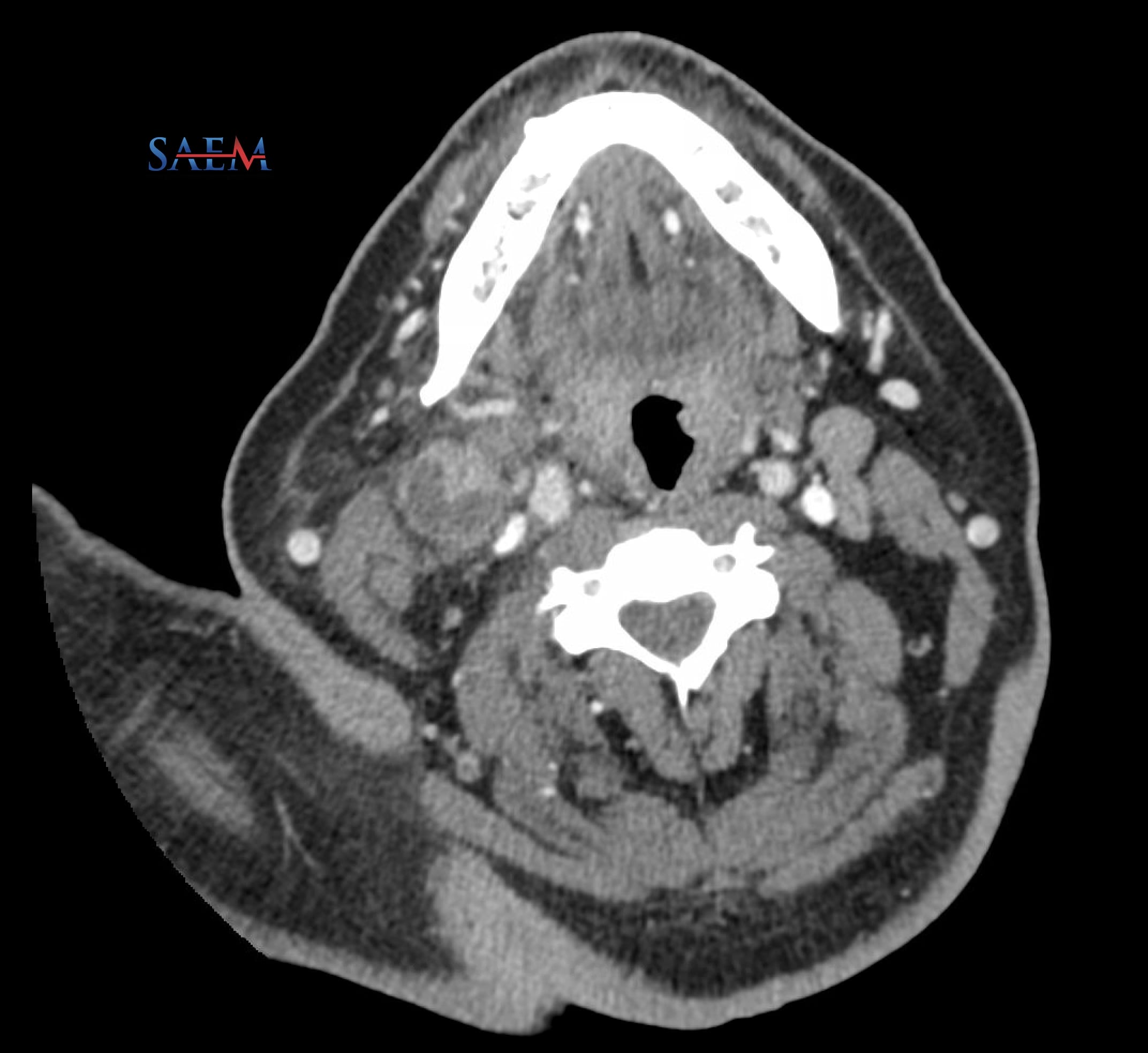
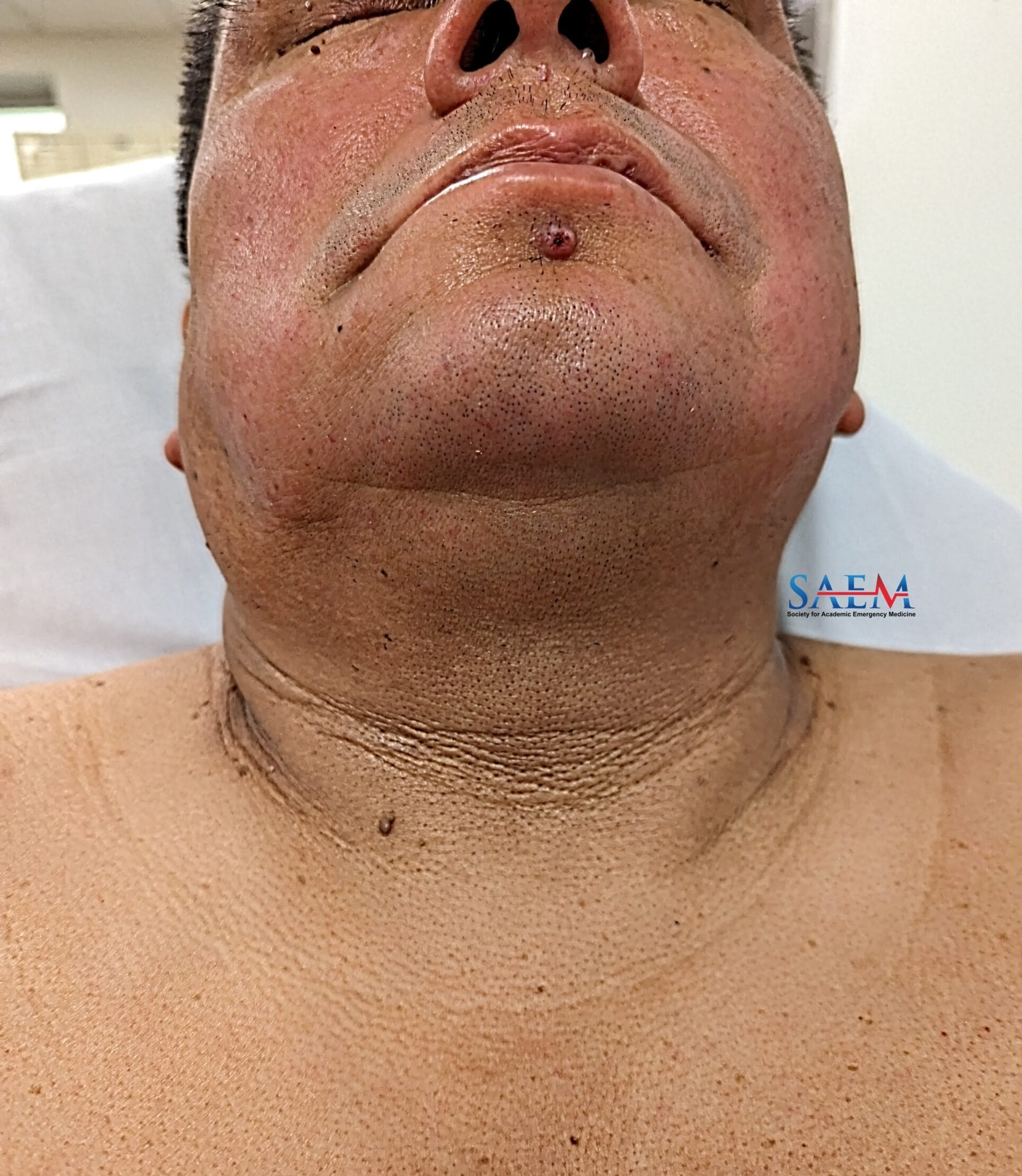
A 50-year-old male with insulin-dependent Type 2 Diabetes presented to the emergency department with three days of pain and swelling on the right side of his neck. He endorsed progression of his symptoms, reporting that he was now having fevers, myalgias, and intermittent difficulty swallowing solid foods.

Vitals: BP 153/96; HR 110; T 100.0°F; RR 16; O2 sat 97%

General: Appears uncomfortable

HEENT: Mild right-sided facial swelling. No trismus. No gingival inflammation or swelling or induration to suggest abscess. There is focal swelling and tenderness to palpation, without overlying erythema, throughout the right submandibular triangle, and along the sternocleidomastoid.

MSK: Limited active right shoulder range of motion secondary to pain

WBC: 10.4

Hgb: 14.4

Plts: 213

Na: 131

K: 3.7

A1C: 13

Lemierre syndrome (LS) is a rare complication of bacterial pharyngitis/tonsillitis and involves an extension of the infection into the lateral pharyngeal spaces of the neck with subsequent septic thrombophlebitis of the internal jugular vein (as seen on CT). Patients may present with trismus, dysphagia, and fever. Due to the possibility of widespread septic emboli, patients may experience sequelae of systemic infection with dyspnea, focal neurologic deficits, and abdominal pain. Treatment consists of prompt antibiosis and rapid source control.

Most cases of bacteremia in Lemierre syndrome are caused by Fusobacterium necrophorum, an anaerobic gram-negative rod that colonizes the oropharynx. This bacterium causes platelet aggregation and thrombus formation through hemagglutinin production and direct activation of the coagulation cascade. However, up to one-third of patients are found to have a polymicrobial infection with streptococcus and staphylococcus species frequently present.

Take-Home Points

  • Lemierre syndrome (LS) is a rare infection. However, the incidence of LS has been increasing in recent decades due to more judicious use of antibiotics for pharyngitis.
  • A high index of suspicion must be maintained to diagnose Lemierre syndrome, with special attention to alternative diagnoses such as Ludwig angina, retropharyngeal abscess, or meningitis.
  • A thorough investigation of associated symptoms is imperative as these may represent sequelae of septic emboli.

  • Foo EC, Tanti M, Cliffe H, Randall M. Lemierre’s syndrome. Pract Neurol. 2021 Oct;21(5):442-444. doi: 10.1136/practneurol-2021-002928. Epub 2021 May 7. PMID: 33963085.
  • Forrester LJ, Campbell BJ, Berg JN, Barrett JT. Aggregation of platelets by Fusobacterium necrophorum. J Clin Microbiol. 1985 Aug;22(2):245-9. doi: 10.1128/jcm.22.2.245-249.1985. PMID: 4031037; PMCID: PMC268368.

Go to Top