


SAEM Clinical Images Series: I Cannot See My Rashes
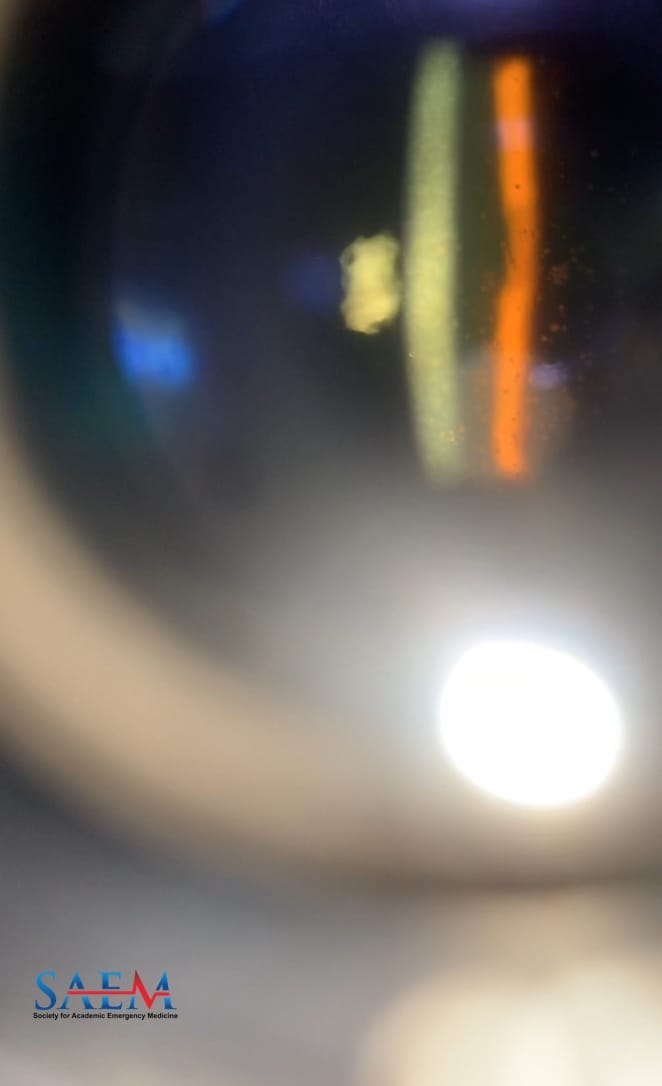
A 37-year-old African-American transgender patient presented with progressive, bilateral painful vision loss. The symptoms began acutely in the right eye two weeks prior to presentation, eventually extending to the left eye. Symptoms were worse in the right eye and included headache, blurry vision, photophobia, and pain with eye movement. Additionally, the patient reported the appearance of a diffuse, generalized, non-pruritic, non-tender rash of unknown duration or timeline. The rash was hyperpigmented and located on the trunk, face, genitalia, palms, and soles. The patient denied any recent trauma, using eye drops, wearing glasses, recent new detergents, soaps, illness, nausea, vomiting or sick contacts.
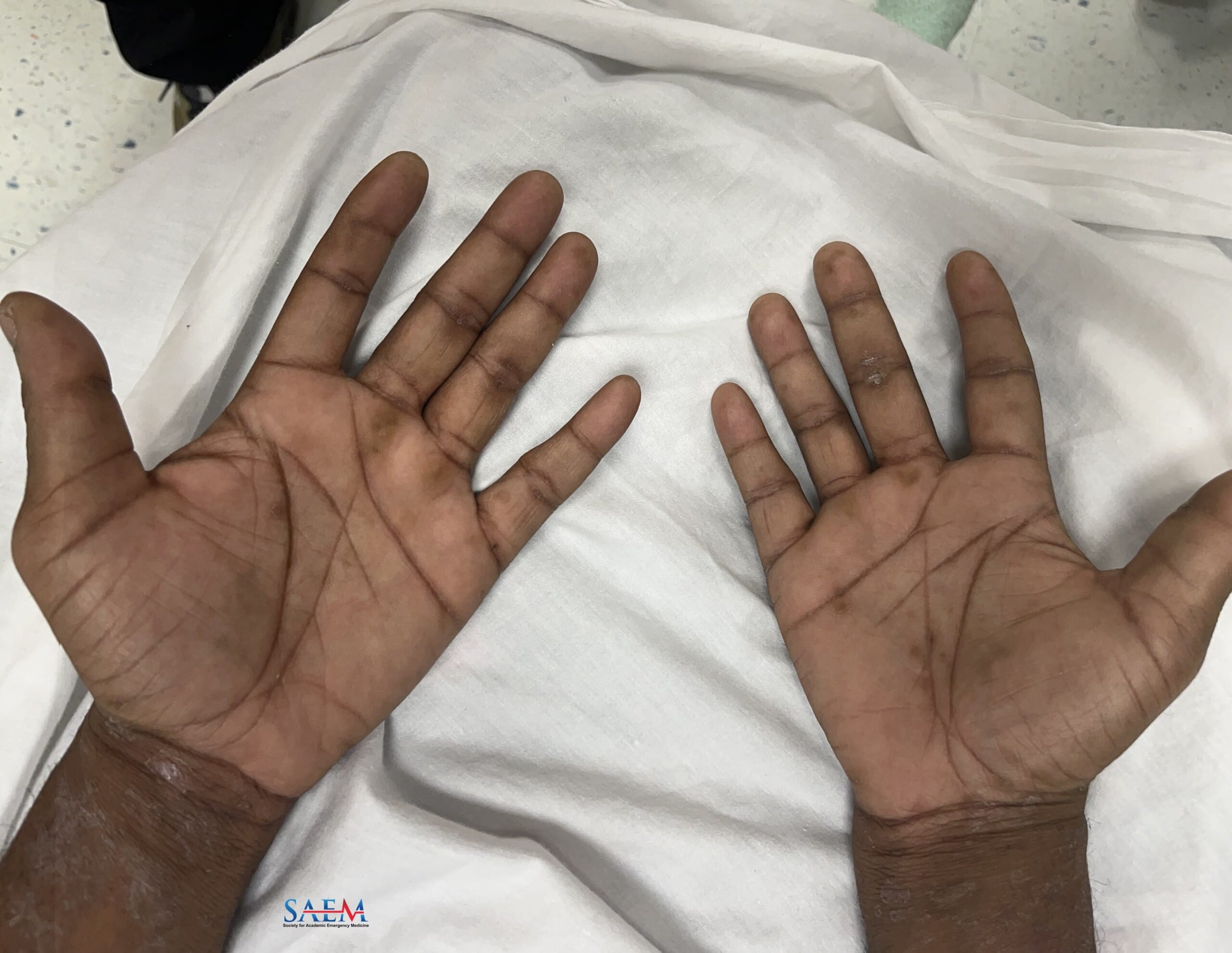
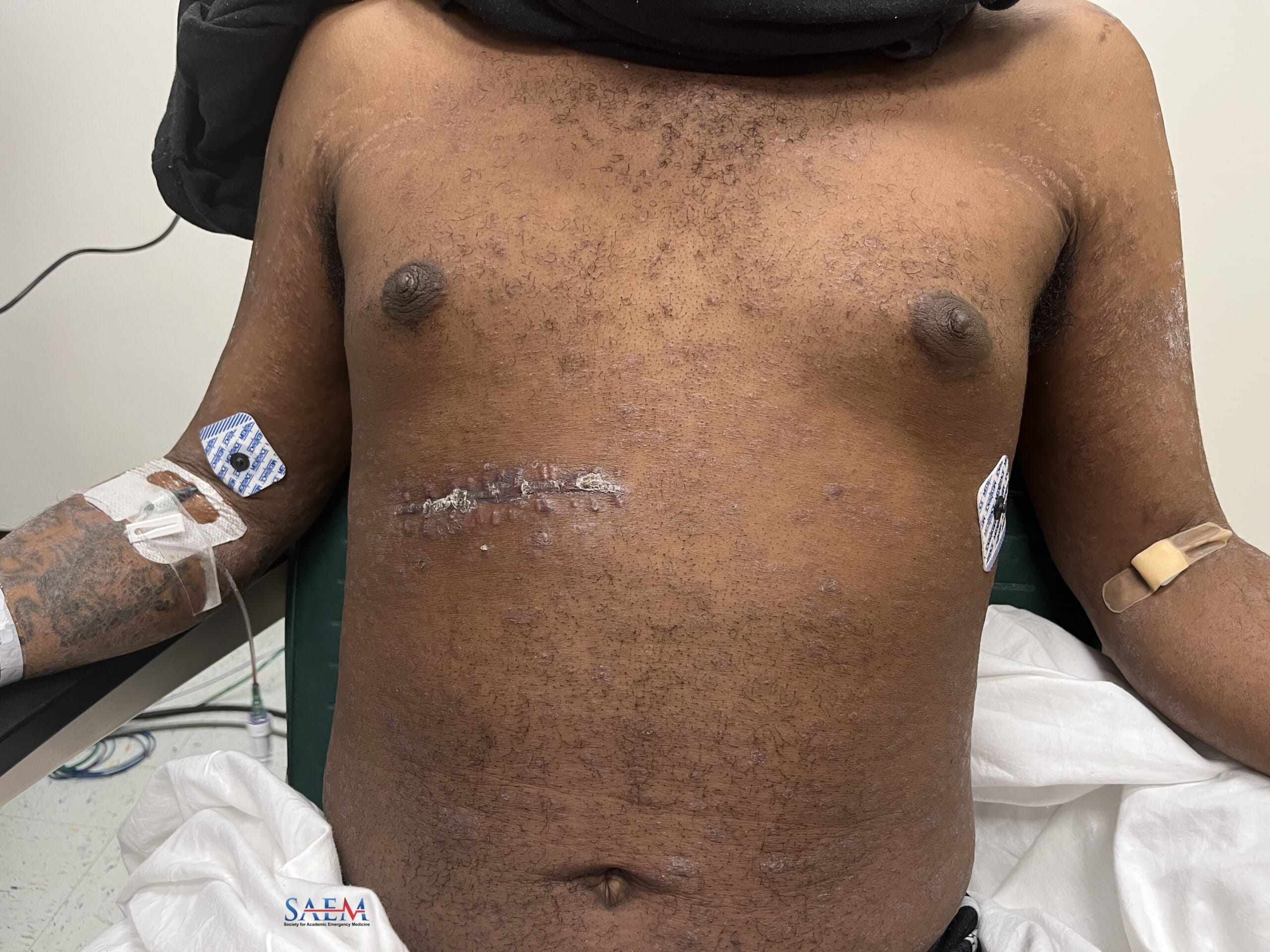
Vitals: HR 114; Temp 101.4 °F; BP 120/77; Resp 16; O2 98%
HEENT: Erythematous eyelids, bilateral conjunctival injection with a hazy cornea. Dilated and poorly reactive pupils, and overlying corneal edema without abrasion. Slit-lamp examination showed keratic precipitates in the anterior chamber. Visual acuity RE 20/200, LE 20/70. Intraocular Pressure (IOP) notable for OD 52, LOS 32.
Respiratory: Good bilateral air entry, clear breath sounds.
Cardiovascular: Normal rate, regular rhythm, S1,S2, no added sounds.
Skin/Extremities: Disseminated maculopapular rash all over the body, not itchy/crusty, nontender.
Neuro: At baseline mental status, AO X 3
WBC: 11.6
Hgb: 11.2
Platelets: 507
ALT: 70
AST: 80
ALK PHOS: 1449
HIV: Non-reactive
Hepatitis B: Non-reactive
Orthopoxvirus DNA: Not-detected
If emergency medicine physicians consider glaucoma due to syphilitic uveitis on their differential for patients presenting with skin and ocular symptoms, this can result in more rapid diagnosis and aggressive treatment. The CDC reported 176,713 cases of syphilis in 2021, showing an annual increase and a collective surge of 28.6% from 2020 to 2021. While the frequency of confirmed syphilis cases can vary, the global trend reveals a consistent rise in reported incidences, suggesting continued transmission of the infection. This is especially concerning because some individuals may not exhibit noticeable symptoms due to its challenging diagnosis and presentation. As a result, not all cases of syphilis are diagnosed or confirmed. Prompt recognition and treatment are crucial to save the patient’s vision and quality of life. The patient was empirically started on IOP-reducing medications, intravenous penicillin and admitted with a presumptive diagnosis of ocular syphilis. During admission, both Rapid Plasma Reagin (RPR) and trepanomal tests confirmed the syphilis diagnosis. Subsequently, the patient’s IOP normalized and vision improved to 20/200 in the right eye and 20/70 in the left.
Take-Home Points
-
High suspicion, improved awareness, increased testing, and effective surveillance systems are essential for accurately assessing the prevalence of syphilis in a given population.
-
Beginning treatment early on and before confirmatory testing in the ED will only help improve patient outcomes throughout hospitalization.
-
Centers for Disease Control and Prevention. Sexually Transmitted Disease Surveillance 2021 – Syphilis. Centers for Disease Control and Prevention. https://www.cdc.gov/std/statistics/2021/overview.htm#Syphilis. Accessed January 10, 2024.
-
Mathew D, Smit D. Clinical and laboratory characteristics of ocular syphilis andneurosyphilis among individuals with and without HIV infection. Br J Ophthalmol.2021;105:70-74.