About Christopher Musselwhite, MD

Attending Physician
University of South Alabama Health System

SAEM Clinical Images Series: Pain and Swelling in a Roofer’s Right Wrist
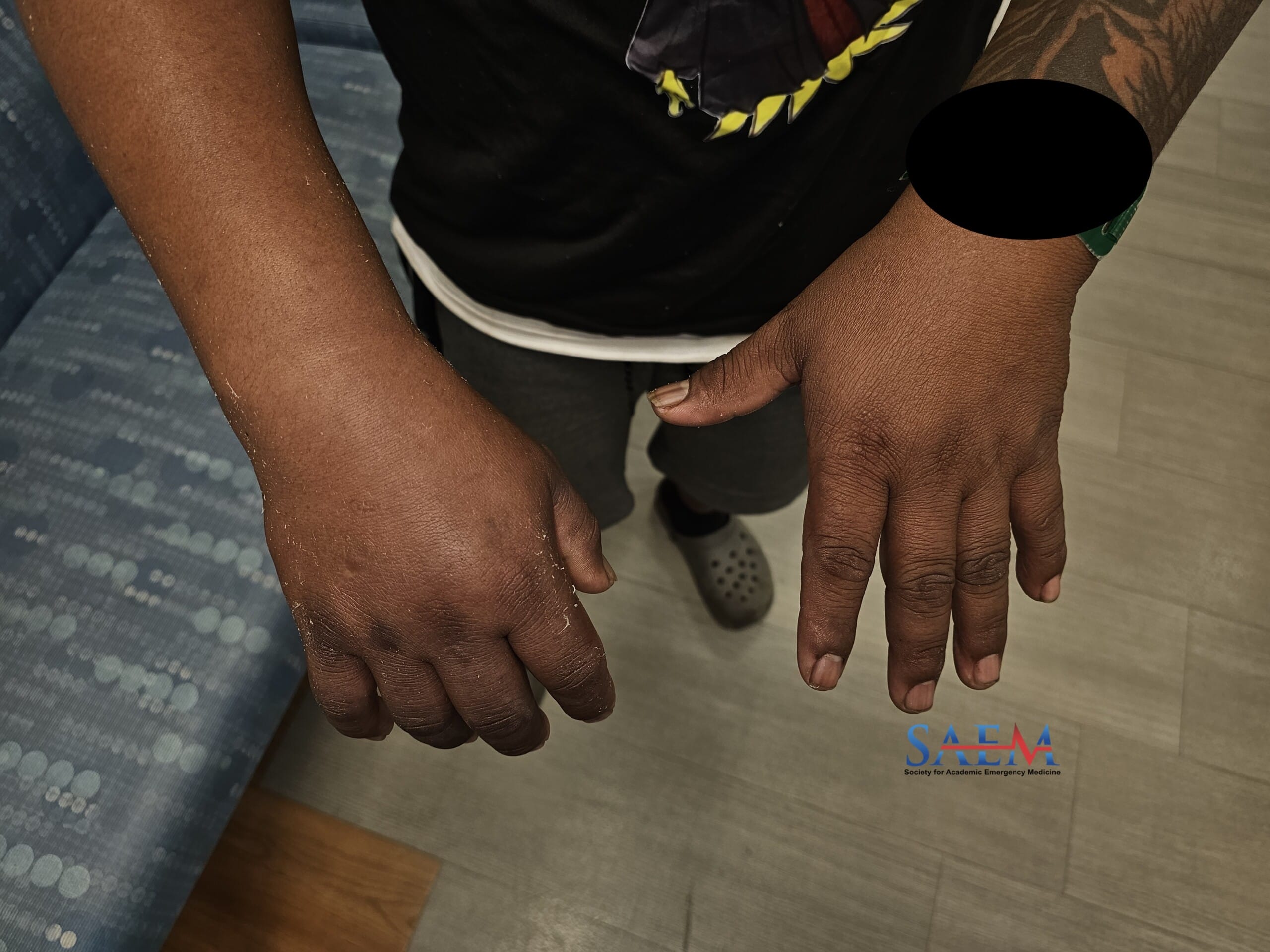
A 27-year-old male with no significant past medical history presented to the ED due to right hand pain and swelling. The patient reported that he works as a roofer and felt severe, sharp pain in his right hand immediately after using a nail gun this morning. The pain was followed by gradual swelling of the right wrist and hand. There was no loss of sensation or bleeding from the injury site. He additionally denied any injury from the nail itself. The patient was in moderate pain but hemodynamically stable while in the ED.
Vitals: Temp 36.6 °C; BP 155/99; HR 71; RR 18; SpO2 99%

General: Alert, mild distress.

Musculoskeletal: No gross deformities to right hand, reduced right hand flexion/extension due to pain, normal ROM of right shoulder and elbow, pain with right forearm supination/pronation, swelling of right hand and fingers and diffusely tender carpal bones.

Non-contributory

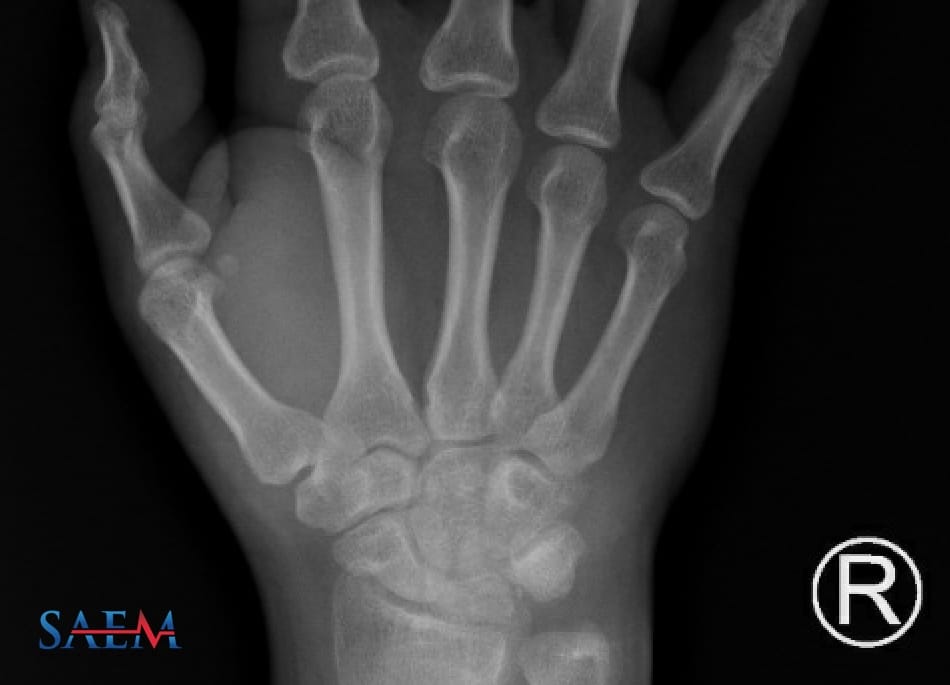
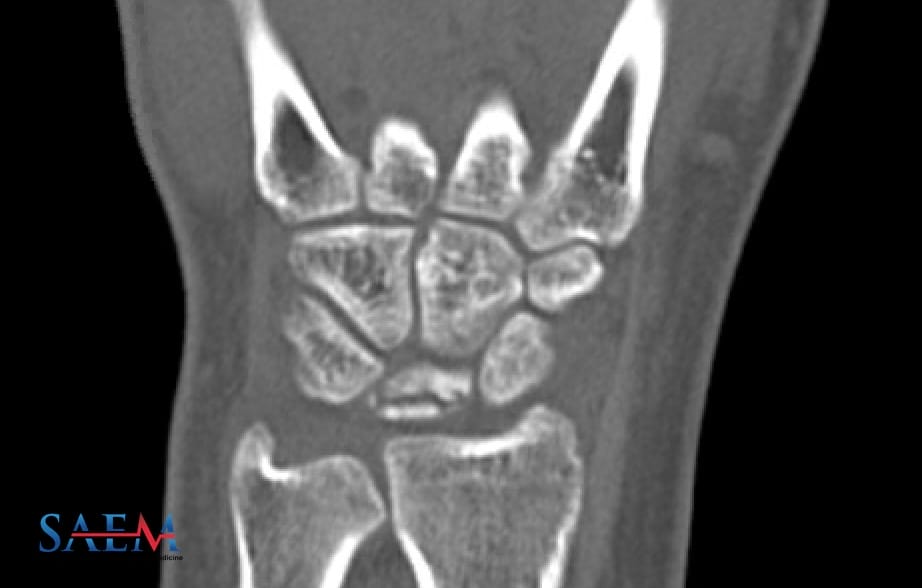
Comminuted lunate fracture. Lunate fractures, especially comminuted lunate fractures, usually result from high-energy trauma, with an incidence ranging from only 0.5% to 6.5% of carpal fractures. Up to one-third of wrist fractures appear to be overlooked on traditional radiography. Further imaging should be warranted for patients who are clinically suspicious of wrist fractures in the ED. Multidetector Computed Tomography (MDCT) with multiplanar reformat capability is a useful method to identify occult wrist fractures.

The blood supply of the lunate bone comes from the palmar and medial arteries of the carpometacarpal branch of the radial artery. Damage to the artery may lead to avascular necrosis (Kienböck disease). Comminuted lunate fractures may result in severe intraosseous destruction of vasculature, increasing the risk of lunate bone necrosis. An at-risk nerve is the median nerve, which runs through the carpal tunnel. If the lunate is fractured or displaced, it may compress or damage the median nerve, resulting in pain, paresthesia, or sensory loss in the palmar surface of the thumb, index, and middle fingers and radial half of the ring finger.

Take-Home Points

  • Associated risk factors for a lunate fracture include occupations or sports involving repetitive pressure to the base of the hand with the wrist in extension (eg, roofer, gymnast, jack-hammer operator).

  • Due to complex carpal anatomy, traditional radiography may not be sufficient to detect lunate fractures.

  • At-risk structures that require evaluation in the case of lunate fracture include the palmar and medial branches of the radial artery and the median nerve.

  • Li, Jun, et al. “Comminuted lunate fracture combined with distal radius fracture and scaphoid fracture: A case report.” Medicine, vol. 102, no. 29, 2023, https://doi.org/10.1097/md.0000000000034393.

  • Balci, Ali, et al. “Wrist fractures: Sensitivity of radiography, prevalence, and patterns in MDCT.” Emergency Radiology, vol. 22, no. 3, 2014, pp. 251–256, https://doi.org/10.1007/s10140-014-1278-1.

  • Geissler, William B. “Carpal fractures in athletes.” Clinics in Sports Medicine, vol. 20, no. 1, 2001, pp. 167–188, https://doi.org/10.1016/s0278-5919(05)70254-4.
SAEM Clinical Images Series: When it is Not Just a Knot

knot

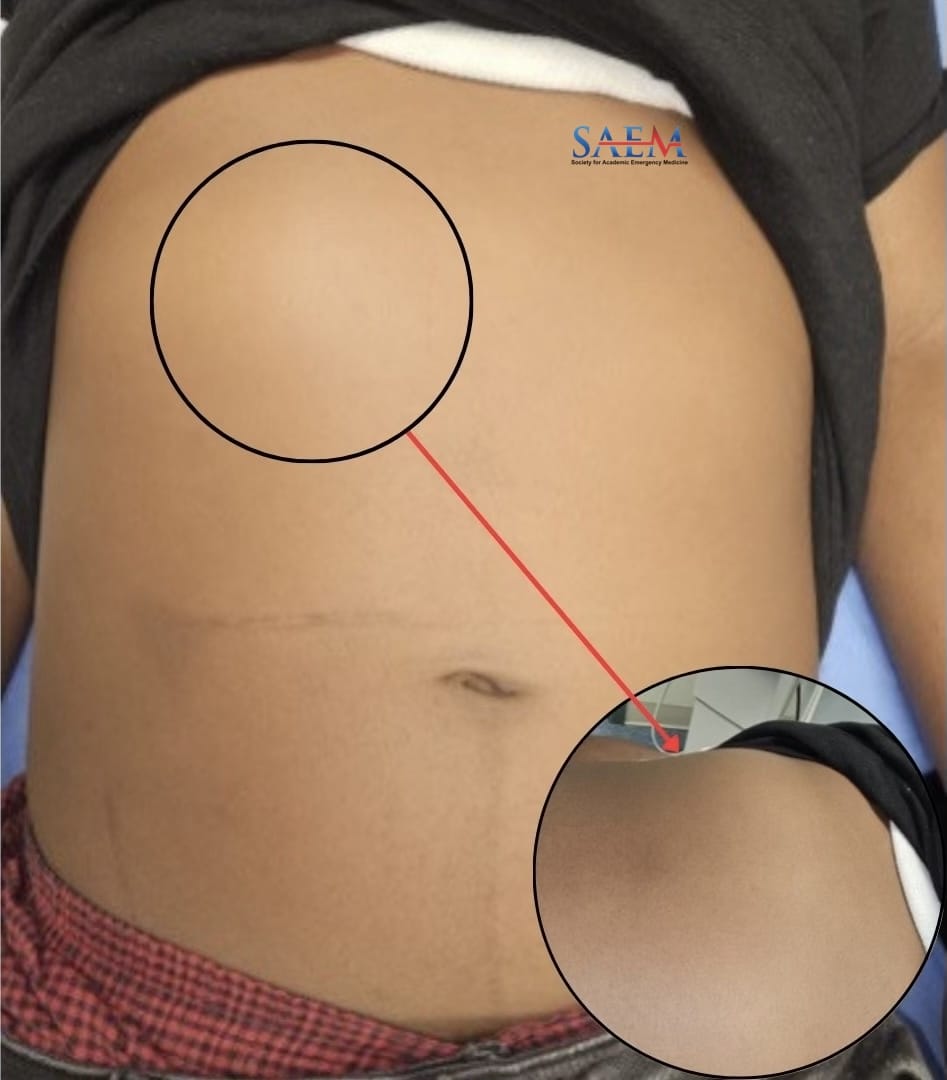
A 12-year-old male with a history of hydrocephalus status post ventriculoperitoneal (VP) shunt placement presented with an abdominal “knot.” The patient’s mother noticed the knot two days ago, on the right anterolateral thorax, which has steadily been increasing in size. The patient had no known trauma to the area or had been bitten or stung by any insect. He has otherwise been complaining of a headache, generalized, without positional changes, improved with home acetaminophen, ice pack, and rest. There were otherwise no associated vision changes, nausea, vomiting, mental status changes, or fever.

Vitals: T-36.2°C; HR 74 bpm; BP 144/75 mm Hg; RR 20; O2 Sat 96% RA

General: Well-appearing teenager in NAD.

HEENT: NC/AT. PERRL approximately 2-3 mm bilaterally. EOMI.

Neck: Supple, no meningismus.

Chest Wall: Induration to the right anterolateral thorax 5 cm x 4 cm without erythema, fluctuance, or drainage, non-tender to palpation.

Neurological: Alert. No focal neurological deficit observed.

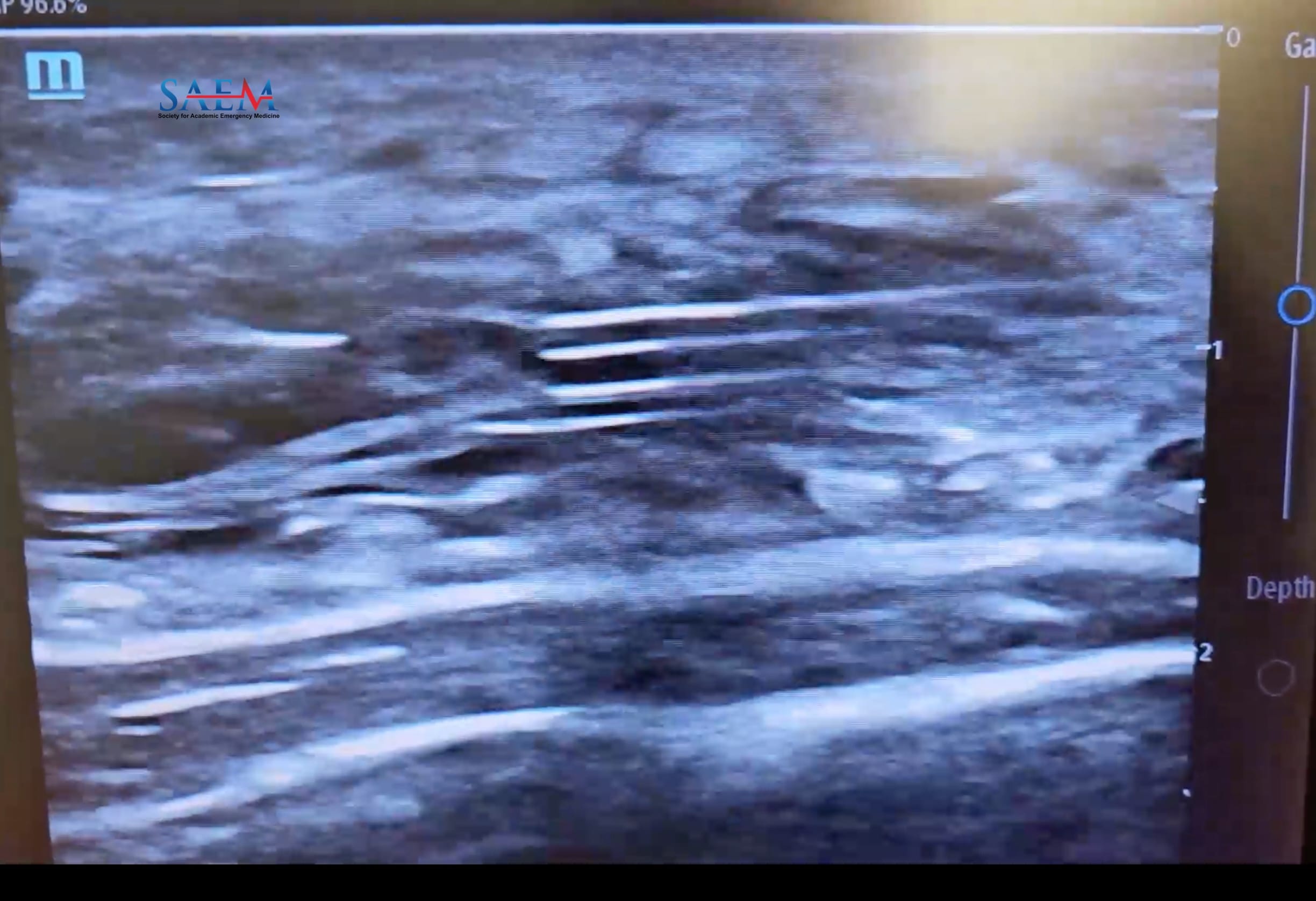
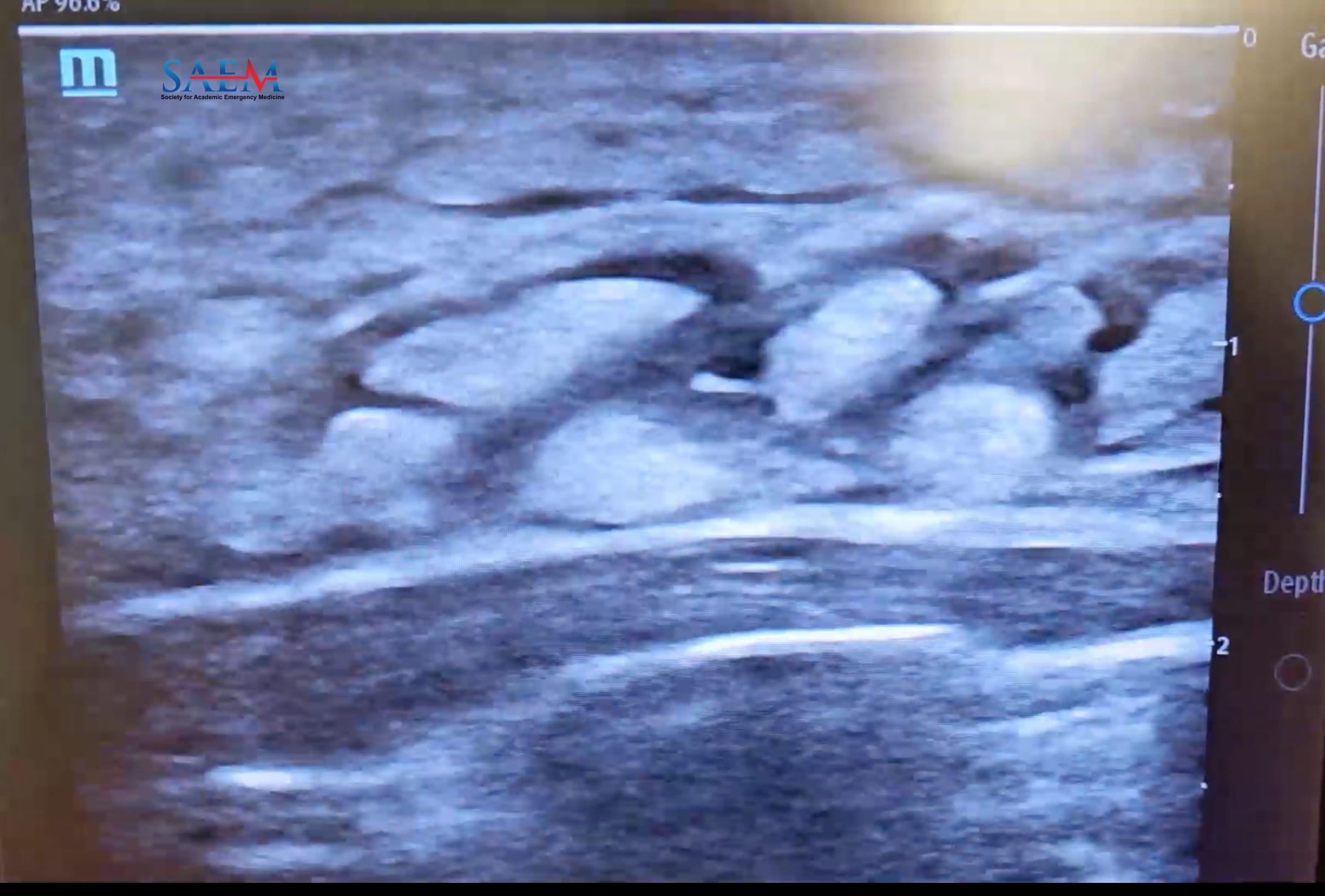
The cause of the knot is subcutaneous cerebrospinal fluid from a shunt malfunction. The ultrasound images show characteristic “cobblestoning,” indicating fluid in the subcutaneous tissue, around a linear hyperechoic object, the catheter of the VP shunt. On the plain film imaging, a disconnect was found between the thoracic and abdominal portions of the VP shunt. Up to 80% of patients with VP shunts will have experienced a shunt malfunction after 12 years, according to one study, with fractured tubing causing shunt failure in around 15% of all cases (1).

Nausea, vomiting, headache, irritability, or decreased mental status are common but nonspecific findings in shunt malfunction. Pediatric patients may present with other signs such as bulging fontanelles, increasing head circumference, or feeding and behavioral changes. An increase in the interval ventricular size can be seen in neuroimaging but can be absent in as many as 20% of patients (2). If there is a high degree of clinical suspicion for shunt malfunction, normal or unchanged neuroimaging should not preclude neurosurgical consultation.

Take-Home Points

  • In the United States, mechanical causes of VP shunt malfunction are the most common presentation, such as catheter obstruction, fracture along the clavicle or ribs, degradation of tubing, and migration of the distal catheter due to changes in height or weight.
  • Rarely, patients can develop an accumulation of CSF at the distal catheter of the VP shunt due to migration into the abdominal wall forming an abdominal pseudocyst.
  • In patients with VP shunts, abdominal complications should be considered as a sign of shunt malfunction.
  • Consider pertinent physical exam findings and POCUS to confirm the diagnosis of shunt malfunction at the distal catheter.

  • Sainte-Rose C, Piatt JH, Renier D, Pierre-Kahn A, Hirsch JF, Hoffman HJ, Humphreys RP, Hendrick EB. Mechanical complications in shunts. Pediatr Neurosurg. 1991-1992;17(1):2-9. doi: 10.1159/000120557. PMID: 1811706.

  • Reynolds RA, Ahluwalia R, Krishnan V, Kelly KA, Lee J, Waldrop RP, Guidry B, Hengartner AC, McCroskey J, Arynchyna A, Staulcup S, Chen H, Hankinson TC, Rocque BG, Shannon CN, Naftel R. Risk factors for unchanged ventricles during pediatric shunt malfunction. J Neurosurg Pediatr. 2021 Sep 24;28(6):703-709. doi: 10.3171/2021.6.PEDS2125. PMID: 34560626.

Go to Top