


SAEM Clinical Images Series: Strawberry Tongue
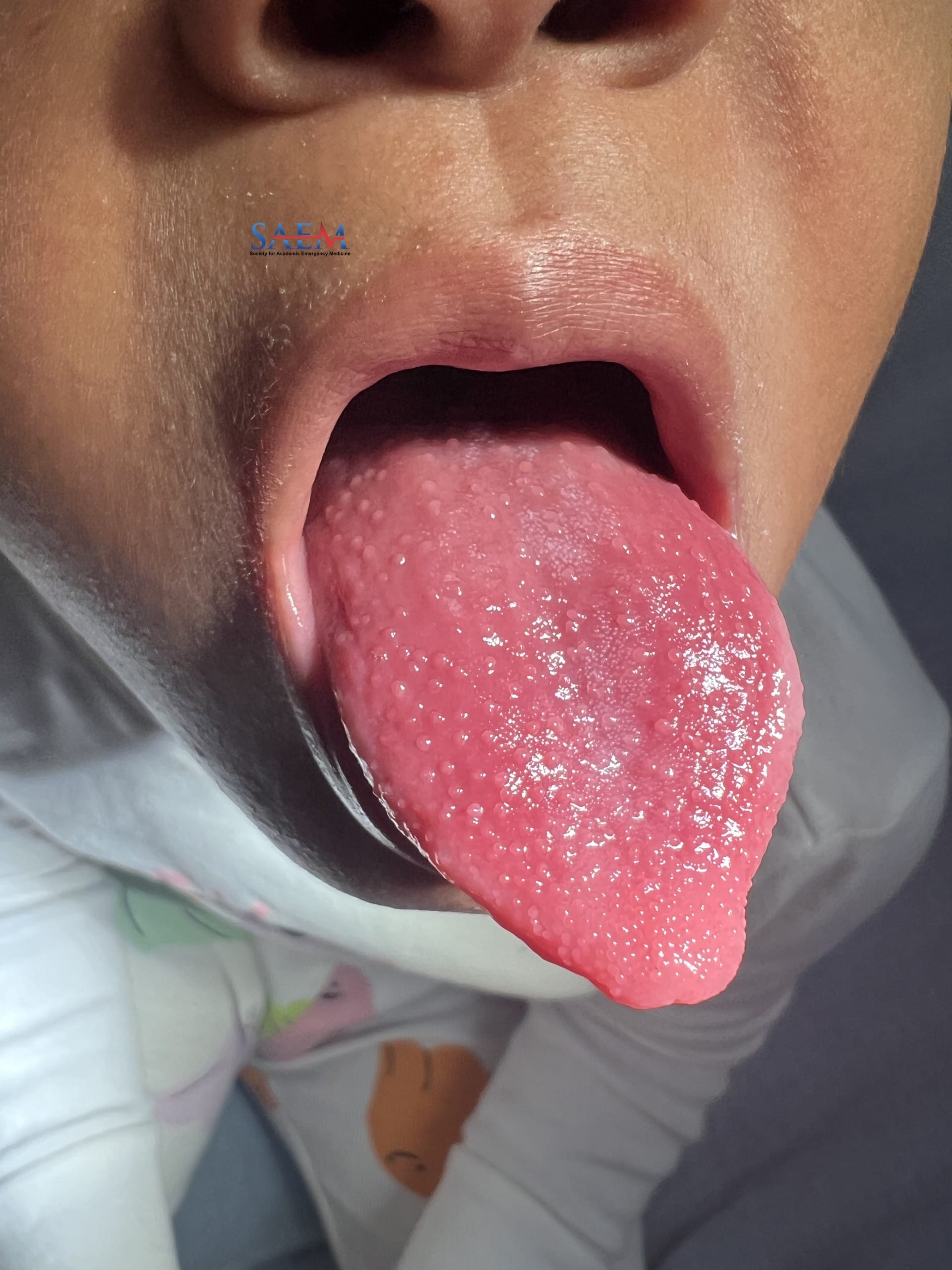
A 7-year-old male with no significant past medical history presented to the Emergency Department complaining of a sore throat. The parents stated that he had been running fevers for two days along with a worsening sore throat. The patient had been able to swallow, but had decreased oral intake secondary to pain. There are no other complaints at the time.

Vitals: BP 110/70; HR 111; R 17; T 101°F; O2 sat: 99% on room air.
General: Well appearing, no acute distress, normal voice.
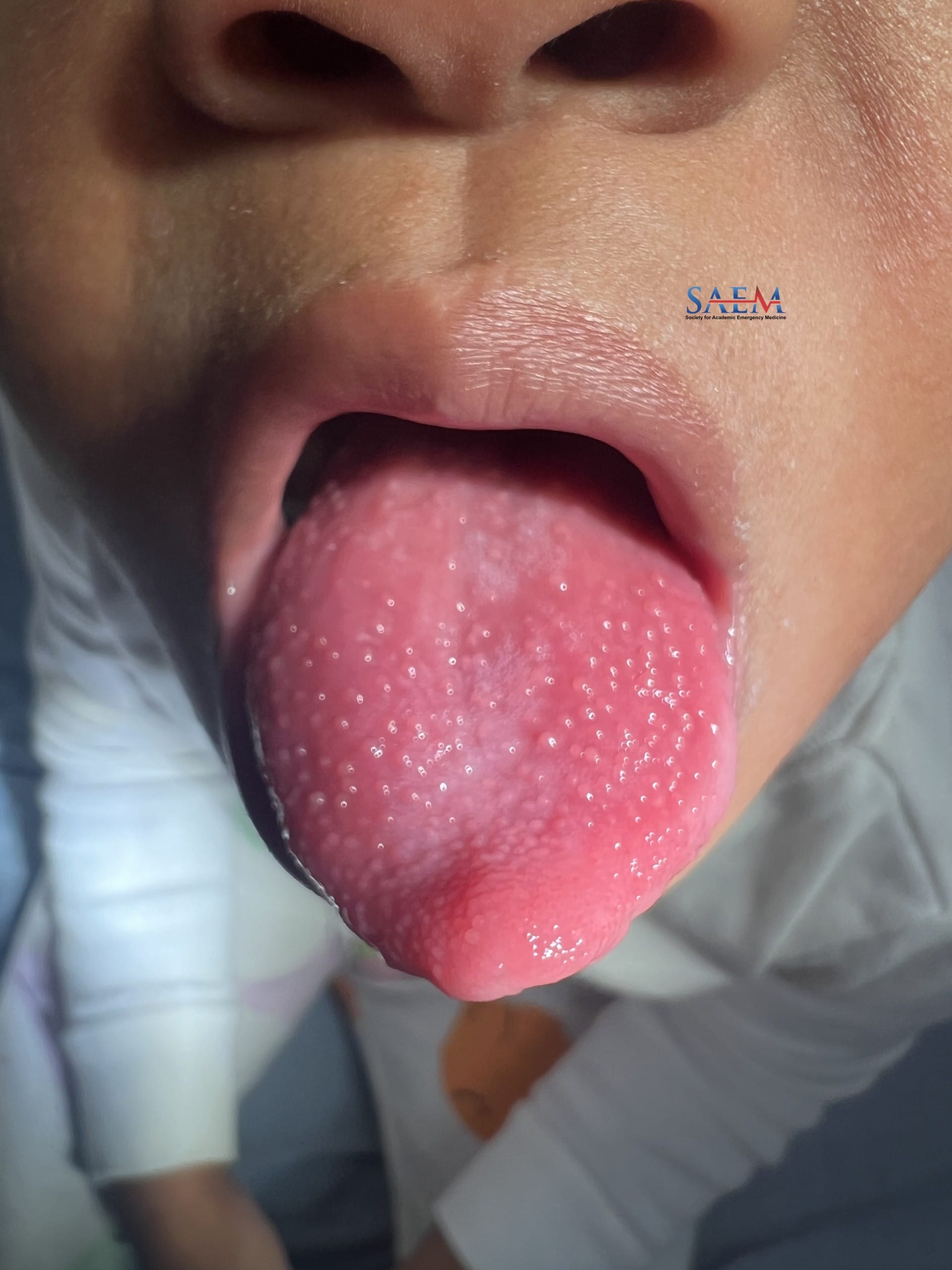
HEENT: There is no sign of conjunctivitis. Oropharyngeal exam is remarkable for exudative pharyngitis with tonsillar swelling. There is no sign of peritonsillar abscess or airway compromise. Uvula midline and normal. Tongue as shown. Anterior cervical lymphadenopathy is present.
Respiratory: Clear to auscultation bilaterally.
Cardiovascular: Tachycardia without murmur.
Abdomen: Non-tender, no organomegaly.
Skin: Relevant findings as shown.
Non-contributory
Strawberry tongue and sandpaper rash.
Scarlet fever
Scarlet fever is caused by Group A Streptococcus (S. pyogenes), and most commonly occurs in children aged 5-15 years. The illness typically begins with a prodrome of fever, sore throat, headache, and abdominal pain, followed 1-2 days later by a distinctive coarse rash with a texture that resembles sandpaper. Exudative pharyngitis is usually present. The tongue may initially have a white coating which fades by day 4-5, revealing a bright red, “strawberry tongue” as seen in this case. The rash usually starts on the neck, axillae, and groin, and then spreads to the trunk and extremities. Pastia lines, which are linear petechial eruptions, may be present in the antecubital and axillary folds. Facial flushing with a pale area around the mouth is also common. Desquamation of the skin may occur about two weeks after the rash appears. A rapid strep test can quickly confirm the diagnosis. If scarlet fever is left untreated, it can lead to serious complications such as rheumatic fever or post-streptococcal glomerulonephritis. Early diagnosis and treatment with antibiotics, usually penicillin or amoxicillin, are effective in preventing sequelae.
Take-Home Points
-
Scarlet fever is characterized by strawberry tongue, sandpaper rash, and exudative pharyngitis. The cause is Group A Streptococcus.
-
Early diagnosis and antibiotic treatment are crucial to prevent the serious potential complications of untreated scarlet fever, such as rheumatic fever and post-streptococcal glomerulonephritis.
-
The Sanford Guide to Antimicrobial Therapy. Dallas, TX :Antimicrobial Therapy, Inc., 1995.