


Discussing Annals EM article: Social Media and Physician Learning
 I was delighted to see the News and Perspectives piece in this month’s Annals of Emergency Medicine about “Social Media and Physician Learning” (free PDF). I had totally forgotten that Jan Greene, the author, had called to talk with me several months ago. In the piece, she discusses many of the issues with which I struggle:
- Is peer review good or bad?
- What is the role of blog and podcast sites in the future of medical education?
- With the ease of how anyone can be “published” on blogs, how can one decide on the trustworthiness of open educational resources such as FOAM?
- Can or should social media education practices be held up to the rigorous scientific standards of original research?
Here are some noteworthy quotes:
 Pauses in chest compressions are known to be detrimental to survival in cardiac arrest, so much so that the 2010 American Heart Association (AHA) emphasize high-quality compressions while minimizing interruptions. There have been some studies that now advocate for continuous chest compressions during a defibrillation shock. There have been substantial changes to external defibrillation technology including: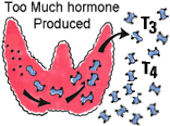
 The prevalence of hyperthyroidism in the general population is about 1-2%, and is ten times more likely in women than men. The spectrum of hyperthyroidism ranges from asymptomatic or subclinical disease to thyroid storm. So how do we diagnose various presentations of hyperthyroidism in the Emergency Department? Below are answers to 7 common questions that commonly arise.