


Diagnose on Sight: Scrotal Swelling

Case: A 58-year-old male with no past medical history presents to the emergency department for evaluation of right lower quadrant abdominal pain associated with right scrotal swelling. The patient reports that he had a colonoscopy the day before to remove a 20 mm polyp, which had been seen on an outpatient CT scan. He states that he noticed that his right scrotum appeared slightly swollen immediately away after the procedure, but since then the swelling had increased and he developed mild right lower quadrant abdominal pain. Physical examination reveals mild tenderness to the right lower quadrant and swelling of the right scrotum with palpable crepitus of the right scrotum and inguinal canal. There is no overlying skin discoloration. What is the most likely diagnosis?
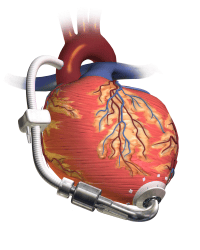 Left ventricular assist devices (LVADs) have moved from being a bridge to a heart transplant to destination therapy for patients with severe heart failure. Although their use in the general public has increased, they still provide a challenge to the emergency medicine (EM) physician. This series aims to cover the basics of how the EM physician approaches the care of these patients.
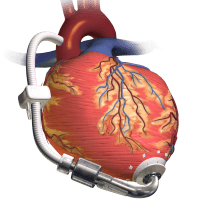 Left ventricular assist devices (LVADs) have moved from being a bridge to a heart transplant to destination therapy for patients with severe heart failure. Although their use in the general public has increased, they still provide a challenge to the emergency medicine (EM) physician. This series aims to cover the basics of how the EM physician approaches the care of these patients.
 A 35-year-old female emergency medicine physician presents for evaluation for severe myalgias, headache, fatigue, mild nasal congestion, profound anosmia, cough, and subjective fevers and chills. She has no measured temperature above 100.4°F, but has been taking anti-inflammatories around the clock. The day previously, she called occupational health and received testing for the novel coronavirus. The next day, her test returns positive. What happens next? We are here to share our personal experiences with COVID-19 and provide some resources to best support yourselves, your families, your learners, and your colleagues throughout this uncertain and ever-changing situation.
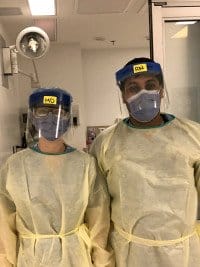 Your team in the Emergency Department (ED) receives a call from your local Emergency Medical Services (EMS) crew informing you that they are transporting a patient with high suspicion of COVID-19 in severe respiratory distress. As you assemble your team in preparation for a Protected Code Blue (PCB), your staff (including physicians, nurses, respiratory therapists, etc.) begins donning full Personal Protective Equipment (PPE). PPE includes donning a gown, gloves, face mask, goggles and/or a face shield.