The patient is a 47-year-old female whose past medical history includes ESRD on dialysis, type 1 diabetes, and hypertension, who presents to the Emergency Department for uncontrollable right-sided movements of her body. The patient states these symptoms have been present for several weeks and have progressively worsened over the past week. She reports difficulty with ambulation secondary to these involuntary movements of the right side of her body. She denies any missed dialysis sessions. She denies fever, headaches, sensory problems, or any other complaints at this time.

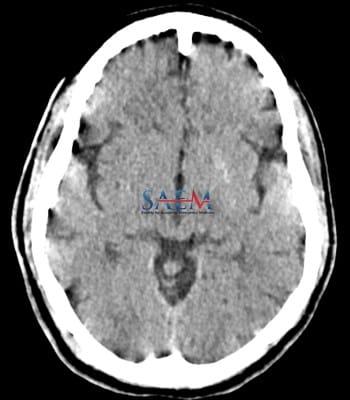
Vitals: BP 201/88 HR 92 R 18 T 97.5 O2sat 99% room air. General: Awake and alert, no acute distress. Cardiovascular: Regular rate and rhythm with no murmur. Right upper extremity fistula with good thrill and no signs of infection. Neurologic: GCS 15, moving all four extremities well. Cranial nerves intact, but repetitive twitching of the right side of the face is seen on examination. There are repetitive jerking movements of her right upper and right lower extremity. Sensation intact and equal bilaterally. CMP: Na 127 Hyperintensity along the left lentiform nucleus. Hemichorea-Hemiballismus Syndrome. There is a stripe of hyperintensity along the left lentiform nucleus seen on head CT, which is a finding consistent with hemichorea- hemiballismus syndrome. This syndrome is a rare presentation that can occur in the setting of acute hyperglycemia or uncontrolled diabetes. Patients with hemichorea-hemiballismus syndrome typically present with involuntary movements of upper and lower limbs, usually unilaterally, but in even more rare cases bilateral symptoms may occur. Neuroimaging may show hyperintense lesions along the contralateral striatum of the affected extremities. Proposed pathophysiology of this syndrome includes hyperviscosity secondary to hyperglycemia and disruption of the blood- brain barrier, decrease in GABA availability in the striatum, and hypersensitivity of the dopamine system receptors due to decreased estrogen concentration in postmenopausal women. Treatment includes management of hyperglycemia; neurological symptoms typically resolve with glycemic control.
K 4.5
Cl 92
HCO3 25
BUN 24
Creat 5.5
Glucose 540Take-Home Points
Copyright
Images and cases from the Society of Academic Emergency Medicine (SAEM) Clinical Images Exhibit at the 2025 SAEM Annual Meeting | Copyrighted by SAEM 2025 – all rights reserved. View other cases from this Clinical Image Series on ALiEM.

Dong Lee, MD
Emergency Medicine
Carilion Clinic – Virginia Tech Carilion

Latest posts by Dong Lee, MD (see all)
- SAEM Clinical Images Series: I Cannot Control My Right Side - December 19, 2025

Andrew Moore, MD MCR
Emergency Medicine
Carilion Clinic – Virginia Tech Carilion

Latest posts by Andrew Moore, MD MCR (see all)
- SAEM Clinical Images Series: I Cannot Control My Right Side - December 19, 2025

Stephanie Lareau, MD, FACEP, FAWM
Dept. of Emergency Medicine
Virginia Tech Carilion School of Medicine

Latest posts by Stephanie Lareau, MD, FACEP, FAWM (see all)
- SAEM Clinical Images Series: I Cannot Control My Right Side - December 19, 2025
- How I Educate Series: Stephanie Lareau, MD - October 26, 2022