



EM Match Advice: Program Directors Reflect on the 2016 Match
The new emergency medicine (EM) residency application season is upon us! Senior medical students are arranging away EM electives, asking for letters of recommendations, and thinking about what residency programs to apply to. But before we look forward, what lessons can we learn from the 2016 EM Residency Match? In this EM Match Advice series installment, an esteemed panel of program directors reflect on the trends, surprises, and lessons learned from the 2015-16 year. Dr. Michael Gisondi (Northwestern) hosts the discussion with the panelists Dr. Diane Rimple (University of New Mexico), Dr. Michael Bond (University of Maryland), and Dr. Christopher Doty (University of Kentucky). [+]
MEdIC Case: The Case of the Honorary Authorship
Welcome to season 3, episode 9 of the ALiEM Medical Education in Cases (MEdIC) series! Our team (Brent Thoma, Sarah Luckett-Gatopoulos, Tamara McColl, Eve Purdy, John Eicken, and Teresa Chan) is pleased to welcome you to our online community of practice where we discuss the practice of academic medicine! In this month’s case a junior staff person is unsure of whether or not to include a senior staff on a paper. [+]
IDEA Series: Just-in-Time Procedural Training for Endotracheal Intubation
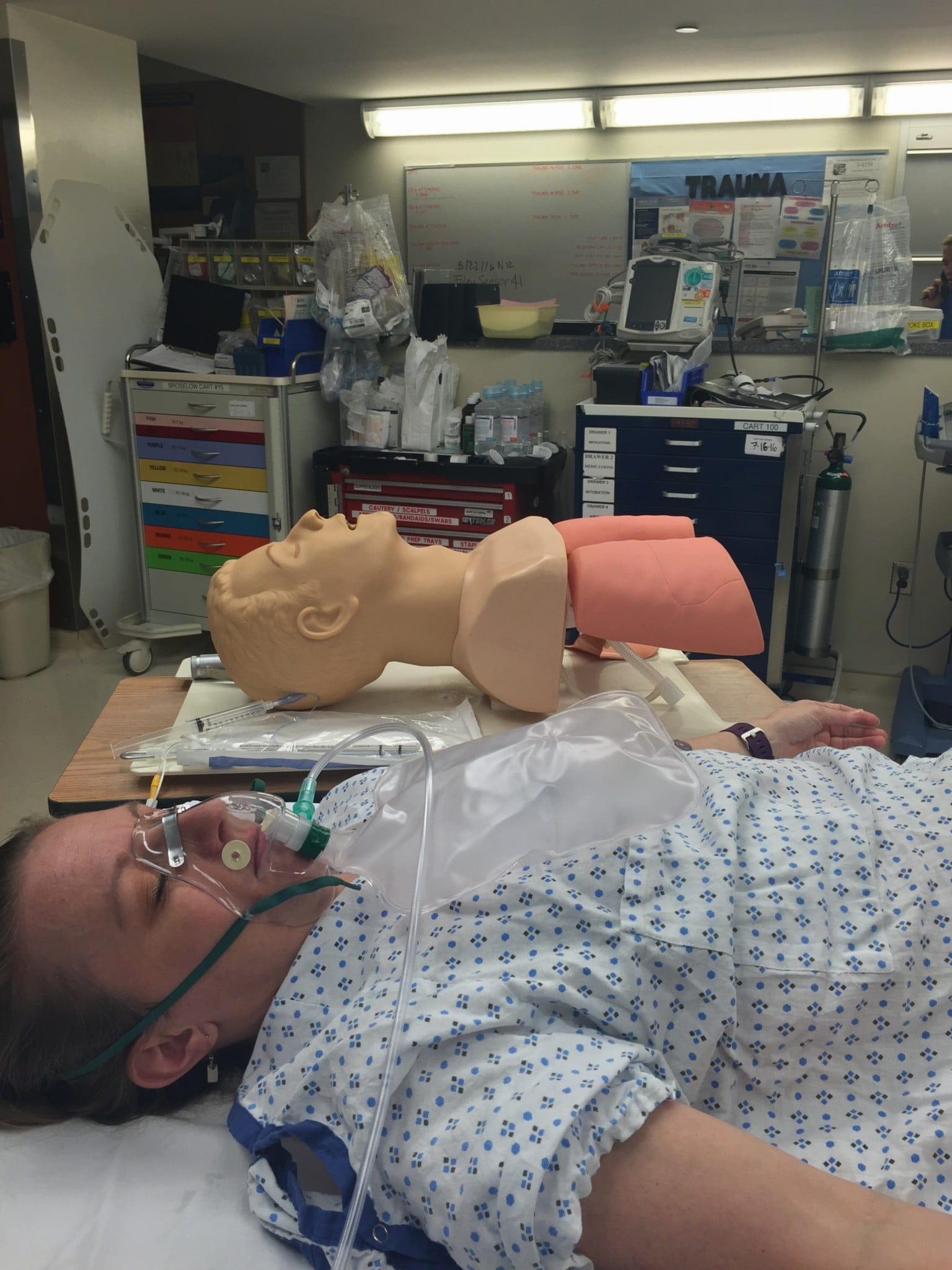
The Problem Procedural training is critical in emergency medicine (EM). EM residents must effectively acquire the skills to safely and accurately perform high-stakes, invasive, and life-saving procedures during high-pressure scenarios. Residency programs typically incorporate procedural skills workshops into didactic sessions, which results in residents practicing procedures several weeks or months before performing them clinically. Unfortunately, there is no established method to practice and evaluate procedural skills competency immediately prior to performing invasive procedures on a patient. A solution to this issue may lead to improved outcomes and greater patient safety. [+]
Free ALiEM In-Training Exam Prep Book is now published
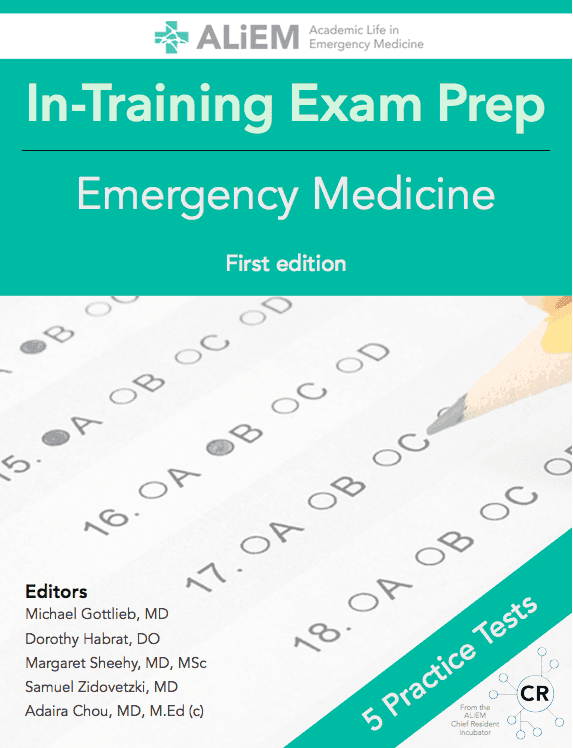
It is with great pleasure that we announce the first edition of the ALiEM In-Training Exam Prep Book in both PDF and iBook form. This free book was a year-long project from the Chief Resident Incubator, led by the Editors Dr. Michael Gottlieb, Dr. Dorothy Habrat, Dr. Margaret Sheehy, Dr. Samuel Zidovetsky, and Dr. Adaira Chou with the support of Associate Editors Dr. Nikita Joshi and Dr. Michelle Lin. Over 90 EM residents and faculty from the Incubator and across U.S. emergency medicine residency programs contributed board-review type questions. Five practice tests are included for those preparing for the in-training exam (also known as the in-service exam) or even [+]

Top 10 Secrets to Success as an Emergency Medicine Resident
So you are about to start your first year as an Emergency Medicine (EM) resident in a few short weeks. Or perhaps you are entering a new, more senior resident role in your department. You are probably unsure of what to expect, a bit anxious, but definitely excited to start. As part of a multi-institutional initiative launched by the ALiEM Chief Resident Incubator, chief residents from across the country pooled together what they wanted residents to know to become an amazing resident. After compiling the responses, we came up with these “Top 10 Secrets to Success as a EM Resident”. [+]
MEdIC Series: Case of the Terrible Code – Expert Review & Curated Commentary
The Case of the Terrible Code outlined a scenario where a resident observed a resuscitation that was not going well. Should he intervene even though the code leader was an attending? How? This month the MEdIC team (Brent Thoma, Sarah Luckett-Gatopoulos, Tamara McColl, Eve Purdy, John Eicken, and Teresa Chan), hosted a discussion around these questions with insights from the ALiEM community. We are proud to present to you the Curated Community Commentary and our 3 expert opinions. Thank-you to all our participants for contributing to the very rich discussions last week. [+]
10 Life and Work Tips for EM Residency Graduates
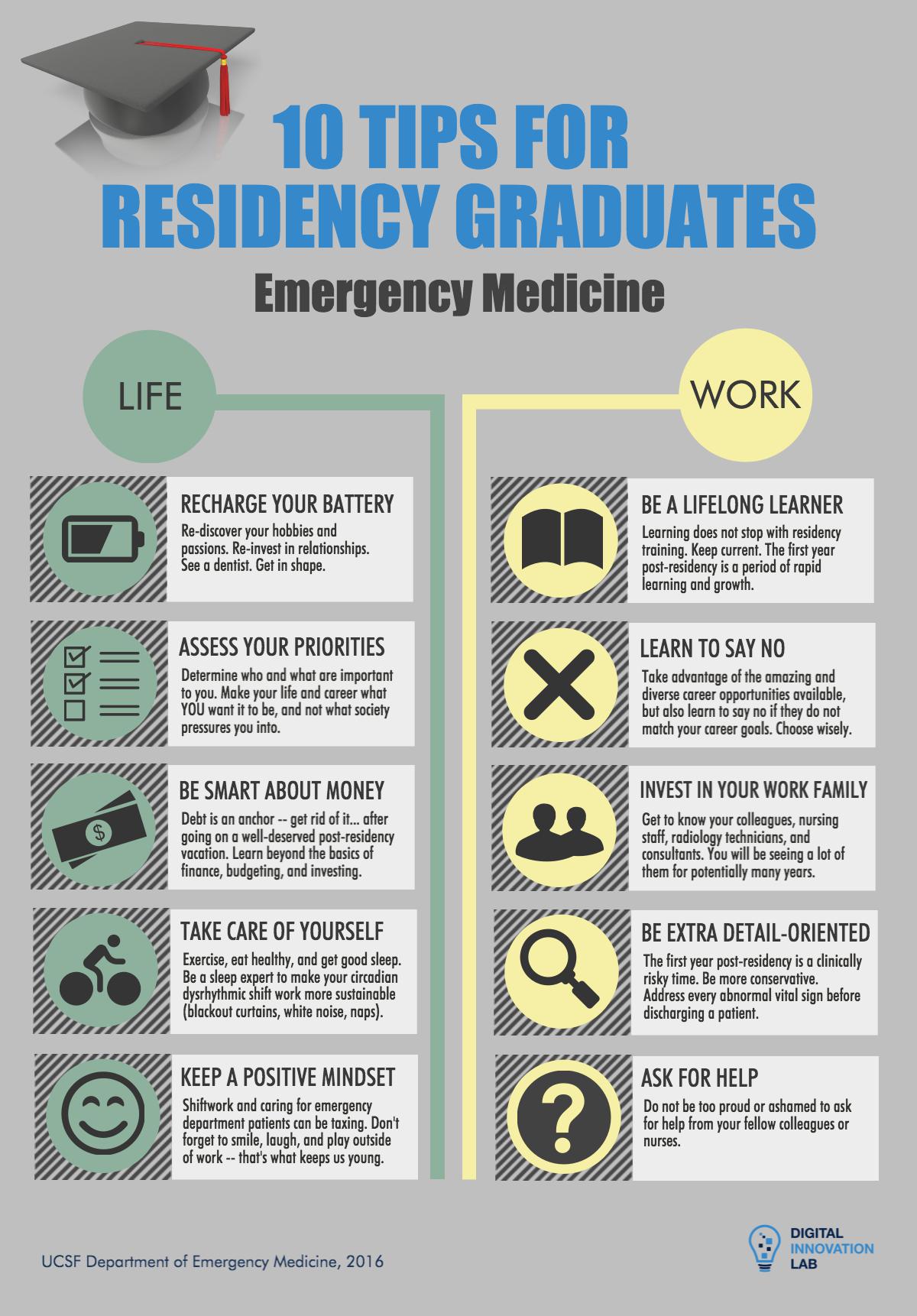
Congratulations to the Class of 2016 graduating class of emergency medicine residents! It is the end of a chapter and a beginning of another. For those of us practicing medicine for so many years, there are many things that we would have done differently… especially in that first year post-residency. In the following infographic, we present crowdsourced reflections and advice for residency graduates from the the UCSF Department of Emergency Medicine faculty. [+]

ALiEM Book Club: The Digital Doctor – Hope, Hype, and Harm at the Dawn of Medicine’s Computer Age
“Medicine is the most information-rich, knowledge-intensive human activity, probably ever.” — Matthew Burton in The Digital Doctor Medicine is becoming an even more information-intensive field as we continue to make new medical discoveries. This, among many other reasons, has prompted increasing efforts over the past couple of decades to develop computerized systems in healthcare. Through this lens, Dr. Robert Wachter examines modern medicine – both the achievements and downfalls that have manifested. [+]
Top 5 FOAM Radiology Resources: ALiEM Chief Resident Incubator Recommendations
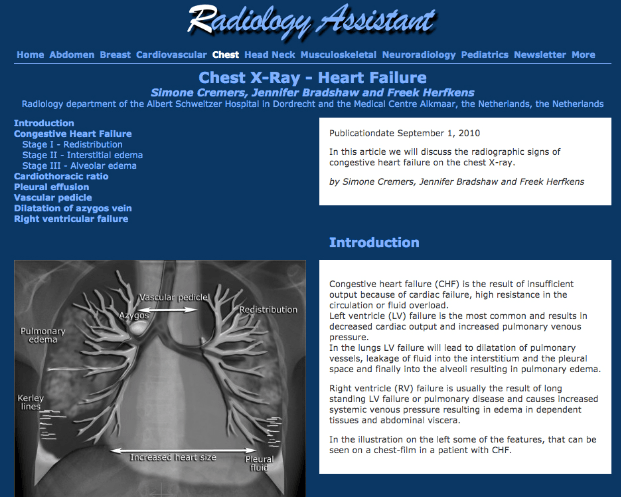
There is no shortage of free open access medical education (FOAM) resources available to the current emergency medicine (EM) learner. It seems that no matter what the concept, FOAM has it covered. And radiology is no different. However, with a specialty as vast as radiology, finding educational material pertinent to the emergency practitioner can be overwhelming. The 2016-2017 ALiEM Chief Resident (CRincubator) class also encountered this when attempting to create an organized FOAM radiology curriculum for EM residents. To tackle this challenge, the chief residents have brought together the best online resources to help EM practitioners gain expertise in the field [+]
5 Tips for Battling Academic Writer’s Block: Insights from the ALiEM Faculty Incubator
Academic writing is a core competency for any faculty member. As much as we hate to all admit it, professional advancement (and dissemination of your hard work) still heavily relies on academic publications – in a variety of formats original research, review papers, case reports, simulation cases, blog, and website writing. It is important to prioritize writing just as consistently as you do staying up-to-date with all the latest practice-changing evidence as a habit early in your health professions education career. [+]
Director of Growth, Strategic Alliance Initiative, Center for Innovation and Digital Health
Massachusetts General Hospital;
Chief Scientific Officer, Conductscience.com
Latest posts by Shuhan He, MD (see all)
- The Discharge Severity Index: Early Research on ED Readmission Risk Assessment - August 14, 2025
- Suboxone and the Emergency Physician: Get Waivered Training - August 12, 2022
- A Tale of Two Epidemics: COVID-19 and the Opioid Crisis - April 23, 2020