


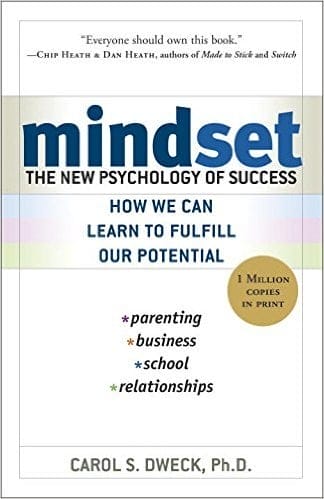
ALiEM Book Club: Beyond the ED – Recommendations from Dr. Jamie Santistevan
It is what you read when you don’t have to that determines what you will be when you can’t help it. – Oscar Wilde Dr. Jamie Santistevan is a senior resident at the University of Wisconsin EM Residency Program. Throughout residency she has been active in the FOAMed community as contributor to multiple educational blogs including emdocs.net. She has also been a leader in the American Association for Women Emergency Physicians (AAWEP) section of ACEP whose mission is to promote women leadership in EM. In July she will continue her training as the Quality and Administration fellow also at the University of [+]
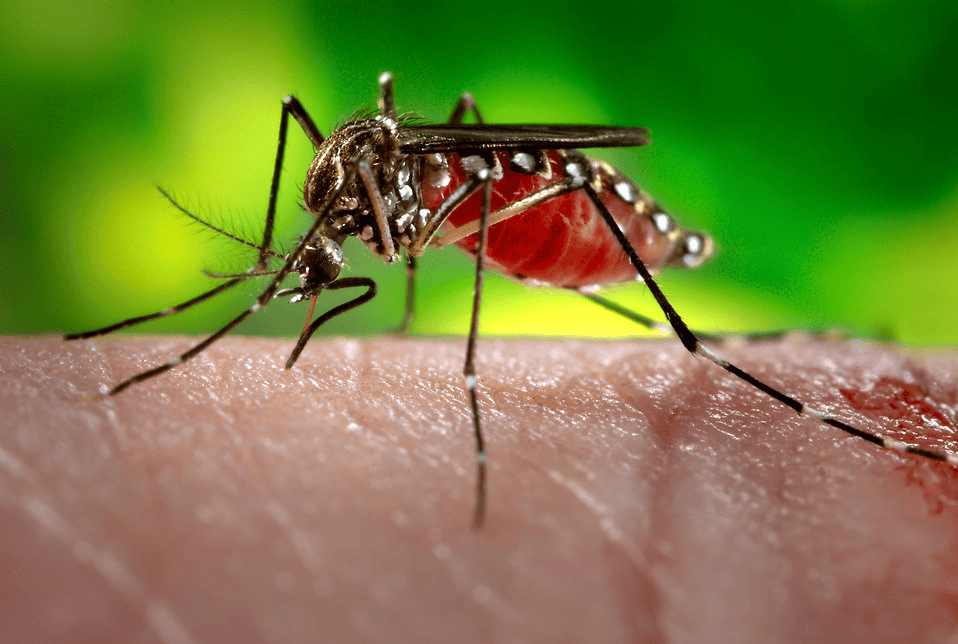
IDEA Series: Team-Based Learning Activity – Fever in the Returning Traveler
The Problem Most academic conferences are run as one-room school houses, with an audience that includes a wide variety of learners ranging from interns to highly experienced attending physicians. Engaging a group of 30 to 40 learners simultaneously can be difficult, especially when covering a particularly dense topic. Although this teaching environment presents unique challenges, it also provides an opportunity to pilot innovative techniques. [+]

MEdIC Series: The Case of the Terrible Code
Welcome to season 3, episode 8 of the ALiEM Medical Education in Cases (MEdIC) series! Our team (Brent Thoma, Sarah Luckett-Gatopoulos, Tamara McColl, Eve Purdy, John Eicken, and Teresa Chan) is pleased to welcome you to our online community of practice where we discuss difficult medical education cases each month. As usual, the community discussion will be reviewed using qualitative research methods to produce a curated summary that will be combined with two expert responses to create a functional teaching resource. In this month’s case a resident observes a code that is not going well. She should help, shouldn’t she? But she doesn’t want to offend the [+]
ALiEM Bookclub: Beyond the ED – Recommendations by Dr. Lainie Yarris
“Not all readers are leaders. But all leaders are readers.” – Harry S. Truman Dr. Lainie Yarris is the Program Director at Oregon Health and Sciences University Emergency Medicine Residency as well as the Co-Director of the Emergency Medicine Education Scholarship Fellowship and Co-Director for Faculty Development for OHSU School of Medicine. Beyond these multiple roles she has most readily known for her leadership in Emergency Medicine Education research, authoring over 40 publications and acting as a mentor for the MERC program, in addition to serving as an editor on multiple journals. She is an inspiration and role model for those of [+]
ALiEM Bookclub | Beyond the ED – Recommendations by Dr. Maria Moreira
If you only read the books that everyone else is reading, you can only think what everyone else is thinking. – Haruki Murakami Dr. Maria Moreira is the Program Director of the Denver Health Emergency Medicine Residency. In addition to her role in her own program, she has been a fixture in the national medical education landscape. She is the chair of the County Program committee and is a member of the CORD executive board. She brings a humility and gentleness to everything that she does that belies her depth of thought and leadership skills. She is a leader, a role [+]
Congratulations to the winners of 2016 ALiEM Awards!
Congratulations to the winners of the first ever 2016 ALiEM Awards! We had great submissions and the decision making process was tough, but ultimately we felt that these winners represent the true spirit of medical education and digital innovation! Most of all, congratulations to all the submissions, we are proud of all you do for the medical education community! [+]
ALiEM BookClub | Lean In: Women, Work, and The Will to Lead
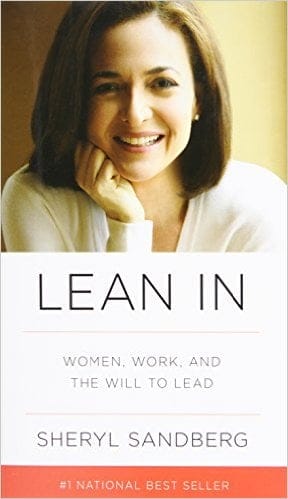
“We still have a problem” Sheryl Sandberg alarms us in her influential 2010 TED Talk, Why we have too few women leaders. “Women are not making it to the top of any profession anywhere in the world.” While women are getting more college degrees and graduate degrees, and more women are entering the workforce than ever before, when it comes to leadership positions, women do not come close to matching their male counterparts. “The blunt truth is that men still run the world.” [+]
MEdIC Series: The Case of the Fibbing First Year – Expert Review and Curated Commentary
The Case of the Fibbing First Year outlined a scenario where a first year resident fibs about the history he just completed. What did the ALiEM community think of this case? This month the MEdIC team (Brent Thoma, Sarah Luckett-Gatopoulos, Tamara McColl, Eve Purdy, John Eicken, and Teresa Chan), hosted a MEdIC series discussion around this issue with insights from the ALiEM community. We are proud to present to you the Curated Community Commentary and our 3 expert opinions. Thank-you to all our participants for contributing to the very rich discussions last week. [+]

IDEA Series: A Novel Flipped-Classroom Approach to Intern Conference Education featuring EM Fundamentals
The Problem Delivering a curriculum of core content to interns is both a priority and a challenge. Weekly conference provides time to deliver such a curriculum; however, varied rotation schedules limit consistent conference attendance, and intern-targeted content is inappropriate for upper-level residents. We addressed these challenges by implementing a flipped-classroom intern curriculum using training level-specific breakout sessions and a dedicated resource for asynchronous learning. [+]

HOT OFF THE ALiEM PRESS | ALiEM MEdIC Series, Volume 2
The ALiEM Medical Education in Cases (MEdIC) Series has been a regular feature of our website for almost 3 years. It has been previously featured as a Top 5 What Works abstract at the International Conference on Residency Education in 2014. At the time of our ICRE presentation, we presented our free e-book of our first years’ cases. Now, it’s time for our second edition. [+]

Director of Growth, Strategic Alliance Initiative, Center for Innovation and Digital Health
Massachusetts General Hospital;
Chief Scientific Officer, Conductscience.com
Latest posts by Shuhan He, MD (see all)
- The Discharge Severity Index: Early Research on ED Readmission Risk Assessment - August 14, 2025
- Suboxone and the Emergency Physician: Get Waivered Training - August 12, 2022
- A Tale of Two Epidemics: COVID-19 and the Opioid Crisis - April 23, 2020