


ALiEM Bookclub: How We Die
DNR/DNI, Code Blue, Cardiac Arrest, Traumatic Brain Injury, Exsanguination, Septic Shock, Respiratory Arrest… and the list goes on. As healthcare providers, we are well versed in the medical and emergency resuscitations that can spiral into these dangerous arenas. Even if we don’t always know the exact cause, we know the mantra of ABCs and we stick to it until the end. The very last end… But the end of what? Where is the dignity in resuscitating a body that has already died? Ultimately the question becomes, are we as practitioners as well versed in letting go, in letting the body [+]
Slide Redesign Competition Winners: International Teaching Course 2014
The International Teaching Course, now held twice annually in Baltimore, has a recurring Slide Redesign workshop and competition. Taught by Dr. Stacey Poznanski, this workshop addressed many of the widespread pitfalls which cause “death by powerpoint”. Here are the winners from the workshop competition, illustrating great examples based on Mayer’s multimedia learning theories. The examples below show the before and after slides. Congratulations to the winner, Badria Alhatali, and the close co-runners up, Nadia Awad and Kris Maday! [+]

Clinician Educator: The agent for change in medical education
Some people consider teaching and learning much more difficult than rocket science. 1 Teaching and learning is such a complex process that researchers are still having debates in different areas including: how it works, how to assess it, and how to research it. For the most part it is safe to presume that different people have different learning philosophies and this is, most likely, how they teach. 2 Because we are a product of our past and form strong habits, these might inadvertently impede the search of more effective and efficient educational activities. Research in education, just like research medical practice, may challenge our most held [+]

Multiple Mini Interviews (MMI): Annals of EM Resident Perspective article
We are very excited this month to bring you our first ALiEM-Annals Resident’s Perspective discussion. Similar to the ALiEM-Annals Global EM Journal Club series, we will be discussing the most recent Resident’s Perspective piece on the role of Multiple Mini Interviews (MMI) in the EM residency selection process. We hope you will participate in an online discussion based on the paper summary and questions below from now through May 11, 2014. Respond by commenting below or tweeting (#ALiEMRP). [+]

Announcing the ALiEM-CORD Social Media and Digital Scholarship Fellowship
We very are excited to announce an innovative, joint initiative with CORD (Council of EM Residency Directors) in launching the 2014-2015 ALiEM-CORD Social Media and Digital Scholarship Fellowship! The application process for this virtual fellowship is open as of right now to U.S. Emergency Medicine residents. [+]
MEdIC Series: The Case of the Unexpected Outcome – Expert Review and Curated Commentary
The Case of the Unexpected Outcome presented an attending trying to deal with a poor outcome in one of their patients despite competent medical management. No matter how good of a clinician we are, odds are that at some point this will happen to all of us. In addition to being potentially emotionally devastating, a serious miss can make us question our competence and shift our practice patterns from evidence- to anecdote-based. Check out the ALiEM community’s discussion of the case. [+]

What makes a good clinical educator?
In this constantly evolving world of learner competencies, assessments, and milestones often is forgotten the important role of clinical teachers. We can all remember clinical instructors that stand out despite the grueling years of medical school and residency training. We admired them for various reasons and remember the insights and teaching pearls they bestowed upon us. But what exactly were the qualities that they possessed that other instructors did not have? What exactly did they have that made them a good clinical teacher in medicine? [+]

MEdIC Series: Case of the Unexpected Outcome
Cry By Clala1220 Emergency medicine is a specialty that requires a level of comfort with uncertainty. No matter how good of a clinician you are, at the end of the day there will be patients that, despite solid medical care, will have an unexpected outcome. In addition to being potentially emotionally devastating, a serious miss can make us question our competence and shift our practice patterns from evidence- to anecdote-based. Dealing with these issues productively will be the topic of discussion in this months MEdIC. [+]

Self-Regulated Learning and Forgetting
We go through school without realizing if our learning strategies are inefficient even more so when some assessments support these practices as opposed to discourage it. Unfortunately, exams and graduation run the risk of giving us a sense that learning is over, that what we have learned does not change, or that there are not more effective ways of learning. There is no way of unlearning what we have learned in the past, so it’s always a sensible practice to reassess our knowledge on a constant basis. [+]
Behaviorism: Is punishment or reward more effective in education?
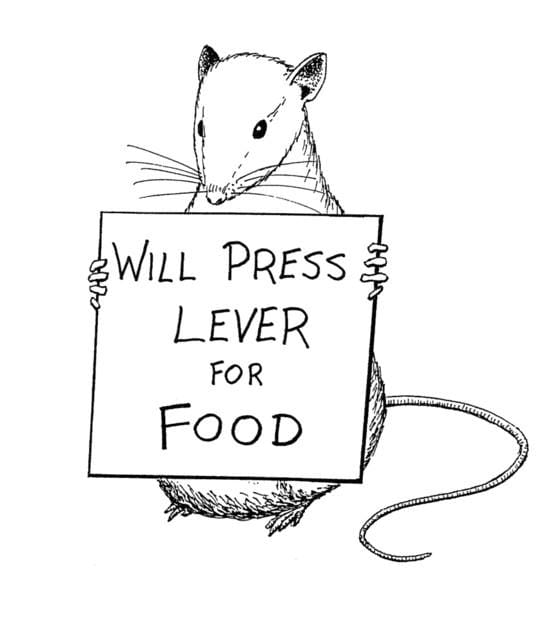
Every person involved in teaching and learning has a philosophy on how people learn. Implicitly, explicitly, legitimate or not this mental construct of learning affects the way they impart instruction and assess learning. One of the oldest and most commonly used educational theory of learning is behaviorism. [+]

Director of Growth, Strategic Alliance Initiative, Center for Innovation and Digital Health
Massachusetts General Hospital;
Chief Scientific Officer, Conductscience.com
Latest posts by Shuhan He, MD (see all)
- The Discharge Severity Index: Early Research on ED Readmission Risk Assessment - August 14, 2025
- Suboxone and the Emergency Physician: Get Waivered Training - August 12, 2022
- A Tale of Two Epidemics: COVID-19 and the Opioid Crisis - April 23, 2020