



MEdIC Series: The Case of the Humorous Humerus – Expert Review and Curated Commentary
The Case of the Not-So-Humorous Humerus presented an attending faced with a patient complaint about a resident. This is a situation that all of us will almost certainly be faced with at one point or another and there is no easy way to address it. This month we asked you to tell us how you would approach this difficult conversation to successfully determine what the problem was and how it should be addressed. [+]
Conference Tweeting: Do not start tweet with @ symbol
In the last two years, live tweeting from medical and education conferences has become mainstream. What better way to stay up-to-date with what is being taught around the globe! Pioneers like Dr. David Marcus (@EMIMDoc) even archive all of the conferences with hashtags, Twitter handles, and topic focus on his EM IM Doc blog. [+]

Hands Up For Health: Simulation Extending to Community Education
Medical simulation is not just for the clinical learner. Rather, it can have far reaching impact and can contribute meaningfully to the community. In this post, Dr. Beth Thomas describes the work of Hands Up For Health which uses the power of simulation to reach young people. [+]

MEdIC Series: Case of the Not So Humorous Humerus
Unprofessionalism. It is notoriously hard to define and dependent upon the eye of the beholder. And yet, as medical educators, we often are asked to intervene when it occurs. Join our discussion on how to handle a case where a patient discloses to you, the supervising physician, that a resident has been less-than-professional. What would you do? [+]
Vote which Annals of EM articles to be open-access in July
Here’s your chance to help choose two articles to be open access in July’s Annals of Emergency Medicine . Take a look at the article abstracts accepted for publication in July’s issue. Vote on your top two choices over the next 4 days, and the top two will be made open after the July issue of Annals of EM goes online. This may be the last month we are doing this, so if you like this opportunity, please vote! Your participation will help us decide whether or not to continue this feature. [+]
Presentation Design for Medical Education: Slide set for CORD 2014
Drs. Tyson Pillow, Stacey Poznanski, Robert Tubbs, and I will be teaming up to deliver a Presentation Design Bootcamp talk for medical educators at the 2014 Council for EM Residency Directors (CORD). The session is on April 2, 2014 at 1:30-2:20p in New Orleans, LA. Because it is a short 1-hour intensive workshop, we want to offer participants the opportunity to prepare themselves by reviewing the slide set ahead of time. [+]
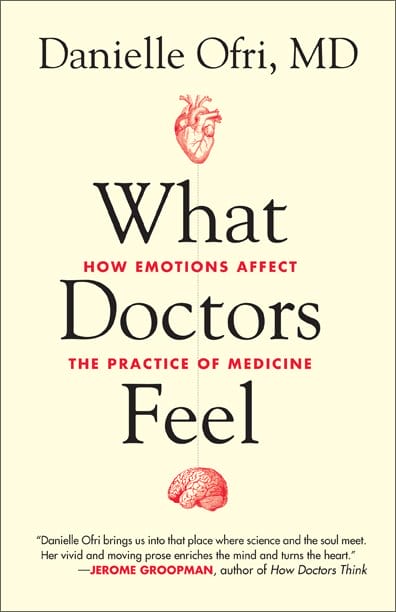
ALiEM Bookclub: What Doctors Feel
How do emotions affect the practice of medicine? This is the complex theme behind the latest book by Dr. Danielle Ofri, What Doctors Feel, and the topic of this month’s ALiEM bookclub discussion. [+]

Director of Growth, Strategic [+]
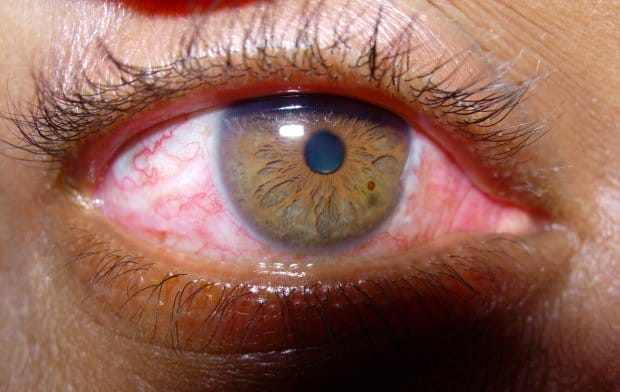
Creating an EM website dedicated to images: Things to consider
The folks at SUNY Downstate Emergency Medicine program have been hard at work contributing to the field of #FOAMed over the last few years (ClinicalMonster.com). Dr. Mark Silverberg, the program’s Associate Residency Director, has also been busy with an EKG website featuring 100 interpreted EKGs. And now he’s busy at it again, introducing the newest contribution to EM – an online visual atlas: www.kchemimage.wordpress.com. While the website is still in development, I wanted to discuss further with Dr. Silverberg the nuances of obtaining images and creating an EM website with it. [+]
MEdIC Series: The Case of the Culture Clash: Expert Review and Curated Commentary
The Case of the Culture Clash presented a conflict within a multi-cultural team of doctors. Mary, a registrar was unable to effectively teach all her interns, who had diverse personal and professional backgrounds. Working in teams with many cultural and linguistic difficulties is becoming more and more common worldwide. This month we asked about personal experiences of difficulties with multi-cultural teams, how to overcome these difficulties, and how we as educators can improve our teaching of learners from different backgrounds. [+]

EM Clinical Decision Rules iBook
As educational content, which was traditionally published in the form of textbooks, get repurposed into blog posts, podcasts, and videos, iBooks have been a bit slower to take hold. They can replace print textbooks, if done from a thoughtful design-based approach such as by Drs. Matthew Dawson and Mike Mallin in their Introduction to EM Ultrasound (volume 1 and 2) iBooks. Here’s another iBook entitled “EM Clinical Decision Rules” involving pulmonary embolism (PE) and minor head trauma by Drs. Shannon McNamara, Christine Knettel, and David Wald. [+]
Director of Growth, Strategic Alliance Initiative, Center for Innovation and Digital Health
Massachusetts General Hospital;
Chief Scientific Officer, Conductscience.com
Latest posts by Shuhan He, MD (see all)
- The Discharge Severity Index: Early Research on ED Readmission Risk Assessment - August 14, 2025
- Suboxone and the Emergency Physician: Get Waivered Training - August 12, 2022
- A Tale of Two Epidemics: COVID-19 and the Opioid Crisis - April 23, 2020