



Open Educational Resources
The Internet has not only facilitated connectivity between people, but it has also helped us to connect with educational material quite different from that of a physical textbook. We are consuming information at a much more rapid rate, and we are also becoming producers of content online. With the use of hyperlinks we are also connecting one content material with another, allowing for a more dynamic-instantaneous flow of knowledge as opposed to the static print in a physical textbook. People have started seeing the potential that this brings to education and are placing educational content online. These educational materials include [+]

MEdIC series: The Case of the Difficult Consult
Inspired by the Harvard Business Review Cases and led by Dr. Teresa Chan (@TChanMD) and Dr. Brent Thoma (@BoringEM), the Medical Education In Cases (MEdIC) series puts difficult medical education cases under a microscope. On the fourth Friday of the month we will pose a challenging hypothetical dilemma, moderate a discussion on potential approaches, and recruit medical education experts to provide “Gold Standard” responses. Cases and responses will be made available for download in pdf format – feel free to use them! If you’re a medical educator with a pedagogical problem, we want to get you a MEdiC. Send us your most difficult dilemmas and help the rest of us to [+]
The Checklist Manifesto: ALiEM Book Club Synopsis
Our dear readers have chimed in and we’ve received amazing commentary and feedback regarding this month’s book The Checklist Manifesto. Please read the summary of the discussion below. CHECKLISTS ARE EVERYWHERE IN EMERGENCY MEDICINE Our readers have spotted checklists in a number of places including PALS/ACLS algorithms, Procedural Sedation protocols, and Clinical Decision Rules. Dr. Javier Benitez (@jvrbntz) stated that he uses a checklist for resuscitations at the start of shifts. Dr. Michelle Lin (@M_Lin) stated “We already use our own mental checklists in Med[icine]. It’s just not explicitly shared. Should have more overt shared checklists.” [+]

Heuristics and Cognitive Errors in Diagnostic Reasoning
Medical error is among the top ten causes of death in the United States, and while there are different forms and sources, diagnostic error is one of the most significant and consequential. Graber et al, 2002 classifies diagnostic error as one of 3 types: No-fault error System error Cognitive error [+]

Retrieval Practice: 10 benefits of testing
Tests terrify people, especially when used for summative assessment. But in reality, tests have also helped students learn the material. Retrieval practice, also known as test enhanced learning or the testing effect, has been demonstrated to have more benefits than re-studying the material or multiple choice tests. As per Henry L. Roediger et al. If students are quizzed frequently, they tend to study more and with more regularity. Quizzes also permit students to discover gaps in their knowledge and focus study efforts on difficult material; furthermore, when students study after taking a test, they learn more from the study episode than [+]
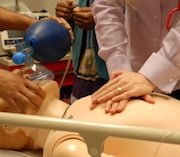
Crisis Resource Management
CRM and SBT… just another set of acronyms in the world of medical education? Don’t we already have enough?? Not quite! Rather, Crisis Resource Management (CRM) is a complementary approach to Simulation Based Training (SBT). It can enhance current ongoing medical simulations or provide foundation for a vigorous curriculum when launching new simulation programs. [+]

Hero spotlight: Dr.Todd Raine
There are incredible people doing incredibly inspiring work in Emergency Medicine. I wanted to restart the hero series, which had fallen off the radar a few years ago, featuring amazing people in our specialty. Today’s hero spotlight is on Dr. Todd Raine (@RaineDoc). He is a Staff Physician and IT Coordinator at the Providence Healthcare Department of EM and Clinical Assistant Professor at the University of British Columbia’s Department of EM. Despite these notable accomplishments, he is famous in the social media world for his innovative creation of a Google-based EM search engine GoogleFOAM.com, which many of us use to perform [+]

Introducing #EMConf Twitter Hashtag
I would like to share with the national and global community an opportunity to participate in the weekly generation of learning pearls from Emergency Medicine residency conferences. The majority of U.S. EM residencies gather faculty and residents together on a weekly basis for a half-day of education on material covering the basics of EM education. This is happening in isolated silos at the individual learning institutions. And up until now it was difficult to share the wealth of knowledge gained outside of the learning institutions in real-time. [+]
ALiEM Bookclub: The Checklist Manifesto
Introduction Checklists have now almost become status quo in current medicine. My earliest encounter with the surgical checklist phenomenon was during PGY1 as an off-service intern. At this point, early adopters were running around with “Checkmark” safety-pins on their surgical caps, trying to encourage everyone to take up the cause. There were jokes and exasperated sighs each time a case started, but most complied with the task at the behest of opinion leaders (often the senior OR nurses in the room). Two years later I returned to see a culture change. OR teams seemed to communicate better, things seemed to [+]
NPR Ted Talks: A non-medical podcast ready to inspire
Most of us have heard of TED talks and most of us have heard of NPR. But did you know that the two have paired together to give a fascinating weekly radio discussion? Since March 2013, NPR reporter and radio host Guy Raz (@NPRGuyRaz) has brought together innovators, leaders, and entrepreneurs among others to the radio format to inspire and enlighten the listener. This amazing free resource is a valuable non-medical podcast for doctors to access. [+]

Director of Growth, Strategic Alliance Initiative, Center for Innovation and Digital Health
Massachusetts General Hospital;
Chief Scientific Officer, Conductscience.com
Latest posts by Shuhan He, MD (see all)
- The Discharge Severity Index: Early Research on ED Readmission Risk Assessment - August 14, 2025
- Suboxone and the Emergency Physician: Get Waivered Training - August 12, 2022
- A Tale of Two Epidemics: COVID-19 and the Opioid Crisis - April 23, 2020