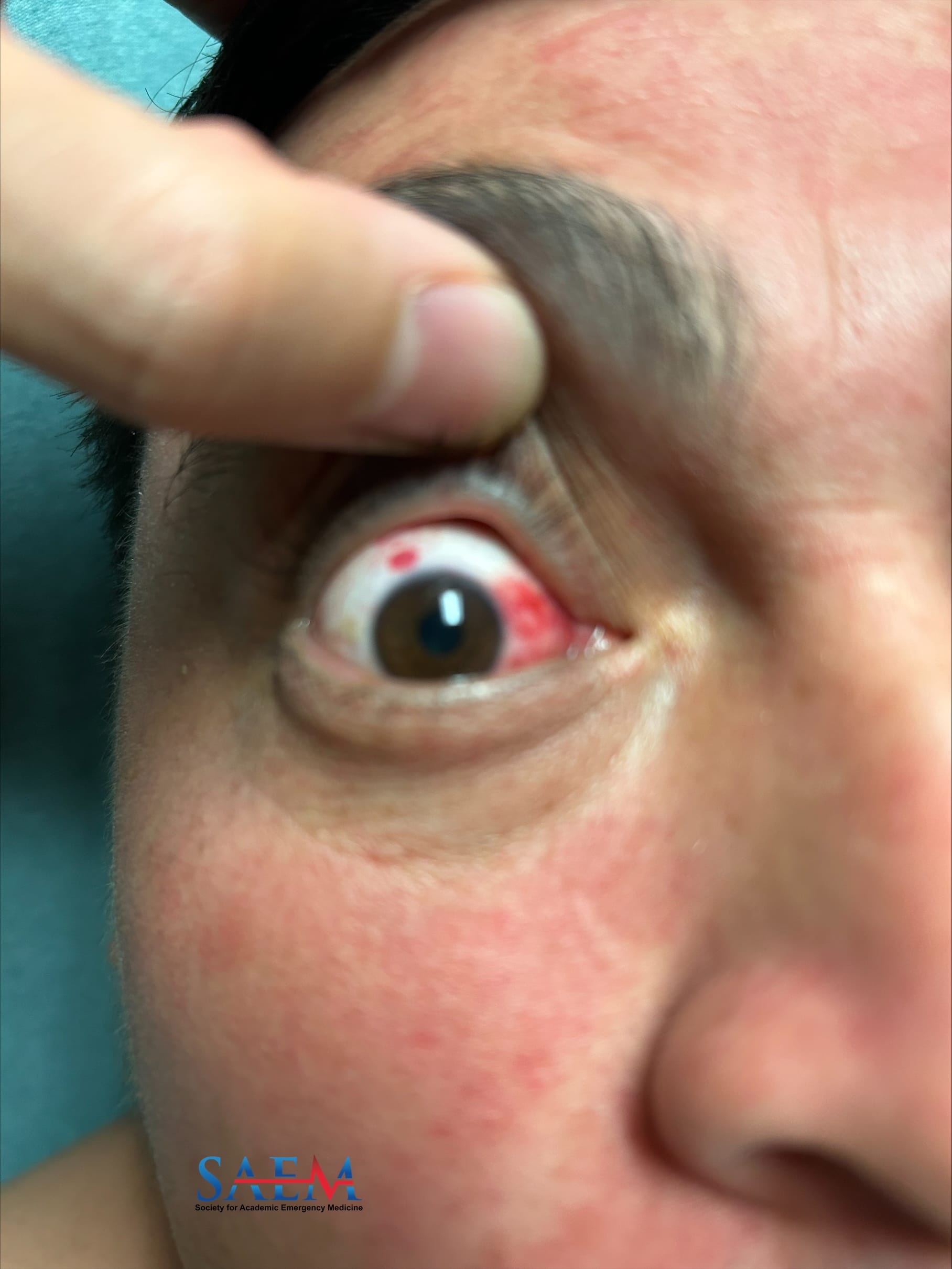
About Clark Measom, MD

Emergency Medicine Resident
The University of Texas Southwestern Medical Center

SAEM Clinical Images Series: Painful Great Toe

great toe

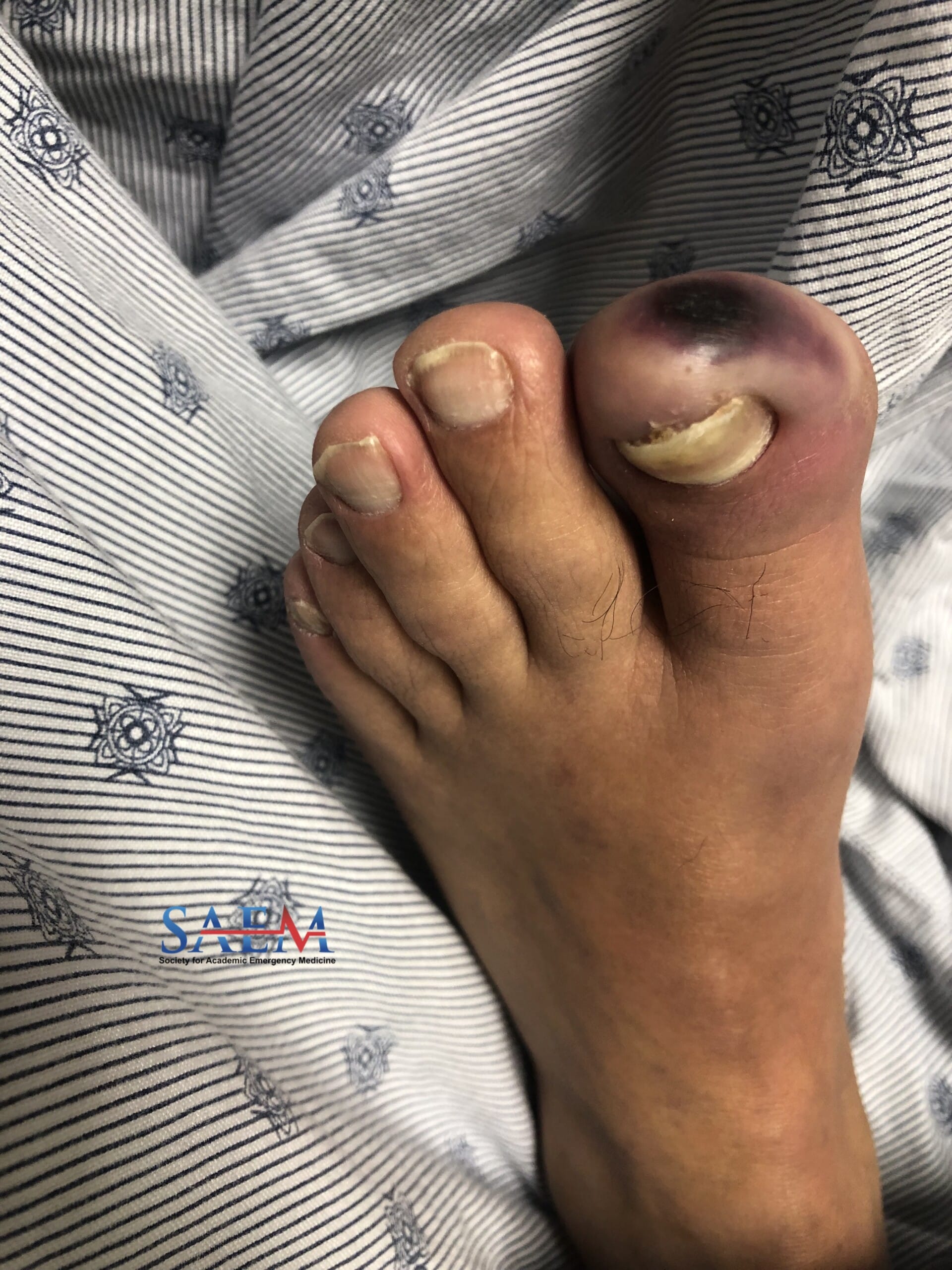
A 63-year-old-male with a past history of hypertension, renal failure with dialysis three times per week, and prior infective endocarditis appropriately treated with a regimen that ended four weeks ago presented with left great toe pain that started three weeks ago. The toe began swelling two weeks ago with continued pain and tenderness, becoming discolored approximately one week ago. He noted subjective fever and chills, but had no other complaints.
Vitals: Heart Rate 104, BP 111/69 mmHg, Temperature oral 38.1°C, Respiratory Rate 16; SpO2: 99% on room air

Skin: The plantar surface of the left great toe has violaceous discoloration extending to the dorsum of the distal phalanx around the nail. It is tender to touch at the plantar surface only. There is dark brown to black discoloration 16 mm x 8 mm at the distal medial aspect of the toe without ulceration.

Musculoskeletal: Good range of motion at all joints without pain.

Cardiovascular: 3/6 systolic murmur noted at the right sternal border.

The rest of the examination is normal.

BMP: BUN 19 mg/dL, Creatinine  5.21 mg/dL

Hemoglobin: 12.3 g/dL

WBC: 12.28 x 10^9/L

Imaging: X-ray of the left foot is unremarkable

Yes, the patient should be admitted; an Osler node or Janeway lesion is indicative of active endocarditis. An Osler node is a painful, tender, nodular lesion that is bluish-purple and is located on the distal phalanx of the fingers or toes. Classically, pain precedes any swelling, with subsequent discoloration occurring with skin pigmentation being described as reddish, cyanotic, bluish-purple, vivid pink, or erythematous. The skin may desquamate or darken, but ulceration is rare. Histologic evaluation reveals necrotizing vasculitis and inflammatory infiltration of the vascular channels. Aspiration and culture of the lesions typically yields no organisms, though several case reports note positive bacterial growth with organisms that match the underlying endocarditis bacteria. Whether an Osler node is caused by micro-septic emboli or by an immune response is a controversy that has not yet been settled. Janeway lesions, also seen in endocarditis, are similar discolored macules on the palms or soles. However, Janeway lesions are normally painless, which is a key factor that differentiates them from Osler nodes. Osler nodes or Janeway lesions are indicative of active endocarditis. Patients with these lesions, such as the patient in this case, should be admitted for blood cultures, echocardiography, and intravenous antibiotics. This patient was admitted, and his echo confirmed multiple vegetative lesions with severe aortic valvular disease. The patient was subsequently transferred for valve replacement surgery after three weeks of intravenous antibiotics.

Take-Home Points

  • Osler nodes are tender, violaceous nodules located on the finger or toe pads.

  • Janeway lesions, located on the palms or soles, have similar discoloration but are not tender.

  • Osler nodes and Janeway lesions are uncommon but important manifestations of infective endocarditis.

  • Farrior JB, Silverman ME. A consideration of the differences between a Janeway’s lesion and an Osler’s node in infectious endocarditis. Chest. 1976 Aug;70(2):239-43. doi: 10.1378/chest.70.2.239. PMID: 947688.

  • Philip J, Bond MC. Emergency Considerations of Infective Endocarditis. Emerg Med Clin North Am. 2022 Nov;40(4):793-808. doi: 10.1016/j.emc.2022.07.001. Epub 2022 Oct 7. PMID: 36396222.
SAEM Clinical Images Series: Snake it Off

snake

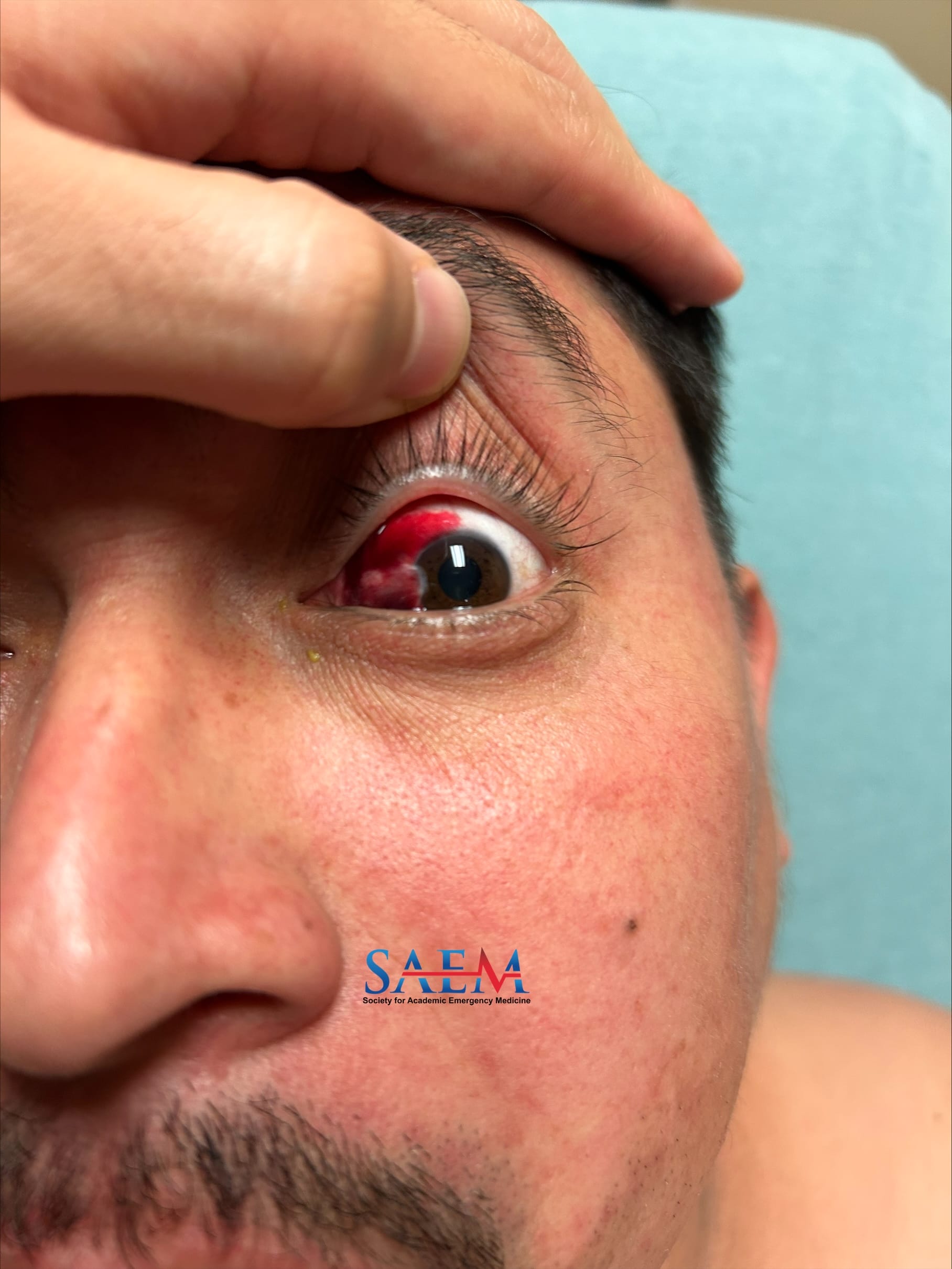
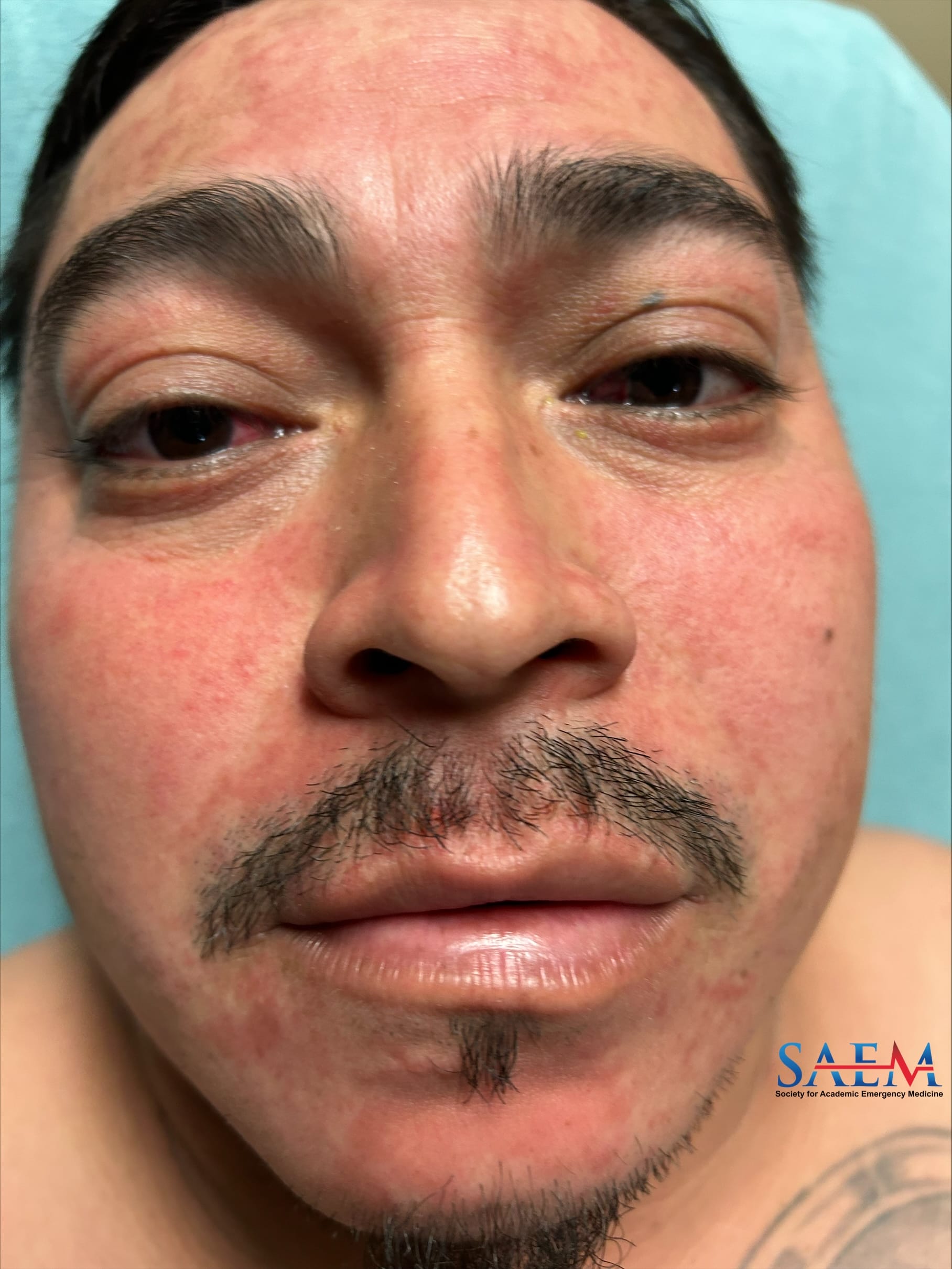
A 35-year-old male with no past medical history presented to the Emergency Department with eye redness. Two days prior, the patient reported he was cutting brush with a chainsaw when he felt something “spray” into his face. After inspecting the area, the patient found the remnants of a dead rattlesnake that unfortunately got in the way of his chainsaw. He subsequently developed bilateral eye redness without pain or vision changes, as well as a painless, pruritic facial rash. The patient denied any additional trauma, injury, snake bite, headache, fever, chills, cough, congestion, or other symptoms.

Vitals: T 36.8°F; BP 147/90 mmHg; HR 81; pulse ox 99% on room air; RR 20

Ophthalmic: OD (right eye) – Visual acuity: 20/20. Tonometry: 18 mmHg. Pupil equal and reactive to light. Conjunctiva: Nasal subconjunctival hemorrhage with small area of fluorescein uptake on the nasal conjunctiva. OS (left eye) – Visual acuity: 20/20. Tonometry: 20 mmHg. Pupil equal and reactive to light. Conjunctiva: Nasal subconjunctival hemorrhage with small area of fluorescein uptake on the nasal conjunctiva. Pterygium on the nasal side.

HENT: Maculopapular, erythematous, blanching rash across the forehead and bilateral cheeks. The remainder of the body is spared.

No other abnormal findings on physical examination.

WBC: 8.97 x 10^9/L

Platelets: 280 x 10^9/L

Hemoglobin: 15.4 g/dL

Fibrinogen: 203 mg/dL

Diagnosis: Ophthalmic Envenomation.

This is a case of ophthalmic envenomation causing subconjunctival hemorrhage. The patient also exhibits irritant contact dermatitis of the face related to topical cutaneous venom exposure. Ophthalmic envenomation is extremely rare in North America but occurs more commonly in areas of the world where “spitting” cobras are native species. Snake venom consists of a complex mixture of cytotoxins, including metalloproteinases and hyaluronidases. Topical ocular venom exposure can cause pain, photophobia, conjunctivitis, subconjunctival hemorrhage, keratitis, uveitis, corneal ulceration, angle-closure glaucoma, retinal hemorrhage, and rarely, blindness. The classic patient is a snake handler who lacks proper eye protection when encountering “spitting” cobras. However, inadvertent ocular exposure, such as accidental venom aerosolization after cutting through a rattlesnake’s head and venom glands with a chainsaw, can also cause ophthalmic envenomation.

The treatment for suspected ophthalmic envenomation is copious ocular irrigation with neutral fluids to clear venom and reduce subsequent damage. Topical antibiotics and supportive care measures can then be applied to prevent infection and minimize irritation. Unlike venomous snake bites, there is usually no indication for antivenom unless the patient develops systemic symptoms.

Take-Home Points

  • Ocular envenomation from aerosolized snake venom can cause pain, photophobia, conjunctivitis, subconjunctival hemorrhage, keratitis, uveitis, corneal ulceration, angle-closure glaucoma, retinal hemorrhage, and rarely, blindness.

  • Dilution is the solution! Early ocular irrigation can decrease the morbidity of ophthalmic envenomation. There is no utility for antivenom for simple ocular envenomation. Save the CroFab for those with severe, systemic signs of envenomation.

  • Eye protection is strongly recommended for those working with power tools, as well as snake handlers (especially when working with spitters!).

  • Hoffman, R. S., Howland, M. A., Lewin, N. A., Nelson, L., Goldfrank, L. R., & Smith, S. W. (Eds.). (2019). Goldfrank’s toxicologic emergencies (Eleventh edition.). McGraw-Hill.

  • Chu ER, Weinstein SA, White J, Warrell DA. Venom ophthalmia caused by venoms of spitting elapid and other snakes: Report of ten cases with review of epidemiology, clinical features, pathophysiology and management. Toxicon. 2010 Sep 1;56(3):259-72. doi: 10.1016/j.toxicon.2010.02.023. Epub 2010 Mar 21. PMID: 20331993.

  • Chang KC, Huang YK, Chen YW, Chen MH, Tu AT, Chen YC. Venom Ophthalmia and Ocular Complications Caused by Snake Venom. Toxins (Basel). 2020 Sep 8;12(9):576. doi: 10.3390/toxins12090576. PMID: 32911777; PMCID: PMC7551025.

Go to Top