About Jamie Holland, MD

Pediatric Emergency Medicine Fellow
Medical College of Wisconsin

SAEM Clinical Images Series: A Mucous Membrane Mystery
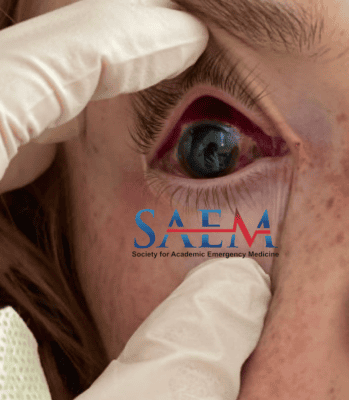
eye

The patient is a healthy 14-year-old male without past medical history who presents to the Emergency Department with oral lesions, eye swelling, intermittent fevers, and pain with urination. Over the past 10 days he has been seen by his PCP and at an outside ED for a cough, sore throat, fevers, and oral pain. Three days ago he was seen by his PCP, had a positive rapid strep test, and was started on amoxicillin. His oral lesions and lip swelling have been progressively worsening over the past 2 days. Monospot testing was also performed yesterday and is negative. Today he was seen again by his PCP for new pain with urination and was sent to the ED for concern for Kawasaki disease. The patient has had decreased oral intact due to his pain, but otherwise has no other complaints.
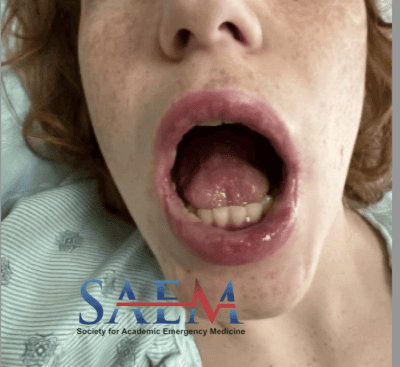
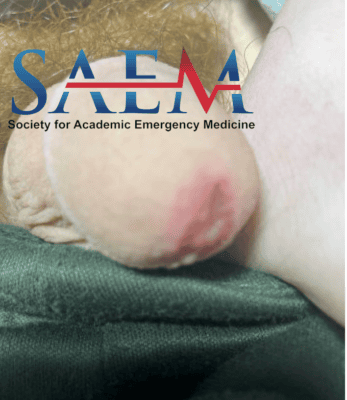
Vitals: BP 124/88 HR 112 R 28 T 100.2 F O2sat 94% room air.
HEENT: Relevant findings are shown in the images provided. Tonsillar exudate is present. No meningismus. Voice is normal.
Respiratory: Coarse breath sounds with diffuse wheezing.
Cardiovascular: Tachycardic, no murmurs, no rubs.
Skin: No rash. Negative Nikolsky sign. No palmar desquamation.
Lymph: Cervical lymphadenopathy is present
Genitourinary: See image provided.

CBC, CMP, Urinalysis: negative

COVID/Flu/RSV: negative

Mycoplasma NAAT: positive.

CRP: 13.5 mg/L

ESR: 48 mm/Hr

This child has RIME (reactive infections mucocutaneous eruption), a rare post-infectious cause of mucositis in children and adolescents.

Prolonged fevers and illnesses are frequent reasons for pediatric ED visits. Children and adolescents can be more prone than adults to a variety of immune-mediated and other inflammatory reactions such as Kawasaki disease, serum sickness like reactions, erythema or urticaria multiforme, SJS/TEN, MISC, among others. RIME is a relatively recently described post-infectious condition characterized by mucositis in at least two mucus membranes, with or without an area of cutaneous eruption. It was previously called mycoplasma-induced rash and mucositis (MIRM), and mycoplasma is the most common trigger, though the designation RIME implies that other common infectious agents (covid, influenza, and other viral and bacterial pathogens) have been identified as causal agents. Management is supportive, including treatment of the underlying illness (in this case, treatment of mycoplasma). Corticosteroids and other immunomodulatory agents may be used in more severe cases.

Take-Home Points

  • RIME is a reaction primarily involving mucosal surfaces that is often associated with Mycoplasma pneumoniae infections in pediatric populations.
  • Treatment of RIME involves treating Mycoplasma pneumoniae with azithromycin and supportive care including hydration and appropriate consultations for wound management as needed.

  • Lofgren D, Lenkeit C. Mycoplasma Pneumoniae-Induced Rash and Mucositis: A Systematic Review of the Literature. Spartan Med Res J. 2021 Aug 30;6(2):25284. doi: 10.51894/001c.25284. PMID: 34532621; PMCID: PMC8405277.
  • Meyer Sauteur PM, Theiler M, Buettcher M, Seiler M, Weibel L, Berger C. Frequency and Clinical Presentation of Mucocutaneous Disease Due to Mycoplasma pneumoniae Infection in Children With Community-Acquired Pneumonia. JAMA Dermatol. 2020 Feb 1;156(2):144-150. doi: 10.1001/jamadermatol.2019.3602. PMID: 31851288; PMCID: PMC6990853.
  • Rehmus, W. E., Phillips, J., & Flegel, L. (2023). In Pediatric Dermatology (pp. 274–274). essay, UBC LIBRARY. Retrieved January 6, 2025,.
By |2026-02-06T12:12:18-08:00Feb 20, 2026|SAEM Clinical Images, Uncategorized|

SAEM Clinical Images Series: Can I Snooze on This Bruise?

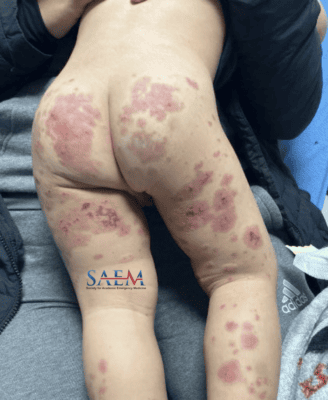
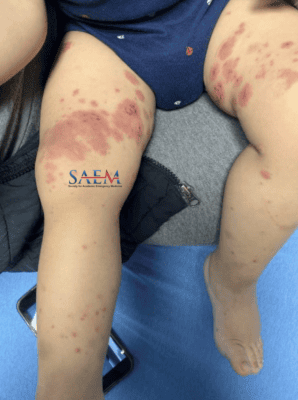
The patient is a 21-month-old male with no medical problems who is brought into the Emergency Department with concerns for bruising of the lower extremities and swelling of feet. His parents noticed the patient was walking differently 4 days ago and then noted bruising and edema of his feet bilaterally. They state there has been no known injury or trauma, and at least one of the parents has been with the child at all times. The bruising has spread and darkened to become widespread on both legs and today they noticed a few new spots on his arms and face. They report some possible subjective fevers and mild congestion, but there have been no other symptoms. There has been no recent weight loss and there is no history easy bleeding.

Vitals: HR 150, RR 28, Temp 98.1, O2sat 100% room air.

General: Awake, alert. Appears uncomfortable but in no acute distress.
Respiratory: Breath sounds normal. No increased work of breathing.
Cardiovascular: Mild regular tachycardia, no murmur.
Abdominal: Abdomen soft. There is no tenderness. No organomegaly.
Neurologic: At neurologic baseline. No focal deficits.
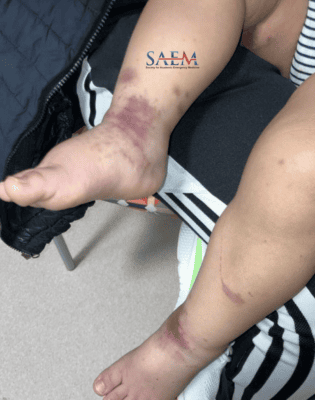
Skin: See images provided. Image 1 was on the first day of illness,
whereas Images 2 and 3 were taken on day four of the illness.

CBC: WBC 10.3, Hgb10.9, Plt 412,000

Creatinine normal at 0.25.

Urinalysis without blood or protein.

Acute Hemorrhagic Edema of Infancy (AHEI).

Acute Hemorrhagic Edema of Infancy (AHEI) is a small vessel vasculitis characterized by palpable purpuric skin lesions, edema, and fever. AHEI normally develops in children between the ages of 4 months to 2 years, as opposed to Henoch-Schönlein Purpura, which is more typical in children 2-10 years of age (peak age 4-6). Triggers can include infections, medications including penicillin, cephalosporins, and Trimethoprim- sulfamethoxazole, and immunizations. Clinical features are often preceded by a mild prodromal illness, followed by the rapid development of palpable purpura, ecchymosis, and petechia over 24-48 hours that is distributed mainly on the extremities and face, specifically the ears, eyelids and cheeks. The mucus membranes and the trunk are spared. Because AHEI is an immune-mediated vasculitis, internal organ involvement is possible, although rare, and can include nephritis, arthritis, and gastrointestinal tract problems. Diagnosis of AHEI is clinical, although other serious conditions must be considered in the differential such as non-accidental trauma, leukemia, and Kawasaki Disease. AHEI is a self-limited disease that resolves spontaneously over 1-3 weeks.

Take-Home Points

  • AHEI is characterized by palpable purpuric skin lesions, edema and fever. It is distinguished from HSP clinically primarily by the age of onset, with HSP affecting children usually from age 2-10 years.
  • Serious conditions such as non-accidental trauma, leukemia, and Kawasaki Disease should be considered and excluded.

  • Cunha DF, Darcie AL, Benevides GN, Ferronato AE, Hein N, Lo DS, Yoshioka CR, Hirose M, Cardoso DM, Gilio AE. Acute Hemorrhagic Edema of Infancy: an unusual diagnosis for the general pediatrician. Autops Case Rep. 2015 Sep 30;5(3):37-41. doi: 10.4322/acr.2015.020. PMID: 26558246; PMCID: PMC4636105.
  • Jindal SR, Kura MM. Acute hemorrhagic edema of infancy-a rare entity. Indian Dermatol Online J. 2013 Apr;4(2):106-8. doi: 10.4103/2229-5178.110630. PMID: 23741666; PMCID: PMC3673373.

By |2026-01-06T10:05:22-08:00Jan 9, 2026|Pediatrics, SAEM Clinical Images|

SAEM Clinical Images Series: Alternative Block

A 10-year-old female with a history of constipation presented with intermittent lower abdominal pain with difficulty urinating. Pain was in the suprapubic area. The patient stated she last urinated the morning of presentation and typically urinates 1-2 times a day. She reported that it is sometimes hard to initiate urination and that she has pain at the conclusion of urination. She typically takes MiraLAX daily for constipation but ran out one week ago. She denied fever, chills, nausea or vomiting.

Constitutional: Awake, alert and in no acute distress.

HEENT: PERRLA. Moist mucus membranes.

Cardiovascular: Regular rate and rhythm. No murmur.

Pulmonary: Breath sounds normal. No increased work of breathing.

Abdominal: Abdomen soft. There is tenderness in the suprapubic area. There is no guarding or rebound.

Neurologic: Awake and alert. At neurologic baseline. No focal deficits.

UA: Trace ketones, 100 protein.

Post void residual: 430 cc.

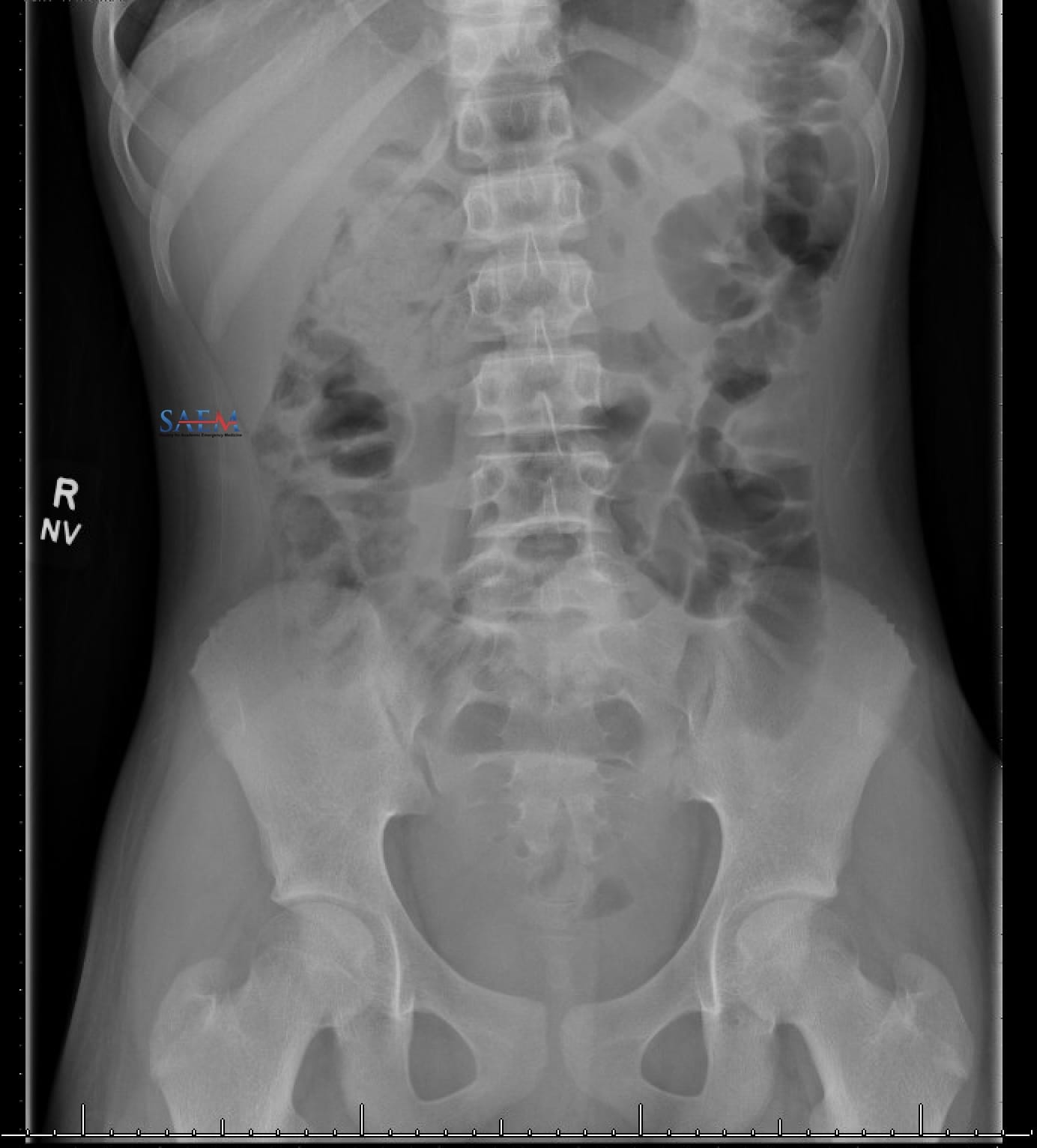
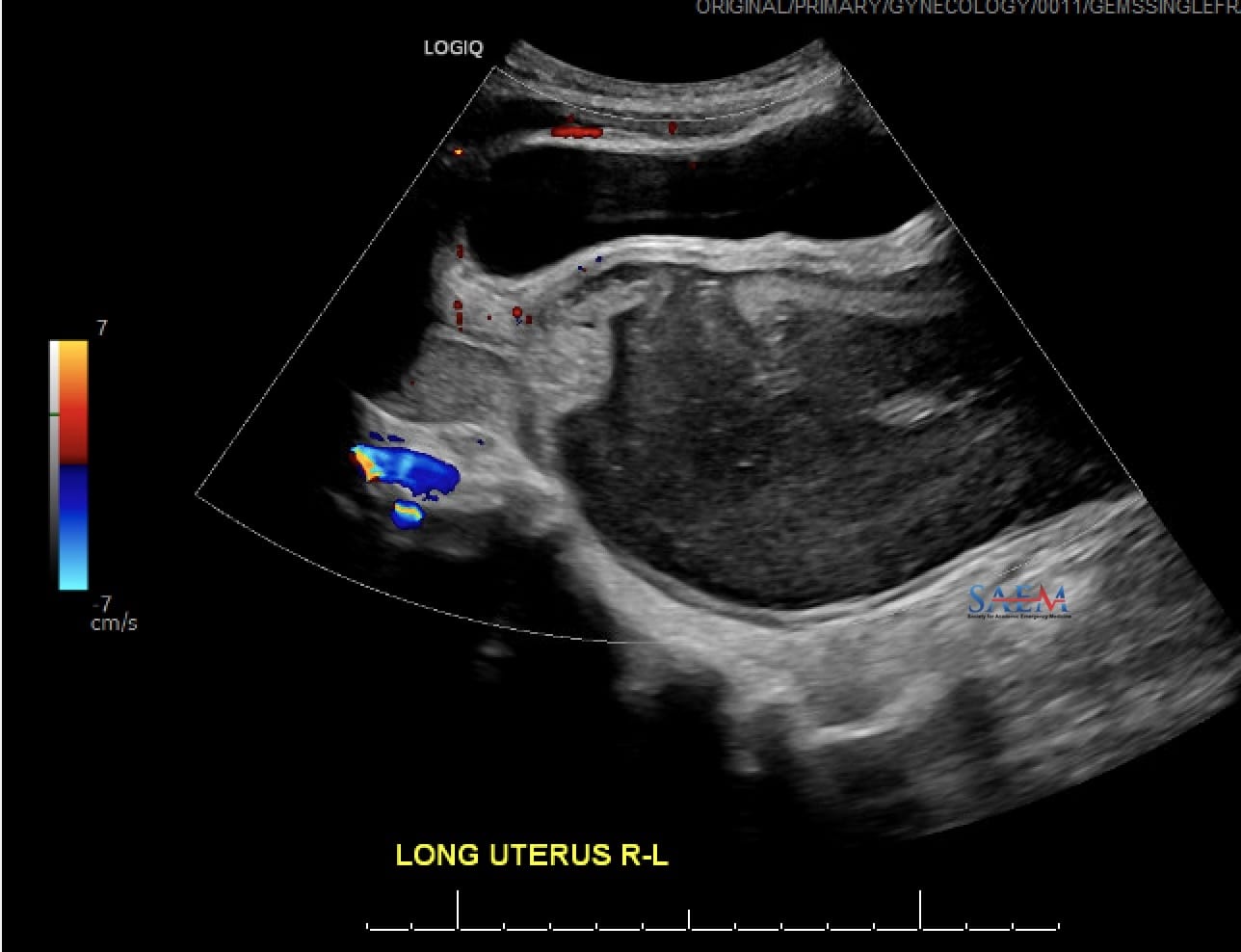
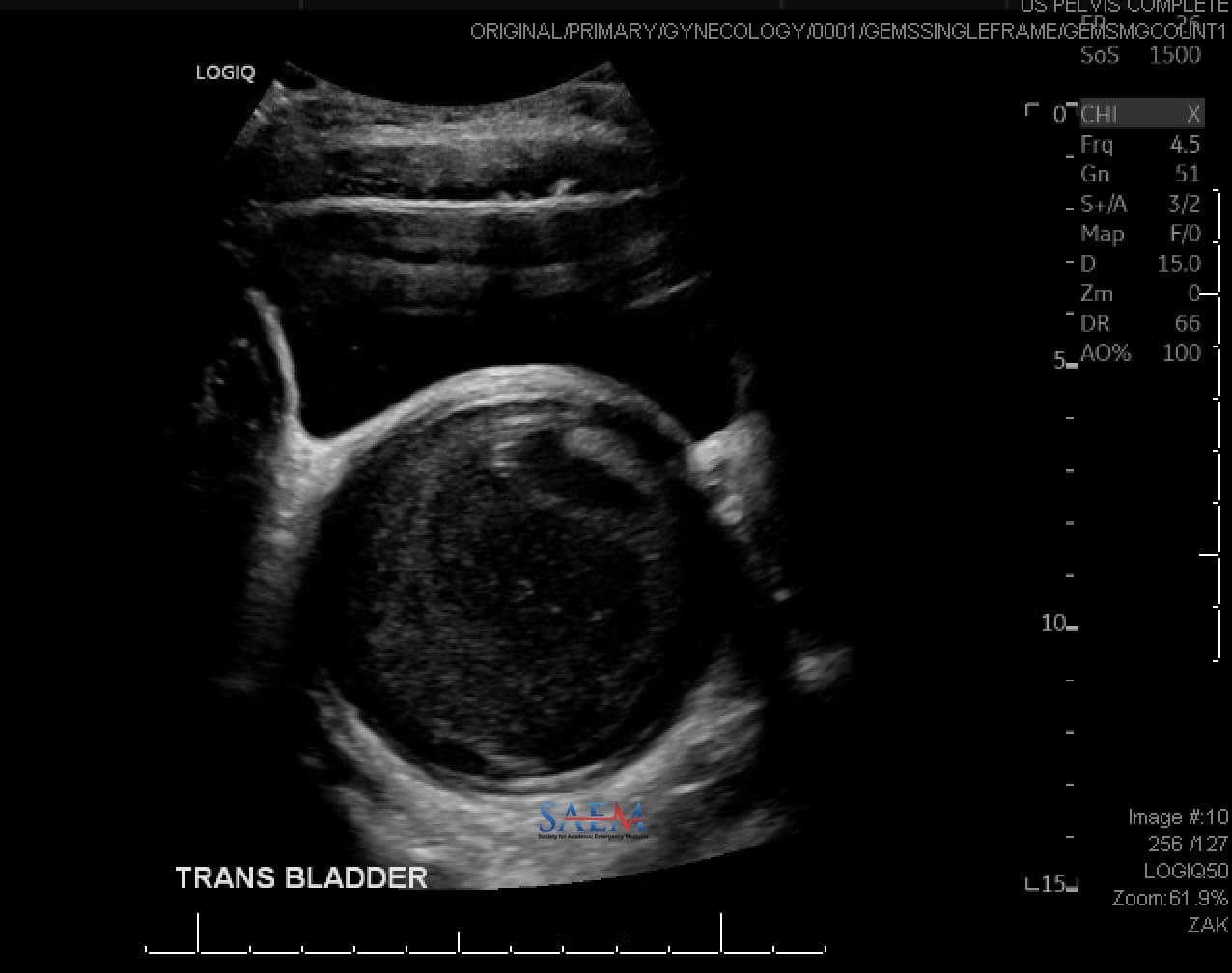
X-ray of the abdomen is normal without obstruction or a significant stool burden. Ultrasound demonstrates a distended fluid-filled vagina.

Imperforate hymen. The opening of the vagina is typically surrounded by a thin membrane with an opening in the center, called the hymen. In the case of an imperforate hymen, the membrane does not have an opening and therefore blocks the vaginal canal. Symptoms of imperforate hymen vary. It can present early in life if normal mucous builds up and causes a bulge of the membrane. Imperforate hymen may not be diagnosed until adolescence when menstruation begins. Symptoms at that time include amenorrhea, back pain, lower abdominal pain, or difficulty with urinating or stooling. In an adolescent with imperforate hymen, physical exam may demonstrate a vaginal bulge with a bluish discoloration, caused by the accumulation of blood in the vagina (hematocolpos). This patient had urinary retention secondary to imperforate hymen and accumulation of blood in the vaginal canal that compressed the urethra. A genitourinary exam was later performed and confirmed the diagnosis. Imperforate hymen is treated with a minor surgical procedure to remove the extra tissue.

Take-Home Points

  • Imperforate hymen occurs when the hymen covers the vaginal entire vaginal opening, therefore blocking it. It may present early in life or later during adolescence.

  • Consider imperforate hymen as a differential diagnosis for female patients who present with lower abdominal or back pain, amenorrhea, or difficulty with urinating or stooling.

  • Diagnosis and management of hymenal variants. ACOG. (2019, May 23). https://www.acog.org/clinical/clinical-guidance/committee-opinion/articles/2019/06/diagnosis-and-management-of-hymenal-variants

  • Hamouie A, Dietrich JE. Imperforate Hymen: Clinical Pearls and Implications of Management. Clin Obstet Gynecol. 2022 Dec 1;65(4):699-707. doi: 10.1097/GRF.0000000000000703. Epub 2022 Mar 11. PMID: 36260009.

By |2025-02-26T14:55:11-08:00Feb 28, 2025|Ob/Gyn, Pediatrics, SAEM Clinical Images|
Go to Top