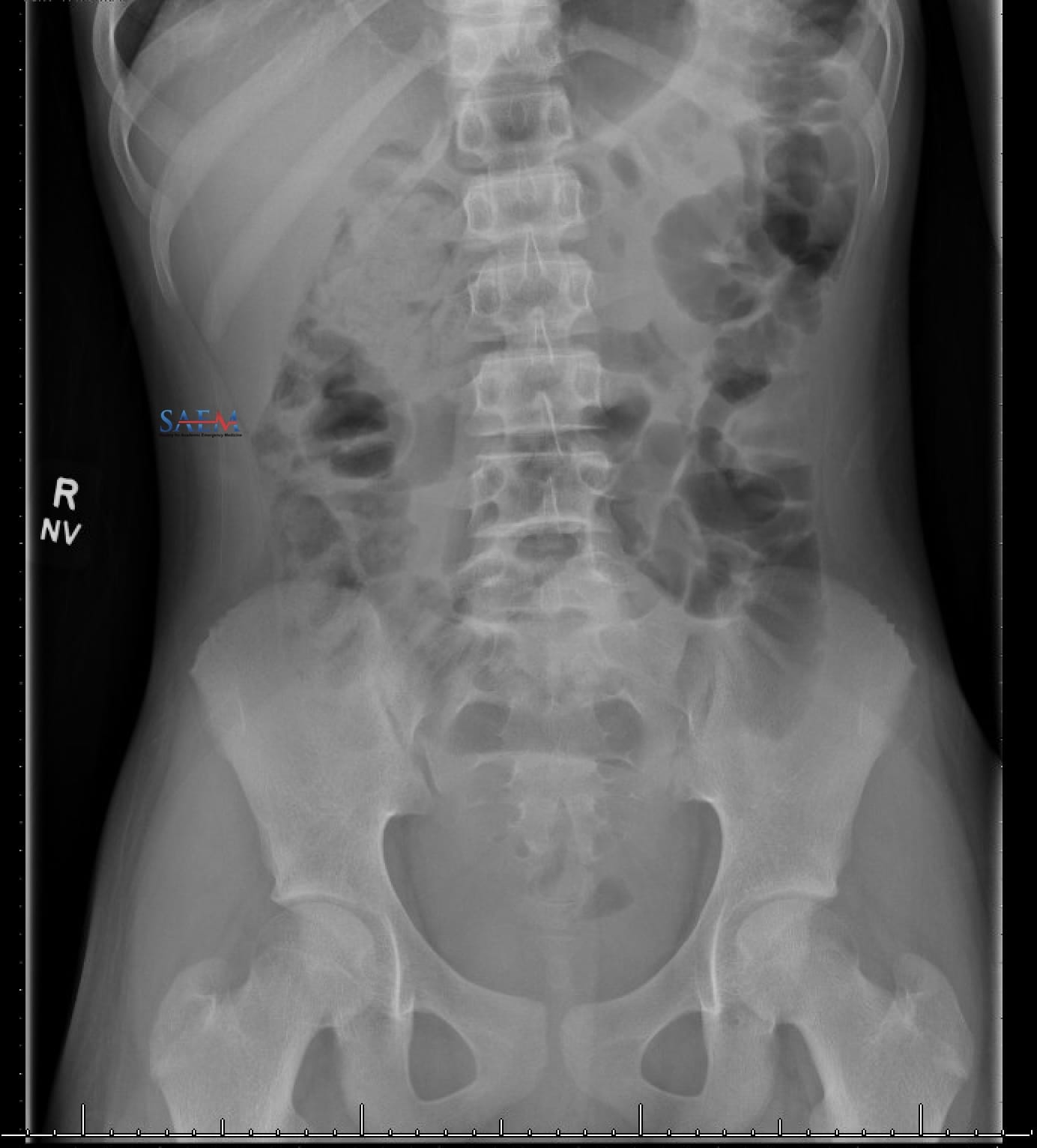
A 10-year-old female with a history of constipation presented with intermittent lower abdominal pain with difficulty urinating. Pain was in the suprapubic area. The patient stated she last urinated the morning of presentation and typically urinates 1-2 times a day. She reported that it is sometimes hard to initiate urination and that she has pain at the conclusion of urination. She typically takes MiraLAX daily for constipation but ran out one week ago. She denied fever, chills, nausea or vomiting.
Constitutional: Awake, alert and in no acute distress.
HEENT: PERRLA. Moist mucus membranes.
Cardiovascular: Regular rate and rhythm. No murmur.
Pulmonary: Breath sounds normal. No increased work of breathing.
Abdominal: Abdomen soft. There is tenderness in the suprapubic area. There is no guarding or rebound.
Neurologic: Awake and alert. At neurologic baseline. No focal deficits.
UA: Trace ketones, 100 protein.
Post void residual: 430 cc.
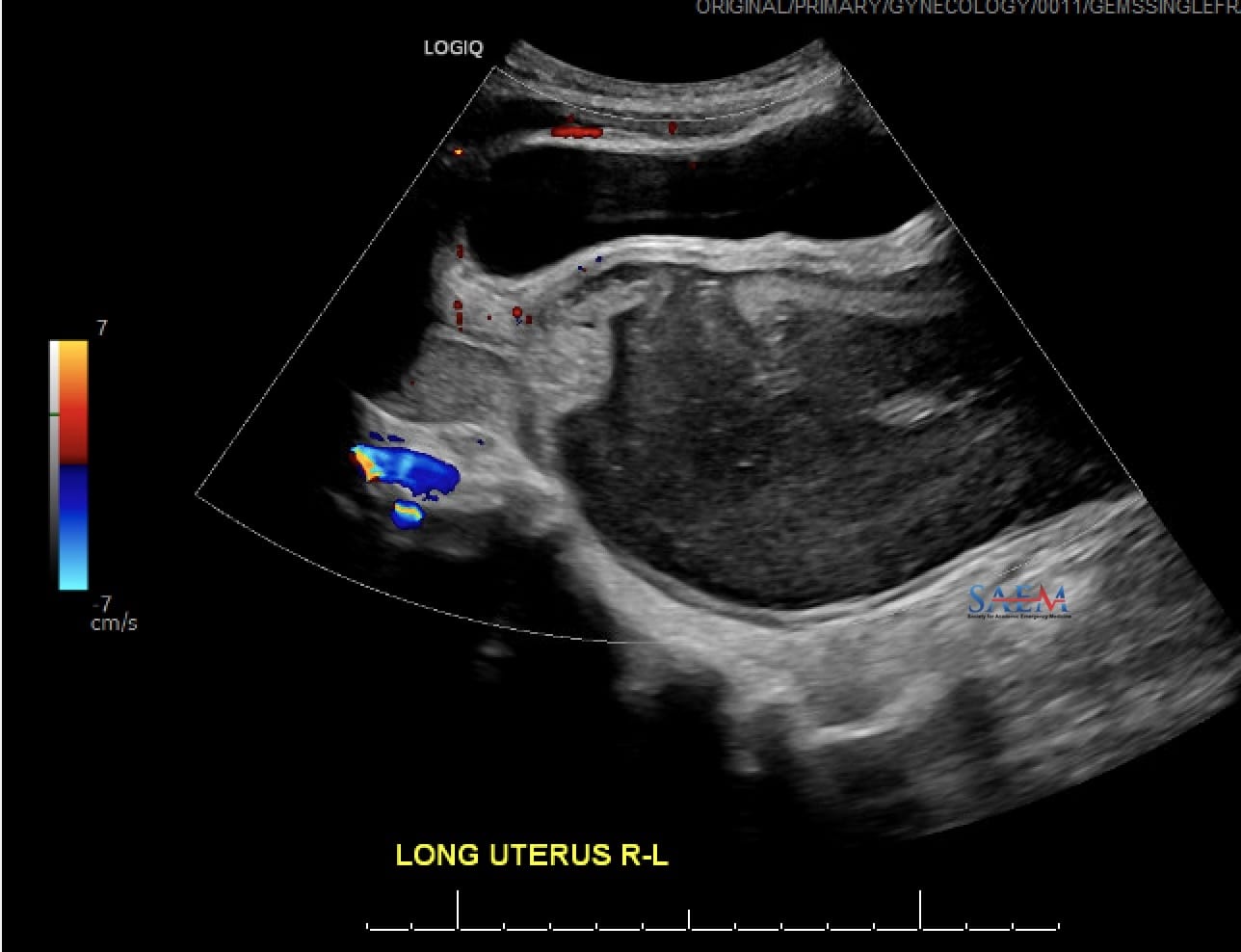
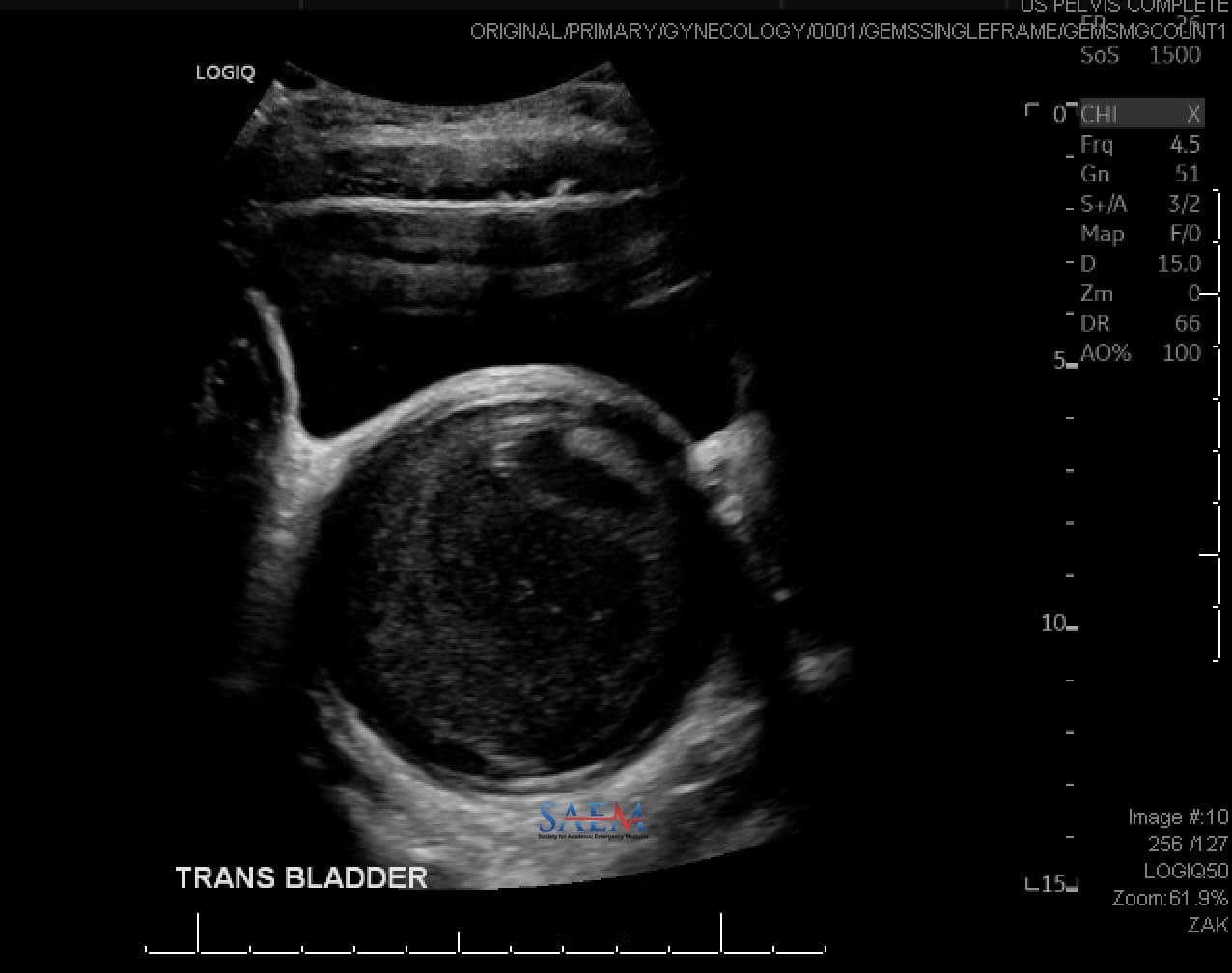
X-ray of the abdomen is normal without obstruction or a significant stool burden. Ultrasound demonstrates a distended fluid-filled vagina.
Imperforate hymen. The opening of the vagina is typically surrounded by a thin membrane with an opening in the center, called the hymen. In the case of an imperforate hymen, the membrane does not have an opening and therefore blocks the vaginal canal. Symptoms of imperforate hymen vary. It can present early in life if normal mucous builds up and causes a bulge of the membrane. Imperforate hymen may not be diagnosed until adolescence when menstruation begins. Symptoms at that time include amenorrhea, back pain, lower abdominal pain, or difficulty with urinating or stooling. In an adolescent with imperforate hymen, physical exam may demonstrate a vaginal bulge with a bluish discoloration, caused by the accumulation of blood in the vagina (hematocolpos). This patient had urinary retention secondary to imperforate hymen and accumulation of blood in the vaginal canal that compressed the urethra. A genitourinary exam was later performed and confirmed the diagnosis. Imperforate hymen is treated with a minor surgical procedure to remove the extra tissue.
Take-Home Points
-
Imperforate hymen occurs when the hymen covers the vaginal entire vaginal opening, therefore blocking it. It may present early in life or later during adolescence.
-
Consider imperforate hymen as a differential diagnosis for female patients who present with lower abdominal or back pain, amenorrhea, or difficulty with urinating or stooling.
-
Diagnosis and management of hymenal variants. ACOG. (2019, May 23). https://www.acog.org/clinical/clinical-guidance/committee-opinion/articles/2019/06/diagnosis-and-management-of-hymenal-variants
-
Hamouie A, Dietrich JE. Imperforate Hymen: Clinical Pearls and Implications of Management. Clin Obstet Gynecol. 2022 Dec 1;65(4):699-707. doi: 10.1097/GRF.0000000000000703. Epub 2022 Mar 11. PMID: 36260009.

Jamie Holland, MD
Medical College of Wisconsin
Latest posts by Jamie Holland, MD (see all)
- SAEM Clinical Images Series: A Mucous Membrane Mystery - February 20, 2026
- SAEM Clinical Images Series: Can I Snooze on This Bruise? - January 9, 2026
- SAEM Clinical Images Series: Alternative Block - February 28, 2025

Wendi Wendt, MD
Pediatric Emergency Medicine
Medical College of Wisconsin
Latest posts by Wendi Wendt, MD (see all)
- SAEM Clinical Images Series: A Mucous Membrane Mystery - February 20, 2026
- SAEM Clinical Images Series: Can I Snooze on This Bruise? - January 9, 2026
- SAEM Clinical Images Series: What is in my Child’s Mouth? - March 17, 2025