


Trick of the Trade: Prescribing opiates
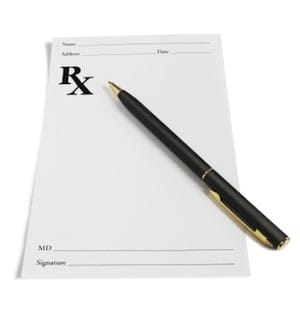 As emergency physicians, we are experts in pain control. We frequently write opiate prescriptions for patients being discharged home. Unfortunately, an occasional patient tries to forge my prescription. At times, I get a call from pharmacy for prescriptions that were suspiciously written. For instance several years ago, I had someone try to forge 100 tablets of “Mophine”.

 The treatment of shock should focus on correcting the underlying pathophysiology. With persistent hemodynamic instability, a vasopressor and/or inotrope should be selected. Reviewing receptor physiology can help you select the best-fit agent for the patient’s clinical condition. There is an especially useful table on medication selection in the reviewed 2008 EM Clinics of North America article.
 Given all the recent brouhaha around propofol and Michael Jackson, I thought I would review the 2007 Annals of EM Clinical Practice Advisory paper on the use of propofol in the Emergency Department for procedural sedation. This is one of the 2009 Lifelong Learning Self-Assessment (LLSA) articles. Each year EM-board certified physicians are tested on 20 pre-selected LLSA articles to maintain eligibility for re-certification.