SAEM Clinical Images Series: Wilma, Take a Look at This!

A 2-year, 11-month-old female with a history of constipation was brought to the ED by her mother for abdominal pain. The mother noticed that the patient’s abdomen had been enlarging for months. When they visited the pediatrician several months ago, the pediatrician also noticed a mildly enlarged abdomen but the patient was asymptomatic at that time. She was well during the interval until more recently, the patient began to complain of persistent abdominal pain and would point to the epigastric area. The patient had two episodes of unprovoked, non-bloody, non-bilious vomiting the morning prior to the ED visit. The patient had been tolerating oral intake well, passing adequate urine, having normal bowel movements, and behaving at baseline. No associated fever, diarrhea, bloody stool, dysuria, hematuria, or weight loss.

[/fusion_text]

Vitals: Temp 97.9 °F (36.6 °C); BP 103/68; Pulse 121; RR 26; SpO2 99% on room air

Constitutional: Active, well-developed, and in no distress.

HEENT: Normocephalic and atraumatic. No scleral icterus. TMs intact, no erythema. No rhinorrhea, no erythema. Moist mucous membranes, oropharynx is clear, no exudates or erythema.

Cardiovascular: Normal rate, regular rhythm and normal heart sounds.

Pulmonary: Breath sounds normal. No wheezing, no stridor, no decreased breath sounds. Normal effort, no acute respiratory distress.

Abdomen: Protuberant, distended abdomen with mild generalized tenderness to palpation. Rigid mass palpated in the upper right quadrant. Normal bowel sounds are heard.

Genitourinary: Normal anatomy. No hernias visualized, no erythema.

Skin: No jaundice or rashes visualized.

Neurological: Awake and alert. No focal deficits present.

CBC: No leukocytosis, leukopenia, anemia, or thrombocytopenia.

CMP: Electrolytes, kidney, and liver function tests were within normal limits.

The most common pediatric renal malignancy is a Wilms tumor, also known as nephroblastoma. It is an embryonal tumor due to disrupted nephrogenesis. It affects approximately 1 in 10,000 children with the median age of onset being 3.5 years (1). The most common chief complaint is abdominal pain, as in this case.

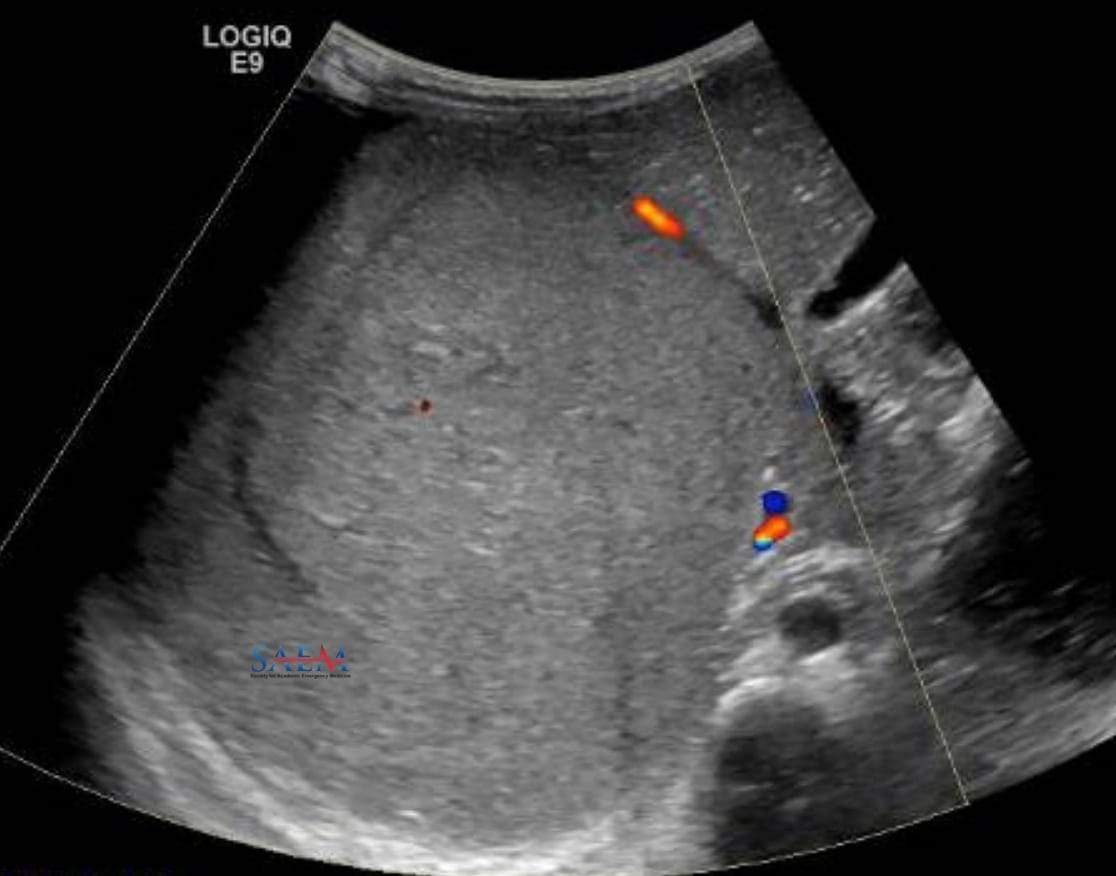
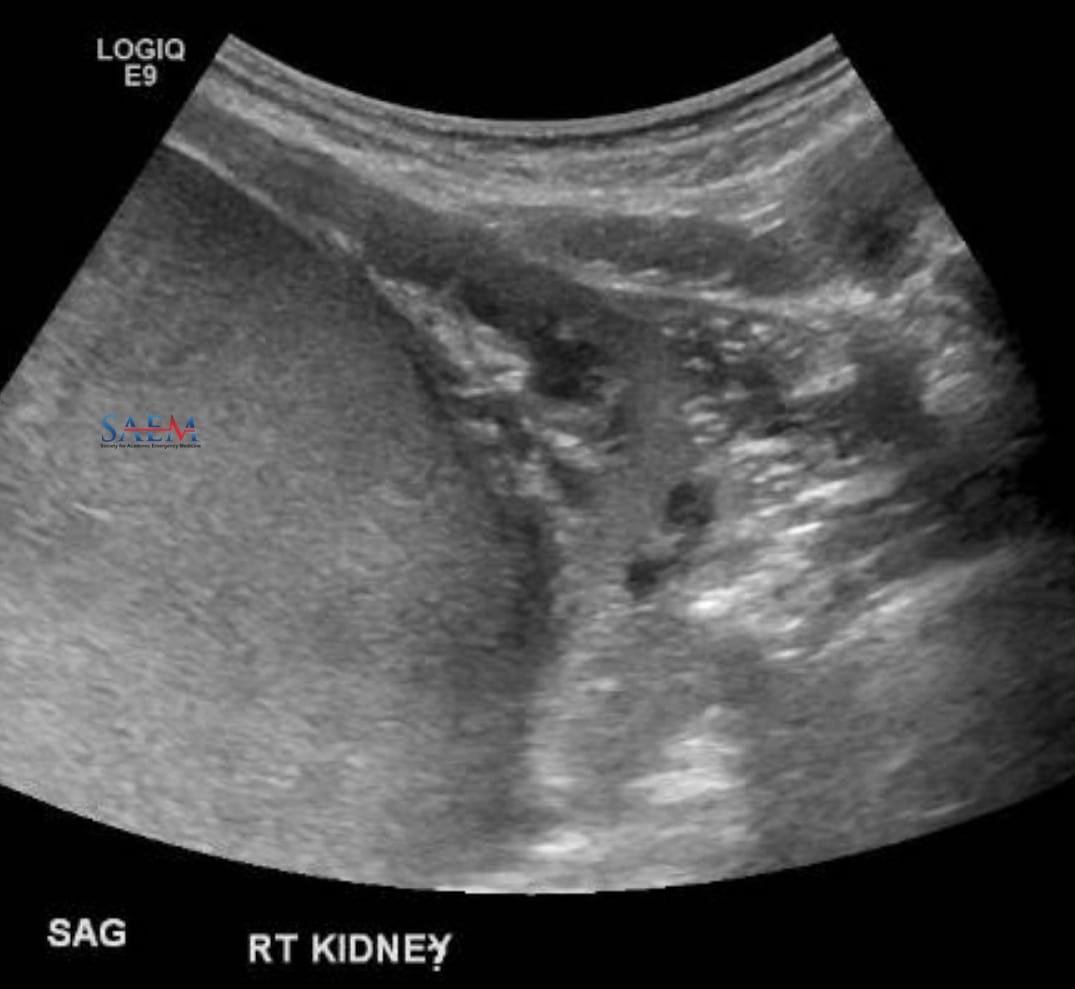
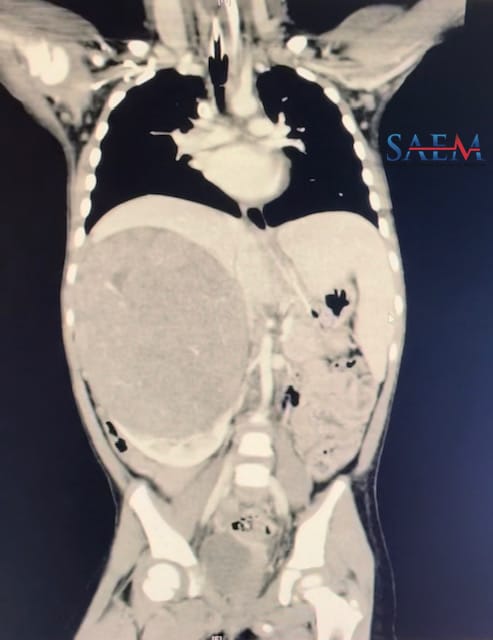
Here a large homogenous mass initially appears to be projecting from the liver, but it can also be seen protruding out of the right kidney. Pediatric abdominal organs commonly overlap so it is essential to note the origination of a mass, primarily for surgical planning. If ultrasound imaging is equivocal, CT is the next best step in differentiating the mass origination. Here, a 12 cm x 9.5 cm x 9 cm mass was noted to originate from the right kidney. If the mass becomes big enough, patients can present with vomiting due to the direct compression of the alimentary tract, such as in this case. Other presenting signs and symptoms may be fever, hypertension, anemia, hematuria, or dysuria (2).

In the US, the National Wilms Tumor Study Group recommends primary nephrectomy followed by a chemotherapy regimen that is tailored to the individual patient and tumor staging. With modern multidisciplinary management, curative therapy is achievable in approximately 90% of affected patients (2). This patient had a successful nephrectomy performed by general surgery and initiated chemotherapy on the medical floor. The patient was eventually discharged home with pediatric oncology follow-up.

Take-Home Points

  • Think of pediatric malignancy if the patient presents with chronic abdominal distention and pain.
  • Pediatric abdominal structures commonly overlap. Knowing the origination of an abdominal mass is essential for surgical planning. If ultrasound is equivocal, CT imaging is the next best step.
  • The definitive management of a Wilms tumor is a multidisciplinary approach, with primary nephrectomy followed by a tailored chemotherapy regimen as the gold-standard treatment in the US.

  1. Spreafico F, Fernandez CV, Brok J, Nakata K, Vujanic G, Geller JI, Gessler M, Maschietto M, Behjati S, Polanco A, Paintsil V, Luna-Fineman S, Pritchard-Jones K. Wilms tumour. Nat Rev Dis Primers. 2021 Oct 14;7(1):75. doi: 10.1038/s41572-021-00308-8. PMID: 34650095.
  2. Sonn G, Shortliffe LM. Management of Wilms tumor: current standard of care. Nat Clin Pract Urol. 2008 Oct;5(10):551-60. doi: 10.1038/ncpuro1218. PMID: 18836464.
  3. Leslie SW, Sajjad H, Murphy PB. Wilms Tumor. 2023 May 30. In: StatPearls [Internet]. Treasure Island (FL): StatPearls Publishing; 2023 Jan–. PMID: 28723033.

[/fusion_builder_column][/fusion_builder_row][/fusion_builder_container]

SAEM Clinical Images Series: A Blistery Mystery

blister

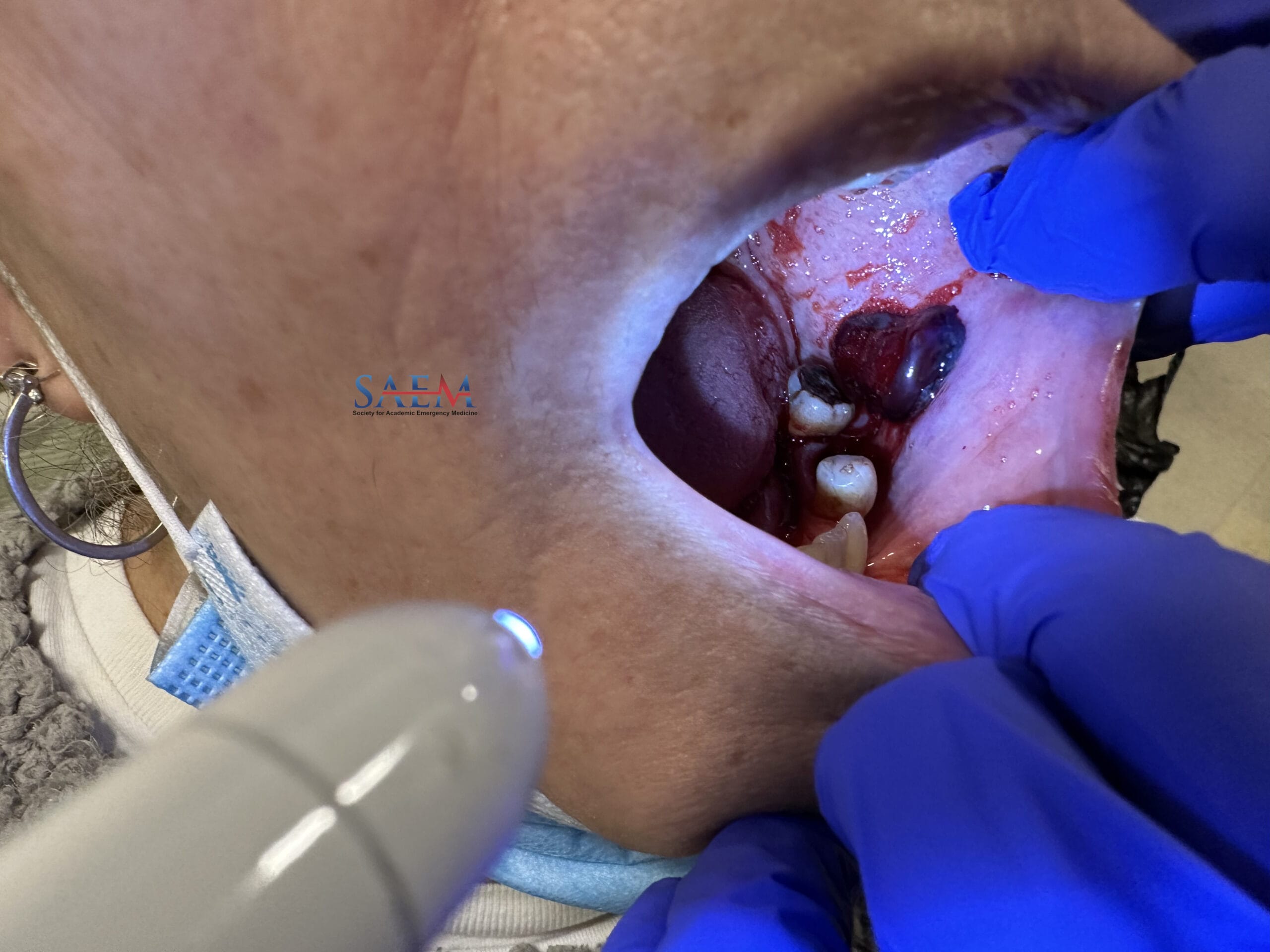
A 76-year-old female presented with a lingering cough and an oral lesion to the left lower cheek. She reported ten days of improving flu-like symptoms but had a persistent cough and nasal congestion. On the day of presentation, she developed a painful, intermittently bleeding “blood blister” to the left lower cheek that had increased in size, as well as new red spots on her arms and legs. She reported no recent trauma or history of similar lesions in the past.

Vitals: 98.3°F; HR 85; BP 178/89; RR 16; SpO2 98% on RA

HENT: Blood-filled pocket to the left lower vestibule

Skin: Diffuse petechial rash to extremities

CBC: Hb 13.6, Plt 6, WBC 10.3

PT: 12.2

INR: 1.05

PTT: 33

Immune thrombocytopenia (ITP) is an acquired autoimmune disorder caused by autoantibodies against platelet antigens. It is thought to be due to IgG directed against platelet membrane glycoprotein GPIIb/IIIa, leading to platelet destruction. Common inciting events include viral infections, autoimmune diseases, or immunodeficiency syndromes [1]. Patients typically present with bleeding or nonspecific symptoms such as fatigue or generalized weakness. The severity of bleeding can range from petechiae, purpura, and epistaxis, to (very rarely) life-threatening hemorrhage. It is important to perform a thorough skin and oral exam to evaluate for petechial rashes or mucosal bleeding. Initial diagnostics include a CBC which will show isolated thrombocytopenia, as well as hemolysis labs to exclude alternative etiologies.

Patients with life-threatening bleeding should be treated emergently with platelet transfusions, IVIG, and steroids. In all other cases, management decisions should be made in conjunction with Hematology. In general, those with mild/moderate bleeding and platelets <20,000/μL should be treated with a steroid course, with IVIG or platelet transfusions in special circumstances only [3]. Patients who receive any treatment or have diagnostic uncertainty should be admitted.

Take-Home Points

  • Immune thrombocytopenia is an acquired isolated thrombocytopenia that can be a primary disorder or secondary to viral illness, autoimmune syndrome, or immunodeficiency disease.
  • Patients typically present with minor bleeding and nonspecific symptoms such as fatigue, or, rarely, severe hemorrhage. Perform a thorough skin and oral exam to evaluate for petechial rashes or mucosal bleeds.
  • Life-threatening bleeding should be treated immediately with platelet transfusions, IVIG, and steroids. Treatment for mild/moderate bleeding is more nuanced. Consult Hematology early to guide management.

  • Cines DB, Bussel JB, Liebman HA, Luning Prak ET. The ITP syndrome: pathogenic and clinical diversity. Blood. 2009 Jun 25;113(26):6511-21. doi: 10.1182/blood-2009-01-129155. Epub 2009 Apr 24. PMID: 19395674; PMCID: PMC2710913.
  • Neunert C, Terrell DR, Arnold DM, Buchanan G, Cines DB, Cooper N, Cuker A, Despotovic JM, George JN, Grace RF, Kühne T, Kuter DJ, Lim W, McCrae KR, Pruitt B, Shimanek H, Vesely SK. American Society of Hematology 2019 guidelines for immune thrombocytopenia. Blood Adv. 2019 Dec 10;3(23):3829-3866. doi: 10.1182/bloodadvances.2019000966. Erratum in: Blood Adv. 2020 Jan 28;4(2):252. PMID: 31794604; PMCID: PMC6963252.
  • Provan D, Arnold DM, Bussel JB, et al. Updated international consensus report on the investigation and management of primary immune thrombocytopenia. Blood Adv. 2019;3(22):3780-3817. doi:10.1182/bloodadvances.2019000812

By |2024-09-28T21:40:15-07:00Oct 11, 2024|Heme-Oncology, SAEM Clinical Images|

SAEM Clinical Images Series: Blue is Bad

66 year-old-male with a history of type 2 diabetes and hypertension presented as a transfer for rapid progression of lower extremity pain, swelling, and blue-purple discoloration of the entire limb with concern for a possible necrotizing infection. His symptoms began earlier in the day and progressed over just a few hours. He had no known thromboembolic risk factors.

MSK: Swollen, tender, and blue/purple-colored right lower extremity

Complete Blood Count (CBC): WBC 8.7; Hb 15; Hct 45; Plt 172

Glucose: 472

Severe venous thromboembolism (VTE), also known as Phlegmasia Cerulea Dolens, which means “painful blue inflammation”, is commonly seen with a unilateral exquisitely tender, swollen, and bluish/purple-colored lower extremity.

Phlegmasia Cerulea Dolens has a high amputation rate secondary to venous gangrene or compartment syndrome. If no pulse is noted on exam, a high suspicion for compartment syndrome must be maintained.

Take-Home Points

  • Phlegmasia Cerulea Dolens is a rare ischemic complication of massive venous thromboembolism with amputation and mortality rates as high as 50% and 40% respectively.
  • Phlegmasia Cerulea Dolens tends to affect the iliofemoral segment of the lower extremities and is commonly associated with malignancy.
  • The preferred imaging modality is doppler ultrasound. Management includes limb elevation, IV fluids, and either systemic anti-coagulation, catheter-directed thrombolysis, and/or thrombectomy.

  • Bazan HA, Reiner E, Sumpio B. Management of bilateral phlegmasia cerulea dolens in a patient with subacute splenic laceration. Ann Vasc Dis. 2008;1(1):45-8. doi: 10.3400/avd.AVDcr07002. Epub 2008 Feb 15. PMID: 23555338; PMCID: PMC3610218.
  • Chaochankit W, Akaraborworn O. Phlegmasia Cerulea Dolens with Compartment Syndrome. Ann Vasc Dis. 2018 Sep 25;11(3):355-357. doi: 10.3400/avd.cr.18-00030. PMID: 30402189; PMCID: PMC6200621.
  • Gardella L, Faulk J. Phlegmasia Alba And Cerulea Dolens. 2022 Oct 3. In: StatPearls [Internet]. Treasure Island (FL): StatPearls Publishing; 2022 Jan–. PMID: 33085284.
  • Said A, Sahlieh A, Sayed L. A comparative analysis of the efficacy and safety of therapeutic interventions in phlegmasia cerulea dolens. Phlebology. 2021 Jun;36(5):392-400. doi: 10.1177/0268355520975581. Epub 2020 Nov 25. PMID: 33236674.
  • Schroeder M, Shorette A, Singh S, Budhram G. Phelgmasia Cerulea Dolens Diagnosed by Point-of-Care Ultrasound. Clin Pract Cases Emerg Med. 2017 Mar 13;1(2):104-107. doi: 10.5811/cpcem.2016.12.32716. PMID: 29849409; PMCID: PMC5965407.

SAEM Clinical Images Series: An Ominous Umbilical Lesion

umbilical

A 54-year-old male with a past medical history of atrial flutter and alcohol use disorder presents with an umbilical wound that has been bothering him for approximately six months. There is no history of trauma, prior infection, or umbilical surgery. There is intermittent mild pain and irritation that occurs randomly. No drainage or bleeding. He admits to picking at the wound regularly. He denies fever, chills, nausea, generalized abdominal pain, diarrhea, constipation, dysuria, and hematuria. The patient drinks four or more alcoholic beverages daily and has a long-standing history of tobacco use.


Vitals: BP 105/73; HR 70; RR 16; SpO2 97% on room air; Temp 36.1°C

Constitutional: Appears stated age, resting comfortably, well-appearing.

Abdominal: Soft, flat, non-tender.

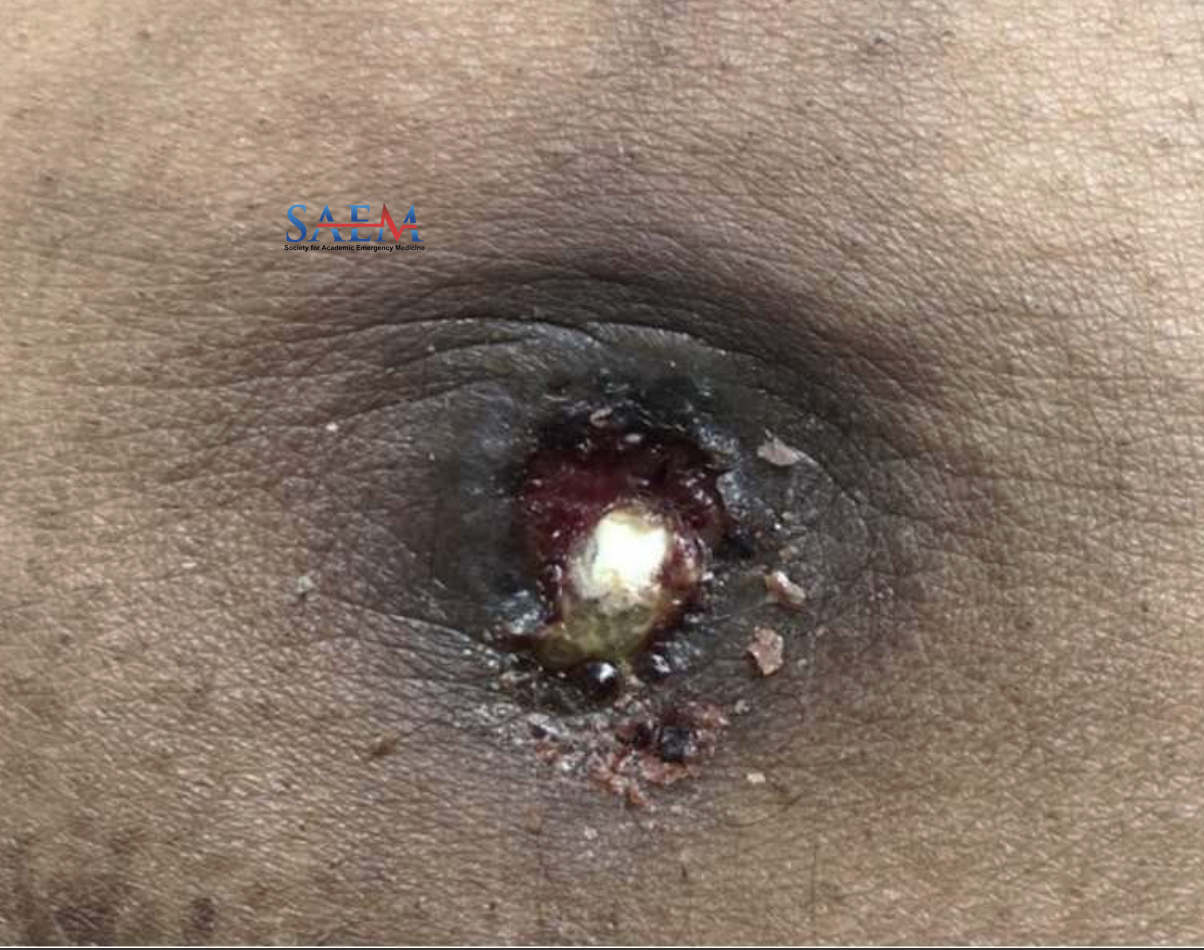
Skin: Umbilical wound characterized by a peripheral eschar and a central area of hyperpigmented and crusted tissue overlying an area of whiteish moist tissue that was uncovered by gentle cleansing. No surrounding erythema and no areas of fluctuance. No active drainage or malodor.

None available.

Sister Mary Joseph (SMJ) nodule is a rare cutaneous metastasis of gastrointestinal or genitourinary primary malignancies to the umbilicus [1,3]. They are typically firm, painful, indurated, and irregularly shaped, with sizes typically less than 2 cm [1]. They can be ulcerated or necrotic with variable presence of discharge ranging from purulent to serous or serosanguinous [1]. Sister Mary Joseph nodules typically arise late in disease and portend a poor prognosis [1]. Most primary malignancies are adenocarcinomas (75%), and pancreatic cancers represent approximately 9% of umbilical metastases [1]. Mean survival of patients with SMJ nodules is less than 12 months, and less than three in those with pancreatic primaries [1]. Prognosis is slightly less bleak if the SMJ nodule is the only metastatic site [1]. Sister May Joseph Dempsey was a nun and surgical assistant to Dr. William Mayo, the surgeon who developed the approach to umbilical hernia repair and the first to identify the connection between abdominopelvic cancers and umbilical nodules [2,3].

Abdominal CT imaging.

Our patient was discharged on the initial visit with wound care instructions. He returned to the Emergency Department two months later and was admitted for atrial flutter with rapid ventricular response and acute on chronic congestive heart failure. During that visit, the patient had a CT chest/abdomen/pelvis that demonstrated likely a pancreatic tail adenocarcinoma with metastasis to the peritoneal and abdominal walls. The patient declined any further intervention.

Take-Home Points

  • Sister Mary Joseph nodules are umbilical metastases from abdominopelvic primary malignancies.
  • Recognition of their features on clinical exam can lead to a more rapid diagnosis.
  • Prognosis is grim with an average survival of less than one year.

  1. Vekariya P, Daneti DB, Senthamizh Selvan K, Verma SK, Hamide A, Mohan P. Sister Mary Joseph Nodule as an Initial Presentation of Pancreatic Adenocarcinoma. ACG Case Rep J. 2020 Aug 25;7(8):e00453. doi: 10.14309/crj.0000000000000453. PMID: 32903972; PMCID: PMC7447472.
  2. Palazzi DL, Brandt ML. Care of the umbilicus and management of umbilical disorders. UpToDate. Updated August 27, 2021. Accessed January 2, 2022. https://www.uptodate.com/contents/care-of-the-umbilicus-and-management-of-umbilical-disorders?search=sister%20mary%20joseph%20nodule&source=search_result&selectedTitle=2~6&usage_type=default&display_rank=2#H25.
  3. Tso S, Brockley J, Recica H, Ilchyshyn A. Sister Mary Joseph’s nodule: an unusual but important physical finding characteristic of widespread internal malignancy. Br J Gen Pract. 2013 Oct;63(615):551-2. doi: 10.3399/bjgp13X673900. PMID: 24152477; PMCID: PMC3782795.

SAEM Clinical Images Series: Dermatology Deserving a Deeper Dive

A 22-year-old female without significant past medical history presented to the Emergency Department (ED) for a progressive rash for the past six months. She had initially complained of dry and peeling skin on bilateral hands and feet and had multiple ED and dermatology encounters where topical steroids, acyclovir, and methotrexate were prescribed with no improvement. The rash continued to progress with worsening pain and inability to flex fingers secondary to lesions and scabbing at the joints. The patient also developed painful sores in her mouth primarily involving the tongue. More concerningly, she had lost 60 pounds since the onset of the rash and mouth lesions which she attributed to the inability to eat due to significant pain. Otherwise, she denied systemic symptoms, exposures, new medications, or previous illnesses.

Vitals: Within normal limits

HEENT: Swelling, erythema, and mild desquamation of the tongue mucosa with adherent white discharge present. Lesions are limited to the surface of the tongue with no buccal involvement.

Cardiovascular/Respiratory: Heart sounds within normal limits. Bilateral breath sounds without wheezes, rales, or rhonchi.

Abdomen: Soft, non-tender and non-distended.

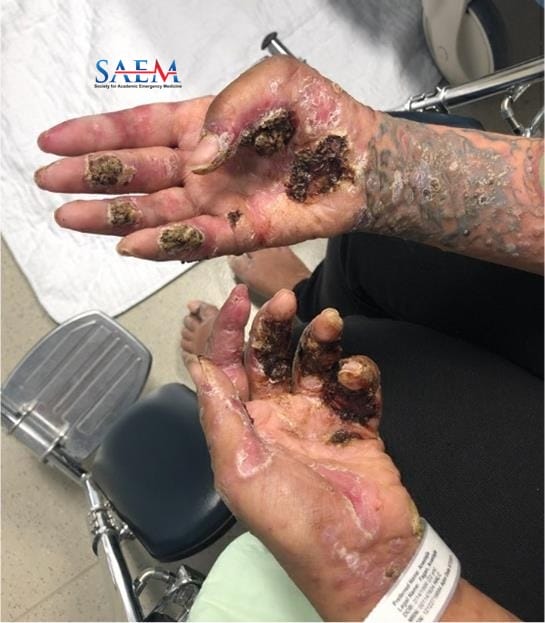
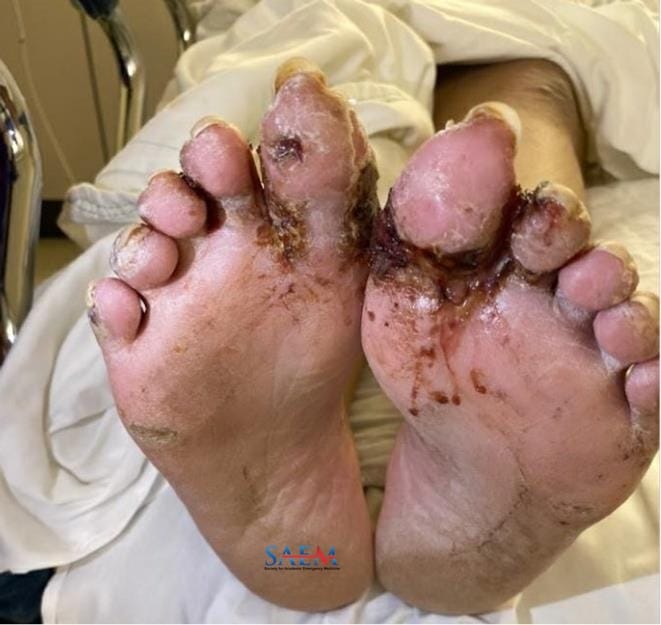
Skin: The patient was noted to have desquamated, scabbing and oozing lesions on bilateral palms and fingers, soles of the feet, and web spaces between toes. The patient had no observable vesicles/bullae, or target lesions. Negative Nikolsky sign.

Complete Blood Count (CBC): Mild anemia, stable from baseline.

Basic Metabolic Panel (BMP): Within normal limits.

CT Abdomen/Pelvis with contrast (relevant findings only): Large solid right retroperitoneal mass lobulated in contour with heavy coarse calcifications measuring 21.2 x 8.5 x 10.4 cm, traversing the right hemidiaphragm and extending to the right lower mediastinum. The diaphragm itself is asymmetrically thickened as compared with the contralateral left side with a small volume of adjacent retroperitoneal fluid and there is extension into the right neural foramina.

The diagnosis of paraneoplastic pemphigus (PNP) was made after skin biopsy along with the constellation of findings including desquamating cutaneous lesions, painful mucosal erosions, and large retroperitoneal mass concerning for malignancy. Skin biopsy findings in this case include a distinct suprabasilar cleft, apoptotic keratinocytes, eosinophilic spongiosis, and superficial perivascular lymphocytic infiltrate with scattered eosinophils. Focally, there was full-thickness necrosis of the epidermis and dermis.

Patients with concern for PNP without known malignancy require a full neoplastic workup. In this case, a biopsy of the retroperitoneal mass and subsequently full resection was notable for Castleman’s disease, a rare lymphoproliferative disorder. PNP is an often fatal paraneoplastic mucocutaneous blistering disease that is most commonly caused by various lymphoproliferative disorders including non-Hodgkin’s lymphoma, chronic lymphocytic leukemia (CLL), and Castleman’s disease. It is an extremely rare condition with an unknown incidence rate. The mucosal erosions present are a requirement for the diagnosis. It typically presents as an erosive stomatitis involving the tongue and is characteristically chronic, progressive, and painful. These lesions are the initial disease manifestation in almost one-half of patients with PNP and often lead to malnutrition secondary to pain with attempts at oral intake. The cutaneous lesions in the disease are widely variable in morphology and can present with tense or flaccid bullae, as well as inflammatory papules or plaques.

Take-Home Points

  • In patients with a progressive rash involving the oral mucosa that have failed multiple outpatient regimens and have findings concerning for possible systemic involvement, dermatology consultation, tissue biopsy, and body imaging are often needed to confirm a diagnosis of complicated disease processes such as paraneoplastic pemphigus (PNP).
  • Significant unintentional weight loss may be due to a variety of reasons stemming from one unifying etiology. In this case, our patient had both mouth pain limiting oral intake as well as a lymphoproliferative disorder.
  • Anhalt GJ, Kim SC, Stanley JR, Korman NJ, Jabs DA, Kory M, Izumi H, Ratrie H 3rd, Mutasim D, Ariss-Abdo L, et al. Paraneoplastic pemphigus. An autoimmune mucocutaneous disease associated with neoplasia. N Engl J Med. 1990 Dec 20;323(25):1729-35. doi: 10.1056/NEJM199012203232503. PMID: 2247105.
  • Kaplan I, Hodak E, Ackerman L, Mimouni D, Anhalt GJ, Calderon S. Neoplasms associated with paraneoplastic pemphigus: a review with emphasis on non-hematologic malignancy and oral mucosal manifestations. Oral Oncol. 2004 Jul;40(6):553-62. doi: 10.1016/j.oraloncology.2003.09.020. PMID: 15063382.
By |2023-01-02T04:44:30-08:00Jan 2, 2023|Dermatology, Heme-Oncology, SAEM Clinical Images|

SAEM Clinical Images Series: ‘Tis Not the Season to be Wheezing

wheezing

A 2-year-old male with a history of solitary kidney presented with greater than one month of daily coughing, wheezing, and decreased appetite. The patient was previously seen by his primary care physician after three weeks of symptoms where he was prescribed albuterol as needed for viral bronchospasm. The patient’s wheezing did not improve after two weeks of albuterol treatment so a chest x-ray was ordered. The patient’s mother denied any fevers, vomiting, diarrhea, weight changes, or night sweats.

Vitals: BP 131/60; Pulse 148; Temp 36.7 °C (98.1 °F) (Axillary); Resp 28; Wt 15.7 kg (34 lb 9.8 oz); SpO2 95%

General: Alert; well appearing

HEENT: Pupils equally reactive to light; moist mucous membranes; nares with normal mucosa without discharge

Cardiovascular: Regular rate; regular rhythm; normal S1, S2; no murmur noted; distal pulses 2+

Pulmonary: Good aeration throughout all lung fields; clear breath sounds bilaterally; prolonged expiratory phase; stridor with agitation

Abdomen: Soft; non-tender; non-distended

White blood cell (WBC) count: 56.1/uL (Blasts 58%)

Platelets: 288/uL

Uric acid: 8.3 mg/dL

LDH: 2231 iU/LD

D-Dimer: 3.22 ug/mL

Fibrinogen: 463 mg/dL

Bronchospasm, bronchiolitis, viral infection, pneumonia, foreign body aspiration, space-occupying lesion, vocal cord dysfunction, cardiac dysfunction, and acute chest in patients with sickle cell disease.

The radiograph shown demonstrates a mediastinal mass. This patient was ultimately diagnosed with T-cell acute lymphoblastic leukemia. T-ALL can present with fatigue, fevers, weight loss, easy bleeding/bruising, paleness, or a mediastinal mass. Mediastinal masses found on chest x-ray require further evaluation to determine the diagnosis, location, and treatment. If malignancy is suspected, an oncology referral and bone marrow sample will be necessary.

Take-Home Points

  • In patients with first-time wheezing that does not improve with bronchodilator therapy, consider alternative diagnoses and further evaluation.
  • A mediastinal mass is found at the time of diagnosis in 10% to 15% of children with acute lymphoblastic leukemia.

  • Steuber, P (2021). Overview of common presenting signs and symptoms of childhood cancer.UpToDate. Retrieved January 2, 2021.2.
  • Juanpere, S., Cañete, N., Ortuño, P., Martínez, S., Sanchez, G., & Bernado, L. (2013). A diagnostic approach to the mediastinal masses. Insights into imaging, 4(1), 29–52.https://doi.org/10.1007/s13244-012-0201-0

SAEM Clinical Images Series: Breast Swelling

A female in her 50s with a past medical history of coronary artery disease, pacemaker placement, hypertension, and ESRD presented to the emergency department with the chief complaint of missed dialysis, breast engorgement, and an increase in vascularity in her chest and abdomen. The patient reported an increase in breast swelling and increased vascularity in her belly over the past three months. Additionally, she woke up short of breath on the morning of presentation and reported dyspnea at rest. She denied chest pain, diaphoresis, breast pain, fever, rash, trauma to the breasts, or drainage.

Vitals: T 36.9°C; HR 105; BP 109/74; RR 20; O2 sat 97% on nasal canula @ 3L

Neck: JVD

Lungs: Bilateral crackles

Chest and abdomen: Increased vascularity

Breast: Bilateral breast swelling and redness

Lower extremity: Bilateral pitting edema and varicose veins

Basic metabolic panel (BMP): K 6.9; Cr 9.53

Brain natriuretic peptide (BNP): >35,000

Troponin I: 0.1

DDX: Inflammatory carcinoma, mastitis, superior vena cava syndrome, portal hypertension, pulmonary hypertension, pulmonary embolism.

Superior vena cava (SVC) syndrome results from any condition that leads to obstruction of blood flow through the SVC. Our case was caused by complete occlusion from a thrombus and the patient presented with bilateral breast swelling, skin changes (peau d’orange), and an increase in vascularity in the abdomen and chest (caput medusa). Breast tissue largely drains into the axillary veins, and more proximally into the subclavian veins. Due to occlusion of the SVC, a complete backup of venous flow occurs, resulting in all of the noted collateral hypervascularity.  Often SVC occlusion is caused by malignancy obstructing the superior vena cava or invading the vein.

The CTA demonstrates occlusion of the superior vena cava. There are multiple varices in the chest wall and the imaged upper abdominal wall. There is also diffuse subcutaneous edema with diffuse soft tissue swelling and skin thickening of the bilateral breasts.

Take-Home Points

  • Consider superior vena cava occlusion in patients undergoing hemodialysis who present with the above physical exam findings.
  • Consider occult malignancy as the source or cause of thrombosis.
  • Be sure to fully expose your patient when appropriate and keep your differential broad.

  • Corduff N, Rozen WM, Taylor GI. The superficial venous drainage of the breast: a clinical study and implications for breast reduction surgery. J Plast Reconstr Aesthet Surg. 2010 May;63(5):809-13. doi: 10.1016/j.bjps.2009.02.055. Epub 2009 Apr 3. PMID: 19345164.
  • Friedman T, Quencer KB, Kishore SA, Winokur RS, Madoff DC. Malignant Venous Obstruction: Superior Vena Cava Syndrome and Beyond. Semin Intervent Radiol. 2017 Dec;34(4):398-408. doi: 10.1055/s-0037-1608863. Epub 2017 Dec 14. PMID: 29249864; PMCID: PMC5730434.

Go to Top