Educational resources discussing lifestyle, public policy, and wellness relevant for all healthcare providers

Dear emergency physicians: We see you

The COVID-19 pandemic has placed incredible stress and strain on the personal work lives of emergency physicians. We have endured these almost 2 years of misinformation, PPE shortages, fear, frustration, grief, and death. So much going on in the world politically and socioeconomically, we at ALiEM wanted to share a message that WE SEE YOU. We’re with you, and we’re in this together.

Credits

Thank you for the tireless work on this video by animator Spencer Evans, who is a soon-to-be-emergency physician attending medical school currently at the University of Colorado. Also thanks to the entire ALiEM team for contributing to the message and storyboard, especially Drs. Al’ai Alvarez, Andy Little, Carl Preiksaitis, Chris Belcher, Christian Rose, Felix Ankel, Jason Woods, and Teresa Chan.

How I Work Smarter: Simiao Li-Sauerwine, MD

One word that best describes how you work?

Efficiently!

Current mobile device

iPhone 12

Computer

MacBook Air

What is something you are working on now?

I’m working on a research study examining the impact of EM faculty demographics on learner evaluations.

How did you come up with this Idea/Project?

I’ve always been interested in the impact of implicit bias on physician professional development and advancement. We use learner evaluations of attendings for promotion, for compensation, for recognition with departmental awards. So, I was interested to know how the demographics of a faculty member might impact a resident’s expectations of how they teach at the bedside and on shift. Do they impact those metrics that affect advancement?

What’s your office workspace setup like?

My office in the Department of EM at OSU is right across from our Program Managers – very convenient for quick questions and discussions! I have a PC but often also bring my laptop for a centralized work machine. I have a French press with coffee and tea and mugs so that folks can get a caffeine fix when they stop by. I also make sure to have snacks available for quick nutrition between meetings.

My home setup is my MacBook Air on a laptop stand. About a year into the pandemic as I was continuing to work from home, I purchased the stand and it’s been a game-changer! Less neck strain and better angles for Zoom :). I usually work on the couch in our home office or wherever I can find a quiet space for deep work.

What’s your best time-saving tip in the office or home?

I have no magical time-saving tips but I keep an aggressively up-to-date to-do list which I re-prioritize every day. If it’s not on paper (or on my Notes app), it tends to fall off my radar. So everything gets written down.

What’s your best time-saving tip regarding email management?

Triage your email. I either glance at it, respond if necessary, and move on, or flag the email if it requires more thought or an in-depth response. Then, when I have blocks of time to sit down, the flagged emails become their own TO DO list. I try to keep this down to less than one page.

What apps do you use to keep yourself organized?

The Reminders app is nice because I can sync it across all my Apple devices. I use this primarily for groceries and personal TO-DOs. I use Notes for work-related tasks; each line is a deadline for a task (either real or self-imposed) with a title and descriptor.

How do you stay up to date with resources?

I go to our resident conference every single week – it’s a privilege to continue to learn. Free knowledge! Who doesn’t love that?

What’s your best time-saving tip in the ED?

Save your teaching until after you’ve seen a patient, so you can focus on discussing the most relevant and high yield educational pearls.

ED charting: Macros or no macros?

No macros! It takes time to click through. I use dot phrases and change the text – it goes much quicker.

Advice

  • What’s the best advice you’ve ever received about work, life, or being efficient?

    Choose your projects based on 1. Are you passionate about the topic? 2. Are you really excited to work with the people involved? and 3. Will it build your dossier for promotion? Hitting one is great, two is better, and ideally all three! Wise words from Jorge Fernandez that have guided my junior faculty years.

  • What advice would you give other doctors who want to get started, or who are just starting out?

    • Find your passion, and academic products will follow.
    • You are entitled to mentorship from anyone and everyone – don’t be afraid to ask for it.
    • Your personal brand is important – are you solutions-oriented, do you get things done, are you timely.
    • Work time is work time, and make it count – but protect your non-shift weekends and evenings for family and the stuff that matters.
  • Is there anything else you’d like to add that might be interesting to readers?

    I am an avid foodie who loves to read up on local and regional specialties – so if you find me at a conference, ask me where to eat!

Read other How I Work Smarter posts, sharing efficiency tips and life advice.

How I Work Smarter: Al’ai Alvarez MD

One word that best describes how you work?

Compassion

Current mobile device

iPhone 12

Computer

MacBook Pro

What is something you are working on now?

Where do I begin? The pandemic has opened doors for virtual talks and conferences, so I’m just taking it week by week sometimes. I’m also doing a fellowship, the Stanford Byers Center for Biodesign Faculty Fellowship. I’m learning how to apply design thinking to well-being interventions in the ED, and hopefully collaborating with other high-performance teams. I am also co-directing a conference in May 2022 on High-Performance Resuscitation Teams.

How did you come up with this Idea/Project?

re: High-Performance Resuscitation Teams Conference, I have been attending the Mission Critical Teams Institute summits over the past several years. We wanted to create a conference focused on healthcare and high-performance teams. I’ve had the opportunity to center my areas of interests in Medical Education, Process Improvement (Quality and Clinical Operations), Recruitment (Diversity), and Well-being (Inclusion) through human-centered design. A natural area was focusing on team performance and professionalism under stress.

What’s your office workspace setup like?

I’m in the middle of 5 people-office space. I have a plant, some snacks, and a big monitor. I haven’t been there in months. My home office is somewhat similar.

What’s your best time-saving tip in the office or home?

Paper and pen writing of big deadlines in a week. I’ve tried calendaring after learning from Dr. Jennifer Kanapicki, though I have yet to develop the discipline to do this weekly. My coach offered an alternative, which is focusing on 3 big projects a week to focus my energy. This helps me put things in perspective, as opposed to having so many loose ends, and writing it down cognitively frees up memory space for me.

What’s your best time-saving tip regarding email management?

Quick run-through in the morning, and start deleting.

What apps do you use to keep yourself organized?

On Chrome: OneTab for all my tabs. Omnifocus for my to-do stuff. My calendar is a part of my life so my calendar is an extension of my brain. When2meet to find mutual availability for meetings plus My calendar with zoom links.

How do you stay up to date with resources?

Twitter. I know.

What’s your best time-saving tip in the ED?

Eyeball patients immediately so I have a sense of who’s sick and who’s not. Talk to the nurses. They know more about the patient most of the time. For the rest, I follow the mantra, “Quality care takes time,” and I am on the faster end of the dispositions in my group, as I’ve learned to be more comfortable with managing uncertainties.

ED charting: Macros or no macros?

No macros. I also don’t chart as much as I should. I write for the sake of documenting and not for billing. I’m OK with that. We can’t do it all.

Advice

  • What’s the best advice you’ve ever received about work, life, or being efficient?

    #selfcompassion. Can’t do everything perfectly. Show up. Learn to say no. The power of perspectives. In 1 week, 1 month, 1 year, 10 years will this really matter? This grounds me on how I tackle tasks and often the emotions surrounding deadlines.

  • What advice would you give other doctors who want to get started, or who are just starting out?

    Easier said than done, practicing self-compassion has allowed me to really develop a growth mindset. To start, simply doing a daily mindfulness practice of even 5-10 minutes. This trains my mind to slow things down when things become chaotic. This also trains me to be attuned to how my body reacts to stress, and therefore, tending to it whenever I notice these sensations (neck stiffening up, etc).

  • Is there anything else you’d like to add that might be interesting to readers?

    I may be doing a ton of stuff, and in the background, I’m doing a ton more and failing. For me, the more things I’m working on that I’m truly passionate about, the more I get done. I’m OK with failure, and whenever I do (and not if I do), these offer me a great opportunity to learn how to be better (or choose better opportunities). Last and also very important, I find the collaborations bring more meaning to my work.

Read other How I Work Smarter posts, sharing efficiency tips and life advice.

By |2022-01-18T09:55:16-08:00Jan 21, 2022|How I Work Smarter, Medical Education|

The 1440 Doctor: How to Unplug While Working From Home

unplug from work working from home WFH

When we are scheduled for a clinical shift, we are well aware of our work hours for the day (and any added charting time afterwards). However on our academic days working from home (WFH) the separation between work and leisure time becomes more blurry. 

Harvard Business Review studies found that being on the road can help people switch gears between home and work (1). Blake Ashforth et al. in “All in a Day’s Work: Boundaries and Mirco Role Transitions” writes about the importance of the transition between work to non-work, including “boundary-crossing activities,” such as putting on work clothes and driving in your car (2). The paper emphasizes the importance of physical and social indicators that tell us something has changed. 

Given WFH is not going away anytime soon, let’s talk about strategies to set boundaries and aid in the transition between these 2 environments when the physical commute is gone.

hourglass stop working from home

Parkinson’s law describes how the amount of work expands to fill the time available for its completion. The principle should be etched at the top of every physician’s calendar. Most of us have experienced Parkinson’s law while writing a paper, preparing for a lecture, or just about anything else with a due date. Suddenly it’s the day before the deadline and instantly your effort increases as the time for completion decreases. 

There are 2 applications of Parkinson’s law that can aid us while WFH.

  1. Apply Parkinson’s law throughout your workday. Do our 1-hour standing meetings ever end early? Not likely. When we plan for more time than a task actually takes, we often take advantage of that time, even if it’s not productive. Challenge yourself to complete that 2-hour task in 1 hour. Use an aid to help you, like the BeFocused timer app, to set a hard stop to your task. It also instills a sense of urgency to watch the timer ticking down.

When you are planning your WFH day, don’t think about the time you HAVE to complete a task; think about how much time you will NEED

  1. Set a hard stop to your work day. These hard stops are not only important for each task at hand but also the end of the work day. At what time do you want to end your WFH day? Calendar the time. Use your BeFocused timer and with that final “beep” you are done with your workday. By having a hard stop to your day, you will increase your effort to work more efficiently because your work day will be ending at a certain time (regardless of how many emails are in your inbox). 

This is an area we must all practice self-compassion. When a day of hard work is done, it’s okay to stop. What this means is no emails when the kids go to bed, no late night work texts or Slack checks. You want some supporting data? Check out the article, Psychological Detachment From Work During Leisure Time: The Benefits of Mentally Disengaging From Work, by Sonnentag. Her research talks about psychological detachment, a state of being when you are mentally disengaged from work and you are not thinking about any job-related activities (like that patient from last night) or doing any job-related activities (yes, that means no email, Slack, charts). Sonnentag found that workers that practiced psychological detachment after work were more satisfied with their lives, experienced fewer symptoms of psychological strain, and had a better job performance (3).

laptop couch working from home

We know that commuting helps the transition between work and personal life. But this transition doesn’t need to be a physical one. An article, The Positive Utility of the Commute: Modeling Ideal Commute Time and Relative Desired Commute Amount, from the journal Transportation reported that the most optimal commute length is 16 minutes (4). The happiest commuters use this time to plan their workdays on their way to work (5). 

So on your next WFH day, block off 15 minutes at the start of your day and 15 minutes at the end of your day and plan your own WFH commute. Use this time for what has been shown to lead to happiness. For instance, my morning WFH commute consists of 15 minutes reviewing my day. I look through my Omnifocus (protip: check out this amazing time management software app) and calendar to get a sense of what the day entails. I usually also try to fit in a short meditation, which is known to reduce stress, increase your attention span, and improve sleep (evidence behind the benefits of meditation).

For the last 15 minutes of my WFH day, I plan my evening. I go to my favorite website for pursuing local events, print out some activities I can do with my kids, and reconfirm how I want my evening to look. I plan every minute because I’ve learned if I don’t plan, I am more likely to just sit around the house. Think also about scheduling that 6 pm work out or 9:30 pm appointment with a good book. 

Want to do something more active with your WFH commute? Consider using this time to call a friend while on a short 15 minute walk. Both connecting with others and walking have been shown to have a positive effect on your mood (6).

Creating a WFH ritual will help distance you from your workday.

feierabend work from home

Feierabend (Feier=celebration + abend = evening) is an evening celebration that German’s partake in that marks the moment when your work day has ended. Many Germans celebrate with a German beer, but I want you to think about what you’d like to reward yourself with at the end of a hard-worked day. Is it calling family/friends, a run, a dance party with your kids, your own favorite beverage? Make your own ritual, it will help you celebrate what you have accomplished during the day (instead of focusing on what needs to be done).

Summary Action items

  1. Set limits on the amount of time you spend on a task, and consider using the BeFocused timer. The last “beep” of the timer signals the end of the workday. Hard stop.
  2. Plan out your ideal 15-minute virtual commute to start and end of your work day. Doing so will help you transition mentally between roles.
  3. Celebrate the work you do every day. Get in the habit of being intentional about celebrating something every evening at the end of your work day, even if it’s something small (like a boba tea). Schönen Feierabend!


References

  1. Jachimowicz J, Lee J, Staats BR, Menges J, Gino F. Between Home and Work: Commuting as an Opportunity for Role Transitions. Harvard Business School NOM Unit Working Paper No. 16-077, Columbia Business School Research Paper No. 16-7. 2019. http://dx.doi.org/10.2139/ssrn.2714478
  2. Ashforth BE, Kreiner GE, Fugate M. All in a Day’s Work: Boundaries and Micro Role Transitions. The Academy of Management Review. 2000; 25(3), 472–491. https://journals.aom.org/doi/10.5465/amr.2000.3363315
  3. Sonnentag S. Psychological Detachment From Work During Leisure Time: The Benefits of Mentally Disengaging From Work. Current Directions in Psychological Science. 2012; 21(2), 114–118. http://www.jstor.org/stable/23213103
  4. Redmond LS, Mokhtarian PL. The positive utility of the commute: modeling ideal commute time and relative desired commute amount. Transportation. 2001; 28, 179–205. https://doi.org/10.1023/A:1010366321778
  5. Jachimowicz J, Lee J, Staats B, Gino F, Menges J. Between home and work: commuting as an opportunity for role transitions. Organization Science. 2021; 32 (1), 64-85. https://doi.org/10.1287/orsc.2020.1370
  6. Miller JC, Krizan Z. Walking facilitates positive affect (even when expecting the opposite). Emotion. 2016 Aug;16(5):775-85. doi: 10.1037/a0040270. Epub 2016 Apr 21. PMID: 27100368.


As physicians we are managing many different roles in our lives: academician, researcher, clinical provider, spouse, parent, just to name a few. Despite our many roles, the amount of time we have in a day to complete the tasks of each role remains the same: 1,440 minutes. Is how you’re spending your 1,440 minutes in a day the way you want to spend them? By assessing your priorities, practicing time saving tips and being proactive and not reactive you can live the balanced life you’ve dreamt of. There are only 1440 minutes in a day. Are you utilizing them well?

The 1440 Doctor series, originally launched on the Medutopia site, is authored by efficiency guru, Dr. Jennifer Kanapicki.


By |2022-01-25T11:50:35-08:00Jan 19, 2022|1440 Doctor, Life|

Improving Your ED Efficiency: Upgrade This Elusive Skill

Improving Your ED Efficiency ALiEMU emergency department

No specialty in medicine requires “efficiency” more than Emergency Medicine (EM). Being able to seamlessly and quickly move between tasks is a necessary skill to function in the Emergency Department (ED). The controlled chaos and many moving parts can be overwhelming to new learners in the department and takes dedicated time and experience to overcome. Along with learning the necessary medical knowledge, efficiency expertise is crucial to becoming a high-performing emergency physician. Unfortunately, there is minimal formal training on how to maximize efficiency skills, leading many new EM learners (e.g. medical students and junior residents) having to troubleshoot and create these skills for themselves. 

ED Efficiency Themes

Research and anecdotal tips on being an efficient healthcare provider are sprinkled throughout the literature, but there are no established efficiency guidelines or consensus recommendations. Parsing through all available smattering of information in the literature, we identified 3 distinct “themes”: 

  1. Efficiency in workflow practices: This means learning skills that maximize a practitioner’s ability to see more patients throughout the shift. These skills work to help providers navigate patients quickly through the department, maintaining constant flow and maximizing resource utilization. By improving one’s workflow practices, tasks can be completed quickly and more patient’s can be seen overall.
  1. Anticipating roadblocks: Situational awareness of potential hurdles allows providers to more easily find workarounds to keep patients on a forward path. Understanding the intricacies of the health system and the functionality of a hospital allows for better anticipation and planning for future impedances to patient care and progress toward disposition.
  1. Effective team communication: Communication is an integral part of being an EM physician. By improving communication and learning to effectively work in a team, a provider can improve their overall efficiency in the department and can decrease provider mental burden. 

The ALiEMU 3-Course Series

As educators, we believe all skills can be taught. This includes efficiency skills. After distilling the available efficiency literature, we designed 3 courses, based on the above themes to best teach efficiency to new EM learners.

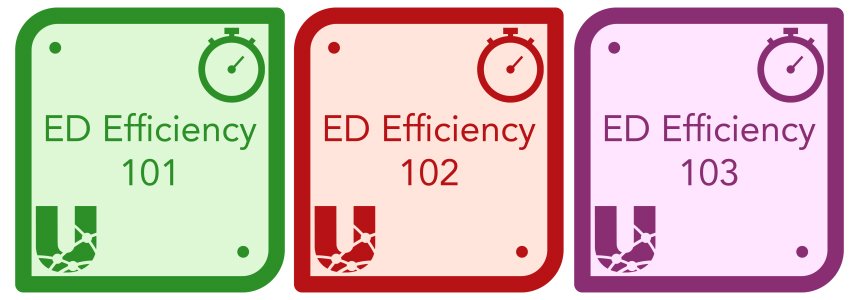
ED Efficiency ALiEMU badges emergency department

Our FREE curriculum uses the ALiEMU platform to simulate real-world scenarios, integrating the lessons in an interactive and fun way. Learners will discover strategies to optimize their time in the ED and begin their journey toward optimal efficiency. 

Examine how your ideas of efficiency fit with the strategies. These concepts may be new, or may already be a part of your EM practice. While operations vary for hospitals and EDs, the content taken as a whole represents the best practices found in the literature. These 3 themes should begin and guide your journey toward efficiency mastery. 

What are some of YOUR best tips for efficiency on shift? Contact us on Twitter (Dr. Guy Carmelli @GuyCarmelli) with any suggestions or feedback.

By |2021-12-16T14:34:48-08:00Dec 17, 2021|Academic, Life, Medical Education, Medical Student|

Holiday Gift Guide for ALiEM Readers: Top 5 Favorite Tech Tools

Technology continues to integrate with our life — for better and worse. Our team felt that the following 5 tech tools added value and joy to our lives, and so we are sharing with you. These also make great gifts for the emergency physician or healthcare provider in your life this holiday season.

holiday tech tools blinkist

Blinkist is a professional book summary subscription service that condenses key points from non-fiction books into 15-minute reads. This is an efficient way to catch with all those books that you have been putting off.

holiday tech tools headspace app

The Headspace app is one of the frequently used mindfulness app in the world. Working in Emergency Medicine was already extremely stressful before the pandemic began. Being more intentional about self-care is as critical as ever for our personal and professional well-being.

holiday tech tools headphones

Noise-cancelling headphones, such as the Anker Soundcore Life Q20 Noise Canceling Headphones are essential, especially if need some quality time working alone or just need some “me time”. With potentially many people in our house conducting virtual meetings, doing work, and performing chores, this over-the-ear headphone does the trick.

holiday tech tools speaker

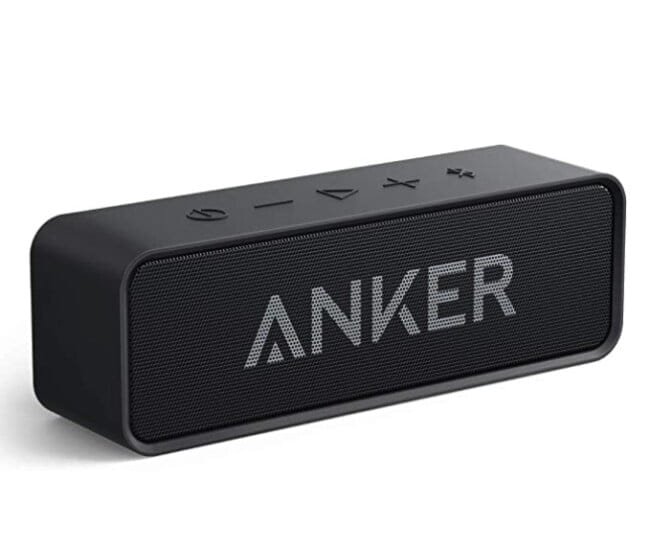
The Anker Soundcore Bluetooth Speaker is a compact, quality wireless speaker that you can take with you to your favorite “office” (such as your backyard), on your night shift to boost team morale, or play in the background for your patients as you are suturing their lacerations.

holiday tech tools blinkist camo

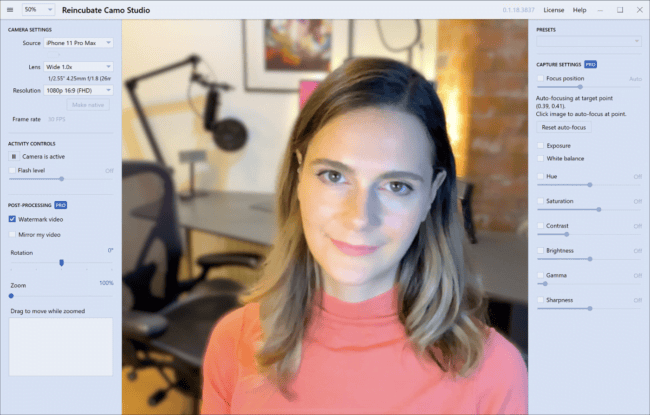
Reincubate’s Camo is a software that turns your iPhone into your computer’s webcam. Without needing to buy fancy videocamera equipment, you can upgrade your videoconferencing and video recordings by using your iPhone’s high-resolution camera. While the free version provides 720p video resolution, Camo Pro allows for 1080p resolution, portrait mode, and manual control of the camera features. Note: Nonprofits and educators can contact them for a discount off of the $39.99 annual subscription.

Check out our other holiday gift lists:

Disclosure: Although we do not have an official partnership with Amazon, we belong to their Amazon Affiliates program which allows us to be paid a few pennies with books purchased from our links.

By |2021-11-17T15:14:01-08:00Nov 19, 2021|Academic, Social Media & Tech|

Holiday Gift Guide for ALiEM Readers: Top 7 Favorite Level-Up Gear

The difference between a great shift in the Emergency Department and a frustrating one can sometimes be attributable to having the right gear or peri-shift routine. Listed are the top 6 “level-up” tools, recommended by our team.

holiday gift gear ALiEM socks

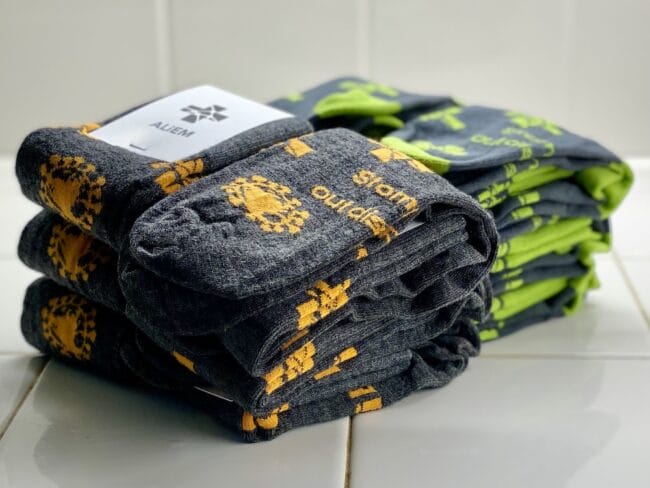
We have a very limited supply of custom ALiEM socks available at $20 per medium-sized pair. These socks have been rumored to quell the blackest of black clouds in the Emergency Department. It may be because of the “Stomping Out Disease” mantra on the socks. You’ll have to try for yourself. We have orange (with the COVID-19 graphic) and lime green socks. These are being sold until December 10, 2021 and only shipped to United States addresses.

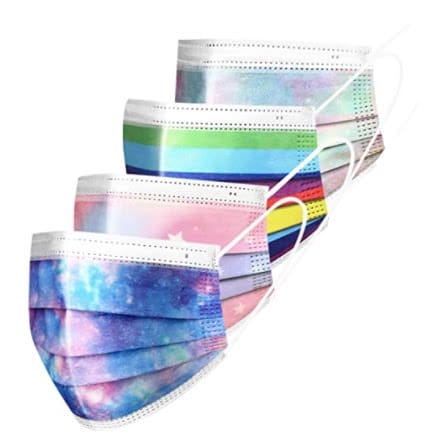
The fashion statement for 2021 is all about the face mask covering. Swap out your boring monochromatic mask for a more festive mask for the holidays.

The MZOO Sleep Eye Mask is essential, especially for those working Emergency Department night shifts. Ambient light can disrupt your deep sleep as you try to recharge for your next night shift.

A bright light source is a crucial tool for any emergency physician. With the Streamlight 250-lumen penlight, you can illuminate injured areas to identify occult wounds and almost-missed foreign bodies. Shining it briefly in the eyes of an overly somnolent may help you arouse them without a painful stimulus. Bonus: This pen is rechargeable using a USB cord and only weighs 1.2 ounces.

leatherman raptor shears gift

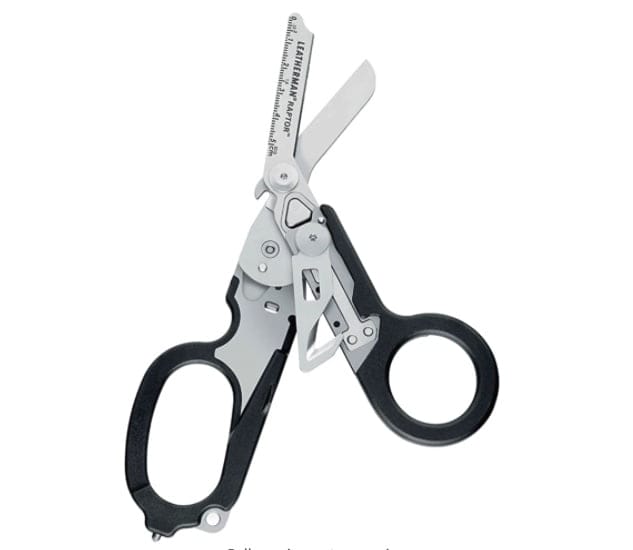
The Leatherman Raptor Shears is a durable, all-purpose scissors that can cut through thick clothing in a hurry. Although it also features a strap cutter, ruler, oxygen tank wrench, and carbide glass breaker, we especially love it for the ring-cutting feature. It has saved many of us the time and stress of troubleshooting other failed attempts at ring removal.

yeti mug turquoise green gift

Keeping cold beverages cold and hot beverages hot are challenging on an 8-12 hour shift. This 14 oz Yeti Rambler Mug with a MagSlider Lid is a stainless steel, double-walled, vacuum-insulated cup that travels well.

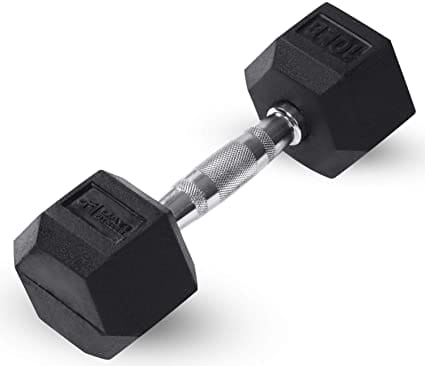
A regular exercise regimen can help reduce stress, improve brainpower, and boost your energy levels. Consider these home exercise tools, vetted by our team.

Check out our other holiday gift lists:

Disclosure: Although we do not have an official partnership with Amazon, we belong to their Amazon Affiliates program which allows us to be paid a few pennies with books purchased from our links.

By |2021-11-17T15:13:17-08:00Nov 18, 2021|Academic, Life|
Go to Top