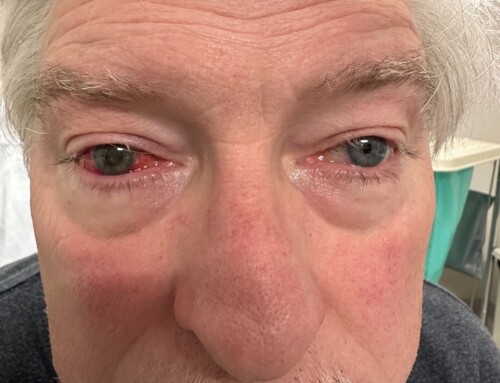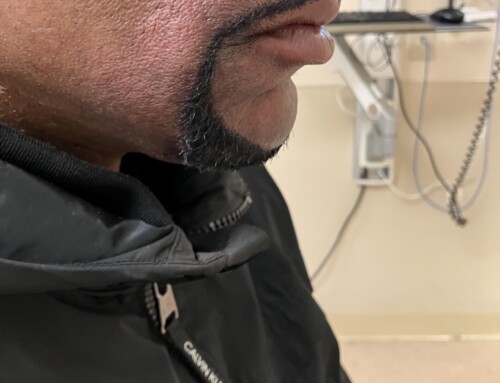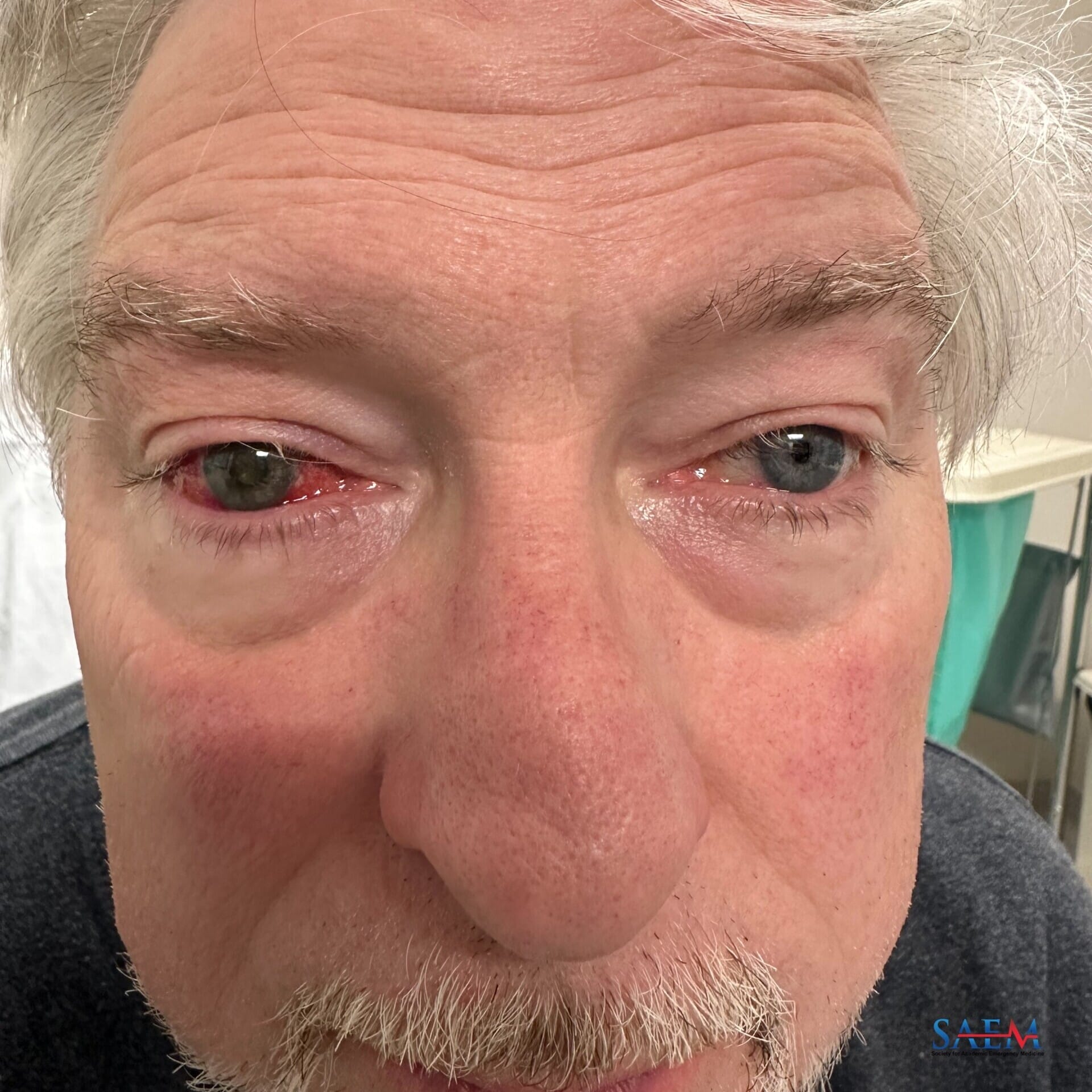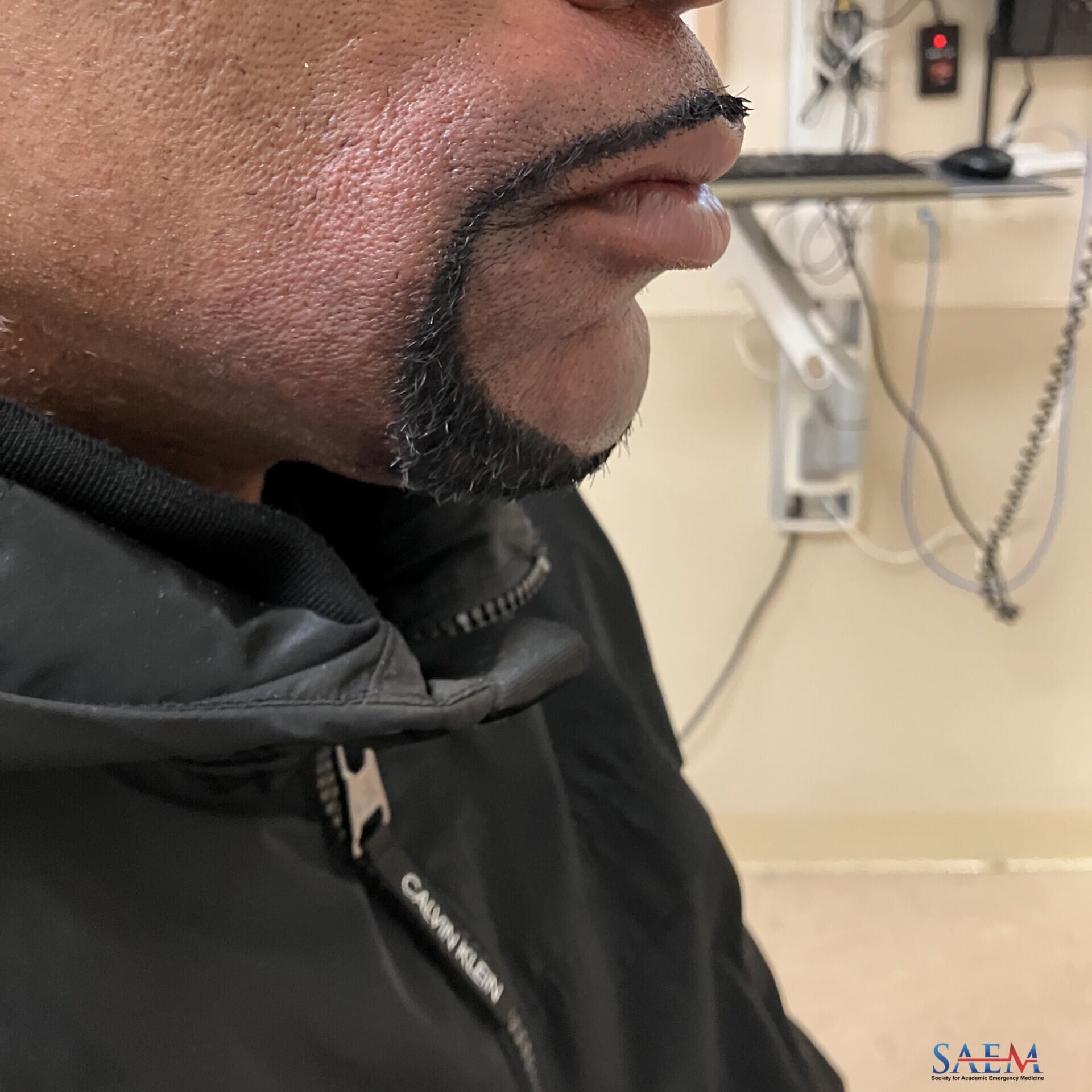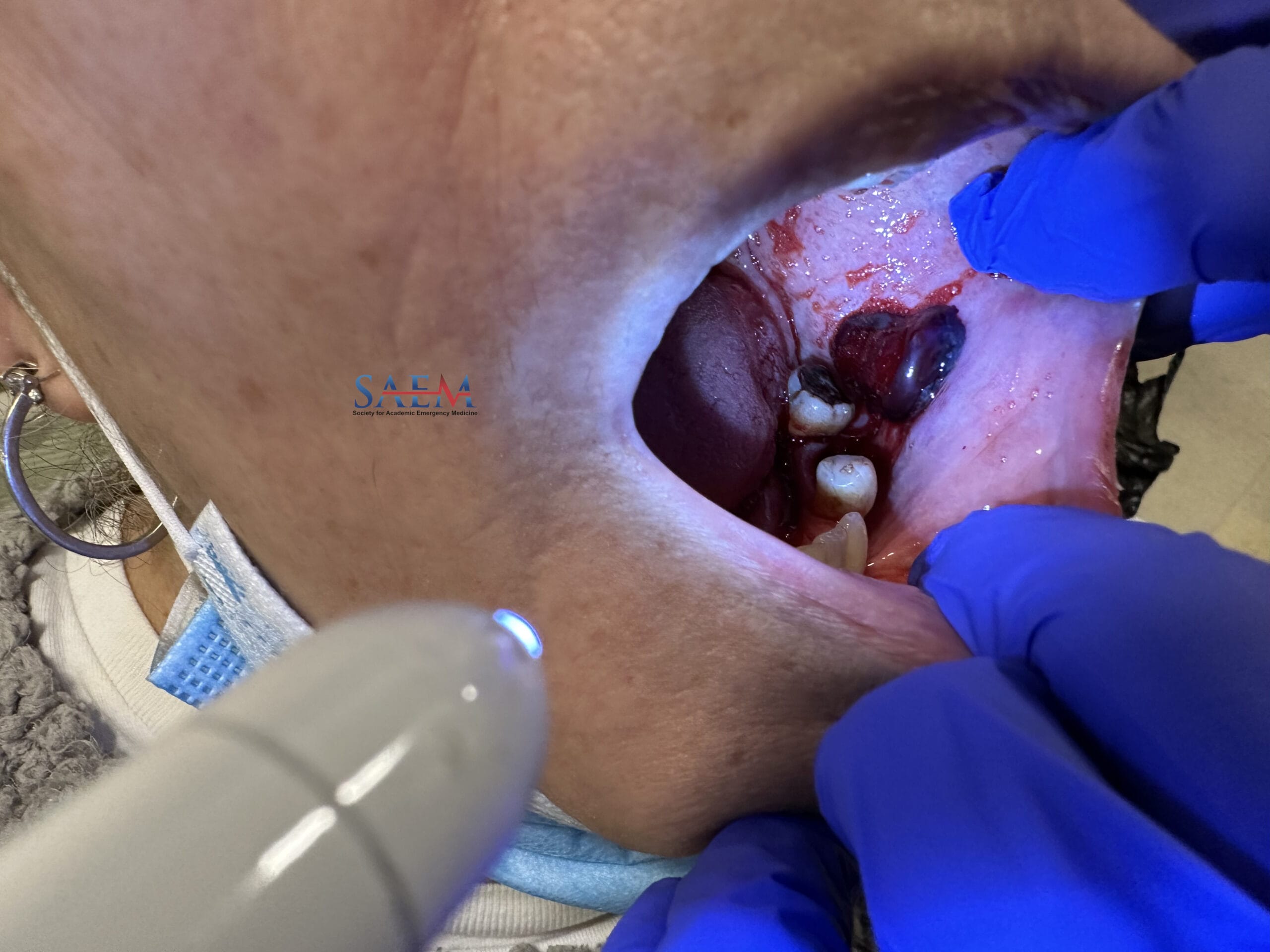
blister

A 76-year-old female presented with a lingering cough and an oral lesion to the left lower cheek. She reported ten days of improving flu-like symptoms but had a persistent cough and nasal congestion. On the day of presentation, she developed a painful, intermittently bleeding “blood blister” to the left lower cheek that had increased in size, as well as new red spots on her arms and legs. She reported no recent trauma or history of similar lesions in the past.

Vitals: 98.3°F; HR 85; BP 178/89; RR 16; SpO2 98% on RA

HENT: Blood-filled pocket to the left lower vestibule

Skin: Diffuse petechial rash to extremities

CBC: Hb 13.6, Plt 6, WBC 10.3

PT: 12.2

INR: 1.05

PTT: 33

Immune thrombocytopenia (ITP) is an acquired autoimmune disorder caused by autoantibodies against platelet antigens. It is thought to be due to IgG directed against platelet membrane glycoprotein GPIIb/IIIa, leading to platelet destruction. Common inciting events include viral infections, autoimmune diseases, or immunodeficiency syndromes [1]. Patients typically present with bleeding or nonspecific symptoms such as fatigue or generalized weakness. The severity of bleeding can range from petechiae, purpura, and epistaxis, to (very rarely) life-threatening hemorrhage. It is important to perform a thorough skin and oral exam to evaluate for petechial rashes or mucosal bleeding. Initial diagnostics include a CBC which will show isolated thrombocytopenia, as well as hemolysis labs to exclude alternative etiologies.

Patients with life-threatening bleeding should be treated emergently with platelet transfusions, IVIG, and steroids. In all other cases, management decisions should be made in conjunction with Hematology. In general, those with mild/moderate bleeding and platelets <20,000/μL should be treated with a steroid course, with IVIG or platelet transfusions in special circumstances only [3]. Patients who receive any treatment or have diagnostic uncertainty should be admitted.

Take-Home Points

  • Immune thrombocytopenia is an acquired isolated thrombocytopenia that can be a primary disorder or secondary to viral illness, autoimmune syndrome, or immunodeficiency disease.
  • Patients typically present with minor bleeding and nonspecific symptoms such as fatigue, or, rarely, severe hemorrhage. Perform a thorough skin and oral exam to evaluate for petechial rashes or mucosal bleeds.
  • Life-threatening bleeding should be treated immediately with platelet transfusions, IVIG, and steroids. Treatment for mild/moderate bleeding is more nuanced. Consult Hematology early to guide management.

  • Cines DB, Bussel JB, Liebman HA, Luning Prak ET. The ITP syndrome: pathogenic and clinical diversity. Blood. 2009 Jun 25;113(26):6511-21. doi: 10.1182/blood-2009-01-129155. Epub 2009 Apr 24. PMID: 19395674; PMCID: PMC2710913.
  • Neunert C, Terrell DR, Arnold DM, Buchanan G, Cines DB, Cooper N, Cuker A, Despotovic JM, George JN, Grace RF, Kühne T, Kuter DJ, Lim W, McCrae KR, Pruitt B, Shimanek H, Vesely SK. American Society of Hematology 2019 guidelines for immune thrombocytopenia. Blood Adv. 2019 Dec 10;3(23):3829-3866. doi: 10.1182/bloodadvances.2019000966. Erratum in: Blood Adv. 2020 Jan 28;4(2):252. PMID: 31794604; PMCID: PMC6963252.
  • Provan D, Arnold DM, Bussel JB, et al. Updated international consensus report on the investigation and management of primary immune thrombocytopenia. Blood Adv. 2019;3(22):3780-3817. doi:10.1182/bloodadvances.2019000812

Jeffrey Cheah, MD

Jeffrey Cheah, MD

Resident Physician
Boston Medical Center
Jeffrey Cheah, MD

Latest posts by Jeffrey Cheah, MD (see all)

Bethanne Bartscherer, MD

Bethanne Bartscherer, MD

Resident Physician
Boston Medical Center
Bethanne Bartscherer, MD

Latest posts by Bethanne Bartscherer, MD (see all)

Anna Fang, MD

Anna Fang, MD

Resident Physician
Department of Emergency Medicine
Boston Medical Center
Anna Fang, MD

Latest posts by Anna Fang, MD (see all)

Andrew Mittelman, MD

Andrew Mittelman, MD

Assistant Professor of Emergency Medicine
Boston Medical Center