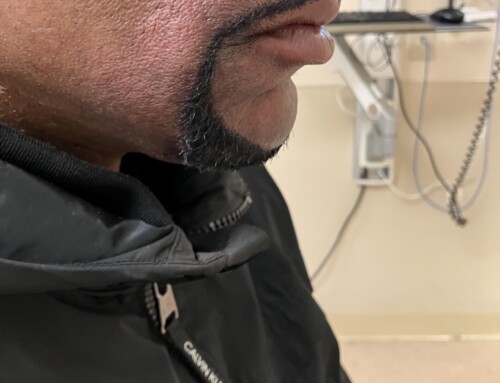
A 54-year-old woman with a history of hypothyroidism, diabetes mellitus type II, COPD, asthma, anxiety, and depression presented to the emergency department via EMS with three days of fatigue, weakness, chills, and shortness of breath without chest pain or cough. Symptoms had been progressively worsening, and she stated she felt as if she could not move her body on presentation. She also noted diarrhea without abdominal pain, melena, or hematochezia. Just prior to arrival the patient’s daughter thought she looked paler and shorter of breath and called EMS after a near syncopal episode. EMS reported that the family was concerned that the patient’s blood glucose level was low. Blood glucose upon EMS arrival was 90 and rose to 150 following their administration of oral glucose. The patient denied fever, recent sick contacts, urinary changes, hematuria, or leg swelling. She reported two missed doses of levothyroxine which was prescribed at a dose of 25 mcg daily. No recent antibiotic use reported.
Vitals: Temp 36.4°C; BP 106/64 mmHg; HR 62 bpm; Resp 16/min; SpO2 96% on RA
General: Patient drowsy, slow to answer questions, sitting with eyes closed. No obvious distress.
Skin: Warm and dry.
Cardiovascular: Regular rate and rhythm without murmur.
Respiratory: Lungs clear to auscultation bilaterally. No respiratory distress.
Abdomen: Soft, non-distended, normal bowel sounds, diffuse abdominal discomfort to palpation, which she states is chronic.
Neurological: Oriented to person, place, time. CN II-XII intact. No focal neurological deficit observed, strength 4+/5 throughout able to hold all extremities up when placed above the body.
Extremities: No obvious swelling.
CBC: Hb 11.5, WBC 9.5, Plt 186
BMP: Na 141, K 3.8, Cl 105, CO2 24, BUN 17, Cr 1.3
LFTs: AST 20, ALT 11, Bili 0.4
VBG: pH 7.28, PCO2 60, HCO2 28
Mg: 1.7
CK: 333
TSH: 196.80
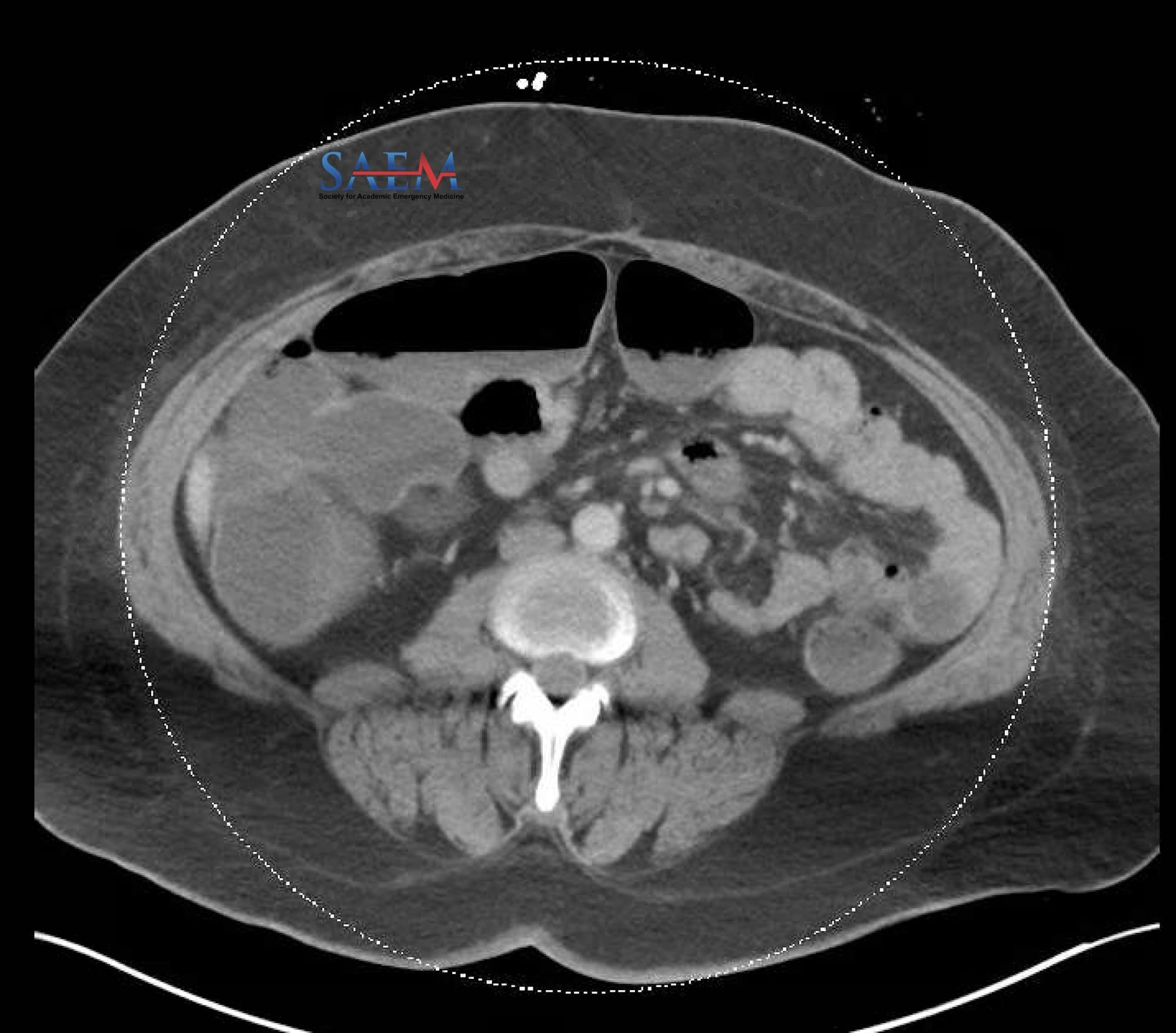
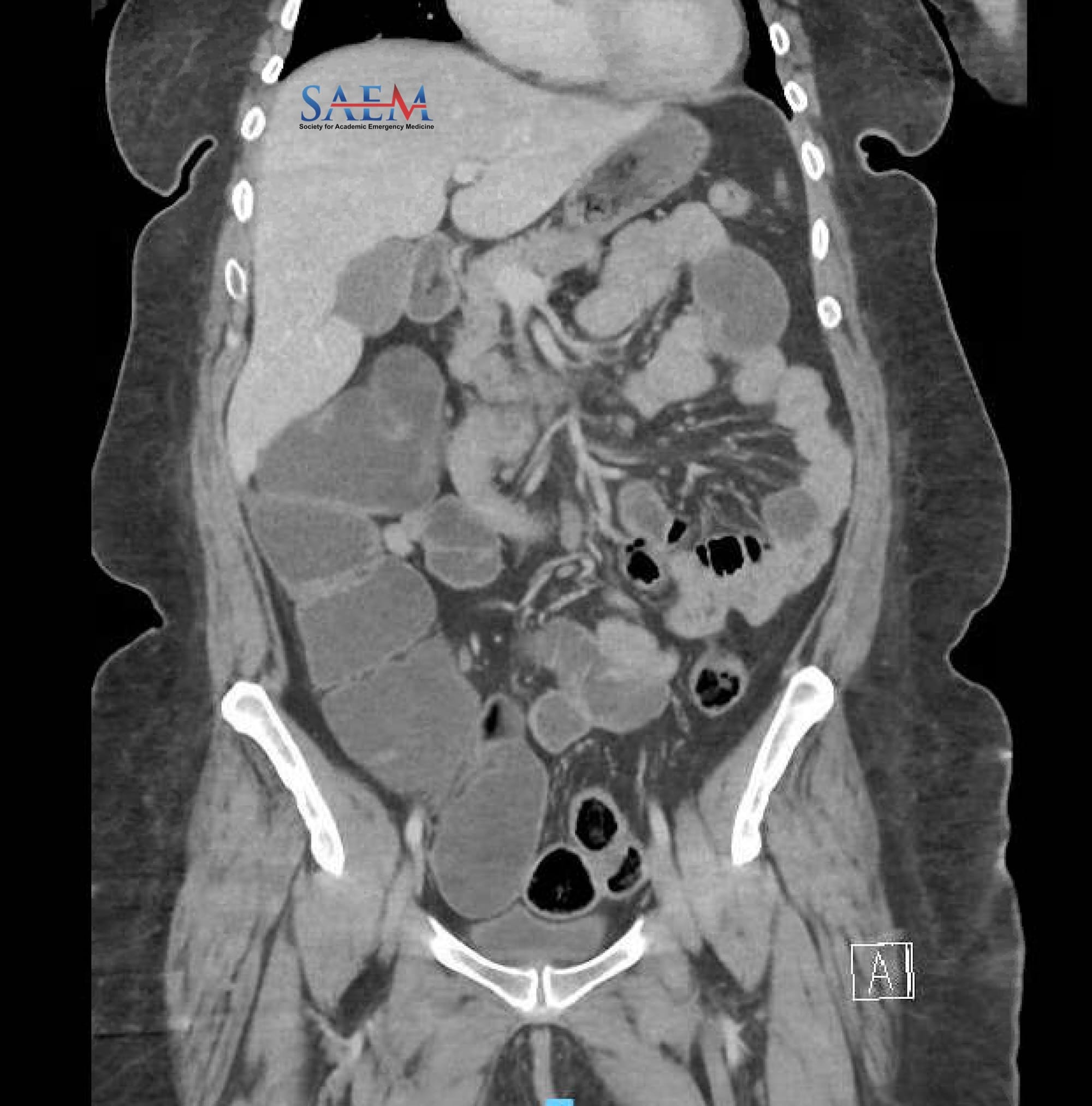
The abdominal CT scan demonstrates multiple fluid-filled mildly dilated loops of large bowel with air-fluid levels, some minimally dilated loops of small bowel, and no clear transition point identified which is concerning for developing colonic pseudo-obstruction (Ogilvie Syndrome). There are many predisposing factors that may cause Ogilvie Syndrome including recent surgery, infection, trauma, respiratory failure, cancer, and other metabolic conditions.
Given our patient’s history of hypothyroidism with missed doses of levothyroxine and an elevated TSH her cause of Ogilvie syndrome is most likely hypothyroidism. This is also known as myxedema ileus, a rare entity. Management of myxedema ileus consists of bowel decompression with a nasogastric tube and treatment of the hypothyroid condition. In our case, the patient received 200 mcg of levothyroxine, and 12.5 mcg of liothyronine while undergoing further endocrinologic workup
Take-Home Points
- In patients with a history of hypothyroidism presenting with gastrointestinal concerns, myxedema ileus, while not common, should be considered.
- Colonic pseudo-obstruction (Ogilvie syndrome) has many causes and the radiographic appearance of a bowel obstruction without an obvious transition point.
- Myxedema ileus should be managed with bowel decompression and treatment of the underlying hypothyroidism. ICU level care is often needed for this severe endocrine emergency
-
Saunders MD. Acute colonic pseudo-obstruction. Best Pract Res Clin Gastroenterol. 2007;21(4):671-87. doi: 10.1016/j.bpg.2007.03.001. PMID: 17643908.
-
Vanek VW, Al-Salti M. Acute pseudo-obstruction of the colon (Ogilvie’s syndrome). An analysis of 400 cases. Dis Colon Rectum. 1986 Mar;29(3):203-10. doi: 10.1007/BF02555027. PMID: 3753674.

James Waymack, MD
Southern Illinois University School of Medicine
Latest posts by James Waymack, MD (see all)

Sophia Mounce
Southern Illinois University School of Medicine
Latest posts by Sophia Mounce (see all)

Sharon Kim, PhD
Southern Illinois University School of Medicine