3. White Phosphorus
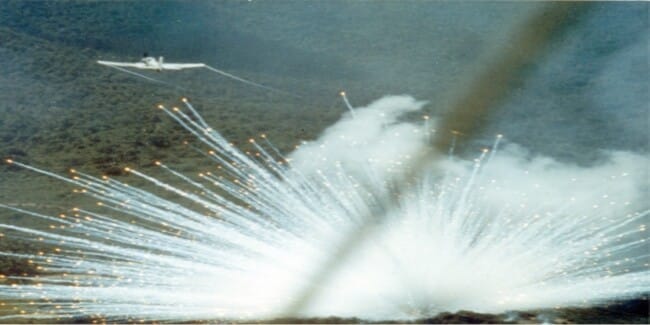
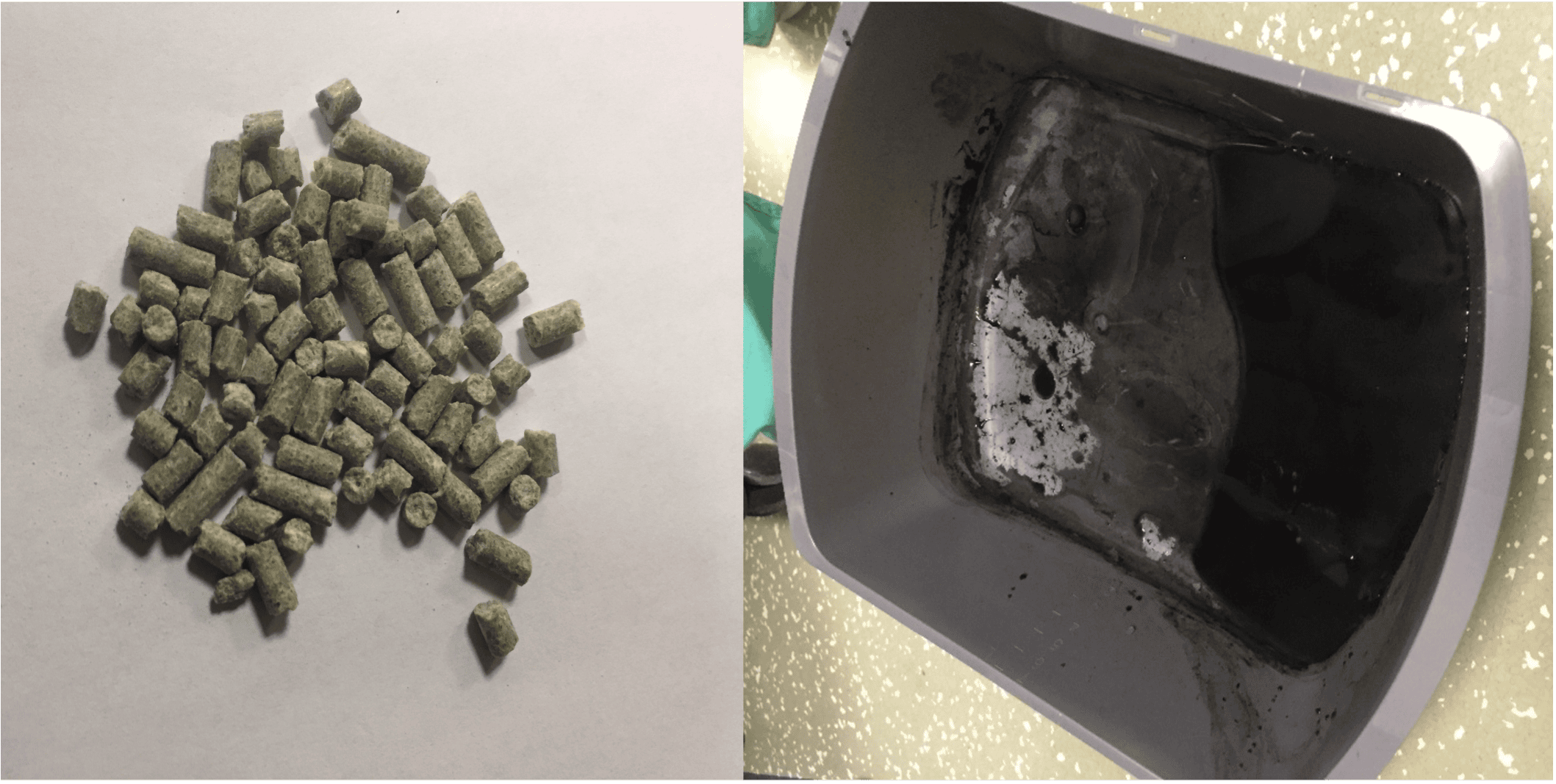
White phosphorous is a waxy, whiteish-yellow substance that is highly flammable and ignites upon contact with air. Most elemental phosphorous produced is used to manufacture pesticides, plasticizers, fertilizers, fireworks, matches, and animal feed additives [1,2]. Historically, large-scale military use of white phosphorous dates to World War I, when it was used extensively in mortars, rockets, grenades, and bombs for both concealment and anti-personnel purposes [3]. Currently, white phosphorous is not considered a chemical weapon under the Chemical Weapons Convention when it is used for purposes other than anti-personnel reasons. [4]
How does white phosphorous cause injury? [5-8]
- When white phosphorous reacts with oxygen, it ignites and forms phosphorous pentoxide, which then reacts with water in an exothermic reaction to create phosphoric acid.
- Dermal injury may occur via thermal burns following white phosphorous ignition or during the exothermic reaction or corrosive burns from phosphoric acid.
- Burning white phosphorous particulates can penetrate deep into the skin and underlying tissues, including bone, causing extensive full-thickness burns.
- Oxides of phosphorous are direct irritants to the eyes and lungs.
- Systemic toxicity can occur following absorption from ingestion, dermal, or mucosal exposures.
- Ingestions of 1 mg/kg in adults can cause significant toxicity. [5]
- A potent hepatotoxin, phosphorous can cause periportal hepatic injury.
What are the signs and symptoms of white phosphorous exposure? [5-8]
- Dermal exposure:
- Deep necrotic burns with yellow-white charring.
- Smoke emanates from wounds with a garlic odor, which is a sign of white phosphorous oxidation.
- Wounds may have a yellow fluorescence under a black light.
- Ocular exposure:
- Corneal ulceration, photosensitivity.
- Lacrimation, conjunctivitis.
- Pulmonary exposure to phosphorus pentoxide and phosphoric acid:
- Upper airway irritation, cough.
- Dyspnea, pulmonary edema.
- Gastrointestinal symptoms can be seen following ingestion or when associated with systemic toxicity. These include:
- Nausea, vomiting, abdominal pain, and diarrhea.
- Vomit and stool can be luminescent and smoking.
- Burning pain in the throat and abdomen, extreme thirst.
- Gastrointestinal bleeding can be observed due to inflammatory injury and coagulopathy.
- Hepatic injury and failure leading to death within several days. [5]
- Transaminases typically are between 1,000-3,000 IU/L.
- Systemic toxicity:
- The onset of effects is likely dose-dependent and can be delayed for several hours.
- Rapid deaths from large ingestions can occur in less than 24 hours, typically from cardiovascular collapse.
- Typical electrolyte abnormalities include hyperphosphatemia, hyperkalemia, and hypocalcemia.
- Phosphorous levels do not reflect the total body burden of elemental phosphorous. [5]
- Metabolic acidosis and hypoglycemia can also occur, and if they do so early, they are associated with a poor prognosis. [5]
- Dysrhythmias and a variety of EKG changes have been reported.
- Acute kidney injury can occur, likely from acute tubular necrosis. [5]
- Patients can develop headaches, encephalopathy, and coma.
How is white phosphorous toxicity managed? [5-8]
Decontamination
- All healthcare teams should properly protect themselves with gloves and face shields.
- Eyes: irrigate eyes with cool water for at least 15 minutes.
- Skin:
- Remove all clothing/bandages from the patient, submerging them in water to prevent further ignition.
- Thoroughly but carefully wash the patient with damp gauze and cool water.
- Retained white phosphorous particles must be removed from wounds
- White phosphorous fluoresces under black light, and a Wood’s lamp can be useful in identifying remaining pieces.
- Use metal forceps for removal.
- Cover contaminated skin and wounds with water or saline soaked gauze to prevent reignition.
- Do not use lipid or oil-based ointments, which may increase the absorption of white phosphorus.
- Re-examine wounds a day or two later to ensure no particles remain
- Gastrointestinal:
- There is no good evidence supporting GI decontamination.
- However, gastric lavage with an NG or OG tube is recommended after significant ingestion, given the poor outcomes reported post-ingestion.
Treatment
- There is no specific antidote for white phosphorous toxicity.
- High-quality supportive care is the mainstay of treatment.
- Provide supplemental oxygen/noninvasive positive-pressure and possibly mechanical ventilation for pulmonary edema.
- Use fluid resuscitation and vasopressors as needed
- Monitor ECGs and serum electrolytes closely and correct them as indicated.
- Treat seizures with benzodiazepines.
- Manage pain with potent analgesics.
- There may be benefit in treating hepatic injury with N-acetylcysteine.
- Patients with significant dermal injury will need burn center management.
Bedside Pearls
- Adequate protection of the healthcare team and prompt decontamination are of high priority in the acute setting.
- There is no specific antidote for white phosphorus toxicity.
- Outcomes are poor for patients with significant systemic absorption or following large ingestion.
- Supportive therapies, burn/wound care, and monitoring for electrolyte disturbances are the mainstays of treatment.