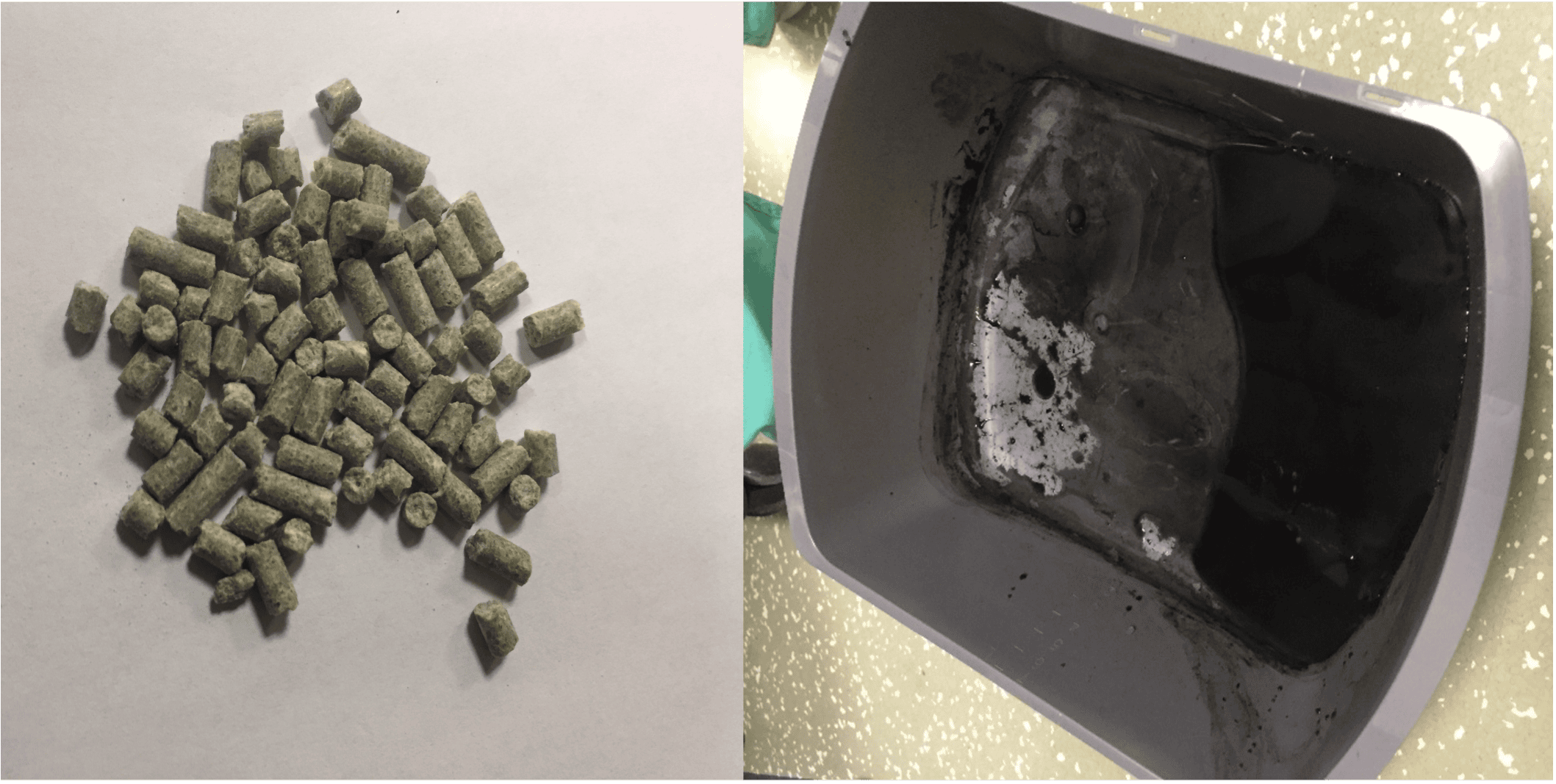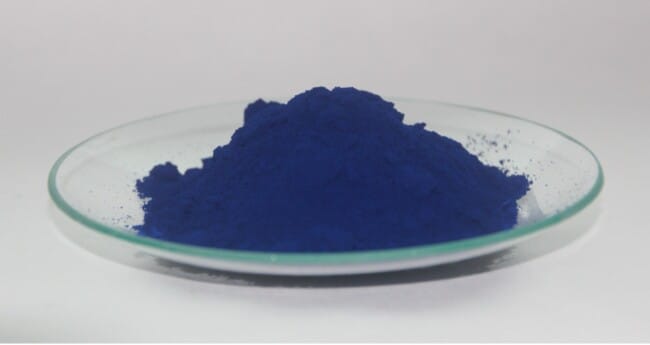
The medication shown in the image is used to treat which type of toxic exposure?
- Beryllium
- Cadmium
- Cesium
- Iron
[Image from Saalebaer via Wikimedia Commons]

The American College of Medical Toxicology hosts this Toxicology Visual Pearls series. The post was peer reviewed on behalf of ACMT by Drs. Howard A Greller, Louise Kao, and Ziad Kazzi.
References
- Kraft, A, GmbH, G. On the Discovery and History of Prussian Blue. Bull Hist Chem. 2008;33(2):61-67. DOI: 10.70359/bhc2008v033p061 https://acshist.scs.illinois.edu/bulletin_open_access/FullIssues/bhc2008v033f2.pdf
- U. S. National Library of Medicine. RADIOGARDASE — Prussian blue insoluble capsules. DailyMed. Updated October 7, 2021. Accessed October 17, 2025. https://dailymed.nlm.nih.gov/dailymed/drugInfo.cfm?setid=baa68c79-5f3d-468a-a510-58b9e978cd50
- Agency for Toxic Substances and Disease Registry (ATSDR). Cesium. Toxic Substances Portal. Centers for Disease Control and Prevention (CDC). Published February 10, 2021. Accessed October 21, 2025. https://wwwn.cdc.gov/tsp/substances/ToxSubstance.aspx?toxid=107
- Burger A, Lichtscheidl I. Stable and radioactive cesium: a review about distribution in the environment, uptake and translocation in plants, plant reactions, and plants’ potential for bioremediation. Sci Total Environ. 2018;618:1459-1485. PMID: 29122347
- U.S. Food and Drug Administration. FDA Approves First New Drug Application for Treatment of Radiation Contamination due to Cesium or Thallium. Washington (DC): FDA; Oct 2, 2003. Accessed Oct 21, 2025.
- Agency for Toxic Substances and Disease Registry (ATSDR). Toxicological Profile for Thallium (Draft for Public Comment). Atlanta, GA: U.S. Department of Health and Human Services, Public Health Service; 2024. Accessed October 21, 2025. https://wwwn.cdc.gov/TSP/ToxProfiles/ToxProfiles.aspx?id=309&tid=49
- Peter AL, Viraraghavan T. Thallium: a review of public health and environmental concerns. Environ Int. 2005;31(4):493-501. PMID: 15788190.
- Fujihara J, Nishimoto N. Thallium – poisoner’s poison: An overview and review of current knowledge on the toxicological effects and mechanisms. Curr Res Toxicol. 2024 Feb 18;6:100157. PMID: 38420185
- Hoffman RS. Thallium toxicity and the role of Prussian blue in therapy. Toxicol Rev. 2003;22(1):29-40. PMID: 14579545
- Sonoda A, Nihei M, Shinkawa N, Kakizaki E, Yukawa N. Perls’ Prussian blue staining and chemistry of Prussian blue and Turnbull blue. Forensic Sci Int Synerg. 2025;11:100627. Published 2025 Jul 10. PMID: 40686580

Victoria Soewarna, MD
Emergency Medicine Resident
Carolinas Medical Center, Charlotte, NC
Carolinas Medical Center, Charlotte, NC
Latest posts by Victoria Soewarna, MD (see all)
- ACMT Toxicology Visual Pearl: Blue to the Rescue - March 24, 2026

Kathryn T. Kopec, DO
Emergency Medicine and Medical Toxicology Faculty
Carolinas Medical Center, Charlotte, NC
Carolinas Medical Center, Charlotte, NC
Latest posts by Kathryn T. Kopec, DO (see all)
- ACMT Toxicology Visual Pearl – Black Vomit, Big Problem - June 23, 2026
- ACMT Toxicology Visual Pearl: Breathtaking Emergencies - April 7, 2026
- ACMT Toxicology Visual Pearl: Blue to the Rescue - March 24, 2026