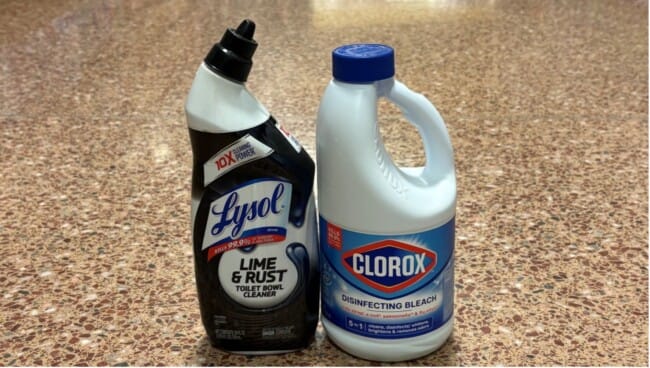
What toxic gas is created by mixing these two household products?

  1. Chloramine gas
  2. Chlorine gas
  3. Chloroform
  4. Peracetic acid

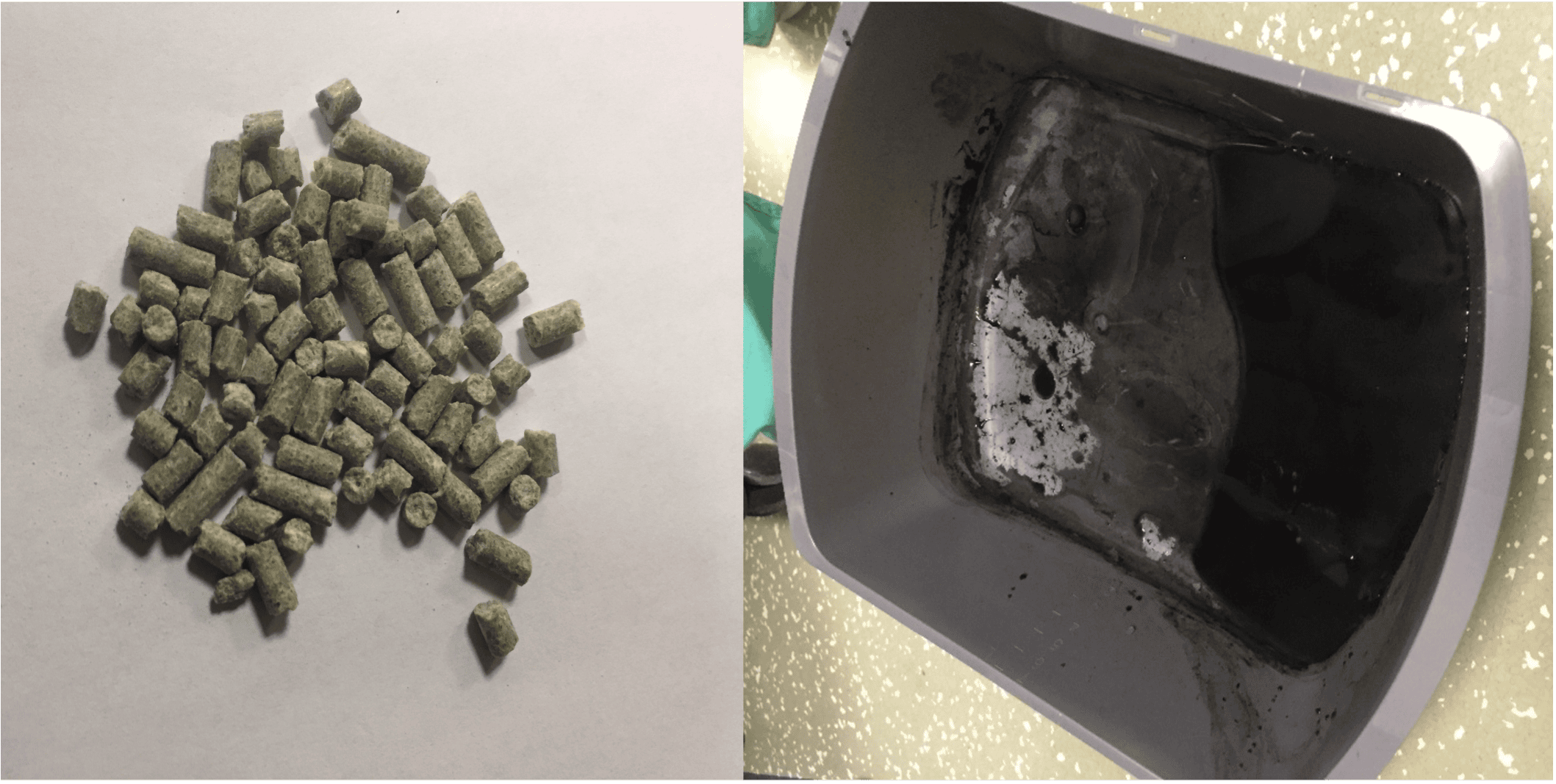
[Author’s own image]

2. Chlorine gas

Background

Mixing acids (found in common cleaning products such as vinegar, toilet bowl cleaner, pet stain remover, or pool chemicals) with bleach can create chlorine gas. Chlorine gas is considered one of the most common inhalational irritants in the United States. In 2023, America’s Poison Centers reported over 5,300 cases of chlorine gas exposure from combinations of household cleaning products [1]. Chlorine gas is highly toxic and potentially life-threatening; emergency providers must be ready to recognize and treat exposures.

What is chlorine gas, and how do exposures occur? [1-5]

  • Chlorine gas (CL2) is a green-yellow gas with a strong bleach-like odor that can be liquefied by pressurization and cooling for storage and transport.
  • Chlorine is very reactive, making it dangerous when mixed with other substances.
  • Historically, chlorine gas has been used as an agent of chemical warfare, first deployed on a large scale by Germany in 1915, and it was used in 2007 in Iraq, by detonating explosives attached to chlorine tankers, and most recently it was used in Syria, resulting in civilian morbidity and mortality [2,3].
  • Large-scale industrial incidents, such as a 2005 train derailment in South Carolina and a 2024 BioLabs plant fire in Georgia, may release chlorine gas plumes, causing human exposures [4].
  • Chlorine is a common industrial chemical used in the production of plastics (e.g. PVC), solvents, textiles, dyes, and pool treatment products.
  • Chlorine gas is man-made through industrial processes and can be liquefied by compression and cooling for storage and transport.
  • Residential exposures occur when bleach and an acid are inadvertently mixed.

How is chlorine gas formed from cleaning agents? [4-7]

  • The most common domestic exposures occur when bleach (sodium hypochlorite) is mixed with an acid, leading to the release of chlorine gas.
    • Bleach + Acids → Chlorine Gas
    • Acids include vinegar (acetic acid), toilet bowl cleaner, lime remover, and some drain cleaners.
    • NaOCl + 2HCl → Cl₂ (chlorine) + NaCl + H₂O
  • Another noxious gas called chloramine gas is formed when bleach is mixed with ammonia.
    • Bleach + Ammonia → Chloramine +/- Chlorine Gas
    • Ammonia is found in window cleaners (e.g. Windex), urine, and pet mess cleaners.
    • NaOCl + NH₃ → NH₂Cl (chloramine) + NaOH

What is the clinical presentation of chlorine gas exposure? [5-9]

  • Chlorine gas is moderately water-soluble and reacts with moisture in mucous membranes, forming hydrochloric and hypochlorous acids, as well as free oxygen radicals.
  • It is categorized as a pulmonary irritant.
  • Due to lower warning properties, exposure can be prolonged, and symptoms may be delayed.
  • Symptoms depend on dose, duration of exposure, and underlying pulmonary health – symptoms are more severe and persistent in patients with a history of smoking, wheezing, asthma, and/or chronic lung conditions.
  • Interestingly, you can often smell chlorine gas at concentrations below those expected to cause clinical effects.
  • Presentating symptions
    • Mild exposure
      • Eye, nose, and throat irritation
    • Moderate exposure
      • Wheezing
      • Dyspnea
      • Cough
      • Chest tightness
      • Blurry vision
    • Severe exposure
      • Corneal damage and scarring
      • Nausea and/or vomiting
      • Blistering of the skin
      • Loss of consciousness
      • Laryngeal edema
      • Bronchospasm
      • Pulmonary edema
      • Adult respiratory distress syndrome (ARDS)
      • Death
  • Most people make a full recovery within 7-14 days.
  • In some cases, exposures have been correlated to the development of obstructive airway diseases such as asthma.

What is the management of chlorine gas exposure? [5,9]

  • Identification of exposure is essential.
  • Removal of the patient from the source is the priority.
  • Decontamination keys:
    • Flush out eyes for > 15 minutes with water or saline if experiencing ocular symptoms
    • Wash exposed skin with soap and water
  • Healthcare providers also need to make sure they protect themselves from secondary contamination or exposure with appropriate PPE.
  • Humidified oxygen therapy as needed.
  • Bronchodilators for bronchospasm.
  • Although evidence is limited, both nebulized bicarbonate and corticosteroids have been used and could be considered for severe exposures.
  • Avoid prophylactic antibiotics unless a secondary infection is suspected.
  • Patients with minimal symptoms or symptom resolution after 6 – 12 hours of observation can be discharged home with strict return precautions and outpatient follow-up [9].
  • Patients with ongoing symptoms, increased work of breathing, respiratory findings, CXR findings, airway compromise, or hemodynamic instability will need to be admitted and observed for possible delayed pulmonary edema or ARDS.

Bedside Pearls

  • Unintentional chlorine gas exposures can easily occur when mixing household cleaning agents.
  • Early identification and removal from the source are critical first steps in treatment.
  • Clinical presentation can range from mucosal membrane irritation to coughing, dyspnea, chest pain, and in severe cases, pulmonary edema, ARDS, or death.
  • Decontamination and PPE are vital
  • Treatment consists of supportive care, including airway/respiratory support.

References

  1. Gummin DD, Mowry JB, Beuhler MC, et al. 2023 Annual Report of the National Poison Data System (NPDS) from America’s Poison Centers: 41st Annual Report. Clin Toxicol (Phila). 2024;62(12):793-1027. PMID: 39688840.
  2. Fitzgerald GJ. Chemical warfare and medical response during World War I [published correction appears in Am J Public Health. 2008;98(7):1158]. Am J Public Health. 2008;98(4):611-625. PMID: 18356568.
  3. Rodriguez-Llanes JM, Guha-Sapir D, Schlüter BS, Hicks MH. Epidemiological findings of major chemical attacks in the Syrian war are consistent with civilian targeting: a short report. Confl Health. 2018;12:16. Published 2018 Apr 16. PMID: 29686727
  4. U.S Chemical Safety Board Releases Investigation Update into September 2024 Massive Fire and Toxic Plume at Bio-Lab Facility in Georgia – General News – News | CSB. https://www.csb.gov/us-chemical-safety-board-releases-investigation-update-into-september-2024-massive-fire-and-toxic-plume-at-bio-lab-facility-in-georgia/
  5. Morim A, Guldner GT. Chlorine Gas Toxicity. In: StatPearls. Treasure Island (FL): StatPearls Publishing; June 26, 2023. PMID: 30725898.
  6. National Center for Biotechnology Information. PubChem Compound Summary for CID 24526, Chlorine. https://pubchem.ncbi.nlm.nih.gov/compound/Chlorine.
  7. White CW, Martin JG. Chlorine gas inhalation: human clinical evidence of toxicity and experience in animal models. Proc Am Thorac Soc. 2010;7(4):257-263. PMID: 20601629
  8. Al-Shami K, Almurabi S, Shatnawi J, Qasagsah K, Shatnawi G, Nashwan AJ. Ophthalmic Manifestations of Chlorine Gas Exposure: What Do We Know So Far? Cureus. 2023 Feb 28;15(2):e35590. PMID: 37007383
  9. Huynh Tuong A, Despréaux T, Loeb T, Salomon J, Mégarbane B, Descatha A. Emergency management of chlorine gas exposure – a systematic review. Clin Toxicol (Phila). 2019;57(2):77-98. PMID: 30672349.

Teresa Crow, MD

Teresa Crow, MD

Emergency Medicine Resident
Carolinas Medical Center, Charlotte, NC
Teresa Crow, MD

Latest posts by Teresa Crow, MD (see all)

Kathryn T. Kopec, DO

Kathryn T. Kopec, DO

Emergency Medicine and Medical Toxicology Faculty
Carolinas Medical Center, Charlotte, NC