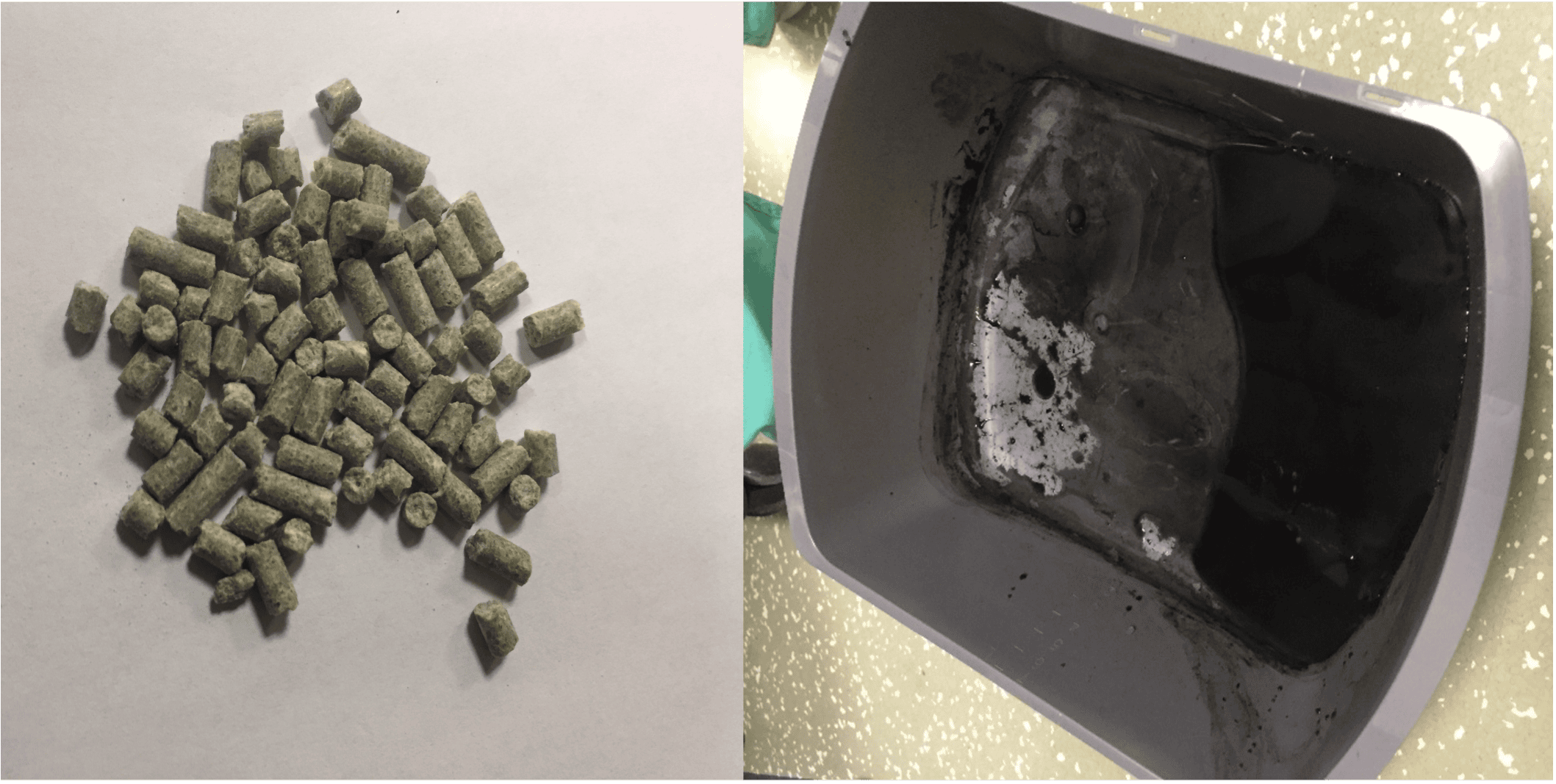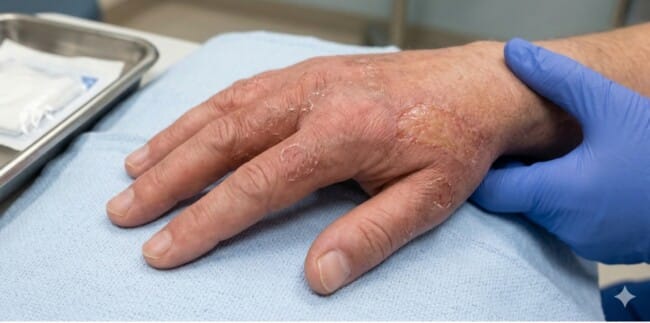
What type of burn may not develop findings shown until days to weeks after the exposure?
- Chemical
- Electrical
- Radiation
- Thermal
[Image generated via Google Gemini]

The American College of Medical Toxicology hosts this Toxicology Visual Pearls series. The post was peer reviewed on behalf of ACMT by Drs. Howard A Greller, Louise Kao, and Ziad Kazzi.
References
- Ullah S, Mansoor S, Ayub A, et al. An update on stem cells applications in burn wound healing. Tissue Cell. 2021;72:101527. PMID: 33756272.
- “Ionizing Radiation and Health Effects.” World Health Organization, World Health Organization, 27 July 2023, www.who.int/news-room/fact-sheets/detail/ionizing-radiation-and-health-effects.
- Yang X, Ren H, Guo X, Hu C, Fu J. Radiation-induced skin injury: pathogenesis, treatment, and management. Aging (Albany NY). 2020;12(22):23379-23393. PMCID: PMC7746368.
- Rosenthal A, Israilevich R, Moy R. Management of acute radiation dermatitis: A review of the literature and proposal for treatment algorithm. J Am Acad Dermatol. 2019;81(2):558-567. PMID: 30802561.
- Cutaneous Radiation Injury (CRI): Information for Clinicians | Radiation Emergencies | CDC. April 17, 2024. Accessed April 3, 2026
- Alexopoulou E, Katsila T, Tolia M, et al. An Exploratory Study of Radiation Dermatitis in Breast Cancer Patients. Anticancer Res. 2018;38(3):1615-1622. PMID: 29491093.
- Hymes SR, Strom EA, Fife C. Radiation dermatitis: clinical presentation, pathophysiology, and treatment 2006. J Am Acad Dermatol. 2006;54(1):28-46. PMID: 16384753.
- Iddins CJ, DiCarlo AL, Ervin MD, Herrera-Reyes E, Goans RE. Cutaneous and local radiation injuries. J Radiol Prot. 2022;42(1):10.1088/1361-6498/ac241a. Published 2022 Jan 12. PMID: 34488201.
Kevin Black, DDS, MD
Emergency Medicine Ultrasound Fellow
Carolinas Medical Center
Carolinas Medical Center
Latest posts by Kevin Black, DDS, MD (see all)
- ACMT Toxicology Visual Pearl: Delayed Skin Burn - May 5, 2026
Erik Fisher, MD
Associate Program Director, Medical Toxicology Fellowship
Atrium Health Carolinas Medical Center and Levine Children's Hospital
Clinical Assistant Professor of Emergency Medicine
Wake Forest School of Medicine
Atrium Health Carolinas Medical Center and Levine Children's Hospital
Clinical Assistant Professor of Emergency Medicine
Wake Forest School of Medicine
Latest posts by Erik Fisher, MD (see all)
- ACMT Toxicology Visual Pearl – The Fang and the Furious - June 30, 2026
- ACMT Toxicology Visual Pearl: Delayed Skin Burn - May 5, 2026
- ACMT Toxicology Visual Pearl: Sleeping with the Fishes - February 24, 2026