About Julia Isaacson, MD

Resident Physician
Boston Medical Center

SAEM Clinical Images Series: A Pedunculated Bone to Pick
knee

The patient is a 46-year-old male with a past medical history of chronic left knee pain, hypertension, and congestive heart failure who presents to the Emergency Department with worsening left knee pain. He had been walking more frequently of late to increase his exercise, but denies any falls or specific trauma. He noticed some swelling to the area over the past few days but there has been no redness, rash, or fever. He also denies calf pain, lower leg swelling, and shortness of breath. He has no other complaints at this time but due to his worsening
pain and mild swelling, he comes in for evaluation.
Vital Signs: All vital signs are normal.
General: Well appearing, no acute distress.
Cardiovascular: No murmurs, 2+ peripheral pulses in all extremities.
Extremities: Left knee exam shows a small suprapatellar effusion and mild tenderness to palpation; there is no erythema, deformity, or crepitus; he has full active and passive range of motion.

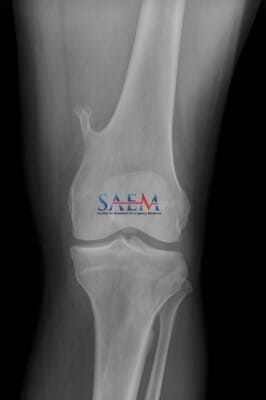
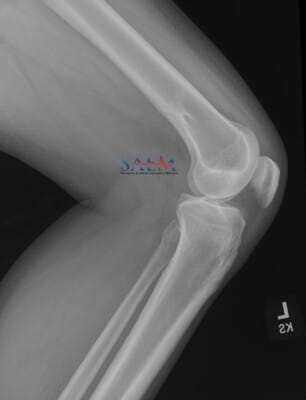
The patient has an osteochondroma.

Asymptomatic growths require no intervention. Symptomatic patients should be referred to orthopedics for consideration of resection.

Osteochondromas are the most common benign bony tumor and occur due to hamartomatous growth of cartilage. The characteristic x-ray appearance is a sessile or pedunculated bony growth located in the metaphysis projecting away from the epiphysis, as seen in this case. These lesions are more commonly seen in males and are typically diagnosed in the first four decades of life, with 75% of diagnoses occurring before the age of twenty. Patients typically present with painless masses close to tendon insertion sites, most commonly near the knee. There is a low risk of malignant transformation. Patients with Multiple Hereditary Exostoses, a rare autosomal dominant genetic condition, may present with numerous osteochondromas with a greater potential for malignant transformation. While the majority of osteochondromas are asymptomatic, symptoms may develop due to impingement on nearby structures or from fractures. If patients have persistent symptoms or cosmetic concerns, they can be referred to orthopedic surgery for consideration of resection. There have been no approved medical therapy options for osteochondroma.

Take-Home Points

  • Osteochondromas are benign bony tumors that typically present as painless masses and are also commonly found incidentally on x-ray.
  • Treatment is usually supportive; however, orthopedic surgery referral should be considered for persistent or severe symptoms.

  • Paras T, O’Donnell P. Osteochondroma & Multiple Hereditary Exostosis. Orthobullets.   Rauf A, Gaillard F. Osteochondroma. In: Radiopaedia.Org. Radiopaedia.org; 2005. doi:10.53347/rID-1799
  • Tepelenis K, Papathanakos G, Kitsouli A, et al.   Osteochondromas: an updated review of epidemiology, pathogenesis, clinical presentation, radiological features and treatment options. In Vivo. 2021;35(2):681-691. doi:10.21873/invivo.12308

By |2026-01-06T10:24:09-08:00Jan 12, 2026|SAEM Clinical Images|

SAEM Clinical Images Series: Weird Flex

tenosynovitis

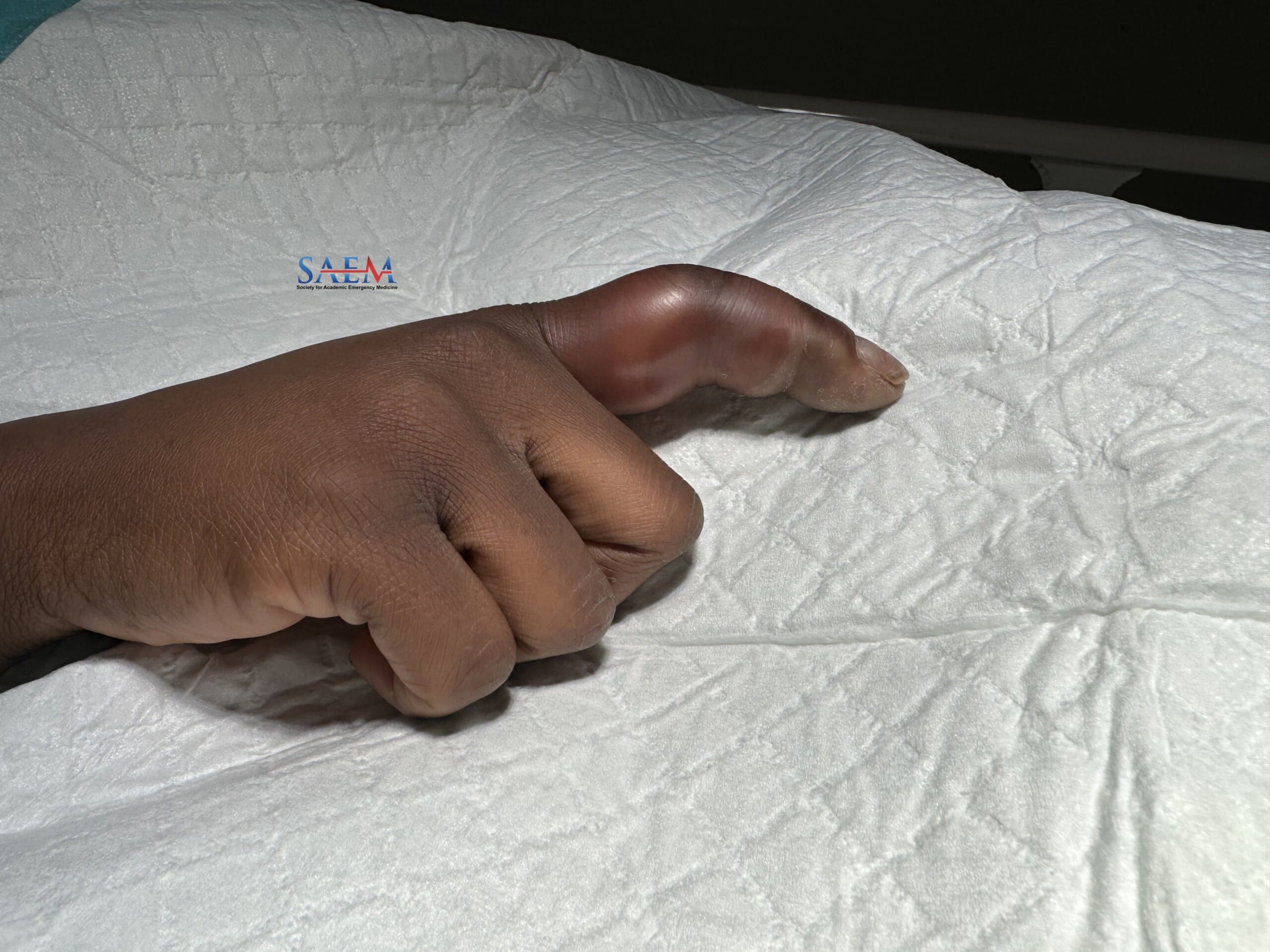
A 29-year-old female with a history of depression, anxiety, and tobacco use disorder presented with worsening right index finger pain, swelling, and redness for the previous three days. Additionally, she reported that she was unable to further flex or extend her finger. She denied fevers, chills, rashes, or recent illness. There was no history of trauma, aquatic or other environmental exposures, insect bites, or intravenous drug use. She did note that she uses a copper brillo pad to clean her dishes at home which often causes small abrasions to her fingers.

Vitals: BP 160/112; PR 73; Temp 36.4°C; RR 18; SpO2 100% on RA

General: Well-appearing, no acute distress.

Cardiovascular: Right index finger capillary refill <2 sec.

Skin: Right index finger uniformly edematous and erythematous with tenderness to palpation along the tendon sheath; small healed abrasions over distal palmar aspect of the digit; no focal area of fluctuance.

MSK: right index finger held in flexion, pain with passive extension.

WBC: 8.6

ESR: 129

CRP: 105.5

This patient has flexor tenosynovitis, an infection of the synovial sheath surrounding the flexor tendon of the hand. The condition is usually caused by local inoculation from penetrating trauma although can also result from hematogenous spread. Flexor tenosynovitis is considered a surgical emergency, as delayed intervention can lead to significant morbidity including tendon rupture, deep space infection, abscess development, soft tissue necrosis, amputation, and/or chronically compromised hand function. Diagnosis is usually clinical, based on history and physical exam findings; however, laboratory evaluation may reveal leukocytosis and/or elevated inflammatory markers. If there is a history of penetrating trauma, x-rays of the affected digit are recommended to rule out retained foreign body. Management in the ED includes prompt surgical consultation and broad-spectrum antibiotics against common cutaneous pathogens. Antibiotic coverage should be broadened in patients with a history of marine exposure or Pseudomonal risk factors including immunocompromised status.

Flexor tenosynovitis presents with four classic exam findings called “Kanavel Signs.” Kanavel Signs include (1) flexion of the involved digit, (2) tenderness to palpation over the tendon sheath, (3) pain with passive extension, and (4) uniform swelling of the finger. The presence of all four Signs has a sensitivity for flexor tenosynovitis as high as 97.1%, although early in the course of infection, pain with passive extension may be the only finding.

Take-Home Points

  • Flexor tenosynovitis is an infection of the flexor tendon sheath of the hand and a history of trauma or penetrating injury to the area should raise suspicion.

  • Flexor tenosynovitis is a “can’t miss” clinical diagnosis in the ED as there is a risk of significant complications with delayed antibiotics and surgical intervention.

  • Infection can reliably be identified by the presence of the four Kanavel Signs on physical exam.

  • Chan E, Robertson BF, Johnson SM. Kanavel signs of flexor sheath infection: a cautionary tale. Br J Gen Pract. 2019 Jun;69(683):315-316. doi: 10.3399/bjgp19X704081. PMID: 31147342; PMCID: PMC6532803.

  • Chapman T, Ilyas AM. Pyogenic Flexor Tenosynovitis: Evaluation and Treatment Strategies. J Hand Microsurg. 2019 Dec;11(3):121-126. doi: 10.1055/s-0039-1700370. Epub 2019 Nov 2. PMID: 31814662; PMCID: PMC6894957.

  • Hermena S, Tiwari V. Pyogenic Flexor Tenosynovitis. In: StatPearls. StatPearls Publishing; 2022.

  • Kennedy CD, Huang JI, Hanel DP. In Brief: Kanavel’s Signs and Pyogenic Flexor Tenosynovitis. Clin Orthop Relat Res. 2016 Jan;474(1):280-4. doi: 10.1007/s11999-015-4367-x. Epub 2015 May 29. PMID: 26022113; PMCID: PMC4686527.

By |2025-03-30T20:30:57-07:00Apr 7, 2025|Orthopedic, SAEM Clinical Images|

SAEM Clinical Images Series: Ptosis? A Don’t Miss Diagnosis!

ptosis

A 50-year-old female with no past medical history presented to the emergency department for a headache. She developed progressive dull, left-sided head pain with sinus pressure one week prior, associated with sleep disturbance. In addition, she described two days of left eyelid drooping. She had no fever, chills, cough, difficulty breathing, neck pain, jaw claudication, vision changes, dizziness, numbness, or recent weight loss. She also denied any recent trauma to the head or neck.

Vitals: BP 119/59; PR 92; Temp 37°C; RR 16; SpO2 100% on RA

General: Well-appearing, no acute distress.

HEENT: EOMI, left eyelid ptosis with miosis of left pupil.

Cardiovascular: RRR, normal S1/S2, no murmur.

Neurologic: Alert and oriented x 3, normal strength and sensation bilateral upper and lower extremities, left ptosis and miosis, otherwise cranial nerves II-XII unremarkable.

WBC: 8.9

INR: 0.9

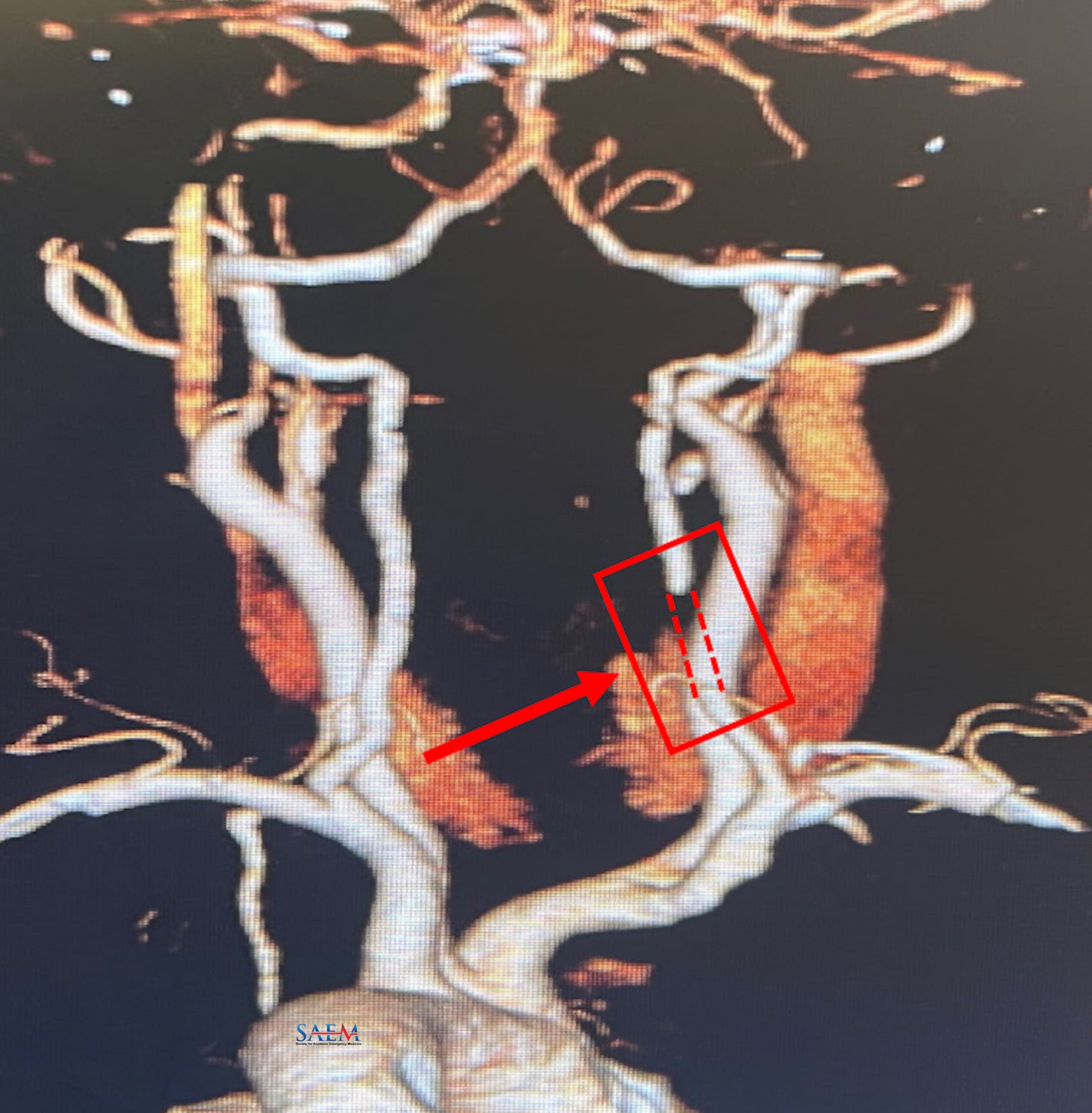
This patient presented with Horner Syndrome, a triad of ipsilateral anhidrosis, miosis, and ptosis, the latter two of which are evident in this clinical image. Horner Syndrome presents when a lesion or insult disturbs the three-order sympathetic pathway that innervates the head, neck, and ipsilateral eye. Physical examination findings may be variable and/or subtle in patients with carotid dissection. Interestingly, isolated Horner Syndrome is the only abnormal physical finding in up to 50% of patients with carotid dissection. Further, patients with carotid dissection may present with only a partial Horner’s, with anhidrosis limited to the ipsilateral eyebrow, which can be difficult to identify. Evaluation of a patient with a new Horner Syndrome in the emergency department should include CT brain, CXR, and, if there is concern for carotid artery dissection, CTA or MRA head/neck. Carotid artery dissection is a neurologic emergency with significant morbidity and mortality ranging between 25-46% if left untreated. Management requires emergent neurology consultation with activation of the stroke team, as the treatment may require systemic thrombolytics and/or mechanical thrombectomy. Patients who present outside the time-window for stroke care, or who demonstrate resolving symptoms should be treated with antiplatelet or anticoagulant therapy. Notably, for patients with intracranial dissection or dissection involving the aorta, the preferred treatment is antiplatelet therapy in conjunction with neurology consultation.

Horner syndrome has a broad differential diagnosis including stroke, neoplastic disease (brain, neck or lung), vascular injury, demyelinating disease, lymphoma, and iatrogenic injuries. This patient’s Horner syndrome was attributable to a carotid artery dissection (the most common vascular cause of Horner’s). Carotid dissection may occur after blunt trauma to the neck, but also as a result of seemingly innocuous movements of the neck. For example, evidence suggests that yoga, massage, and roller coaster rides each may increase risk for carotid dissection.

Take-Home Points

  • Horner syndrome is the triad of ipsilateral anhidrosis, miosis, and ptosis, although physical exam findings may be subtle.

  • The differential for Horner Syndrome includes several urgent and emergent underlying etiologies.

  • Carotid artery dissection is an important cause of Horner Syndrome to consider in the appropriate clinical context.

  • Hakimi R, Sivakumar S. Imaging of Carotid Dissection. Curr Pain Headache Rep. 2019 Jan 19;23(1):2. doi: 10.1007/s11916-019-0741-9. PMID: 30661121.

  • Keser Z, Chiang CC, Benson JC, Pezzini A, Lanzino G. Cervical Artery Dissections: Etiopathogenesis and Management. Vasc Health Risk Manag. 2022 Sep 2;18:685-700. doi: 10.2147/VHRM.S362844. PMID: 36082197; PMCID: PMC9447449.

  • Flaherty PM, Flynn JM. Horner syndrome due to carotid dissection. J Emerg Med. 2011 Jul;41(1):43-6. doi: 10.1016/j.jemermed.2008.01.017. Epub 2008 Sep 14. PMID: 18790590.

  • Maloney WF, Younge BR, Moyer NJ. Evaluation of the causes and accuracy of pharmacologic localization in Horner’s syndrome. Am J Ophthalmol. 1980 Sep;90(3):394-402. doi: 10.1016/s0002-9394(14)74924-4. PMID: 7425056.

  • Stein DM, Boswell S, Sliker CW, Lui FY, Scalea TM. Blunt cerebrovascular injuries: does treatment always matter? J Trauma. 2009 Jan;66(1):132-43; discussion 143-4. doi: 10.1097/ TA.0b013e318142d146. PMID: 19131816.

By |2025-04-03T09:22:20-07:00Apr 4, 2025|Neurology, SAEM Clinical Images|

SAEM Clinical Images Series: An On-Target Diagnosis

erythema

A 25-year-old female with no pertinent past medical history presented to an emergency department in Massachusetts with four days of generalized malaise, myalgias, congestion, low-grade fever, and a rash behind her left knee. The patient denied cough, shortness of breath, chest pain, abdominal pain, nausea, vomiting, and diarrhea. She lives with three roommates, none of whom were sick, and she denied any other known sick contacts. She also denied any occupational exposures or recent travel, although did endorse some recent hiking in the area.

Vitals: BP 128/84; HR 88; Temp 98°F; RR 18; SpO2 (on RA) 100%

General: Well appearing

HEENT: No conjunctival injection

Cardiovascular: S1, S2; no murmurs, rubs, or gallops

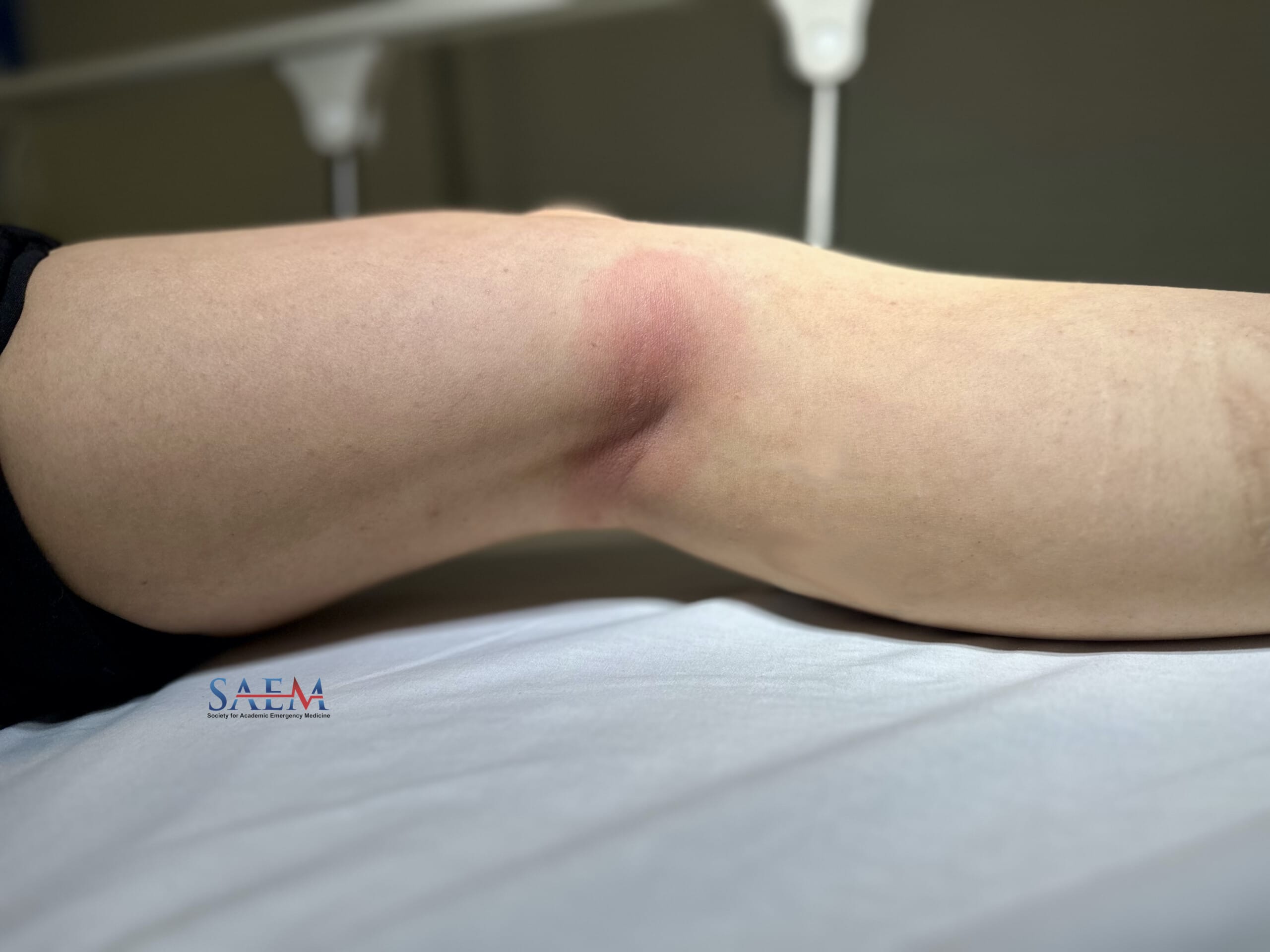
Skin: Erythematous patch with central clearing in left popliteal fossa

WBC: 5.1

Hgb: 12.6

Platelets: 223

Sodium: 139

Creatinine: 0.8

ALT/AST: 22/22

COVID/Influenza/RSV: negative

This clinical image depicts erythema migrans (EM), the classic rash seen in 70- 80% of early localized Lyme disease infections. Lyme disease is a bacterial infection caused by the spirochete Borrelia burgdorferi, transmitted through bites from Ixodes scapularis (Blacklegged Tick). Lyme disease is endemic to the northeastern part of the United States but is also commonly reported in the upper Midwest region of the country. There are three stages of Lyme disease: early localized infection, early disseminated infection, and late disseminated infection. Early localized infection starts 3-30 days after a tick bite. This stage is characterized by the EM rash as well as fatigue, low-grade fevers, malaise, myalgias, and lymphadenopathy. EM develops at the site of the tick bite, although only 25% of patients with the characteristic rash recall being bitten by a tick. Over the next several days, the rash will expand and may develop a central clearing. Thus, the rash is often described as appearing like a “bull’s eye” or a “target.” Serological testing may be negative in early Lyme disease thus diagnosis at this stage is usually clinical.

Treatment for early localized infection is typically Doxycycline 100mg PO BID x 10-14 days. Cefuroxime 500mg PO BID x 14 days is another option. Amoxicillin 500mg PO TID x 14 days is the preferred antimicrobial in patients who are pregnant and/or breast-feeding. As when treating infections caused by other spirochetes such as Treponema pallidum, a Jarisch- Herxheimer reaction may occur. Left untreated, disseminated disease will develop in 60% of patients. Most symptoms will occur within days to months, although late disseminated disease may take months to years to present. A wide range of clinical presentations are possible with early disseminated disease including diffuse annular skin lesions, meningoencephalitis, cranial nerve palsies (most commonly Bell’s Palsy), peripheral neuropathies, and AV nodal blocks. Late disseminated infection can present with transient, migratory oligoarticular arthritis and non-focal nervous system symptoms such as mild encephalopathy and fatigue. Serological studies in disseminated disease are highly sensitive and the CDC recommends two-step testing such as an enzyme immunoassay or immunofluorescent antibody assay followed by a Western blot if the initial testing is positive or equivocal. Treatment of disseminated Lyme depends on the systems involved. Given the ambiguity of early serologic testing and the potential for development of disseminated disease, erythema migrans is a clinical “can’t miss” dermatologic diagnosis in the emergency department.

Take-Home Points

  • Lyme disease is caused by bites from the Blacklegged Tick and is endemic to the northeastern United States.
  • Early localized Lyme infection often presents with the erythema migrans rash, a large targetoid or bull’s eye area of erythema with central clearing at the site of the tick bite.
  • The diagnosis of early Lyme is usually clinical and the three first-line antibiotics are Doxycycline, Cefuroxime, or Amoxicillin.

  • Kowalski TJ, Tata S, Berth W, Mathiason MA, Agger WA. Antibiotic treatment duration and long-term outcomes of patients with early lyme disease from a lyme disease- hyperendemic area. Clin Infect Dis. 2010 Feb 15;50(4):512-20. doi: 10.1086/649920. PMID: 20070237.
  • Lyme Disease. Centers for Disease Control and Prevention. 2022, Jan 19. https:// www.cdc.gov/lyme/
  • Steere AC. Lyme disease. N Engl J Med. 2001;345(2):115-125. doi:10.1056/NEJM200107123450207 4. Torbahn G, Hofmann H, Rücker G, Bischoff K, Freitag MH, Dersch R, Fingerle V, Motschall E, Meerpohl JJ, Schmucker C. Efficacy and Safety of Antibiotic Therapy in Early Cutaneous Lyme Borreliosis: A Network Meta-analysis. JAMA Dermatol. 2018 Nov 1;154(11):1292-1303. doi: 10.1001/jamadermatol.2018.3186. PMID: 30285069; PMCID: PMC6248135.

Go to Top