About Michelle Lin, MD

ALiEM Founder and CEO
Professor and Digital Innovation Lab Director
Department of Emergency Medicine
University of California, San Francisco

Best mobile apps for the emergency department (2015 ACEP Live talks)

ACEP SA 15 appsAt the recent 2015 ACEP Scientific Assembly in Boston, many of emergency medicine’s (EM) finest speakers arrived to share their expertise with the EM community. Two were ACEP Live talks, hosted and recorded by the Annals of Emergency Medicine, featuring Dr. Seth Trueger (@MDAware, Assistant Social Media Editor for Annals of EM) and Dr. Iltifat Husain (@iMedicalApps, Founder and Editor-in-Chief of iMedicalApp.com). Do you agree or disagree with their lists? What are your favorite apps?

(more…)

By |2019-01-28T21:42:34-08:00Nov 11, 2015|Social Media & Tech|

PV Card: Initial Pain Medication Options in the Emergency Department

backpain_pc_400_clr_2144The emergency department (ED) manages acute pain on a daily basis, ranging from non-traumatic back pain to traumatic fractures. Some providers jump immediately to opioids without considering other non-opioid alternatives or start at incorrect doses. In the age of the opioid epidemic (ALiEM-Annals of EM journal club; bookclub discussing Dreamland) and medication errors, choosing the initial right agent(s) and dose(s) are important. Dr. Nick Koch and Dr. Sergey Motov (@PainFreeED) from Maimonides Medical Center present a thoughtful, evidence-based PV reference card on selecting and dosing initial pain medications for ED patients. Also congratulations to Dr. Motov and his team for their recent 2015 Annals of EM publication1 on subdissociative dose ketamine for analgesia.
(more…)

By |2021-10-04T09:52:20-07:00Oct 23, 2015|ALiEM Cards, Tox & Medications|

PV Card: Continuous End Tidal CO2 Monitoring in Cardiac Arrest

capnography

For many years, end tidal CO2 monitoring initially was helpful in differentiating tracheal versus esophageal intubations. Now with continuous end tidal capnography, providers have access to so much more information during a cardiac arrest resuscitation, as summarized by the recently released 2015 American Heart Association (AHA) recommendations.1 Thanks to Dr. Abdullah Bakhsh from Emory University for a great PV card to help remind us of these key cardiac resuscitation pearls.

PV Card: Continuous End Tidal CO2 Monitoring in Cardiac Arrest


Adapted from [1-4]

References

  1. Link M, Berkow L, Kudenchuk P, et al. Part 7: Adult Advanced Cardiovascular Life Support: 2015 American Heart Association Guidelines Update for Cardiopulmonary Resuscitation and Emergency Cardiovascular Care. Circulation. 2015;132(18 Suppl 2):S444-64. [PubMed]
  2. Ahrens T, Schallom L, Bettorf K, et al. End-tidal carbon dioxide measurements as a prognostic indicator of outcome in cardiac arrest. Am J Crit Care. 2001;10(6):391-398. [PubMed]
  3. Silvestri S, Ralls G, Krauss B, et al. The effectiveness of out-of-hospital use of continuous end-tidal carbon dioxide monitoring on the rate of unrecognized misplaced intubation within a regional emergency medical services system. Ann Emerg Med. 2005;45(5):497-503. [PubMed]
  4. Kleinman M, Brennan E, Goldberger Z, et al. Part 5: Adult Basic Life Support and Cardiopulmonary Resuscitation Quality: 2015 American Heart Association Guidelines Update for Cardiopulmonary Resuscitation and Emergency Cardiovascular Care. Circulation. 2015;132(18 Suppl 2):S414-35. [PubMed]
By |2021-10-19T19:25:31-07:00Oct 20, 2015|ALiEM Cards, Cardiovascular, Critical Care/ Resus|

PV Card: Normal Values for Ultrasound Measurements

Ultrasound-PV-Card-sm

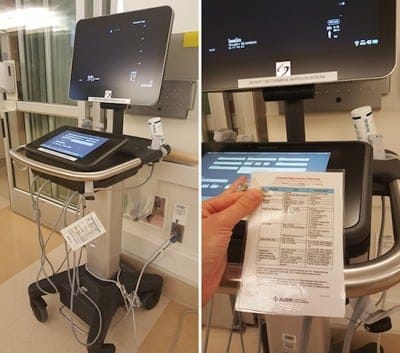
As emergency medicine providers become more proficient in using bedside ultrasonography as a diagnostic tool, it can be difficult to remember all of the normal cutoff values. Is it 3 or 5 mm as the cutoff? Thanks to the team at UCSF (Dr. Maria Beylin, Dr. Scott Fischette, and Dr. Nate Teismann) for creating a succinct PV card listing the key numbers to remember. You can download this PV card into your mobile device as a reference guide, or you can even print and attach to each of your ultrasound machines!


PV Card: Normal Values for Ultrasound Measurements


Adapted from [1–4]

References

  1. Horrow M. Ultrasound of the extrahepatic bile duct: issues of size. Ultrasound Q. 2010;26(2):67-74. [PubMed]
  2. Beigel R, Cercek B, Luo H, Siegel R. Noninvasive evaluation of right atrial pressure. J Am Soc Echocardiogr. 2013;26(9):1033-1042. [PubMed]
  3. Doubilet P, Benson C, Bourne T, et al. Diagnostic criteria for nonviable pregnancy early in the first trimester. N Engl J Med. 2013;369(15):1443-1451. [PubMed]
  4. Adhikari S, Zeger W, Thom C, Fields J. Isolated Deep Venous Thrombosis: Implications for 2-Point Compression Ultrasonography of the Lower Extremity. Ann Emerg Med. 2015;66(3):262-266. [PubMed]
By |2021-10-04T09:56:16-07:00Oct 15, 2015|ALiEM Cards, Ultrasound|

NEXUS Chest CT Decision Instruments in Blunt Trauma

ct_cat_scanner_angled_400_wht_5332One of the five 2014 American College of Surgeons’ Choosing Wisely recommendations is to avoid routing whole-body CT imaging of trauma patents, also known as the ‘pan-CT’. Until now, no validated decision instrument existed to help guide clinicians decide whether to obtain a chest CT in the setting of blunt trauma. This month, Dr. Robert Rodriguez and the multi-institutional NEXUS Chest CT research team published a paper describing the derivation and validation of 2 decision instruments in PLOS Medicine [1].

(more…)

By |2026-06-16T16:08:13-07:00Oct 13, 2015|Radiology, Trauma|

EM Fellowship Match Advice: Simulation, Toxicology, and Ultrasound

Fellowships doctors_solve_custom_text_puzzle_12406 copySubspecialty training within emergency medicine is increasingly becoming a popular route for those interested in pursuing an academic faculty position. This year, we will cover the ins-and-outs, nuts-and-bolts, and nuances for 3 fellowships available to EM residency graduates: Simulation, Toxicology, and Ultrasound. Modeled after the wildly successful EM Match Advice for medical students applying to residency, Dr. Mike Gisondi launches and hosts another successful series — the EM Fellowship Match Advice series.


Podcast: Simulation Fellowship

Panelists

  1. Teresa Wu, MD (University of Arizona)
  2. Sharon Griswold, MD MPH (Drexel University)
  3. Demian Szyld, MD EdM (NYSim)

Recommended simulation resources/events

  1. Hot Topics in Simulation Education Annual Symposium (October 14, 2015)
  2. 2nd Annual Symposium for Fellows in Healthcare Simulation (April 11, 2016)
  3. Simulacion de Sur a Norte Podcast

References

  1. Stern S. Fellowship training: a necessity in today’s academic world. Acad Emerg Med. 2002 Jul;9(7):713-6. PubMed PMID: 12093713. [Free PDF]

Podcast: Medical Toxicology Fellowship

Panelists

  1. Binh Ly, MD (UC San Diego)
  2. Christopher Hoyte, MD (Denver)
  3. Robert Hendrickson, MD (OHSU)

Podcast: Emergency Ultrasound Fellowship

Panelists

  1. J Christian Fox, MD (University of California, Irvine)
  2. Jeremy Boyd, MD (Vanderbilt University)

Important Links

  1. Emergency Ultrasound Fellowships
  2. American Institute of Ultrasound in Medicine
  3. Ultrasound Podcast
  4. Sonospot blog

Listen to all the episodes of the EM Match Advice Series

By |2021-07-01T10:40:05-07:00Oct 8, 2015|EM Match Advice, Medical Education, Podcasts|

EM Match Advice Series: The Non-LCME Applicant

Yesterday the Electronic Residency Application Service (ERAS) opened its digital doors to medical students applying to ACGME residency programs. So we thought it was a perfect time to host another EM Match Advice Series installment. This time, we focus on the challenges that the non-LCME applicant encounters throughout the ACGME application process. These applicants include:

  1. Students from osteopathic medical schools
  2. Students from non-U.S. medical schools
  3. Applicants who have been in the military service and are returning for residency training
  4. Residents who want to transfer in from another specialty training program.

(more…)

By |2021-07-01T10:42:01-07:00Sep 16, 2015|EM Match Advice, Podcasts|
Go to Top