About Nikita Joshi, MD

ALiEM Chief People Officer and Associate Editor
Clinical Instructor
Department of Emergency Medicine
Stanford University

Welcome Dr. Matthew Zuckerman: 2015 ALiEM-AAEM Social Media and Digital Scholarship Fellow

Matthew Zuckerman

Welcome to the newest member of our team, Dr. Matthew Zuckerman (@matthew608b), who is an Assistant Professor in Emergency Medicine at the University of Colorado, Anschutz Medical Campus. He will serve as our inaugural 2015 ALiEM-AAEM Social Media and Digital Scholarship Fellow, working on advancing medical education and upgrading the AAEM e-book “Rules of the Road for Young Emergency Physicians.”

(more…)

By |2026-06-16T16:06:50-07:00Jan 19, 2015|Medical Education|

ALiEM Bookclub: Risk Savvy

41SdxtBgsPL._SY344_BO1,204,203,200_The full title of Gerd Gigerenzer’s book is Risk Savvy: How to Make Good Decisions [Amazon], which is exactly what makes this book so relevant, not just to the everyday reader, but to the medical reader. We make decisions every day in the medical field that range from the complex of intubating someone with low reserve or difficult airway anatomy to the less life-and-death decision of when to best time a quick food break between seeing patients. Of course, we also help our patients make very complex decisions, especially in the ED when time is short but risk can be high. And it certainly is not an easy task to attempt to bring family members up to speed on the ins and outs of intubation vs BiPAP or the complex statistics associated with radiation exposure when working up a pregnant patient with a potential pulmonary embolism. Gigerenzer’s book does a beautiful job of helping the reader not only understand how to break down the complexity of risk, but also how to go about explaining it.
(more…)

By |2016-11-11T19:35:48-08:00Dec 12, 2014|Book Club, Statistics & Epidemiology|

ALiEM Bookclub: Humble Inquiry

3148

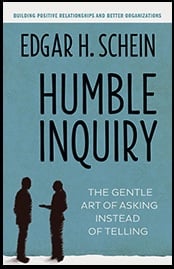
In this month’s ALiEM Book Club selection, Humble Inquiry: The Gentle Art of Asking Instead of Telling, author Edgar Schein describes a model of communication termed “humble inquiry” which he defines as “the fine art of drawing someone out, of asking questions to which you do not already know the answer, of building a relationship based on curiosity and interest in the other person”. Although a very quick read (100 short pages!), it is packed with profound insights about the way we communicate and a vision for what might be! Communication is so pertinent to our work in the medical field from encounters with our colleagues, our learners, and our patients. Striving to improve communication is a goal that every provider should have and this powerful book can help!

(more…)

By |2016-11-11T18:17:21-08:00Nov 21, 2014|Book Club, Medical Education|

Diagnose on Sight: “I feel like I am having a heart attack”

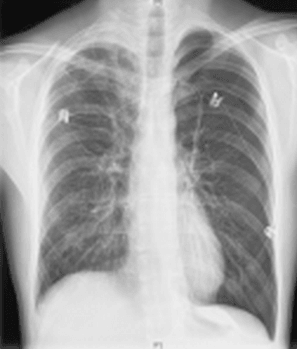
Pneumothorax-Deep-SulcusCase: A 18-year-old male with no medical history presents to the emergency department (ED) complaining of “feeling like I am having a heart attack” which started suddenly 1 hour ago. The patient ate from a food truck the night before and developed several episodes of forceful vomiting prior to arrival in the ED. What finding in this supine chest radiograph aids in the diagnosis? Click on image for a larger view.

(more…)

By |2016-12-22T19:15:42-08:00Sep 23, 2014|Diagnose on Sight, Pulmonary, Radiology|

Most Followed #FOAMed Women on Twitter

twitter_2012In 2014 we published a list of the Most Followed #FOAMed Twitter Users (FOAM = Free Open Access Meducation). One observation, keenly pointed out by Dr. Nikita Joshi (@njoshi8), was the lack of female representation on the list. Separately, Dr. Esther Choo (@choo_ek) published a blog post entitled Women in Emergency Medicine Who Give Great Talks. As a follow up to our original post, here are the most ‘followed’ women on Twitter in the FOAM world.

(more…)

By |2016-11-11T19:22:34-08:00Aug 30, 2014|Medical Education, Social Media & Tech|

SimLIFE-EM Challenge: Add to the conversation

simLIFE-EM

Debriefings in medical simulation are meant to be the bow on top of the gift that is medical simulation. It is the ultimate delicious dessert, served after a grueling dinner course. All analogies aside, debriefings are meant to drive home the teaching points, to gain a deeper understanding of medical resuscitation as a group, and create mental frameworks of the approach to various patients. But this is often easier described than actually done. We here at ALiEM paired with Dr. Henry Curtis to come up with a creative way of developing debriefing skills and gain deeper understanding of mental frameworks.

(more…)

Improving debriefing skills: Two-column case and learning pathways grid

250px-teammeeting1ExpertPeerReviewStamp2x200Being a learner in a medical simulation case can be tough. But equally challenging, is the role of the Debriefer. This person has to balance the important task of debriefing the small group, provide feedback, and still maintain a positive and open learning environment. A 2013 paper by Rudolph et al attempts to show methods how to balance these demands while improving as a Debriefer through the use of 2 Column Case Analysis and Learning Pathway Grid.

(more…)

Go to Top