

About Robert Steele, MD

Attending Physician
Southwest MEC

SAEM Clinical Images Series: Pain, Paralysis, and Rash
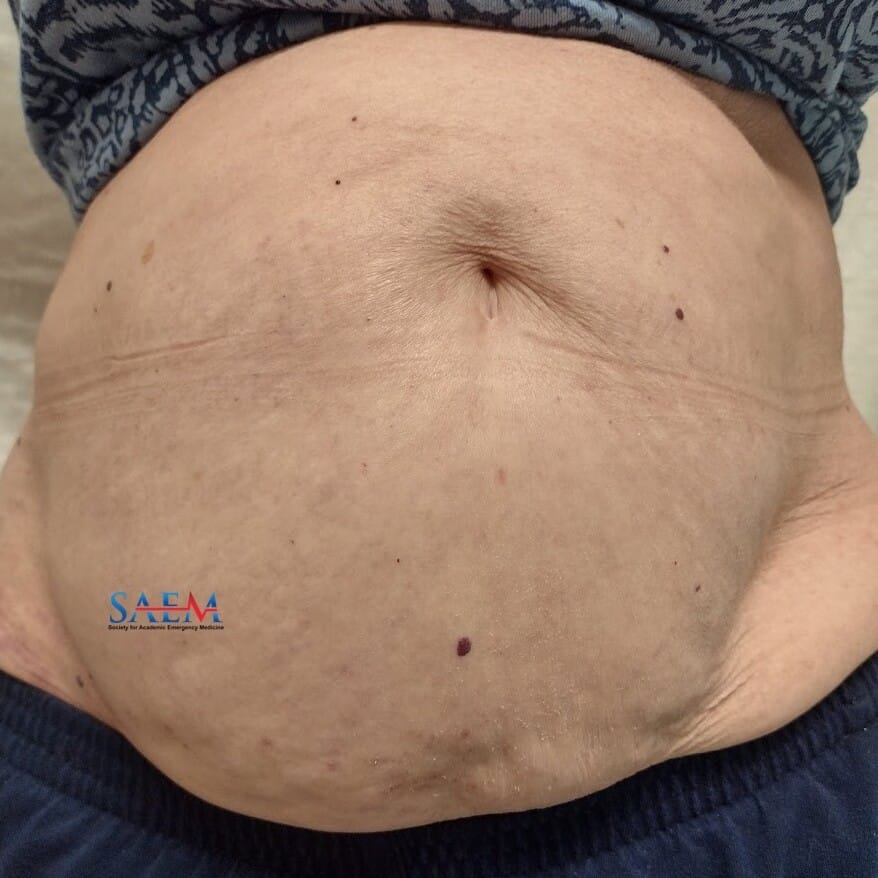
The patient is an 81-year-old female with a history of asthma and hypertension who presents to the Emergency Department with right-sided abdominal swelling for five days. Five days ago, the right side of her abdomen appeared to protrude more than the left. This protrusion then increased over the next 2-3 days. The patient was diagnosed with shingles to the right lower abdomen earlier that month, but her rash has now nearly resolved. She continues to have “electric” pain in the region of the prior shingles infection. She denies any fevers, abdominal trauma, vomiting, or changes in bowel or bladder habits. She has never had anything like this before.
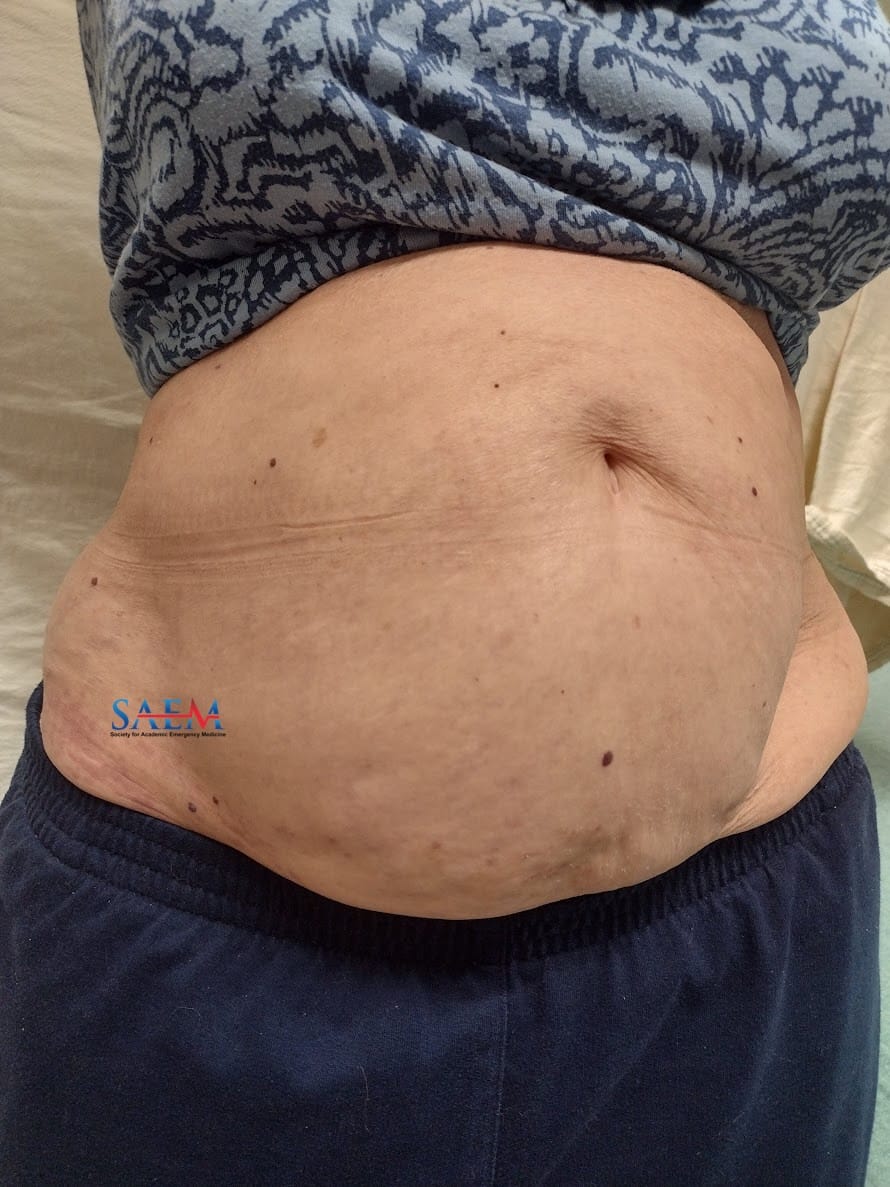
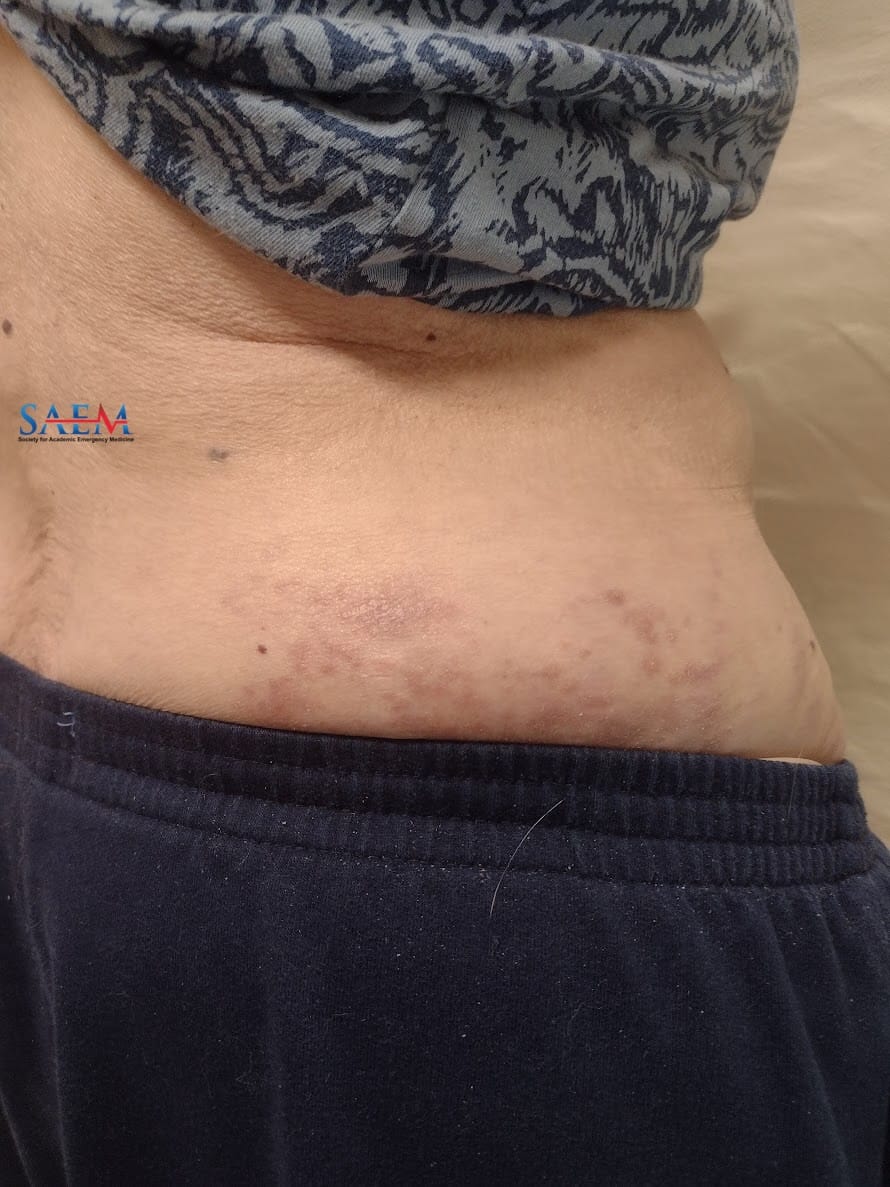
Vitals: All vital signs are normal.

Abdomen: See image provided. There is a firm unilateral distention of the right lower abdomen without shifting dullness or fluid wave. No palpable masses are present. There is moderate tenderness over the protruding region but no rebound or guarding. Bowel sounds are present.

Skin: See image provided. Moderate tenderness to palpation over region.

CBC and CMP are unremarkable.

CT scan of the abdomen and pelvis: No evidence of acute abnormality. Normal appendix. Moderate stool burden.

Zoster pseudohernia (ZP) occurs when the zoster infection infiltrates a posterior thoracic dermatome, affecting the spinal nerve roots responsible for the motor function of the abdominal wall. ZP typically presents with a rapidly progressive unilateral outpouching of the abdomen, giving a hernia-like appearance, but with intact abdominal wall musculature. In most cases, the classic Herpes Zoster rash precedes ZP, however in up to 10% of patients ZP may be the first presenting sign of zoster. Although uncommon, the symptoms are often distressing to patients, with many presenting to emergency departments or surgical offices for initial evaluation. The diagnosis is clinical and is based on a history of zoster infection or classic zoster symptoms and lack of findings suggesting alternate pathology. Abdominal CT or other imaging is recommended to exclude tumors, true hernias, free fluid, or other possible causes of abdominal distention. Electromyography (EMG) can be used to support diagnosis and will typically be abnormal due to the dysfunction of the abdominal wall musculature. Complete recovery occurs in 70-80% of patients within about 4-5 months.

Take-Home Points

  • Zoster Pseudohernia is a rare presentation of herpes zoster infection resulting in dysfunction of the abdominal wall musculature.

  •  There is no specific treatment with most cases fully resolving within several months to one year.

  • Chernev I, Dado D. Segmental zoster abdominal paresis (zoster pseudohernia): a review of the literature. PM R. 2013 Sep;5(9):786-90. doi: 10.1016/j.pmrj.2013.05.013. PMID: 24054853.
  • Yoo J, Koo T, Park E, Jo M, Kim MS, Jue MS. Abdominal pseudohernia caused by herpes zoster: 3 case reports and a review of the literature. JAAD Case Rep. 2019 Aug 5;5(8):729-732. doi: 10.1016/j.jdcr.2019.06.019. PMID: 31440570; PMCID: PMC6698640.

SAEM Clinical Images Series: Leg Rash

ulcer

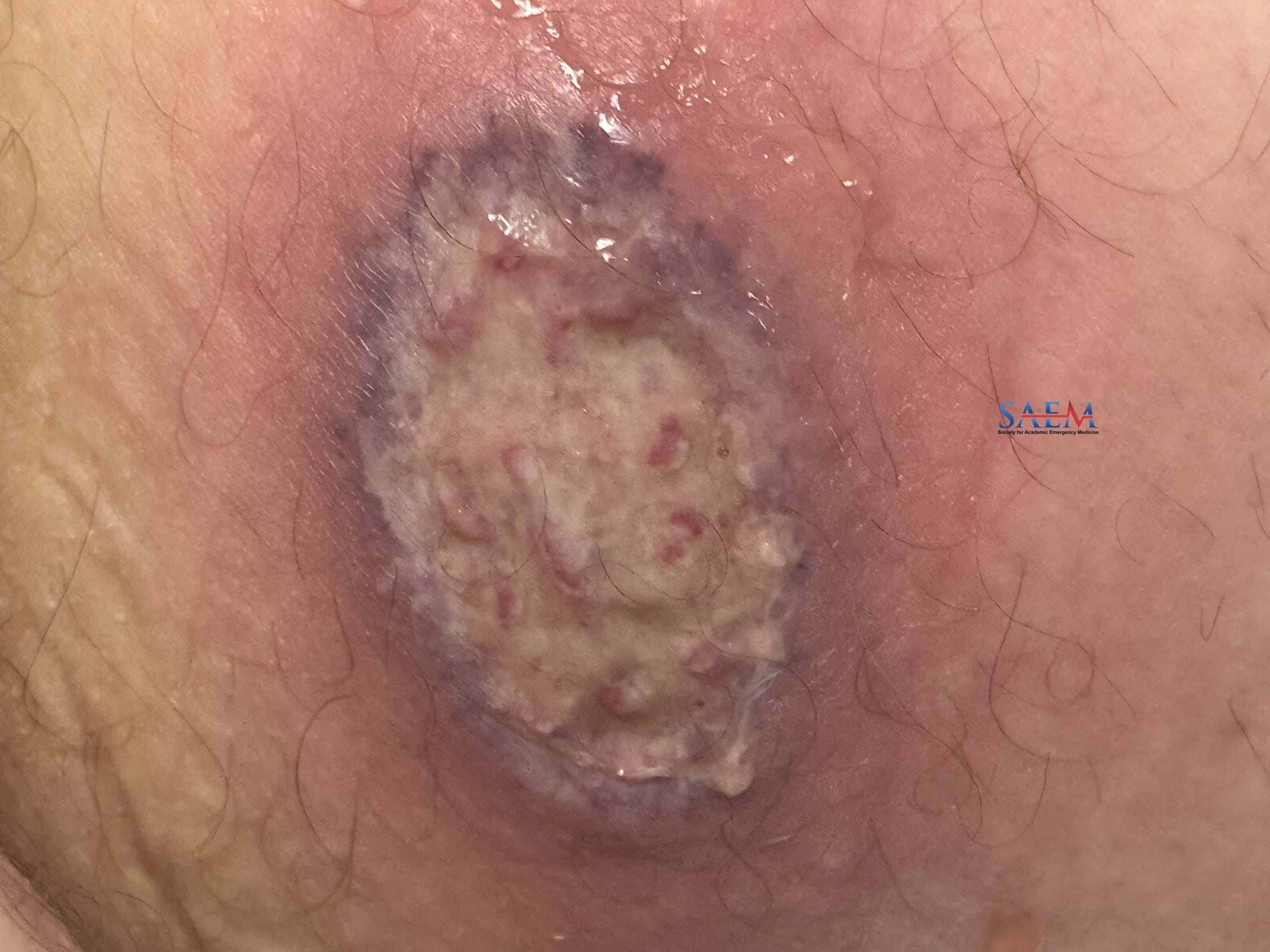
A 42-year-old male with no significant medical problems presented to the Emergency Department with a 5-week history of abdominal pain and bloody diarrhea. He also reported painful intraoral blisters and ulcerative lesions on the bilateral lower extremities and scrotum. The patient had been self-managing his symptoms with over-the-counter antidiarrheal medications and has unsuccessfully attempted to establish care with a gastroenterologist. He denied any history of intravenous drug use, cutaneous injections, or previous skin infections and has no other complaints at this time.

Vitals: BP 125/85; HR 97; R 22; T 99.2°F; O2 sat; 100% on room air

General: Overall well-appearing but uncomfortable.

HEENT: Dry mucous membranes, no lesions seen.

Respiratory: Clear to auscultation.

Cardiovascular: Regular rhythm without murmurs, rubs, or gallops.

Abdominal: Mild diffuse tenderness on palpation of abdomen without rebound or guarding. Bowel sounds mildly hyperactive.

Genitourinary: External purulent lesion on anus. Gross bright red blood on digital rectal exam.

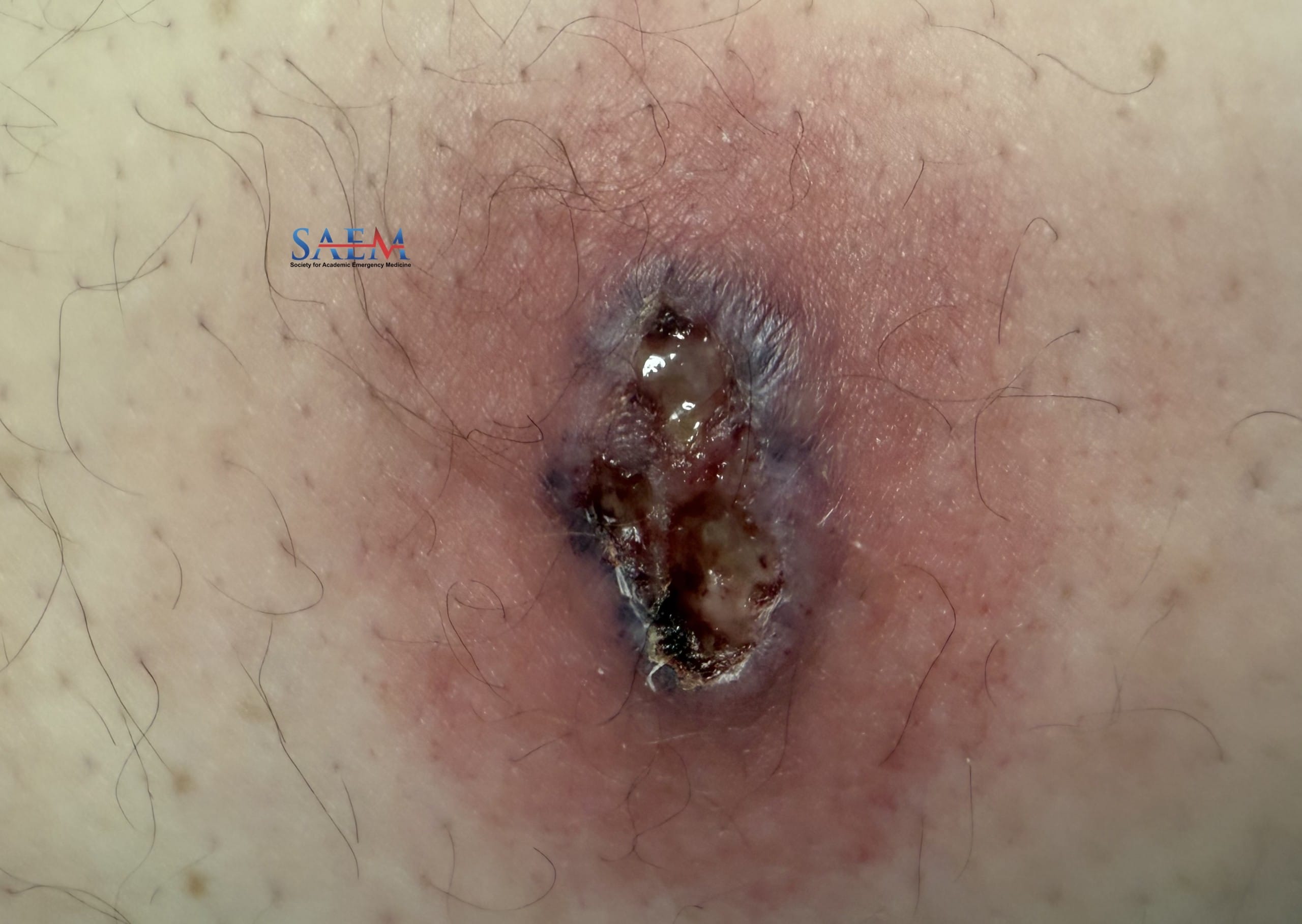
Skin: Overall pallor, there are Scattered purulent ulcers on bilateral lower extremities and scrotum. Image 1 shows a lesion on the inner right thigh. Image 2 shows a second lesion on the right inner buttock. The right inner thigh lesion has been present longer.

WBC: 17.9

Hgb: 10.6

Plt: 654,000

ESR: 112

CRP: 21.8

This rash is consistent with ulcerative pyoderma gangrenosum (PG), a rare inflammatory condition which may occur in isolation or in association with systemic diseases. PG typically manifests as an erythematous nodule or pustule that progresses to form a purulent or necrotic ulcerative base. The lower extremities are the most frequently affected sites. In this patient, the presence of abdominal pain, hematochezia, and elevated inflammatory markers raises suspicion for an underlying diagnosis of ulcerative colitis. Measurement of fecal calprotectin may provide additional diagnostic support. Management of mild flares in an outpatient setting may include rectal or oral mesalamine (5-ASA) in combination with oral prednisone. Severe exacerbations often require hospitalization for systemic glucocorticoid therapy and gastroenterology consultation. The patient was started on IV glucocorticoids and during his admission had resolution of his rectal bleeding and improvement in his rash. Colonoscopy results confirmed the underlying diagnosis of ulcerative colitis. The patient was discharged in stable condition with outpatient gastroenterology follow-up.

Take-Home Points

  • Pyoderma gangrenosum features erythematous nodules and pustules that progress to form a purulent or necrotic base, and is associated with inflammatory bowel diseases.

  • Severe cases of PG generally require glucocorticoid therapy.

  • Ruocco E, Sangiuliano S, Gravina AG, Miranda A, Nicoletti G. Pyoderma gangrenosum: an updated review. J Eur Acad Dermatol Venereol. 2009 Sep;23(9):1008-17. doi: 10.1111/j.1468-3083.2009.03199.x. Epub 2009 Mar 11. PMID: 19470075.
  • Ko CW, Singh S, Feuerstein JD, Falck-Ytter C, Falck-Ytter Y, Cross RK; American Gastroenterological Association Institute Clinical Guidelines Committee. AGA Clinical Practice Guidelines on the Management of Mild-to-Moderate Ulcerative Colitis. Gastroenterology. 2019 Feb;156(3):748-764. doi: 10.1053/j.gastro.2018.12.009. Epub 2018 Dec 18. PMID: 30576644; PMCID: PMC6858922.


Go to Top