Patwari Academy videos: Demystifiying how ECGs work

As a nice segue from the Low Risk Chest Pain videos, below is a 3-part series on Demystifying the Electrocardiogram by Dr. Rahul Patwari. It takes talent to make the complex simple.
(more…)



As a nice segue from the Low Risk Chest Pain videos, below is a 3-part series on Demystifying the Electrocardiogram by Dr. Rahul Patwari. It takes talent to make the complex simple.
(more…)

A patient presents with an asymmetric leg with trace pitting edema in the affected leg. What is your diagnostic approach to such a patient? What is the role of D-dimer and ultrasound (U/S)? Does this match the 2012 American College of Chest Physicians (ACCP) guidelines?
The first step is to determine your patient’s pretest probability because the recommendations vary based on risk. I can tell you that many ED patients come in with a Wells score of 1-2, which places them in the “moderate pretest probability” category. There are 2 approaches you can take based on the availability of resources at your site (high-sensitivity D-dimer or U/S) and the patient’s comorbidities. Are you referring your patient for a repeat outpatient ultrasound, if warranted?Walk through various patient scenarios to see how the D-Dimer and U/S come into play.
Adapted from [1]
Go to ALiEM (PV) Cards for more resources.
Thanks to Dr. Jason West (EM resident at Jacobi/Montefiore) for this card idea and deciphering the complex recommendations from the publication.

One of the most common complaints in the Emergency Department is chest pain. Is it something serious? How do I risk-stratify patients with potential acute coronary syndrome? What should I be thinking of and not missing?
Rahul goes over the low-risk chest pain patient in 2 great, short teaching videos, based partly on the 2010 AHA/ACC Guideline for ACS risk stratification.
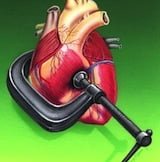 Bottom Line1
In asymptomatic black patients who presented to the ED with elevated blood pressure, subclinical hypertensive heart disease was detected in 9 of every 10 patients.
 Bottom Line 1
 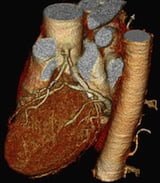 Bottom Line 1