Is the 6-12-12 adenosine approach always correct?

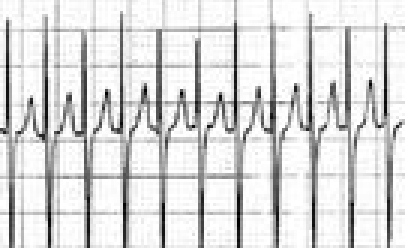
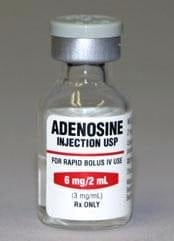
AdenosineVialThe ACLS-recommended dosing strategy of 6 mg, 12 mg, and 12 mg for adenosine may not be appropriate in every situation. There are a few instances when lower or higher dosing should be considered.

Caveat: All recommendations are data-based, but many factors affect successful conversion of paroxysmal supraventricular tachycardia (PSVT) including proper line placement and administration technique.

(more…)

PV card: PE Severity Index (PESI) score

pulmonary embolism PE PESI score

Do you send some of your low-risk patients with pulmonary embolism home?

This is a controversial issue which warrants a look at risk stratification tools. The primary one used is the validated Pulmonary Embolism Severity Index (PESI) score. In Lancet 2011, the authors looked at whether PESI class I and II (low risk) patients could be managed safely as outpatients. It turns out in their study, regardless of whether their PESI class I and II patients were treated as outpatients and inpatients, all fared equally well from a complications standpoint (recurrent clot, bleeding from anticoagulation).

I like the validated PESI scoring system to risk-stratify patients as low vs high risk for complications. I, however, do caution people to look closely at the exclusion criteria for this study before applying this to all ED patients.

The exclusion filter was so strict that they likely have captured a very narrow and unrealistic scope of patients to be widely applicable. It makes sense from a research standpoint to have these criteria to achieve internal validity but the question is external validity. Two exclusion criteria that struck me as awfully strict were: (1) needing parenteral opioids or (2) active alcohol or drug abuse.

Bottom line

For me, this study alone seems not have enough external validity to decide about the decision to treat PE patients as inpatient vs outpatient. Although I think that ultimately some can be managed as outpatients, I’d like to see more studies.

PV Card: PESI Score for Pulmonary Embolism


See other ALiEM (PV) Cards.

By |2021-10-08T09:35:48-07:00Nov 17, 2012|ALiEM Cards, Cardiovascular, Pulmonary|

Take the quiz: Do you know your antihypertensive agents?

Identify the antihypertensive agent:

1. Rapid acting systemic and coronary artery vasodilator with minimal effects on cardiac conductivity or inotropy. Well studied in pregnancy. Caution in patients with left ventricular failure, liver cirrhosis

Answer: Nicardipine

2. Predominantly dilates the venous system. Useful in patients with cardiac ischemia, pulmonary edema, or congestive heart failure. Caution in patients with right ventricular failure

Answer: Nitroglycerin

3. Drug of choice in eclampsia, pre-eclampsia, and aortic dissection. Contraindicated in patients with congestive heart failure and heart block  

Answer: Labetalol

4. Decreases peripheral vascular resistance and increases collateral coronary blood flow in an uncontrolled and unpredictable manner and may result in serious complications. Drug of choice during pregnancy

Answer: Nifedipine

5. Direct arterial vasodilator that increases cardiac output and heart rate (Reflex response). Patient may develop lupus like syndrome. Not to be used as first line in the ED

Answer: Hydralyzine

6. Arterial vasodilator that delays atrioventricular conduction and has a negative inotropic effect 

Answer: Verapamil

7. Rapid onset of effect after oral administration (30 mins) with little change in cardiac output or reflex tachycardia. Adverse effect may include cough, angioedema. Toxic during first trimester.

Answer: Captopril

8. Only for patients with subarachnoid hemorrhage. Not to be given IV only PO or NG tube  

Answer: Nimodipine

9. The only parenteral angiotensin-converting enzyme inhibitor. May cause azotemia in older patients after MI

Answer: Enalapril

10. Oral or transdermal decreases peripheral vascular resistance. May cause sedation and bradycardia  

Answer: Clonidine

11. Used in patients who are volume overloaded but not in patients who are hypertensive and volume depleted 

Answer: Diuretics

12. Drug of choice  for pheochromocytoma, MAOI crisis, and cocaine overdose  

Answer: Phentolamine

Reference:
1. Richard S. Irwin, James M. Rippe. Manual of Intensive Care Medicine; 4th ed
2. Marx: Rosen’s Emergency Medicine, 7th ed (Chapter 82- Hypertension: Richard O. Gray)


By |2016-11-11T11:52:01-08:00Nov 14, 2012|Cardiovascular|

Best place to suffer a cardiac arrest?

Where’s the best place to suffer cardiac arrest? Seattle? Las Vegas? Who’s going to give me mouth-to-mouth resuscitation? Will someone know how to use an automatic external defibrillator (AED)?

Where is the BEST place to experience a cardiac arrest???


As luck would have it, the best place would be at the ACEP Scientific Assembly. On the first day of Scientific Assembly, an exhibitor collapsed in the convention center without a pulse. At a conference with thousands of emergency physicians, several Good Samaritans immediately sprung into action. An attendee used a CPR mask while another operated an AED. They were able to revive their patient, where he is reportedly doing well at a local hospital.

Congratulations to Drs. David Pigott, Jared Shell, Jerry Edwards and everyone else involved on a job well done! 

By |2019-02-19T18:05:51-08:00Oct 17, 2012|Cardiovascular|

PV Card: Electrolytes and ECG changes

ECG anatomy segments

The electrocardiogram can pick up all sorts of electrolyte abnormalities. The most common abnormalities revolve around high and low levels of potassium and calcium. Magnesium derangements typically have nonspecific findings. How do you keep things straight? To make things more complicated, multiple electrolyte derangements can occur at the same time, making ECG interpretation challenging.

(more…)

By |2021-10-08T09:38:57-07:00Sep 21, 2012|ALiEM Cards, ECG, Endocrine-Metabolic|

Paucis Verbis: CHF likelihood ratios

senior with oxygen maskA 50 y/o man with a history of CHF and COPD is brought in by ambulance in severe respiratory distress. He is sitting upright with a RR 30 and O2 saturation of 79% on room air. Is this a CHF or COPD exacerbation? This is a common dilemma faced in the ED. Fortunately there are likelihood ratios to help you risk stratify using a Fagan nomogram.

Note that there are 3 tables:

  1. All-comer Emergency Department (ED) patients1
  2. ED patients WITH a known history of asthma or COPD2
  3. Summative LRs for BNP are provided in ED patients with or without a history of asthma/COPD1

See the blue font for the likelihood ratios ≥ 3.0.

PV Card: Does Your Dyspneic Patient Have CHF?


Adapted from [1, 2]
Go to ALiEM (PV) Cards for more resources.


References

  1. Wang C, FitzGerald J, Schulzer M, Mak E, Ayas N. Does this dyspneic patient in the emergency department have congestive heart failure? JAMA. 2005;294(15):1944-1956. [PubMed]
  2. McCullough P, Hollander J, Nowak R, et al. Uncovering heart failure in patients with a history of pulmonary disease: rationale for the early use of B-type natriuretic peptide in the emergency department. Acad Emerg Med. 2003;10(3):198-204. [PubMed]
By |2021-10-10T08:40:49-07:00Aug 24, 2012|ALiEM Cards, Cardiovascular|
Go to Top