


Mechanical vs Manual CPR Chest Compressions
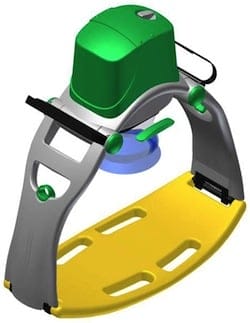 When talking about Out of Hospital Cardiac Arrest (OHCA) there are really only three things that make a true difference on outcomes (i.e. survival and neurologic function):
- High quality, non-interrupted CPR
- Early defibrillation
- Therapeutic hypothermia
The quality of CPR is often under appreciated and performed incorrectly (too slow and/or not hard enough). With mechanical CPR, chest compressions are delivered uninterrupted and at a predefined depth and rate. In my own practice I have seen these devices being used more and more, but my questions is do these devices impact outcomes?

 Door-to Balloon (D2B) time is a time measurement that starts with patient arrival to the emergency department (door) and ends when a catheter crosses a culprit lesion in the cardiac cath lab (balloon). The benefit of prompt primary percutaneous coronary intervention over thrombolytic therapy for acute ST elevation myocardial infarction is very well established. Because of this “time is muscle” strategy, the American College of Cardiology (ACC) launched a national Door to Balloon (D2B) initiative in November 2006. The purpose of this was to recommend a D2B time of no more than 90 minutes. Currently, there is quite a bit of effort put into this guideline by cardiology and emergency medicine, but are we measuring the right thing?
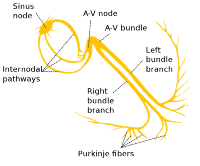 Recently, I have been asked by several students at my home institution (UTHSC at San Antonio) to help them understand bundle branch blocks. This is different than some of my usual posts because it is meant to be more educational than evidence based. So here we go. The normal conduction system of the healthy heart is shown to the right. If there is a delay or block in the left or right bundle, depolarization will take longer to occur. Therefore we get a widened QRS (>0.12 sec or >3 small boxes).