Myth Busted
There doesn’t appear to be a true depot effect. IV and IM ceftriaxone have very similar pharmacokinetic profiles. Let me prove it to you, straight from the FDA-approved ceftriaxone package insert.
| Ceftriaxone route | 0.5 hr | 1 hr | 2 hr | 4 hr | 6 hr | 8 hr | 12 hr | 16 hr | 24 hr |
|---|---|---|---|---|---|---|---|---|---|
| IV | 82 | 59 | 48 | 37 | 29 | 23 | 15 | 10 | 5 |
| IM | 22 | 33 | 38 | 35 | 30 | 26 | 16 | unknown | 5 |
Table 1: Average plasma concentration (mcg/mL) as measured over time after 500 mg of ceftriaxone administration
| Ceftriaxone route | 0-2 hrs | 2-4 hrs | 4-8 hrs | 8-12 hrs | 12-24 hrs | 24-48 hrs |
|---|---|---|---|---|---|---|
| IV | 526 | 366 | 142 | 87 | 70 | 15 |
| IM | 115 | 425 | 308 | 127 | 96 | 28 |
Table 2: Average urine concentration (mcg/mL) as measured over time after 500 mg of ceftriaxone administration
- The plasma concentrations are almost identical after IM and IV administration through 24 hours (Table 1).
- Even the urinary concentrations are similar up to 24-48 hours after a dose (Table 2).
- The volume of distribution is the same for both parenteral routes, too. This means that its penetration into the “affected area” is similar.
- According to a 2012 CDC Report the minimum inhibitory concentration (MIC) for N. gonorrhoeae strains to ceftriaxone is 0.125 mcg/mL. IV therapy provides concentrations above this resistance cutoff well after 24-48 hours, similar to IM therapy.
Trick of the Trade
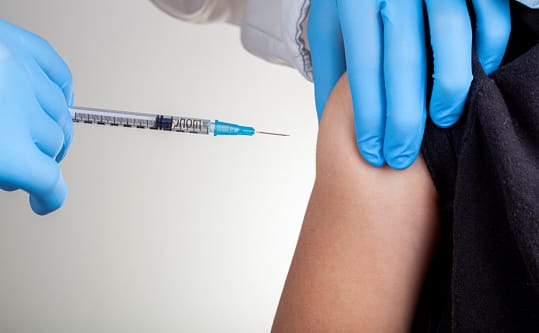
If the patient already has an IV line, we can give IV ceftriaxone for gonorrhea instead of IM.
In fact, the Japanese Society for Sexually Transmitted Diseases has recommended monotherapy with a single IV dose of 1 g ceftriaxone since 2008. (Aoki 2021)
While most of the time patients with STD (or STI, if you prefer) complaints don’t have an IV line established, occasionally they do. My hospital stocks 1 gm and 2 gm premixed IV bags of ceftriaxone, so we could potentially just give 1 gm IV in these rare cases to ensure adequate levels (even 500 mg might be just fine).
Of course, the other way to avoid the painful injection is to mix the ceftriaxone with lidocaine… or avoid contracting gonorrhea altogether.
Disclaimer
This post is intended for educational purposes to explore the kinetic data for IM and IV therapy. The CDC guidelines should be followed for treatment of STDs.
References
- Product Information: ROCEPHIN(R) IV, IM injection, ceftriaxone sodium IV, IM injection. Genentech USA, Inc. (per Manufacturer), South San Francisco, CA, 2010.
- Workowski KA, Bachmann LH, Chan PA, et al.; Centers for Disease Control and Prevention (CDC). Sexually Transmitted Infections Treatment Guidelines, 2021. MMWR Recomm Rep 2021;70(4):1-187. [PMID: 34292926]. Free CDC PDF download.
Original: October 9, 2012; Last Updated: August 10, 2026

Bryan D. Hayes, PharmD, DABAT, FAACT, FASHP
Creator and Lead Editor, Capsules and EM Pharm Pearls Series
Attending Pharmacist, EM and Toxicology, MGH
Associate Professor of EM, Division of Medical Toxicology, Harvard Medical School
@PharmERToxGuy
Latest posts by Bryan D. Hayes, PharmD, DABAT, FAACT, FASHP (see all)

Professor and Digital Innovation Lab Director
Department of Emergency Medicine
University of California, San Francisco
@M_Lin
Latest posts by Michelle Lin, MD (see all)
- Pediatric Pneumonia Without Routine Chest X-Rays: How Much Weight Should We Give the Lung Exam? - September 25, 2026
- Sickle Cell Acute Pain Episodes: Lessons Learned from the Prematurely Halted PECARN STArT Trial - August 24, 2026
- What We Still Do Not Know About Pediatric Mental Health Emergencies: PECARN Research Agenda - July 13, 2026