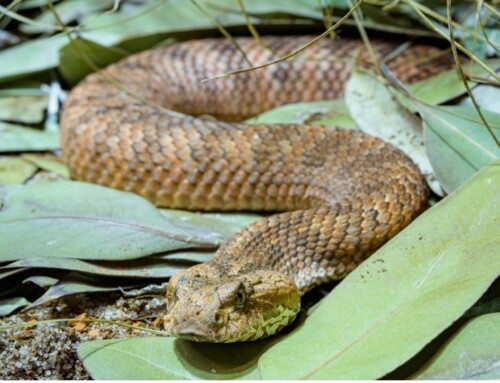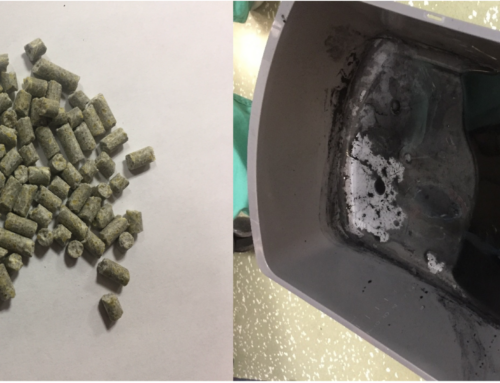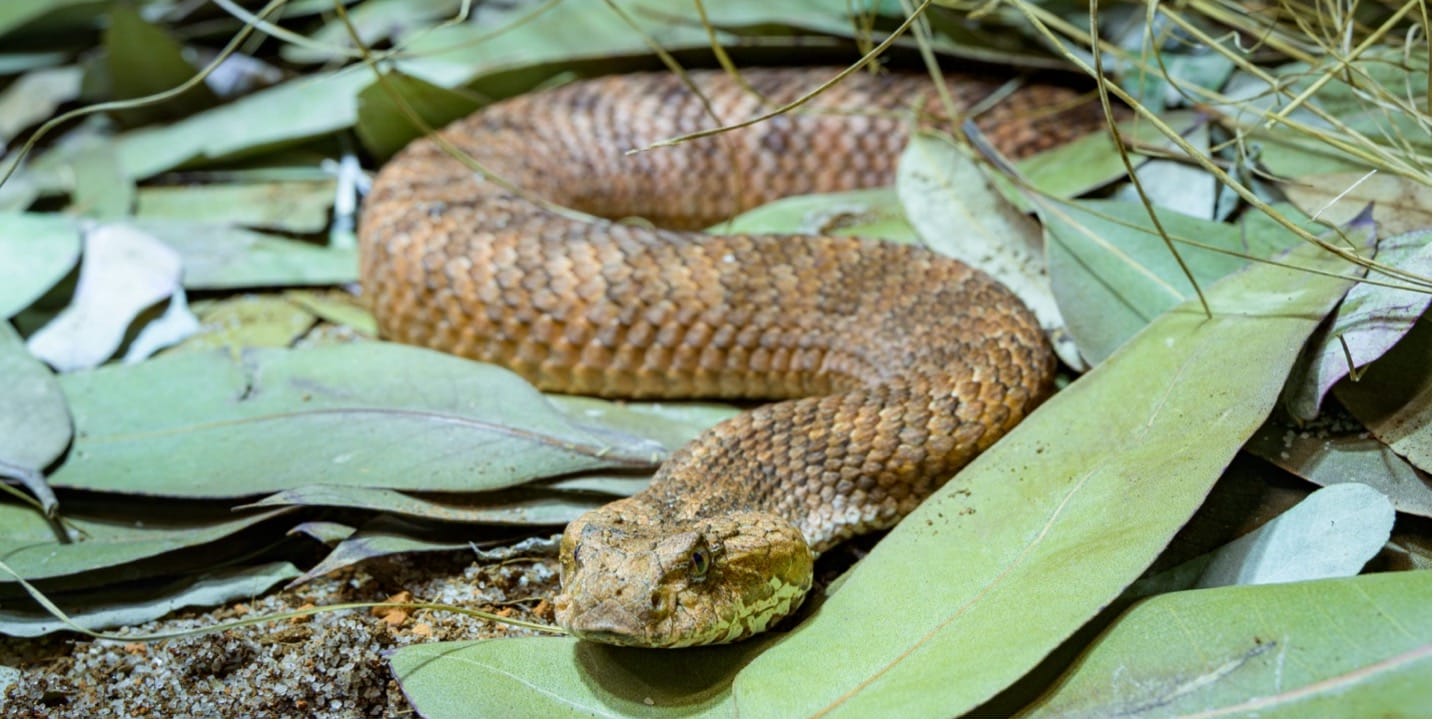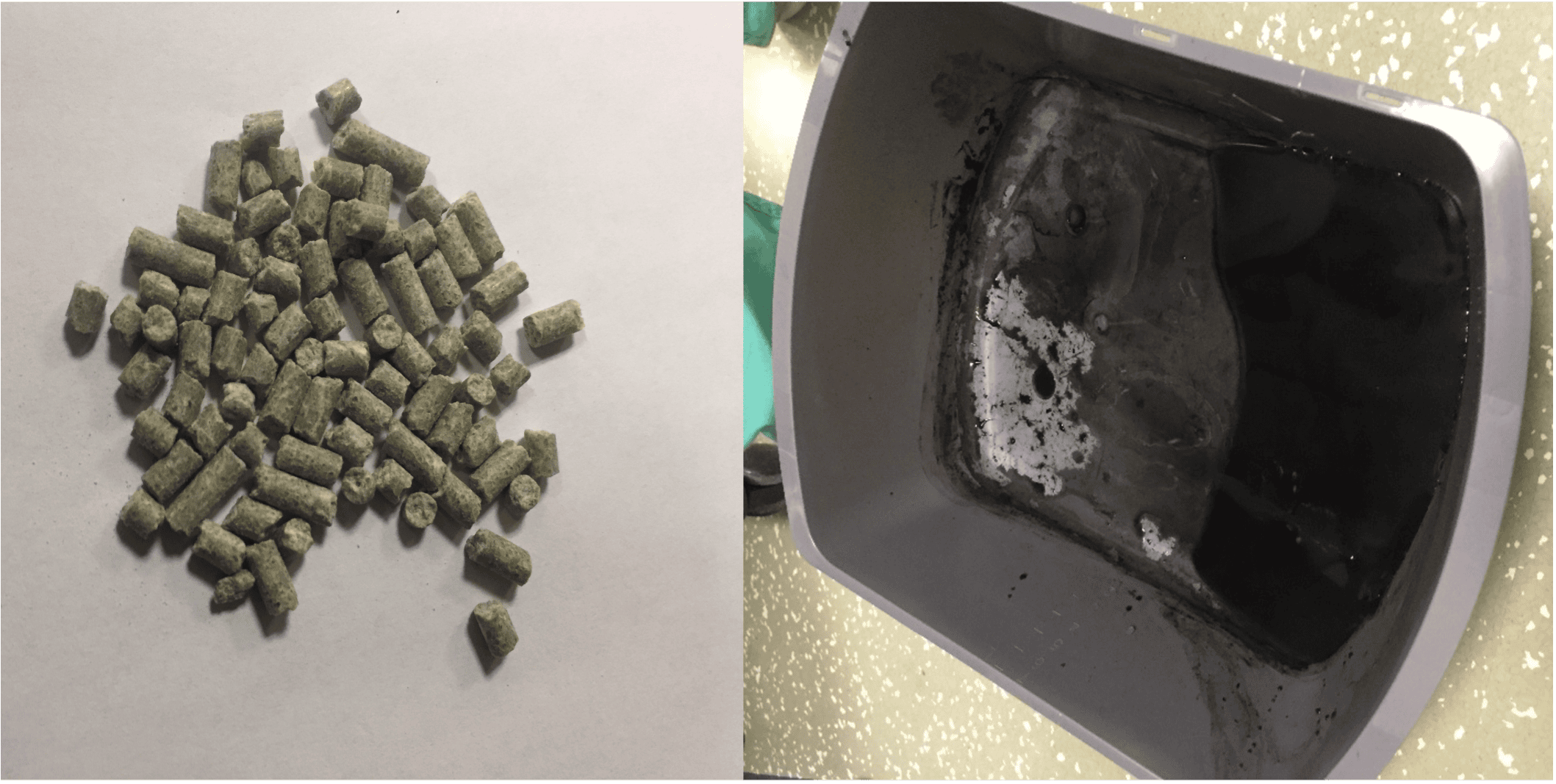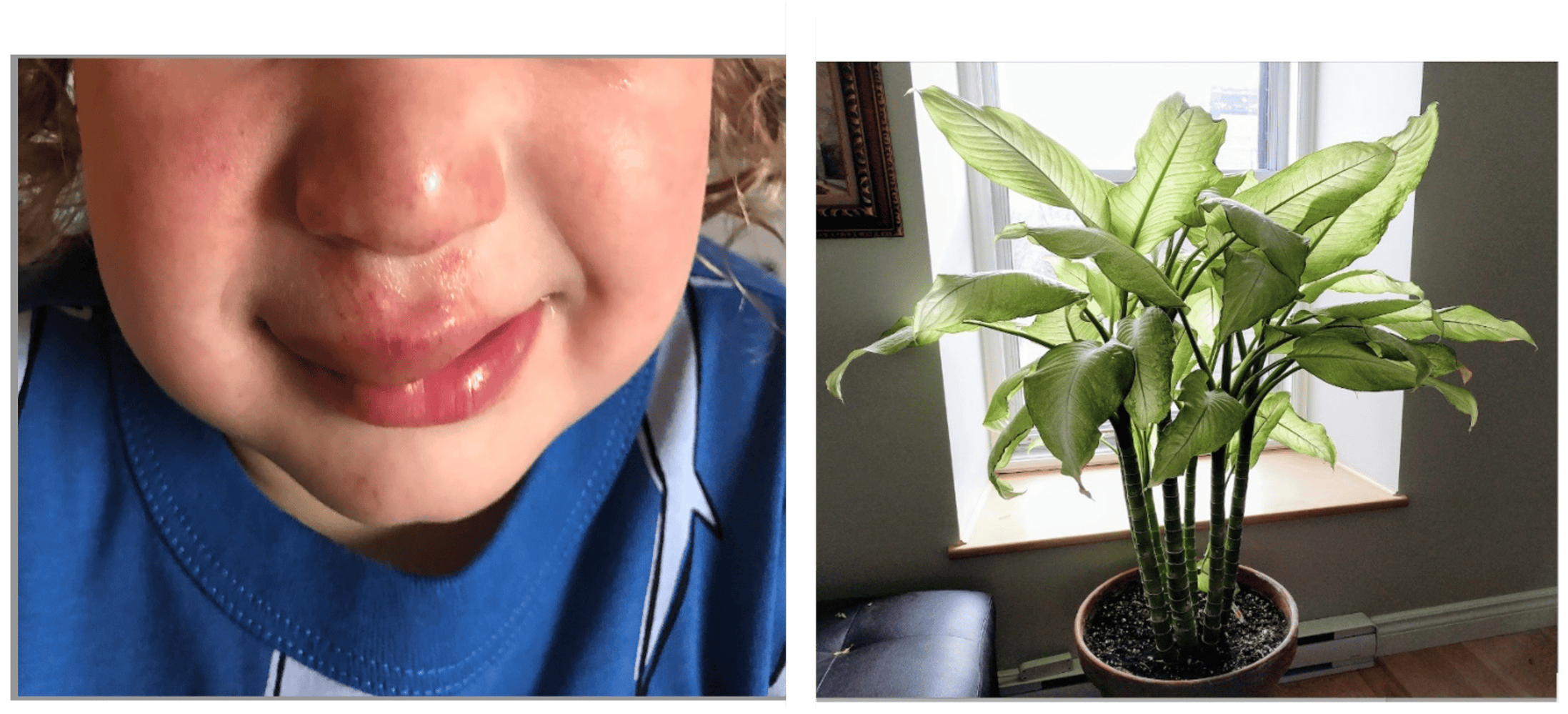
What toxic substance found in common houseplants (such as this one pictured) causes intense irritation of skin and mucous membranes?
- Calcium oxalate
- Lycorine
- Oxalic acid
- Terpene
[Left image from Dr. Bryant Allen, MD, and right image from AJ West -Wikimedia Commons]

The American College of Medical Toxicology hosts this Toxicology Visual Pearls series. The post was peer reviewed on behalf of ACMT by Drs. Michele Burns, Louise Kao, and Kristine Naňagas.
References
- Gummin DD, Mowry JB, Beuhler MC, et al. 2022 Annual Report of the National Poison Data System®(NPDS) from America’s Poison Centers®: 40th Annual Report. Clin Toxicol (Phila). 2023;61(10):717-939. PMID: 38084513.
- Pei, DN, PharmD. Dieffenbachia and Philodendron; Two Popular but Poisonous Houseplants. Poison Control, National Capital Poison Center. Accessed Jan 16, 2024.
- Gębura J, Winiarczyk K. A study on calcium oxalate crystals in Tinantia anomala (Commelinaceae) with special reference to ultrastructural changes during anther development. J Plant Res. 2016;129(4):685-695. PMID: 26961770.
- Miyamoto M, Noma M, Ishii J, Yoshihara S. Oral Symptoms Caused by Toxic Plants Containing Calcium Oxalate. J Pediatr. 2021;230: 258-259. PMID: 33161024.>
- Gardner DG. Injury to the oral mucous membranes caused by the common houseplant, dieffenbachia. A review. Oral Surg Oral Med Oral Pathol. 1994;78(5):631-633. PMID: 7838472.
- Altin G, Sanli A, Erdogan BA, et al. Severe destruction of the upper respiratory structures after brief exposure to a dieffenbachia plant. J Craniofac Surg. 2013;24(3):e245-e247. PMID: 23714978.
- Unlu U, Kocabaş A. Dieffenbachia plant poisoning cases and effects on human health. Ant J Bot. May 2020;4(1):65-68. doi:10.30616/ajb.682862.
- Cumpston KL, Vogel SN, Leikin JB, Erickson TB. Acute airway compromise after brief exposure to a Dieffenbachia plant. [published correction appears in J Emerg Med. 2004 May;26(4):491] J Emerg Med. 2003;25(4):391-397. PMID: 14654179.
- McIntire MS, Guest JR, Porterfield JF. Philodendron–an infant death. J Toxicol Clin Toxicol. 1990;28(2):177-183. doi:10.3109/15563659008993490.
- Šnajdauf, J, Mixa, V, Rygl, M, Vyhnánek, M, Morávek, J, Kabelka., Z Aortoesophageal fistula—an unusual complication of esophagitis caused by Dieffenbachia ingestion. J Pediatr Surg. 2005;40(6):e29-e31. Doi: 10.1016/j.jpedsurg.2005.03.036.

Deryan Smith, MD
Emergency Medicine Resident
Carolinas Medical Center, Charlotte, NC
Carolinas Medical Center, Charlotte, NC
Latest posts by Deryan Smith, MD (see all)
- ACMT Toxicology Visual Pearl: Household Plant Gone Wrong - July 26, 2024

Kathryn T. Kopec, DO
Emergency Medicine and Medical Toxicology Faculty
Carolinas Medical Center, Charlotte, NC
Carolinas Medical Center, Charlotte, NC
Latest posts by Kathryn T. Kopec, DO (see all)
- ACMT Toxicology Visual Pearl – Black Vomit, Big Problem - June 23, 2026
- ACMT Toxicology Visual Pearl: Breathtaking Emergencies - April 7, 2026
- ACMT Toxicology Visual Pearl: Blue to the Rescue - March 24, 2026